

Showing posts from category *Blog Columns.
-
At the Fifth World Water Forum, Africa Steps Up
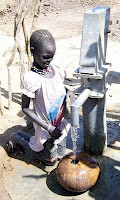
› A record-breaking 28,000 people, including five heads of state, participated in the Fifth World Water Forum in Istanbul, Turkey, last month. I was there, too, excited to be discussing this year’s theme, “Bridging Divides for Water.” Much of the conversation centered on how to bridge the remaining divides in meeting the Millennium Development Goals (MDGs)—especially MDG 7, which aims to halve the proportion of people without sustainable access to safe drinking water and basic sanitation by 2015.
While notable progress has been made in many regions of the world, such as China and India, other areas, particularly sub-Saharan Africa, lag woefully behind. According to the most recent numbers (2006) by UNICEF and the World Health Organization, only 31 percent of the population in sub-Saharan Africa has access to sanitation, and there are 38 sub-Saharan African countries where sanitation coverage is less than 50 percent. Access to improved drinking water sources has increased to 64 percent across the region; however, increases in coverage are not keeping pace with population growth, and the current rate of provision is not adequate to meet the MDG drinking-water target.
The Fifth World Water Forum, however, marked a hopeful new development. For the first time, the region of the world with the most serious water challenges, Africa, used the Forum to announce an internally driven water and sanitation agenda with a united voice. With support from the African Development Bank, the African Union and the African Ministerial Conference on Water (AMCOW) unveiled a plan to implement existing political commitments to water and sanitation. An “Africa Regional Paper” informed by the First African Water Week, held in Tunis in March 2008, presents African perspectives on each of the themes of the Forum (global change and risk management; advancing human development and the MDGs; managing and protecting water resources; governance and management; finance; education, knowledge, and capacity development), with a key message of delivering on existing commitments. In response to this agenda, the G8 countries announced increased aid to Africa’s water sector.
The desire to solve the world’s water crisis has generated many reports and frameworks over the years, including the Brundtland Commission’s report “Our Common Future” and the World Water Forum process itself. But perhaps nothing is as effective as a proactive, united stance from sub-Saharan Africans themselves, which could go a long way toward ensuring aid is used appropriately and efficiently. The fact that South Africa will host the Sixth World Water Forum in March 2012 should provide another impetus for meeting water and sanitation targets on the continent.
Hope Herron is an environmental scientist with Tetra Tech, Inc. She is currently researching water security issues in the context of the new U.S. Africa Command and U.S. defense, diplomacy, and development frameworks.
Photo: A Sudanese girl fills a water jug at a pump. Courtesy of Flickr user Water for Sudan. -
Weekly Reading
›The BBC has produced an excellent multimedia package (including articles, videos, and a narrated slideshow) on the controversial Gibe III dam in Ethiopia, which could threaten the livelihoods of nearly 500,000 people.
According to New Directions for Integrating Environment and Development in East Africa, the following activities are successfully promoting sustainable, integrated development in the region: “community-based management of natural resources for local livelihoods; natural resource-based businesses that benefit communities and the environment, including markets for environmental services; integrating population issues into development activities; connecting initiatives within landscapes; promoting integrated approaches in the formal policy process; and policy research and networks for advocacy.”
Flamingoes, giraffes, buffaloes, and other wildlife are at risk from forest fires in Kenya, according to the BBC. Police believe some of the fires were set deliberately by people opposed to relocated away from protected areas.
The Center for American Progress (CAP) has released two new reports on Afghanistan. Swords and Ploughshares: Sustainable Security in Afghanistan Requires Sweeping U.S. Policy Overhaul describes a three-day simulation conducted by CAP and argues that sweeping U.S. foreign-assistance reform is essential to stabilizing Afghanistan. Sustainable Security in Afghanistan: Crafting an Effective and Responsible Strategy for the Forgotten Front sets forth short-, medium-, and long-term policy goals for Afghanistan.
The UN Population Division has raised its low population projection for 2050, reports Ben Block on Worldchanging. The revision in the estimate was largely due to a rise in births in Europe and the United States. -
Teaching Geographic Perspectives on Environmental Security
›The intersection of the environment, security, and policymaking is often glossed over, even at a venerable institution like the U.S. Military Academy at West Point, which trains the future officers of the U.S. Army. I am teaching a new mini-course within the geography program that aims to change this situation, using a region-specific approach. The course is designed to show geography majors how the environment can act as a catalyst for conflict or simply as an amplifier of existing problems. A series of 14 lessons will focus on defining environmental security, the role it plays in policymaking decisions, the significance of the military in these situations, and the intelligence-gathering and dissemination processes.
The military is evolving, and the armed services often find themselves involved in activities clearly classified as “other than war”; a key example is the recent formation of the U.S. Africa Command (AFRICOM), which focuses on “war prevention rather than war-fighting.” The bottom-line goal of West Point’s environmental security course is to educate future Army leaders on the interrelatedness of the environment and human activities, because these are issues they are likely to face in their careers.
The 11 students taking the course this semester will be required to read, comment on, and analyze a New Security Beat blog topic they find especially interesting, as well as pitch an idea for a potential blog entry. The blogging project is being incorporated into the course to expose students to near real-time perspectives from subject-matter experts in environmental security and related fields. Other readings will come from peer-reviewed journals, the Army War College, and other U.S. government sources. The course will conclude with an integrative experience where students apply what they have learned to a set of “what-if” scenarios from across the globe.
The mini-course, along with the blog exercise, has been a welcome addition to the geography program’s line-up. Feedback from this first-ever attempt to teach environmental security to geography majors at West Point will be compiled, and environmental security will either be developed into a more comprehensive course or split among several existing courses within the geography curriculum, such as environmental geography, climatology, and several regional geography courses. I look forward to sharing my reflections on teaching the mini-course with New Security Beat readers in the coming months.
Photo: U.S. Military Academy at West Point. Courtesy Flickr user Devonaire Eye.
Lieutenant Colonel Luis A. Rios USAF is an assistant professor in the Department of Geography and Environmental Engineering at the U.S. Military Academy at West Point. -
Weekly Reading
›Arab Environment: Future Challenges, the 2008 report of the Arab Forum for Environment and Development, addresses a wide range of issues, including desertification, urbanization, water resources, waste management, air quality, climate change, and the environmental impact of conflict.
Water: A Global Innovation Outlook Report, distills insights from several of IBM’s “deep dives” on water and business, agriculture, infrastructure, and data.
“Securing Our Future: Environmental Security in Mongolia,” a YouTube video from the Asia Foundation, highlights the Foundation’s efforts to ensure that mining in Mongolia protects human and environmental health.
The Economist examines competing claims to land in Peru, where concessions for mining and oil and gas exploration are often “superimposed on towns, farms and natural parks.”
The Washington Post reviewed Sex and War: How Biology Explains War and Offers a Path to Peace this week. Author Malcolm Potts presented the book at the Wilson Center last month, and discusses the themes in a short YouTube video. -
Weekly Reading
›The UN Population Division updated its population predictions through 2050 this week, and global population is now expected to surpass 9 billion by 2050, with most of this growth occurring in developing countries. Andrew Revkin of the New York Times reflected on the findings on his Dot Earth blog.
Although many of Rwanda’s national development policies recognize the links between population, health, environment, and poverty, actually implementing cross-sectoral collaboration remains challenging. A new policy brief from the Population Reference Bureau examines prospects for—and progress in—integrating these sectors. For more on population, health, and environment in Rwanda, read Rachel Weisshaar’s from-the-field dispatches on the New Security Beat.
“Population growth, climate change and demand for greater food and energy supplies are squeezing global water supplies, according to a new U.N. report,” says the New York Times/Greenwire. The report, Water in a Changing World, will be officially launched at the World Water Forum in Istanbul on March 16, 2009.
Karen Hardee and Kimberly Rovin discuss how population affects Ethiopia’s ability to adapt to climate change and increase its citizens’ food security in an article for peopleandplanet.net.
The Canadian Broadcasting Company’s The Current examines the global politics of water in a season-long series entitled “Watershed.” Recent episodes have highlighted desalination in Israel, collapsing fisheries in Nova Scotia, and Karachi’s black market in water. -
Weekly Reading
›“A New Military Mission: Clean Energy,” part of the Center for American Progress’ “It’s Easy Being Green” series, highlights the military’s attempts to become more energy-efficient. Read more about the U.S. military’s environmental initiatives.
Simon Dalby, a professor at Carleton College, discusses the evolution of environmental security with John Tessitore, executive editor of the Carnegie Council, in a video interview (transcript available).
Climate Change, Food Security, and the Right to Adequate Food examines climate change’s expected impact on food production, with a special focus on Africa and Asia.
The BDA Foundation, a Canadian charity, and PharmAfrica, a pharmaceutical company, are working to create a medicinal plants industry that will lift local people out of poverty in the Democratic Republic of the Congo. -
Weekly Reading
›From Conflict to Peacebuilding: The Role of Natural Resources and the Environment, based on the work of the UN Environment Programme’s Expert Advisory Group on Environment, Conflict and Peacebuilding, summarizes the links between the environment, conflict, and peacebuilding, and includes 14 case studies of how natural resources affect—or are affected by—conflict.
The authors of “On Population Growth Near Protected Areas” come to an opposite conclusion from Wittemyer et al., who found a pattern of higher population growth near protected areas in Africa and Latin America. “To understand the disagreement, we re-analyzed the protected areas in Wittemyer et al.’s paper. Their results are simply artifacts of mixing two incompatible datasets,” write the authors. “Protected areas may experience unusual population pressures near their edges; indeed, individual case studies provide examples. There is no evidence, however, of a general pattern of disproportionate population growth near protected areas.”
“The President and I agreed to a new initiative that will further cross-border cooperation on environmental protection and environmental security,” said Canadian Prime Minister Stephen Harper yesterday, announcing plans for a U.S.-Canada Clean Energy Dialogue.
Scientists at Purdue University have teamed up with Google Earth to create an interactive map of U.S. CO2 emissions.
Mark Weston, who writes for the Global Dashboard blog, posted an edited version of a recent talk he gave on West African demography and security. -
Weekly Reading
›An article in Conservation Letters examining the effect of war on wildlife in Cambodia finds that “the legacy of conflict for wildlife can be profound and destructive. To address post-conflict challenges more effectively, conservation must be integrated within broader peacebuilding processes, including disarmament, demobilization, and reintegration of combatants.”
New York Times environmental reporter Andrew Revkin shares a recent nightmare on his blog, Dot Earth: If human beings achieve inexpensive, renewable energy, will this spur environmentally destructive population growth and consumption?
“Today, one-third of the world’s population has to contend with water scarcity, and there are ominous signs that this proportion could quickly increase,” writes the International Water Management Institute’s David Molden in the BBC’s Green Room. “Up to twice as much water will be required to provide enough food to eliminate hunger and feed the additional 2.5 billion people that will soon join our ranks. The demands will be particularly overwhelming as a wealthier, urbanised population demands a richer diet of more meat, fish, and milk.”
“Climate Wars” is a three-part podcast series by the Canadian Broadcasting Corporation.
Circle of Blue has launched the online radio series “5 in 15”; one episode features water expert Peter Gleick, head of the Pacific Institute, while another highlights Mark Turrell, CEO of technology company Imaginatik.
 A record-breaking 28,000 people, including five heads of state, participated in the
  The intersection of the environment, security, and policymaking is often glossed over, even at a venerable institution like the U.S. Military Academy at West Point, which trains the future officers of the U.S. Army. I am teaching a new mini-course within the geography program that aims to change this situation, using a region-specific approach. The course is designed to show geography majors how the environment can act as a catalyst for conflict or simply as an amplifier of existing problems. A series of 14 lessons will focus on defining environmental security, the role it plays in policymaking decisions, the significance of the military in these situations, and the intelligence-gathering and dissemination processes.

