Showing posts from category *Blog Columns.
-
Visualizing Natural Resources, Population, and Conflict
›Environmental problems that amplify regional security issues are often multifaceted, especially across national boundaries. Obtaining a comprehensive understanding of the natural resource, energy, and security issues facing a region is not fast or easy.
Fortunately, the Environment and Security Initiative (ENVSEC) has created highly informative, easy-to-understand maps depicting environmental, health, population, and security issues in critical regions.
Published with assistance from the United Nations GRID-Arendal, these maps offer policymakers and the public a snapshot of the complex topography of environmental security hotspots in Central Asia, Eastern Europe, Southeastern Europe, and the Southern Caucasus.
Some that caught our eye:• Environmental Issues in the Northern Caspian Sea: Overlaying environmental areas and energy production zones, this map finds hydrocarbon pollution in sturgeon spawning grounds, seal habitats in oil and gas fields, and energy production centers and waste disposal sites in flood zones. • Water Withdrawal and Availability in the Aral Sea Basin: Simple and direct, this combination map and graph contrasts water usage with availability in Turkmenistan, Uzbekistan, and Kazakhstan—which stand in stark comparison to the excess water resources of Tajikistan and Kyrgyzstan.• Environment and Security Issues in Belarus: In addition to noting the parts of the country with poor water quality and potassium mining, the map also delineates wildfires that occurred in areas contaminated by the Chernobyl explosion, thus threatening downwind populations.
Maps: Illustrations courtesy of the Environment & Security Initiative. -
The Top 10 Posts of 2010 (So Far)
›1. VIDEO: Peter Gleick on Peak Water
2. Can Haiti Change Course Before the Next Storm?
3. Guest Contributors Cleo Paskal and Scott Savit: How Copenhagen Has Changed Geopolitics: The Real Take-Home Message From Copenhagen Is Not What You Think
4. Hardship in Haiti: Family Planning and Poverty
5. Water, Conflict, and Cooperation: Practical Concerns for Water Development Projects
6. Collier and Birdsall: Plunder or Peace
7. VIDEO: UNEP’s David Jensen on Linking Environment, Conflict, and Peace in the United Nations
8. Gates: More Money for Global Health Is Good for the Environment
9. Lessons From the Field: Focusing on Environment, Health, and Development to Address Conflict
10. Land Grab: Sacrificing the Environment for Food Security -
Monitoring Resources and Conflict
›Is the “resource curse” inevitable? The Resource Conflict Monitor (RCM) produced by the Bonn International Center for Conversion (BICC) attempts to monitor the management, administration, and governance of natural resources in countries prone to resource-conflict dynamics by establishing an empirical measure of resource governance.
-
Climate Change and Conflict
›Climate Change and Security in Africa: A Study for the Nordic-African Foreign Ministers Meeting, a collaboration between the International Institute for Sustainable Development and the Institute for Security Studies, examines the spectrum of literature devoted to the security implications of climate change in Africa. In particular, the study focuses on the economic sectors and regions most susceptible to climate change’s threat multiplier effects. It concludes that “climate change presents very real development challenges which, under certain circumstances, may contribute to the emergence and longevity of conflict.”The International Institute for Sustainable Development’s Rising Temperatures, Rising Tensions: Climate Change and the Risk of Violent Conflict in the Middle East determines that “climate change—by redrawing the maps of water availability, food security, disease prevalence, population distribution and coastal boundaries—may hold serious implications for [the Middle East’s] regional security.” The report identifies the Middle East’s history of conflict as a significant challenge to the region’s ability to cope with climate change’s threats of water scarcity, food insecurity, and volatile migration. Rising Temperatures, Rising Tensions also discusses strategies to advance both adaptation and peacemaking in the region.Using the coinciding outbreaks of regional drought and inter-communal violence in Kenya in 2009 as an illustration, Climate Change and Conflict: Lessons from Community Conservancies in Northern Kenya Conservation Development examines climate change’s potential to act as a threat multiplier in Northern Kenya. The study, jointly produced by the Saferworld, concludes “that the threat of increased conflict in northern Kenya as a result of climate change is real” and “that resource scarcity is already contributing to heightened insecurity and conflict in these areas.” The study also provides recommendations for responding to climate change, managing natural resources, and preventing conflict and ensuring security. -
Patriotism: Red, White, and Blue…and Green?
›“National security often means cyber security, it means energy security, it means homeland security, and more and more…it means environmental security,” says retired U.S. Army Captain James Morin in the Pew Project on National Security, Energy and Climate’s recently released video short, “Climate Patriots.”
“Climate Patriots” calls attention to the nexus between energy, climate change, and national security. The video identifies climate change as a two-fold threat likely to increase the frequency and intensity of humanitarian disasters and political instability. The latter, military analysts believe, will fuel further conflict, fundamentalism, and terrorism.
“Climate Patriots” also touches on military efforts to combat climate change (e.g., reducing energy consumption and shifting to renewable fuel supplies) as well as Center for Naval Analyses (CNA) research on national security, energy, and climate.
“If we don’t take action now,” retired U.S. Navy Vice Admiral Dennis McGinn says, “the options for dealing with the effects of climate change and the effects of energy security become much, much more expensive. In fact, some of the options completely go away over the next 10-20 years if we don’t start taking some prudent actions now.” -
Point of View: Investing in Maternal Health
›Every minute, a woman dies in pregnancy or childbirth. But the overwhelming majority of these more than 500,000 deaths a year are avoidable.
“We know how to save women’s lives, we don’t need a cure…this is a political problem and political will is essential,” said Theresa Shaver, the director of White Ribbon Alliance.
Addressing longstanding issues like political will could jumpstart progress toward Millennium Development Goal 5, which seeks to reduce maternal deaths by 75 percent by 2015. We face daunting challenges, but there are some clear steps we can take to meet this critical goal. We must strengthen health systems in the developing world.Increasing women’s access to quality health services during pregnancy, and ensuring they are attended by skilled providers during childbirth, can help to reduce preventable causes of death, such as hemorrhage, pre-eclampsia, and obstructed labor—which together account for 80 percent of maternal deaths.
Scaling-up family planning services are a cost-effective way of preventing unwanted pregnancies, delaying the age of first pregnancy, increasing the time between pregnancies, and facilitating important relationships between women and health care providers. However, many societal and cultural factors dissuade women and girls from seeking contraception. Culturally sensitive education programs can help overcome this barrier, especially if they include men and local leaders, in addition to women and girls.
We should recognize that improving the well-being of mothers is inseparable from the health of newborns. Efforts to reach Millennium Development Goal 4, reducing under-5 mortality by two-thirds, are integral to improving maternal health. Skilled birth attendants could decrease both maternal and child mortality.
In the United States and abroad, momentum is growing to make the investment necessary to scale up these interventions. In January, Secretary of State Hillary Clinton renewed a commitment of $63 billion for the Obama Administration’s Global Health Initiative, which will include significant resources for maternal and child health.
According to the U.S. Agency for International Development, maternal and newborn deaths cost the world $15 billion a year in lost productivity. Researchers conclude that maternal health services would cost only a $1 per day per woman. That’s a small price to pay for such a high return—saving not only dollars, but also women’s lives.
For more information about maternal health and the Global Health Initiative’s Advancing Policy Dialogue on Maternal Health Series please see this month’s issue of Centerpoint. -
Peace Through Parks on Israel’s Borders – Dream or Reality?
›In areas fraught with conflict, is it possible to advance conflict resolution through environmental discourse? A recent conference hosted by Tel Aviv University’s Porter School of Environmental Studies explored this question through an examination of existing peace parks, as well as possible future preserves.
The wide-ranging discussion sought to apply theories of conflict resolution and environmental peacemaking to local conflict in the Middle East. Touching on conservation, conflict resolution, local history, geography, ecology, and diplomacy, the participants underscored the importance of restoration efforts, local environmental maintenance, and the pursuit of peace through environmental cooperation.
For more, watch these presentations on YouTube (in English; with Timestamps):
Event Part One:
0:15:50
“Conservation to Conflict Resolution: Understanding the Theory and Practice of Peace Parks”
Dr. Saleem Ali, Rubenstein School of Environment and Natural Resources, University of Vermont
1:36:28
“Peace Parks on Israel’s Borders: Lessons from South Sinai”
Dr. Dan Rabinowitz, Department of Sociology and Anthropology, Tel Aviv University
1:55:49
“The Jordan River Peace Park: Post-conflict environmental peacebuilding between Israel and Jordan”
Gidon Bromberg, Israeli Director, Friends of the Earth Middle East
Event Part Two:
0:01:12
“The Golan Heights – A critical habitat with global significance”
Dr. Tamar Ron, Ecologist, biodiversity conservation consultant
2:11:01
Session Response:
Valerie Brachya, Director, Environmental Policy Center Jerusalem Institute for Israel Studies
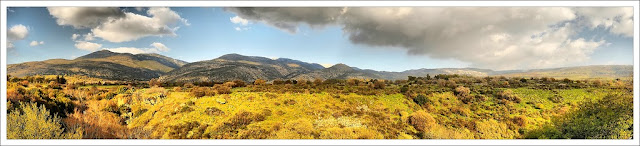
Photo: Golan Heights Panorama, Courtesy Flickr User Vad_Levin. -
Watch: Harriet Birungi: Challenges Facing HIV-Positive Adolescents in Kenya
›“Services are not necessarily very adolescent-friendly, so when you get children who are HIV-positive they are likely to face discrimination,” says Harriet Birungi, an associate in the Reproductive Health Program with the Population Council in Kenya, in this interview with ECSP’s Gib Clarke following the Global Health Initiative’s Integrating HIV/AIDS and Maternal Health Services panel.
According to Birungi, medical service censoring and targeted exclusion from schools are among the top challenges facing Kenyan adolescents living with HIV/AIDS. She hopes better support systems and intervention strategies, especially for pregnant individuals, will help medical personnel more quickly identify HIV-positive young adults needing critical medical services.


 Every minute, a woman dies in pregnancy or childbirth. But the overwhelming majority of these more than