-
High Altitude Turbulence: Challenges to the Cordillera del Cóndor of Peru
›In 1998, Peru and Ecuador settled a long-running border dispute in the Cordillera del Cóndor mountain range that had killed and wounded dozens on both sides in 1995. In addition to pledging renewed cooperation on deciding the final placement of the border, the agreement, the Acta Presidencial de Brasilia, committed both sides to establishing extensive ecological protection reserves on both sides of the border: A peace park of sorts was born.
But now, indigenous groups fear that extractive industries in the area could threaten both the biodiversity and the ecological integrity of the forests and streams that they rely upon for their survival. They detail these charges in a new report, Peru: A Chronicle of Deception, and in a new video documentary, “Amazonia for Sale.”
Located on the eastern slopes of the Equatorial Andes, the area is a recognized global biodiversity hotspot with large areas of pristine montane habitat. In 1993-4, Conservation International led a biodiversity assessment trip to the area and identified dozens of species new to science. Their report, The Cordillera del Cóndor Region of Ecuador and Peru: A Biological Assessment, noted the “spectacular” biodiversity of the area, and its key role in the hydrological cycle linking the Andes with the Amazon.
Recognizing the region’s importance, the Acta Presidencial de Brasilia stipulated the need to create and update mechanisms to “lead to economic and social development and strengthen the cultural identity of native populations, as well as aid the conservation of biological biodiversity and the sustainable use of the ecosystems of the common border,” wrote Martin Alcade et al. in the ECSP Report.
Indigenous communities in Peru are accusing the Peruvian government of reneging on those promises by allowing extractive industries extensive access to the region. They charge that the government gave in to gold mining interests who want to reduce the size of the protected area in the Cordillera del Cóndor. They also claim that the Peruvian government is violating promises made to include indigenous peoples in the governance and management of the area.
Carefully managing extractive activities was a key priority for Peru and Ecuador when they negotiated an end to their border dispute. A management plan for the area with strong protection for key biodiversity areas was supposed to ensure everyone’s interests.
However, Peru’s current president, Alan Garcia, has been aggressive in promoting extractive industries in Peru,to the point of inciting significant popular opposition among many indigenous peoples. Less than a year ago, protests over oil exploration in Amazonian lowlands city of Bagua killed and wounded dozens of Peruvians. This violence followed years of social conflict over mining development in a number of communities in Peru’s Andean highlands.
Earlier this decade, Peru made some progress in resolving extractive disputes. But Garcia’s strong promotion of the extractive sector in the face of indigenous opposition, like we currently see in the Cordillera del Cóndor region, suggests years of confrontations to come.
Tom Deligiannis is adjunct faculty member at the UN-mandated University for Peace in Costa Rica, and an associate fellow of the Institute for Environmental Security in The Hague.
Photo Credit: “El vuelo del condor, acechando a su presa,” courtesy of flickr user Martintoy. -
Climate Change and U.S. Military Strategy
›Promoting the Dialogue: Climate Change and U.S. Ground Forces, a new working paper by Christine Parthemore of the Center for New American Security (CNAS), delves into how climate change will affect future operating environments, related missions, equipment, and capabilities of U.S. ground forces. The working paper, part of “Promoting the Dialogue” series, is based on interviews, research, and site visits. The paper follows Promoting the Dialogue: Climate Change and the Maritime Services, also by Parthemore, and a publication on climate change’s implications for air missions is forthcoming. Parthemore concludes with recommendations for areas of future research and a call for “[d]eeper intellectual study of how climate change is likely to affect the U.S. ground forces.”
Neil Morisetti, U.K. rear admiral and climate and energy security envoy, and Amanda Dory, U.S. deputy assistant secretary of defense for strategy, published an article in Defense News discussing the inclusion of climate change as a new variable in strategic planning. “The Climate Variable: World Militaries Grapple With New Security Calculus” labels climate change a “threat multiplier,” noting that “[c]limate change will amplify the impact of some of the world’s most difficult and common challenges.” Morisetti and Dory call for greater military-to-military engagement concerning disaster response, studies into at-risk military infrastructure, and efforts to foster innovative energy technologies. “Current military operations must continue to be our highest priority, but we also have a responsibility to assess the future security environment, including the impacts of climate change and other key trends such as energy, demographics, economics and science/technology,” they conclude.
Morisetti and Dory recently spoke at the Wilson Center as part of a panel discussing climate change and energy in defense doctrine. -
World Bank President: Climate Policy Is Not “One-Size-Fits All”
›Speaking at the Woodrow Wilson Center yesterday, World Bank President Robert Zoellick said the financial crisis indicated that developed countries should listen to developing countries, but not out of “charity or solidarity: It is self-interest.”
His prepared remarks, “The End of the Third World? Modernizing Multilateralism for a Multipolar World,” notably included a section on climate change:Take climate change: The danger is that we take a rule book from developed countries to impose a one-size-fits-all model on developing countries. And they will say no.
Climate change policy can be linked to development and win support from developing countries for low carbon growth but not if it is imposed as a straitjacket.
This is not about lack of commitment to a greener future. People in developing countries want a clean environment, too.
Developing countries need support and finance to invest in cleaner growth paths. 1.6 billion people lack access to electricity. The challenge is to support transitions to cleaner energy without sacrificing access, productivity, and growth that can pull hundreds of millions out of poverty.
Avoiding geo-politics as usual means looking at issues differently. We need to move away from the binary choice of either power or environment. We need to pursue policies that reflect the price of carbon, increase energy efficiency, develop clean energy technologies with applications in poorer countries, promote off-grid solar, innovate with geothermal, and secure win-win benefits from forest and land use policies. In the process, we can create jobs and strengthen energy security.
The developed world has prospered through hydro electricity from dams. Some do not think the developing world should have the same access to the power sources used by developed economies. For them, thinking this is as easy as flicking a switch and letting the lights burn in an empty room.
While we must take care of the environment, we cannot consign African children to homework by candlelight or deny African workers manufacturing jobs. The old developed country prism is the surest way to lose developing country support for global environment goals. -
Maternal Health Solutions in Peru
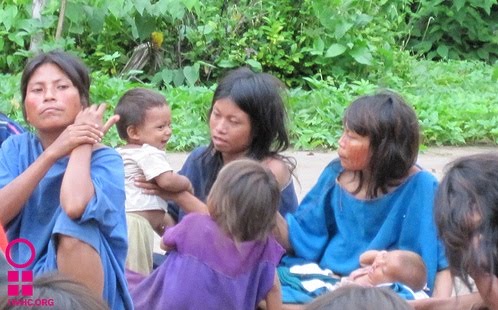
›Media reports on the neglected discussion of maternal and child health often focus on the problems and projects in sub-Saharan Africa or South Asia, which is understandable, as a disproportionate 90 percent of global maternal deaths occur in these two regions. Last month, however, PBS correspondent Ray Suarez reminded us that maternal and child mortality affects countries all over the world, including Peru, where “maternal death rates has historically been unusually high,” he noted in a report for NewsHour.
“Few people in the highlands of central Peru own automobiles and it’s hard to know exactly when the next bus is going to rumble by,” said Suarez. “Villagers are a long way from the nearest health clinic, even further from a fully equipped clinic.” Unfortunately, this scene could describe most developing countries struggling to reach the Millennium Development Goal (MDG) 5 target of reducing maternal deaths by 75 percent by 2015. Maternal health advocates argue that MDG 5 does not require a cure, but rather increased political willpower.
“Health officials, obstetricians, nurses, and community activists looked for ways to make better use of existing resources and connect expecting mothers with them,” said Suarez, reporting from the remote town of Vilcashuaman. At the Casa Materna, or “mother’s house,” nurses plot on a felt, bulls-eye map the names, due dates, geographical proximity, and travel times of pregnant women in nearby villages. Utilizing two-way radio communication, Casa Materna stays in contact with these remote villages and can signal the regional hospital, hours away in Ayacucho, for ambulance assistance for women needing emergency obstetric care.
Delivery teams at the Ayacucho hospital are familiar with indigenous languages and cultures, and welcome traditional practices, such as displaying herbs and giving figurines to new mothers. “The medical professionals in the area know bringing delivering mothers to the hospital can mean the difference between life and death and are prepared to be as accommodating as possible to lure women from home delivery,” reports Suarez. In the Ayacucho district, maternal mortality rates have decreased by 50 percent in five years.
While Suarez said “cultural competence, a welcoming atmosphere, and low-cost, high-result treatment strategies” may seem “pretty smart and straightforward,” it is important to evaluate the regional health system at a larger level, and consider additional factors, such as access to family planning, that may have contributed to Ayacucho’s success in reducing maternal mortality.
Another part of the solution is improving transportation and referral strategies, but increased research is needed to evaluate best practices and scalability of programs such as the one in Ayacucho. On May 19-20, as part of the Maternal Health Dialogue Series, the Wilson Center’s Global Health Initiative will host a two-day conference on “Improving Transportation and Referral for Maternal Health.” Speakers working on transportation and referral strategies in Bolivia, Ghana, and India will share their experiences and best practices.
Calyn Ostrowski is the program associate for the Wilson Center’s Global Health Initiative.
Photo Credits: Mothers in Peru learn to identify risk factors during pregnancy. Courtesy of Flickr user International Women’s Health Coalition -
Cassie Gardener
Integrating Population, Health, and Environment in Ethiopia’s Bale Mountains
›Ethiopia suffers from vast deforestation, rapid population growth, and high rates of maternal mortality. But development programs that address these issues in an integrated fashion may help end that suffering. As part of my two-month internship with the PHE-Ethiopia Consortium, I recently visited the Movement for Ecological and Community Action (MELCA) Project in the rural Bale Zone of southeastern Ethiopia to witness these programs in action.
Ethiopia’s Spectacular Bale Mountains
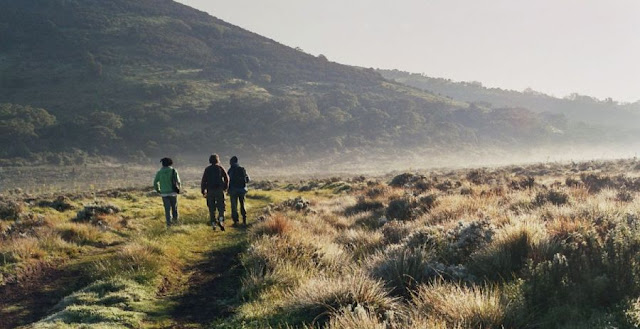
The little-known Bale Mountains are national and global treasures of biodiversity, teeming with dozens of endemic mammal, bird, and plant species. Ethiopia’s most important region for migrating birds, the rivers and streams in the Bale watershed flow to more than 12 million people in southern Ethiopia and western Somalia. Bale Mountains National Park hosts half of the world’s population of its rarest canid, the Ethiopian wolf, which has dwindled to a mere 250 individuals due to human interaction. When I toured the park, I was lucky enough to spot bushbucks, mountain nyalas, molerats, and several Ethiopian wolves.
As in many parts of the country, rural communities around the park face grave livelihood and health challenges, and their unsustainable use of land to eke out a living is threatening its conservation efforts. Due to diminishing agricultural land and an average total fertility rate of 6.2 children per mother in the region, people are increasingly forced to cut trees for fuel and timber in order to feed and house their families.
If Bale’s resources continue to be exploited in an unsustainable way, more mammal species would become extinct here than in any other area of equivalent size in the world. Even worse, MELCA Project Manager Tesfaye Teshome told me that if deforestation and impending climate change dry up Bale’s precious watershed, drought and famine could lead to the displacement or death of millions of Ethiopian citizens.
Raising PHE Awareness in the Community
Since 2005, MELCA, a member organization of the PHE-Ethiopia Consortium, has been working to protect biodiversity and culture in the Bale region through research, advocacy, and their award-winning youth environmental education program called SEGNI, or “Social Empowerment through Group and Nature Interaction.” In March 2008, with funding from Engender Health and the Packard Foundation, MELCA launched an integrated population, health and environment (PHE) project that provides culturally sensitive training at the community, school, and government levels.I was impressed that after just seven months of raising awareness, I met dozens of community members and key stakeholders who strongly believe in both the conceptual and operational benefits of PHE integration. For example, the Health Extension Workers and beneficiaries explained to me that community members in the Bale region, most of whom are conservative Muslims, held negative perception of family planning, which contributed to the area’s large family sizes and maternal mortality. But by involving Islamic community leaders in the project’s discussions, MELCA helped convince religious leaders that family planning is an important part of improving the health and livelihoods of the community.
“After the PHE training, we have improved awareness of population, family planning, health and environmental issues, and we understand that child spacing is better. Even my wife is now using family planning services, and as a result our lives are improved,” said Shihase, a religious leader in the community.
Join the Club: PHE Goes to School
Inspired by training sessions at schools, the SEGNI nature clubs, women’s clubs, and anti-AIDS clubs joined together to form new “PHE Clubs.” With the support of MELCA, PHE Club students plant indigenous tree seedlings in school nurseries for distribution to the community. They also create dramas, songs, poems, and illustrated storyboards about population, health, and environment issues, and use modest “mini-media” equipment such as a stereos and microphones to share these stories with their peers and other community members.
When I arrived at Finchaa Banoo Elementary School, hundreds of students greeted me with a PHE song, wearing traditional costumes with PHE banners strewn across their chests. They led me to their nursery site where they had planted 60,000 indigenous tree seedlings. A beautifully decorated cultural hut was filled with 10 PHE storyboard panels, painted by a local PHE-trained artist.
Fatiye, a 21-year old PHE club leader in 8th grade, proudly told me, “Before the coming of PHE, I’d been working only on SEGNI and knew only about biodiversity and culture. But now, I clearly understand health and population issues, including HIV/AIDS, taught to me by my peers. By having the integration of clubs, we’ve strengthened our power to accomplish more.”
Working Together to Save Time and Improve Health
MELCA’s PHE trainings also helped government officials and development workers who had previously operated in isolated sectors to integrate their work at the planning and implementation levels. Health Extension Workers and experts from the Agricultural and Rural Development Office said that collaboration is beneficial to them and the community, because it saves time and accomplishes greater results. Shankore, one of the Health Extension Workers, told me that integrating efforts across sectors allows them to help more households adopt both family planning and better sanitation, by more consistently and efficiently delivering services at the same time.
And their efforts are paying off: “Previously, we were giving birth just like chickens, our forest coverage was diminishing, and we were damaging our resources. We had cattle in our homes, and our children had health problems. Now, we understand how to improve these issues,” Khasim Sheka, a male member of the community, told me. “Health Extension Workers are teaching us about cleaning our home gardens and homes, and we separate our house from our cattle, liquid, and solid waste. My wife wasn’t using any family planning before, and now she’s using five-year Norplant.”
Although MELCA’s PHE project is still in its early stages, it appears capable of being scaled up with a little investment in additional training and by building the capacity of its staff and community members. In particular, the reproductive health component of the project needs to be strengthened, since Health Extension Workers are not trained on simple long-term family planning methods like IUDs, and are afraid they will lose clients if they continue to have to refer them to the distant health clinic.
With these improvements, MELCA could more successfully implement the integrated PHE approach, which will not only reduce the impact of population growth and deforestation on Bale Mountain Natural Park, but will improve the health and livelihoods of its neighbors, and ultimately protect its biodiversity for Ethiopia and the global community.
For more information about PHE-Ethiopia, please contact phe-ethiopia@gmail.com or visit their website at http://www.phe-ethiopia.org. For more information about MELCA, please contact melca@ethionet.et or visit their website at http://www.melca-ethiopia.org.
Cassie Gardener was the National Campus Organizer for the Sierra Club’s Global Population and Environment Program from 2006-2010, and is currently traveling around the world and volunteering for integrated health and development programs like PHE-Ethiopia and GoJoven prior to beginning her Masters in Public Health Program at UCLA in the fall.
Photo Credits: Morgennenbel034_31a, courtesy of flickr user Agoetzke Practitioners, courtesy of Cassie Gardener. -
Shape of Things to Come: Uganda’s Demographic Barriers to Democracy
›In March, Uganda’s cultural landmark, the Kasubi Tombs, were destroyed in a suspicious fire. Tensions spilled over when Ugandan President Yoweri Museveni paid a visit to the Bugandan site and found his entrance blocked by an angry crowd. According to an independent newspaper, soldiers accompanying the president opened fire, killing three civilians.
With ethnic-tinged unrest and student protests in Kampala, as well as cross-border conflicts in the north and east, Museveni, who has led Uganda since 1986, is facing a potentially serious test as elections approach early next year. The country’s demographic profile, and in particular the lack of opportunities for growing numbers of young people, will add to the country’s challenges, as I argue in a new case study of Uganda’s demography.
Uganda has the youngest population in the world, with 77 percent of its people younger than age 30. Women in Uganda have an average of 6.7 children each and 41 percent of married women have an unmet need for family planning. The population of Uganda is currently growing by about one million people per year, and given the force of its demographic momentum, Uganda’s population is likely to almost double by 2025 even if fertility declines.
Population Action International has found that countries with age structures like Uganda’s are the most likely to experience internal strife and autocratic governance. Between 1970 and 2007, 80 percent of outbreaks of civil conflict occurred in countries in which 60 percent or more of the population was younger than age 30.During that same period, 90 percent of countries with an age structure like Uganda’s had autocratic or only partially democratic governments.
Demography alone does not cause conflict. Most governments, even those with youthful populations, do not become entrenched in internal violence and upheaval. But age structure affects a country’s vulnerability to conflict, due to the demands a government faces in providing for its growing numbers.
In Uganda, young people face diminishing prospects in agriculture, the primary industry, as plot sizes shrink with each successive generation. At projected population growth rates, land density may increase 350 percent by 2050, from 122 inhabitants per km2 to a possible 551 inhabitants per km.
Only one-quarter of students who enroll in primary school reach the final grade, and even those with university degrees find few jobs. A reported youth unemployment rate of 22 percent is even higher in urban areas.
After 25 years in power, President Museveni will stand for a fourth official term in 2011. Despite growing dissent among his constituents, he appears confident of keeping his seat. Regardless of what happens next year,Uganda’s leaders must firmly commit to addressing their country’s demographic issues.
Age structure can become a window of opportunity if youth are engaged in society and couples can choose the number of children they can support. But in Uganda, that window remains far out of reach.
Three new case studies from Population Action International on Haiti, Yemen and Uganda examine the challenges specific to countries with very young age structures and recommend policy solutions.
Elizabeth Leahy Madsen is a senior research associate at Population Action International (PAI). She is the primary author of the 2007 PAI report The Shape of Things to Come: Why Age Structure Matters to a Safer, More Equitable World.
Photo Credits: “Atanga.pater.uganda,” courtesy of flickr user Kcarls. -
Shape of Things to Come: A Demographic Perspective of Haiti’s Reconstruction
›Last month, the International Donors’ Conference Towards a New Future for Haiti sought to lay the groundwork for Haiti’s long-term recovery by pledging an impressive $9.9 billion over the next decade. A large portion of the money will fund health, education, and employment efforts that are crucial to meeting the needs of Haiti’s people—particularly its youth. In a new case study of Haiti’s demography and development, Population Action International (PAI) argues that the country’s age structure should play a central role in any reconstruction strategy.
In Haiti, almost 70 percent of the population is under the age of 30, and this very youthful population affects every aspect of the country’s development prospects, from economic opportunities to security issues, political stability, gender equality, and climate change adaptation.
Haiti is at a demographic crossroads. If sound policies are in place, youthful age structures can translate into an economic asset for the country. The combination of decreasing fertility levels and a growing working-age population may open a window of opportunity for economic growth. To seize it, large-scale education and employment policies and programs should seek to raise employment rates for both male and female youth.
For Haiti to reap the benefits of this “demographic dividend,” access to reproductive health services is equally important. According to the most recent Demographic and Health Survey (2005-2006), if all unintended births were avoided, the average fertility level in the country would be 2.4 children instead of four.
But if instead, Haiti ignores the needs of its youth, the country will remain vulnerable to a variety of political and economic challenges. Youth unemployment is twice that of the rest of the population, which could have a negative impact on the country’s political stability and security situation.
The PAI report The Shape of Things to Come shows that countries with very young age structures are less likely than others to sustain democratic regimes and that age structure impacts political stability. To be an effective partner in its reconstruction, the Haitian government needs stable governance. By prioritizing education, health, and employment for young people, Haiti may reduce the risk of urban violence, help attract private investors, and speed its recovery.
Addressing demographic factors will also help Haiti achieve broader development goals. Decades of high population growth and the use of charcoal as the main source of energy have deforested 97 percent of the country, increasing Haiti’s inherent vulnerability to environmental disasters and climate change. Denuded landscapes contribute to devastating floods, especially in urban coastal zones. The lack of tree cover reduces the country’s ability to absorb carbon and causes wide variations in temperature. Due to soil erosion, Haiti’s agricultural industry is one of the least productive in the world, leading to widespread poverty and food insecurity.
The integration of demographic factors into development strategies constitutes one of the most compelling ways for Haiti to facilitate not only its reconstruction, but also address the challenges of climate change and make its population more resilient and prosperous.
Three new case studies from Population Action International on Haiti, Yemen and Uganda examine the challenges specific to countries with very young age structures and recommend policy solutions.
Béatrice Daumerie is a research fellow at Population Action International (PAI).
Photo: Haitian youth. Courtesy Flickr user NewsHour -
Demobilized Soldiers Developing Water Projects – and Peace
›Can demobilized ex-combatants help improve water resources in post-conflict countries? Last fall, the Global Water Institute (GWI) held a symposium in Brussels to find out.
Seventy representatives from the African Union, the United Nations, civil society, research institutes, and EU water policy advisors discussed ways in which former soldiers could be employed in the water sector to create peace dividends, bridge divided societies, and improve water security in countries recovering from conflict.
GWI, which is headquartered in Brussels and led by Valerie Ndaruzaniye, formerly of the Institute of Multi-Track Diplomacy’s Global Water Program, hopes to use the water sector development to meet multiple objectives in post-conflict reconstruction, such as:- increasing environmental security,
- reducing the likelihood of future conflict over water,
- enhancing security and stability, and
- employing demobilized ex-combatants to create peace dividends.
While disarmament, demobilization, and reintegration (DDR), is a fairly new process in post-conflict settings (the first program took place only 15 years ago), it has progressed rapidly in recent years, moving from a primarily military exercise to one focused on reintegration. Reintegration has also shifted from its exclusive focus on the ex-combatants, which often caused resentment in conflict-affected communities, to include women, children, youth, and the elderly and disabled, as well as the affected communities.
Reintegration is still the most difficult stage of any DDR program, not only for budgetary and political reasons, but also due to the processes of transitional justice and reconciliation. Through experience in the field, practitioners have realized that such programs are not simply technical exercises and must be better linked to wider recovery efforts and development programs for more sustainable results.
By supporting sustainable development in the water sector, and simultaneously contributing to reconciliation and peace dividends by involving ex-combatants in community development work, GWI can offer a substantial contribution to the reintegration process.
“Making the link between water management and DDR is a novel idea. GWI is a good example of integration of policy areas in order to build peace in some countries,” said Catherine Woolard, the director of the European Peacebuilding Liaison office.
Adrienne Stork is currently working on natural resource management and disarmament, demobilization, and reintegration programs jointly with the UNDP Bureau for Crisis Prevention and Recovery and the UNEP Disasters and Conflicts Unit in Geneva, Switzerland.
Photo Credits: Flickr User ISAFMEDIA, 080816-N-8726C-019
Showing posts from category *Blog Columns.