Showing posts from category *Blog Columns.
-
Rape, Resource Management, and the UN in Congo: What Can Be Done?
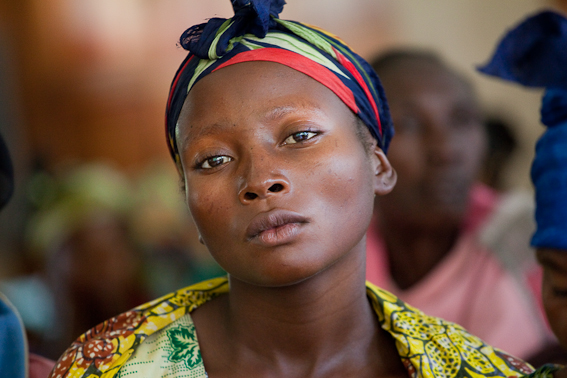
›Rape as a weapon of war is not unique to the Democratic Republic of Congo (DRC), but the scope and degree to which it occurs in this part of the world, especially in the resource-rich eastern provinces – an epicenter of violence during the war – is alarming and unprecedented.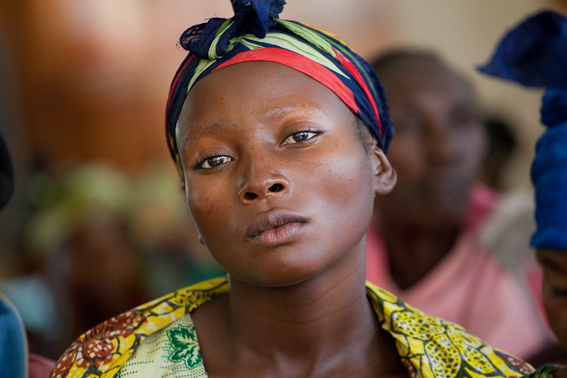
Walikale, the site of a recent scourge of rapes and violence is not unlike several other cities and villages in the Kivus and in the DRC in general. Rich in both tin and gold, Walikale is beset by a convergence of several opposing military factions: the rebel Congrès National pour la Défense du Peuple, (CNDP), whose members have supposedly been reintegrated into the official Congolese army; the FARDC, who have been accused of crimes as egregious as those committed by rebel armies; the Rwandan FDLR; Tutsi rebel factions; and numerous other smaller rebel groups and non-Congolese military groups.
The raping of more than 300 women, children, and men that occurred between July 31 and August 2 in the area of Walikale and the village of Ruvungi has made international news headlines and caused an uproar about the role and responsibilities of the United Nation mission in the DRC – MONUSCO (formerly MONUC) – and their capacity to actually keep the peace. UN peacekeepers, stationed about 30 kilometers away from the attacks, were reportedly aware of rebel activity in the area, but were not aware of the mass raping until after the crimes had been committed. Officials went on a fact-finding mission several days later once the rapes were reported by the International Medical Corps. Some, however, argue that officials should have acted differently, dispatching peacekeepers to the Walikale area as soon as they were made aware of rebel activity.
UN workers and other international organizations may have known about the rapes while they were occurring, and in retrospect the international community can criticize their inaction during the perpetration of this massive atrocity, but there are larger questions that loom: Why has the DRC become the “rape capital of the world?” And what can we do to enable UN peacekeeping forces to actually keep the peace?
More than two months after these crimes were perpetrated, rapes are no doubt still occurring across the region. The UN has declared that militias will be charged for the crimes in Walikale, arrests have already been made, and there are people doing good work to help the victims of sexual crimes after the fact. But despite these efforts and the ongoing presence of MONUSCO and efforts to integrate and train the FARDC as a legitimate army that protects the citizens of the country, sexual violence against civilians, and especially against women, has continued at an outrageous level.
The mandate of MONUSCO, carried over in part from its predecessor, MONUC, is to both protect civilians and backstop the efforts of the FARDC – a sometimes conflicting mandate. Designed to keep the peace and monitor the implementation of the ceasefire agreement, to “facilitate humanitarian assistance and human rights monitoring, with particular attention to vulnerable groups including women, children and demobilized child soldiers” (emphasis added), the UN mission has clearly not been able to successfully fulfill this mandate, even after almost 12 years on the ground. While the UN charter does not explicitly include the word “peacekeeping,” and there are those who argue that it is not properly structured to act as a peacekeeping body, the UN has more than 60 peacekeeping missions under its belt since its first mission in 1948 and the DRC is its largest ever. Still, the weak record of success of MONUC and of its successor MONUSCO together with the unreliability of the FARDC does not inspire confidence for the safety or security of civilians in the DRC.
Why the rapes continue and why neither MONUSCO nor the Congolese authorities are unable to stop them are complicated questions. Explanations range from political complications preventing peacekeepers from becoming involved in day-to-day human security to a simple lack of mission resources. The rapes in Walikale occurred in an area with abundant tin deposits and some of the largest gold mines in the country. The DRC, and the east in particular, is ripe with resources, and historically, underdeveloped regions characterized by such a heavy concentration of natural resources are often more cursed than they are blessed. The competition over resources and violence spurred by an unequal distribution of rents is perhaps part of the reason for such intense violence; it does not, however, explain why rape has become a weapon of choice, why women have become a target of war crimes in general, or why the level of violence against women in the DRC in particular has risen to such a horrifying level.
Justine Lindemann is program assistant with the Africa Program at the Woodrow Wilson Center.
Sources: AFP, AFRICOM, AllAfrica, BBC, Congo Siasa, IPS News, The New York Times, Panzi Hospital of Bukavu, UN, UN Office of the High Commissioner for Human Rights, VII Photo Agency.
Photo Credit: “Congo kivu,” courtesy of flickr user andré thiel. -
Watch: Population, Health, and Environment in Ethiopia
›Severely eroded and deforested, Ethiopia’s land is increasingly turning to desert, due to the country’s high population growth, unsustainable land use, and lack of land ownership. Featuring footage from my trip to Ethiopia last year, this video looks at the efforts of two projects to combat these devastating trends by meeting the country’s complex challenges with integrated solutions.
Ethiopia’s population is estimated at 85 million. Since 1900, the country has grown by nearly 74 million people, and the United Nations predicts this rapid growth will continue, reaching nearly 120 million people by 2025.
“Family planning is very crucial” to sustainable development, said Gebrehiwot Hailu of the Relief Society of Tigray (REST), located in the northern region of Tigray. “If the family has more children… he can’t feed them properly, he can’t send the children to school, because there is a food gap in the household.” REST uses a watershed planning model jointly developed by the community, health workers, and government agencies.
Realizing there is no silver bullet to development, projects like REST integrate population, health, and environment (PHE) programs to engage these challenges from all angles.
The Ethio Wetlands and Natural Resource Association (EWNRA), located in Ethiopia’s Wichi watershed, uses a combination of techniques to restore the watershed, create alternative livelihoods, strengthen health systems, and improve reproductive health.
“Through this integrated watershed intervention, the wetland is regaining its natural situation,” Shewaye Deribe of EWNRA told me. “The communities with their own bylaws, with their own watershed committee, with their own organization… are protecting these remaining forest patches.”
Sources: Population Reference Bureau. -
UNFPA State of World Population 2010
›Today marks the release of the United Nations Population Fund (UNFPA) annual State of the World Population Report. But the 2010 edition, “From Conflict and Crisis to Renewal: Generations of Change,” is unlike those that have come before. In lieu of the traditional statistic-driven report, this year’s edition has enlisted another tool to document living conditions across the world — storytelling. In addition to demographers, the UNFPA looked to journalists to fan out across the world to gather stories on the ground and paint a portrait of the challenges and opportunities facing today’s global population that goes beyond the numbers, with particular focus on gender issues and human insecurity.
For more on the UNFPA report, be sure to listen to The New Security Beat’s interview with one of its authors, Barbara Crossette, who talks about her experiences dealing with family planning around the world, as part of our ongoing Pop Audio series.
Video Credit: UNFPA. -
Assessing Our Impact on the World’s Rivers
› In a special “Rivers in Crisis” issue of Nature, the lead article, “Global Threats to Human Water Security and River Biodiversity,” presents damning evidence that manipulation of river systems — through the construction of canals, levees, hydroelectric projects, and other infrastructure — has caused serious and lasting biological damage to watersheds throughout both the developing and developed worlds. The authors (all 11 of them!) report that key rivers have become shadows of their former selves in terms of the amount of aquatic life they can support. Without drastically improved stewardship of waterways, “we are pushing these river systems toward catastrophe,” warns Peter McIntyre, an article co-author.The human impact on the world’s river systems will be hard to reverse, says Margaret Palmer, author of a second Nature article on freshwater biodiversity loss, “Beyond Infrastructure.” Human-induced changes to watersheds affect local hydrology at a fundamental level, she contends, weakening rivers’ ability to deliver crucial “ecological goods and services” — such as clean water and nutrient-rich sediment loads — that help maintain the health of local environments and the human populations that depend on them. To fully understand the scope of the problem, Palmer says more research is needed to explore the linkages between biodiversity levels and “ecosystem services” that healthy rivers provide.
 -
Barbara Crossette on UNFPA State of the World Population 2010 Report
›“Particularly when you go into a society that’s been broken by war or conflict or is so impoverished that is has nowhere to start climbing up, there have to be integrated programs and they have to work with people in mind,” said former New York Times foreign correspondent Barbara Crossette in an interview with The New Security Beat. “The people themselves will solve a lot of the problems around them if they’re just given the tools to do so.”
Crossette is one of the lead authors of the UN Population Fund’s latest State of the World Population Report, “From Conflict and Crisis to Renewal: Generations of Change,” set to launch this Wednesday, October 20th. She spoke to us particularly about the challenges of women around the world and the unique storytelling aspect of this year’s report.
The “Pop Audio” series offers brief clips from ECSP’s conversations with experts around the world, sharing analysis and promoting dialogue on population-related issues. Also available on iTunes. -
Laurie Mazur at SEJ 2010 on ‘A Pivotal Moment: Population, Justice, and the Environmental Challenge’
›“Right now, half the world’s population – some 3 billion people – are under the age of 25,” began Laurie Mazur on the “Population, Climate, and Consumption” panel at the Society for Environmental Journalists 20th Annual Conference. “It’s the largest generation ever that’s coming of age, and the choices that those young men and women make about childbearing will determine whether world population…grows to anywhere between 8 and 11 billion by the middle of this century.”
“The good news is that everything we need to do to slow population growth is something we should be doing anyway,” she continued. Mazur is the author of A Pivotal Moment: Population, Justice, and the Environmental Challenge and director of the Population Justice Project.
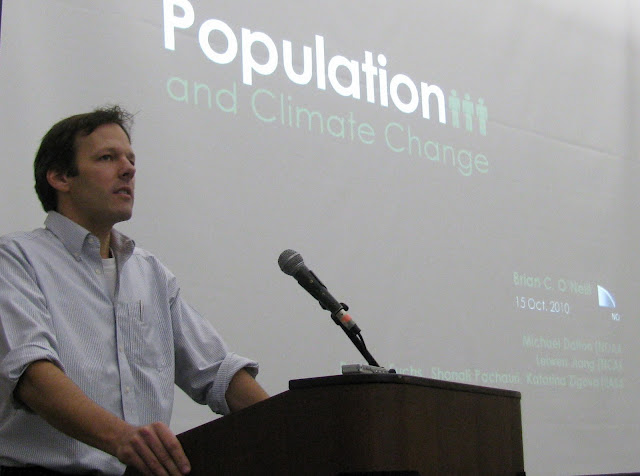
She was joined on the panel by Brian O’Neill, who spoke about a new study examining the impact of demographics on carbon emissions, and Jack Liu, who spoke about the impact of household size on emissions in China.
The “Pop Audio” series offers brief clips from ECSP’s conversations with experts around the world, sharing analysis and promoting dialogue on population-related issues. Also available on iTunes. -
New Study Finds Lower Population Growth Could Cut Carbon Emissions
›A new study, “Global Demographic Trends and Future Carbon Emissions,” finds that slowing population growth by 2050 would meet 16-29 percent of the reductions in carbon emissions necessary to avoid dangerous climate change — roughly equivalent to 1-1.5 “stabilization wedges.” Published in PNAS this week, the article reports the results of a comprehensive assessment, led by Brian O’Neill of the National Center for Atmospheric Research (NCAR), of the impact of demographic changes, including urbanization and aging, on global carbon emissions.
The authors conclude that policies designed to meet the substantial unmet need for family planning and reproductive health services, particularly in the United States and developing countries, would lead to emission reductions that amount to about one-half of a wedge. These results suggest that “family planning policies would have a substantial environmental cobenefit,” they write.
O’Neill will discuss the study’s results and recommendations on Friday morning at the annual Society of Environmental Journalists’ conference in Missoula, MT. The panel, “Population, Climate, and Consumption,” which I helped organize, will be moderated by Ken Weiss of the Los Angeles Times. Weiss wrote on the Times’ Greenspace blog that “the study offers a novel way to quantify how changes in human population influence the buildup of greenhouse gases in the atmosphere.”
To tease out the complex connections between climate, population, and consumption, O’Neill and his coauthors looked beyond population size to delve into household location and composition. They found that urbanization and aging trends will have differential–and potentially offsetting–impacts on carbon emissions.
Aging, particularly in industrialized countries, will reduce carbon emissions by up to 20 percent in the long term. On the other hand, urbanization, particularly in developing countries could increase emissions by 25 percent.
The Taboo Against Mixing Condoms and Climate
Most coverage to date, including the widely distributed press release from the National Science Foundation, overlooked the study’s recommendations to increase access to family planning and meet unmet need for contraception as a climate mitigation strategy.
Unfortunately, that’s the case in many venues: “You don’t see policymakers talking about in the climate negotiations,” climate scientist Richard Somerville told Weiss. Family planning has long been off the table–Mother Jones recently called it “The Last Taboo” – especially at the big climate conferences. At Copenhagen, it was only discussed at side events; NYT’s Andrew Revkin called it the “missing ‘P’ word.“
One of this year’s panelists, Laurie Mazur, who last year published, A Pivotal Moment: Population, Justice and the Environmental Challenge, will likely explore the environmental cobenefits of improving women’s reproductive health. In addition to mitigation, some developing countries have identified family planning as a strategy in their national climate adaptation plans.
Growth Story: Population at SEJ
Friday’s panel is the only one to consider population’s role in environmental issues at this year’s SEJ conference, the premier event for U.S. environmental journalists. Given the issue’s historic marginalization within environmental community, that’s not necessarily surprising.
But there appears to be a growing interest among reporters: last year’s SEJ panel on population moderated by Tim Wheeler of The Baltimore Sun drew a standing-room-only crowd, following a popular 2008 SEJ panel on the topic moderated by Steve Curwood of Living on Earth.
More surprisingly, Friday’s panel is one of less than a handful at this year’s conference to address international environmental issues. I hope next year’s conference in Miami will draw on that city’s vibrant immigrant community and short flights to Latin America and the Caribbean to bring in more international flavor.
Sources: DotEarth, Greenspace, National Science Foundation, Population Action International, UNFPA. -
Youth on Fire at UN Climate Talks in Tianjin
›For the past week, as part of the Adopt a Negotiator program, I got the chance to observe many of the negotiations of the latest UN Framework Convention on Climate Change (UNFCCC) intersessional meeting that took place in Tianjin, China. In many ways it was rather humdrum. I observed as negotiators debated changing agendas and the mandate of contact groups rather than the issues themselves, and made many of the same, tired position speeches again and gain.
When controversial issues did rise to the fore, they felt like more of the same old, same old: arguments between China and the United States about who is doing more to stall the talks and who should make legally binding emissions cuts; developed countries carving enormous loopholes into the LULUCF; the greenhouse gas inventory sector covering emissions and removals of greenhouse gases resulting from land use. But the dry nature of the talks concealed the more important truth – that the negotiators are not just discussing acronyms, but human lives, which could be catastrophically altered due to the effects of climate change.
The Adopt a Negotiator program is supported by the Global Campaign for Climate Action, a group of young people from countries around the world who come to the UNFCCC meetings to track the delegations from their own countries and share what is happening at the negotiations through social networking tools (be sure to check out our blogs).
If the UN climate talks fail, and if countries cannot muster the political will to make substantial economy-wide changes and greenhouse gas emissions continue unabated, the results for the poorest and most vulnerable people on the planet will be catastrophic.
Last week was the first time that I have ever experienced any kind of UN negotiation first hand, and some of what I saw was incredibly depressing. Mitigation efforts are especially in danger, as disagreements primarily between the United States and China about who should agree to emissions cuts and international reporting and verification requirements sharpened and intensified.
But there were many bright spots as well. Negotiators are very close to making the final decisions about an international architecture for technology transfer to help the most vulnerable and poorest countries adapt to the effects of climate change and mitigate greenhouse gas emissions. They also spent the week narrowing and refining draft text with regards to climate finance and an international architecture to disburse “Green Funds,” and hopefully will be able to make final decisions at COP-16 in Cancun this November 29th through December 10th. These steps are small examples of potential good news for the people who will suffer, and are most likely already suffering, from climate change’s global impacts.
Unfortunately, negotiators are already in agreement that the only bright spots that we are likely to see at COP-16 are small items such as these. Almost no one believes that there is any chance that countries will agree on a final, legally binding text to reduce carbon emissions, and negotiators have instead pushed off this decision until the next Conference of the Parties (COP) in South Africa in 2011. Instead, the near-universal buzz at the conference was about a “balanced package.” Although the phrase in reality means something slightly different to everyone who uses it, it is generally understood to refer to a set of decisions on issues like climate finance, technology transfer, initiatives to cut back on deforestation, and putting some of the decisions made under the Copenhagen Accord into legally binding text, like “fast start” finance measures to the developing world.
In many ways the Tianjin session was itself a “balanced package” – a set of interactions and experiences that was both deeply discouraging and incredibly uplifting. One of the personally uplifting moments for me was having the honor of delivering a short intervention on the first day of the opening plenary on behalf of youth NGOs around the world (known as YOUNGOs). In the words I read, which had been drafted by a group of Chinese youth, all the particulars of policy were stripped away and the only thing that remained was the frustration – and also the hopes – of young people around the world (those who will actually experience the effects of climate change well within their lifetimes if UNFCCC negotiators don’t work harder to reach a consensus).
Through the disappointments of Copenhagen to the slow-moving intersessionals throughout this year, many pundits have cynically declared the UNFCCC process dead. This is certainly not the case. But if they are truly serious about saving the planet from climate change’s most serious impacts, negotiators will certainly have to work harder in Cancun.
Alex Stark is a Program Assistant at the Friends Committee on National Legislation, working on the Peaceful Prevention of Deadly Conflict Program. She attended the Tianjin negotiations as part of the Adopt a Negotiator team.
Photo Credit: Adapted from “COP11_lo,” courtesy of Neil Palmer and flickr user CIAT – International Center for Tropical Agricultu.