Showing posts from category *Blog Columns.
-
From Cancun: Getting a Climate Green Fund
›Over 9,000 negotiators from 184 countries have gathered for the 16th Conference of the Parties of the UN Framework Convention on Climate Change (UNFCCC), known as COP-16, in Cancun, Mexico. No one expects a binding emissions reduction agreement, but a successful outcome on a set of decisions here – the so-called “balanced package” – will help build trust among countries and make progress towards a final emissions agreement next year.
One of the most important parts of the package is agreement on the creation of a green climate fund – an international fund designed to help developing countries adapt to and mitigate the effects of climate change.
If the negotiations are as successful, as expected, the fund will be part of a package that also includes the architecture for an adaptation body, technology transfer, REDD-plus, and progress towards a binding international mitigation agreement that negotiators hope to conclude at COP-17 in Durban, South Africa.
An event Monday morning co-hosted by Oxfam and the Global Campaign for Climate Action, featured a variety of developed and developing country perspectives about what a new fund for mitigation and adaptation programs should look like.
The event was galvanized by a letter, currently being circulated here at the talks, signed by 215 civil society organizations and calling for “the establishment of a fair global climate fund at COP-16 that will meet the needs and interests and protect the rights of the most vulnerable communities and people around the world.” In opening comments and a question-and-answer session, panelists articulated some of the most contentious points that negotiators are currently discussing, some of the reasons why a green fund is so important, and the implications for global equity, sustainable development, and international security.
A main point under discussion right now is how the fund will be governed. The United States and other developed countries argue that the fund should work under the supervision of the UNFCCC but international financial institutions, like the World Bank, should also assist in creating the fund.
Judith McGregor, the UK ambassador to Mexico, argued in her opening statement that for the United Kingdom, “climate finance… is a clear, clear priority” at the COP, but that the World Bank would lend the fund legitimacy and make donors more confident in the fund’s ability to deliver. Tim Gore from Oxfam expressed the opinion held by many civil society organizations and delegates from developing countries, that the fund must “act under the authority of the UNFCCC… independent from institutions such as the World Bank,” because a new climate fund should have an equitable governance structure that includes the voices of developing countries, civil society members, indigenous peoples, women, and other stakeholders – not a majority share by the developed countries like at the World Bank.
Another stumbling block is how climate finance will be divided between adaptation and mitigation programs. Gore argued that adaptation and mitigation finance must be balanced 50-50, whereas currently “there is a huge adaptation gap… less than 10 percent of current climate finance is going to adaptation.” Evans Njewa, the lead finance negotiator representing the group of Least Developed Countries (LDCs), noted in his statement that “adaptation is the priority for the LDCs [in Cancun].”
The source of these funds is also a contentious issue that divides developed and developing countries. Under the Copenhagen Accord, most of the COP country parties agreed that developed countries would mobilize $30 billion in fast start finance by 2012 and $100 billion per year by 2020 in climate finance from public, private, and other “innovative sources,” such as a carbon tax or cap-and-trade systems. Developed countries like the United States are mobilizing public funds for climate finance but argue that the majority of the $100 billion figure should be provided by private investments and that loans provided by development institutions as well as grants should also count.
Climate finance for adaptation will help make poor, rural communities in particular more resilient to the effects of climate change, including drought, floods and tropical storms, and therefore help the international community to achieve several related development milestones such as the Millennium Development Goals, according to Alzinda Abrea, finance minister of Mozambique.
Cate Owen of the Women’s Environment and Development Organization (WEDO) explained that investing in climate adaptation now “makes good sense” because “investing now in responding to climate change will lessen the long-term costs” to developed country donors.
The message that climate adaptation measures are becoming essential to sustainable development was perhaps delivered most forcefully by Florina Lopez, an indigenous person from Panama, who described the impacts that her people are already suffering as a result of climate change. Since her community survives by fishing, hunting and growing crops, severe flooding is disrupting indigenous ways of life and floods bring assaults on community health, like diarrhea, skin disease, and malnutrition. Community activities that contribute to development such as education and healthcare are also paralyzed by these impacts. Adaptation funding will be essential for her community to survive and to avoid disruptive displacement.
Still, perhaps the most compelling political reason for American taxpayers to invest in climate change adaptation in the developing world is the national security implications of the effects of climate change. A report issued this week by the Center for American Progress and the Alliance for Climate Protection explains why the United States must have a global climate investment strategy, despite adverse economic and political conditions domestically. Adaptation funding will “reduce risks of climate-related national security threats, including from severe floods or droughts in Pakistan and the Middle East” and strengthen our relationships with developing country recipients, including strategically important partners like India, Indonesia, and Brazil, write the authors. Finally, by managing displacement, migration, and violent conflict driven by the effects of climate change, such as water scarcity, climate change adaptation can help bolster international security and stability.
The establishment of a climate green fund here in Cancun is essential for an equitable and balanced international climate deal. A fund is first and foremost the moral imperative of developed countries, known as the Annex-I parties under the UNFCCC, who are historically responsible for greenhouse gas emissions. However, developed countries need not rely on the moral argument to convince policymakers and taxpayers that climate adaptation for the poorest and most vulnerable countries and people is a good investment.
Within the UN process itself, a robust, well-run, equitable green fund would help rebuild the trust lost between developed and developing countries at Copenhagen last year. In Gore’s words, Oxfam is “cautiously optimistic that we can get an agreement here in Cancun that rebuilds trust between rich and poor countries.”
Alex Stark is a program assistant at the Friends Committee on National Legislation, working on the Peaceful Prevention of Deadly Conflict Program. She is attending the Cancun negotiations as part of the Adopt a Negotiator team.
Sources: Alliance for Climate Protection, British Foreign and Commonwealth Office, Center for American Progress, Global Campaign for Climate, Mozambique Ministry of Planning and Finance, Oxfam, UN Framework Convention on Climate Change, Women’s Environment and Development Organization.
Photo Credit: “Will you back a climate fund?,” courtesy of flickr user Oxfam International. -
Hans Rosling Double Feature: ‘The Joy of Stats’ on BBC and Population Growth at TED
›Hans Rosling, creator of Gapminder and professor of international health at Sweden’s Karolinska Institute, hosts a new documentary on the BBC called The Joy of Stats that takes a look at the breadth and depth of data available today to analysts and private citizens alike.
In the clip above, Rosling demonstrates his primary interest in world health, tracking life expectancy and income over the last 200 years to show both the remarkable progress that has been made but also the tremendous gap that remains between those at the top (the very rich and healthy) and those at the bottom (the very poor and sick).
Rosling has been a vocal (and visual) advocate for expanding people’s knowledge of the world by presenting statistics in innovative ways. “Statistics should be the intellectual sidewalks of a society, and people should be able to build businesses and operate on the side of them,” he said at a discussion at the Wilson Center in May 2009.
In particular, Rosling’s focus has been on health, poverty, and the developing world, where he’s advocated for increased focus on child and maternal health and education. “The role of the old West in the new world is to become the foundation of the modern world – nothing more, nothing less,” he said during a TED talk on population growth (see below) where he broke from his more flashy visuals and went analog – using IKEA boxes to illustrate population and consumption growth. “But it’s a very important role. Do it well and get used to it.”
Rosling’s Gapminder software has been incorporated into Google’s Public Data Explorer, where many development indicators from the World Bank, World Health Organization, and others can now be easily tracked by anyone. For more on Google Data and to see an example set of indicators (agriculture as a percentage of GDP vs. fertility rates over the last 50 years), check out this previous Eye On, on The New Security Beat.
Video Credit: “Hans Rosling’s 200 Countries, 200 Years, 4 Minutes – The Joy of Stats – BBC Four,” courtesy of BBC, via YouTube, and “Hans Rosling on global population growth,” courtesy of TED. -
From Cancun: Roger-Mark De Souza on Women and Integrated Climate Adaptation Strategies
› “When you look at the negative impacts of climate change, the impacts on the poor and the vulnerable – particularly women – increase, so investing in programs that put women at the center is critical,” said Roger-Mark De Souza, vice president of research and director of the climate program at Population Action International (PAI), speaking to ECSP from the UN Climate Change Conference in Cancun, Mexico. “There are a number of missed opportunities here in Cancun and in climate change deliberations overall that are not including women and are missing an opportunity to have a bigger bang for the buck, or power for the peso, as we say in Mexico.”
PAI hosted a side session with five panelists from Denmark, Ethiopia, Kenya, Suriname, and Uganda on “Healthy Women, Healthy Planet: Women’s Empowerment, Family Planning, and Resilience.” The session attracted more than 100 attendees and prompted incisive, informative questions, said De Souza.
“There was a call for additional research that is policy relevant that identifies some of the key entry points and added benefits at a country level,” said De Souza. “And there is a very strong call for youth partnerships from a number of youth advocates who are looking at medical and public health interventions and are desirous of including reproductive health programming as part of that.”
“One concrete next step for Cancun is to work with other civil society partners who are here who are tracking how gender is being integrated into the negotiating language, particularly with regard to financing mechanisms,” De Souza said.
Besides financing and the need for more research, De Souza said the key issues that emerged from the panel were: the importance of linking programs of different scales; ensuring women’s empowerment and ownership; and recognizing and replicating effective partnerships.
For more from Roger-Mark De Souza, see ECSP Focus Issue 19, “The Integration Imperative: How to Improve Development Programs by Linking Population, Health, and Environment.”
The “Pop Audio” series is also available as podcasts on iTunes. -
Top 10 Posts for November 2010
›Matthew Erdman’s report on PHE programing in Madagascar, Jennifer Sciubba’s response to the “aging” media blitz, a series on Nigeria’s cloudy future, and John Bongaart’s Pop Audio topped the list last month:
1. The Beat on the Ground: Toliara, Madagascar
Matthew Erdman Reports on Blue Ventures’ Integrated PHE Initiative
2. On the Beat: Where Have all the Malthusians Gone?
3. Nigeria’s Future Clouded by Oil, Climate Change, and Scarcity: Part One, The Delta
4. Pop Audio: John Bongaarts on the Impacts of Demographic Change in the Developing World
5. India’s Maoists: South Asia’s “Other” Insurgency
6. Guest Contributor Kavita Ramdas: What’s Good for Women Is Good for the Planet
7. Restrepo: Inside Afghanistan’s Korengal Valley
8. DRC’s Conflict Minerals: Can U.S. Law Impact the Violence?
9. Nigeria’s Future Clouded by Oil, Climate Change, and Scarcity: Part Two, The Sahel
10. The Ultimate Weapon Is No Weapon: Human Security and the New Rules of War and Peace -
Developing a Blueprint for Addressing Glacier Melt in the Region
Changing Glaciers and Hydrology in Asia
›“Glacier melt is part of larger hydrologic and climate systems, so effective programs will be cross-sectoral and yield co-benefits,” said Elizabeth L. Malone, senior research scientist at the Joint Global Change Research Institute and Pacific Northwest National Laboratory, speaking at the Wilson Center on November 16. “Looking more closely at glacier melt, we come to understand that upstream actions and choices have a potentially huge effect on downstream communities,” added Kristina Yarrow, health advisor at the U.S. Agency for International Development’s Asia and Middle East Bureaus.
Malone and Yarrow were joined by Mary Melnyk, senior advisor for natural resource management at USAID’s Asia and Middle East Bureaus, to discuss the agency’s new report, “Changing Glaciers and Hydrology in Asia: Addressing Vulnerabilities to Glacier Melt Impacts,” prepared by Malone in collaboration with CDM International and TRG. “This report is a move towards mainstreaming climate change across the development portfolio to ensure enduring success of our investments,” Melnyk said.
Mainstreaming Climate Change
Providing information about the science, vulnerabilities, and current efforts to respond to environmental change and glacier melt in Asia, the new report also features a number of practical, cross-sectoral approaches to addressing glacial retreat in Asia that, if implemented well, could produce multiple benefits. The report highlights the complexity of the issues surrounding glacier melt in the region, and the critical need to prepare today for future environmental changes.“Climate change in general, and glacier melt specifically, can potentially impact all sectors: economic growth, governance, and health,” Melnyk said. Because there is a lack of scientific knowledge on glacial retreat in Asia and limited financial and human resources to address these issues, it is critical to maximize results through programs that will provide environmental, health, and development co-benefits.
“The challenge is that, in practice, addressing issues of climate change and other environmental security issues still are not a part of the day-to-day business across sectors,” Melnyk said. This report is a first step in the right direction to raise awareness and action on these issues and “although there is uncertainty, we need to move forward – the time to act is now,” she concluded.
Multiple Sectors, Multiple Benefits
“Cross-sector collaboration and programs, when done correctly, can have a much greater impact than when doing a vertical program within a specific sector,” Yarrow said, stressing the importance of multidisciplinary approaches to address environment, health, and development issues. Understanding the health impacts of climate-related environmental change now can help prepare us to address these specific impacts in the future.“On a global scale, there is indeed a relationship between population growth, environmental change, and development,” Yarrow said. In Asia, stress on water resources due to climate change and rapid population growth will likely exacerbate health problems caused by lack of clean water. Proactively expanding and improving programs that address the causes and effects of diarrheal disease and under-nutrition can help address these vulnerabilities and make communities more resilient.
“Finding innovative ways to improve access to and integrate family planning messages and services into climate adaptation programs will also yield some important co-benefits,” Yarrow said. Family planning can slow population growth, which could help reduce projected demand for water supplies, as well as potentially reduce the amount of water pollution.
Yarrow also added that “population growth affects glacier melt indirectly through the consumption of resources that exacerbate black carbon.” Black carbon, which is produced by cooking and heating with biomass fuels, contributes to regional climate change and severe health problems, including respiratory illness and pneumonia. Accompanied by efforts to promote alternative fuels, family planning could reduce black-carbon emissions, significantly improve health, and strengthen community resilience to climate change.
“Though challenging, integrating across sectors is absolutely essential – we’re not experts yet, but we’re definitely getting better,” Yarrow said. “Understanding and addressing the multiple issues like climate change, poor health, poverty, dependence on natural resources, and governance challenges that these communities are dealing with in a comprehensive and holistic fashion will improve results.”
Responding to Glacier Melt
“We simply do not have the kind of broad-scale knowledge that we would like to have,” Malone said. Current data on glacier melt is scarce and very few direct measurements of glacier volume exist, making calculations of glacier retreat difficult. Moving forward, it is critical to respond to this lack of information by improving regional scientific cooperation on glaciers, snowpack, and water resources in High Asia, and strengthening climate and water monitoring capacity.“Even the smallest amounts of glacier-melt contribution correspond to the regions of the highest population, so any change in water supply has large implications,” Malone said. Glaciers may not be disappearing as fast as had been previously thought, but “climate change is happening in the Himalayas and is having an effect.”
“If systems – both human and ecological – are already stressed, they are less able to be resilient in the face of changes. But the good news is that we can take actions now that will be crucially important to how societies can respond in the future,” Malone said.
Implementing cross-sector projects can help to target places where environmental, economic, health, and even security issues overlap. Focusing on water resource management, ecosystems, and the needs of high-mountain communities, as well as mitigating climate change by reducing emissions of black carbon, can help reduce both direct and indirect vulnerabilities and improve resilience to future changes.
“The results of this report allow USAID and others to grasp the complexity of these issues, understand the critical gaps, and to respond to the changes in the glaciers to come,” Melnyk said. The next step is applying the knowledge gathered in the report to practitioners in the field and in policy discussions.
“A crucial role USAID can play is to link partners in the government and private sectors to build capacity and spark synergies among new initiatives to really integrate new initiatives with concerns about glacier melt,” Malone concluded.
Photo Credit: “Nepal Sagamartha Trek,” courtesy of flickr user mckaysavage. -
Watch: Blue Ventures PHE Program in Madagascar
›“All conservation efforts will be in vain if family planning issues aren’t addressed,” says Rebecca Hill, project manager for the Sexual and Reproductive Health Programme at Blue Ventures in a video highlighting their population, health, and environment (PHE) programming in Madagascar.
While primarily a marine conservation group, Blue Ventures also recognizes the need for integrating population into their efforts. They began a family planning program in southwestern Madagascar in 2008 as part of a “holistic approach to conservation.” The project aims to address the high unmet need for family planning, high fertility and maternal and infant mortality, and conserve the coastal environment. “We are directly saving lives,” Hill says.
Rapid population growth is creating an unsustainable strain on natural resources, as Matthew Erdman of Blue Ventures wrote in a previous post on The New Security Beat:The average total fertility rate in Velondriake is 6.7 children per woman, according to our data. On average women are only 15 years old when they first conceive. To compound this problem, a majority of the population is under the age of 15 – at or approaching reproductive age. At the current growth rate, the local population will double in only 10 to 15 years. The local food sources, already heavily depleted, barely feed the current population, let alone twice that amount. Without enabling these coastal communities to stabilize their population growth, efforts to improve the state of marine resources and the community’s food security are considerably hindered.
Hill describes the situation in the village when she joined the Blue Ventures in 2008 as “alarming,” with women “having up to 17 children despite not wanting children.” Many people in the town had never heard of condoms and had no idea how to use them, she said, and “they are desperate to have access to contraception.”
Today, the initial family planning program has been scaled up to the surrounding region and generated significant community involvement by peer educators teaching community members about sexual and reproductive health. It’s also become the first PHE project to receive support from the UNFPA within Madagascar.
There are currently 18 community-based distributors who give out two types of contraception in their villages. The fact that the community has so fully embraced the project shows that it can be replicated elsewhere, says Hill in the video. “Communities themselves have harnessed the ideas and consider that what we’re doing is vitally important.”
“Addressing family planning needs and issues is inextricably linked with conservation issues,” says Hill. “All conservation efforts will be in vain, if family planning issues are not addressed.”
Video Credit: Blue Ventures Family Planning Project from Alexander Goodman on Vimeo. -
Robert Walker on Family Planning Promotion and Global Population Growth
›“Expanding voluntary family planning access and ensuring that all women have access to reproductive health services is, to me at least, a no brainer,” said the Population Institute’s Robert Walker in this interview with ECSP. “I think it’s a win for women, for their health, for their welfare, the welfare of their families, for their communities, for the environment, and for the planet at large.”
While China and India dominate much of the global headlines about population growth, other parts of South Asia – namely Afghanistan and Pakistan – and sub-Saharan Africa receive comparatively little attention. For Walker, a renewed global effort to boost the quality and quantity of reproductive healthcare tools and services in these areas of the developing world is essential.
“This is very, very doable. We face a lot of really incredible challenges in the world today, particularly with respect to food, energy, water, and poverty. But if we can increase what we spend on international family planning assistance by three or four billion dollars a year, we can literally change the world,” Walker said. “And I think we desperately need to.”
The “Pop Audio” series is also available as podcasts on iTunes. -
What’s Good for Women Is Good for the Planet
›Ammi, my mother-in-law, was 16 years old when her marriage was arranged. Before she was 18, she had borne her first child, who died within the year, and by 30, she had given birth to six more. She had a fourth-grade education, and like other women in the new state of Pakistan, she knew little about contraceptive choices.
More than 50 years later, contraception still remains inaccessible for millions of women in Pakistan, such as Rani, the young woman who cleans Ammi’s Karachi home. Illiterate and married off to a cousin at age 15, Rani already has three children, and, like the majority of married Pakistani women who have never used modern contraception, will most likely have at least one more.Giving women the ability to determine whether and when to become pregnant is fundamental to the realization of their basic human rights. It is also a proven health and development strategy, substantially reducing maternal and infant mortality by allowing women to space their pregnancies. And now, for the first time, two studies offer compelling evidence that it has another benefit: What is good for women is also good for our planet.
These groundbreaking studies have rigorously quantified the effect on the environment of helping women and girls control their reproductive destinies. The studies – “The World Population Prospects and Unmet Need for Family Planning,” by the Futures Group, and, “Global Demographic Trends and Future Carbon Emissions,” by the National Center for Atmospheric Research and the International Institute for Applied Systems Analysis – demonstrate that giving women and girls access to contraception offers a precious co-benefit: a substantial reduction in carbon emissions.
The logic is simple: When women have the power to plan their families, populations grow more slowly, as do greenhouse gas emissions. The cost of providing these needed family planning services worldwide is minimal compared with other development and emissions reductions strategies – roughly $3.7 billion per year.
More than 200 million women in the United States and developing countries are sexually active and do not want to become pregnant, yet are not using modern contraception. The results are staggering: One in four births worldwide is unplanned, leading to 42 million abortions each year (half of them clandestine) and 68,000 women’s deaths.
Moreover, the large number of women who become pregnant when they do not want to is a significant source of population growth. Read in tandem, the studies show that a reduction of 8-15 percent of essential carbon emissions can be obtained simply by providing modern contraception to all women who want it. This reduction would be equivalent to stopping all deforestation or increasing the world’s use of wind power 40-fold. Although this is just one piece of the emissions reduction puzzle, it is a substantial piece.
The world is now facing multi-layered challenges of economic distress, rising inequality, and environmental devastation caused by climate change. International climate negotiations have repeatedly stalled as powerful nations play the blame game and block progress. Meanwhile, a series of severe weather events has buffeted the earth from Moscow to Iowa to Pakistan, each one hitting women and children hardest. This is the reality that rich nations must reckon with – and commit to changing – today.
In my 14 years at the Global Fund for Women, I have observed the wave of change that comes from empowering women – what some call the “girl effect.” Making information, education, and contraception easily available offers us an affordable, no-regrets strategy that can be implemented now.
Meeting the need for family planning services is not a complex challenge. We know how to provide the commodities, services, and education that women and their families want. There are thousands of programs around the world with successful track records in every conceivable religious, cultural, and political setting.
Investing in family planning has already been proven as an essential strategy to ensure the health, safety, and development of societies. Now we know that it is also an effective way to safely steward Mother Earth through one of her most challenging crises.
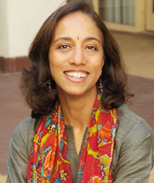
Kavita N. Ramdas is chair of the Expert Working Group of the Aspen Institute’s Global Leaders Council for Reproductive Health and senior adviser and former president and CEO of the Global Fund for Women.
Sources: Futures Group, National Center for Atmospheric Research and the International Institute for Applied Systems, Science, UNFPA, WHO.
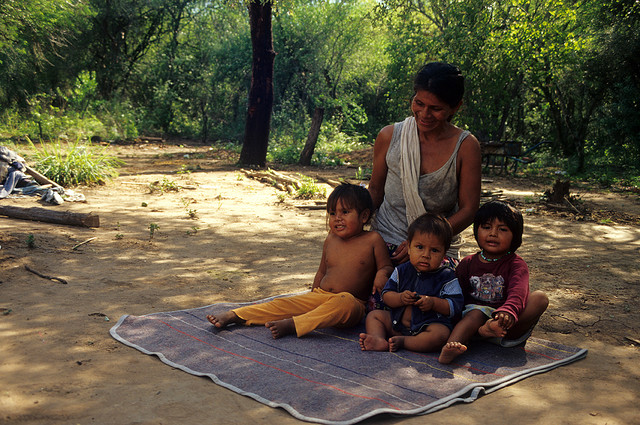
Photo Credit: “Chaco: Madre pilagá,” courtesy of flickr user Ostrosky Photos, and Kavita Ramdas, courtesy of Global Fund for Women.