Showing posts from category *Blog Columns.
-
Book Review: Envisioning a Broader Context to Security With ‘The Ultimate Weapon is No Weapon’
›The Ultimate Weapon is No Weapon: Human Security and the New Rules of War and Peace, by a career U.S. Army officer, Lieutenant Colonel Shannon Beebe, and Professor Mary Kaldor, director of the Centre for the Study of Global Governance at the London School for Economics, is the product of an intriguing partnership. Despite the fact that their respective professions have often displayed distrust and hostility toward one another, the coauthors’ combined perspectives have created a particularly prescient and non-partisan challenge to the security status quo.
Beebe and Kaldor add to the growing call to re-evaluate existing constructs of “national security” and to reconsider the roles of Western militaries and international aid agencies in the globalized 21st century world. In particular, they emphasize the urgent need for a more nuanced understanding of security that includes humanitarian considerations as an integral component in these institutions’ agendas. This “human security” is the right of all people to livelihoods, clean drinking water, nourishing food, and education and proper health care, in addition to a safe and secure place to live, free from the fear of personal crime and violence.
Such insecurity affects us all even if it does not directly result in open warfare. According to Misha Glenny in his 2009 book, McMafia, it is estimated that 20 percent of the global GDP is generated through criminal activities, which exploit the weak and the vulnerable on a global scale. It is difficult to say what role the traditional Western military can play under situations in which vast networks of tyranny through corruption are rapidly growing.
Historical and General Context
The Ultimate Weapon is No Weapon is a persuasive argument in favor of deconstructing the conventional credo of war that has dominated U.S. military theory since World War II. Beebe and Kaldor argue that the political and financial capital mined from the Greatest Generation significantly influenced the “state-against-state” model of the American military machine, and then helped perpetuate and sustain it. The United States’ Cold War experience reinforced the notion that the goal of security is to defeat a great enemy, preferably in open battle using the best available military hardware.
But, the authors ask, did such displays of military superiority and readiness actually accomplish the strategic goal of maintaining our security in today’s world? Did we perhaps narrow the definition of security too much, and in using the wrong tools, did we worsen the very problems we set out to solve?
Beebe and Kaldor provide ample evidence to suggest we have taken the narrow approach, from NATO’s involvement in Yugoslavia, to the debacle in Somalia, and the current conflicts in Afghanistan and Iraq. The authors are not simply out to criticize the military, but instead suggest that the lines that define nation-states today no longer hold the same power that they once did. Other forces at work, from economic globalization to climate change, must be recognized.
Definitions and Prescriptions for a Changing World
When civilians become targets of violence, their resilience is weakened, write Beebe and Kaldor, for a variety of reasons that are often difficult to ascertain without on-the-ground intelligence. For instance, is violence against civilians intended to provide opportunities for political gain by certain groups, or just cover up criminal behavior intended for monetary gain? In this kind of environment, where does the modern Western military machine fit, and how can international humanitarian institutions be more effective?
Beebe and Kaldor contend that instead of developing strategic operations focused on killing the enemy, the military should be focused instead on creating safe spaces for civilians:A human-security approach would emphasize bottom-up reconstruction of governance and justice systems, local security capabilities, and, of course, addressing poverty, education, and health. It would, as well, have to be part of a more global strategy for dealing with the transnational criminal networks, especially drug networks, that are nourished by and that nourish conflicts (p. 196).
Even if it is not the sole responsibility of the military to provide such resources, the authors argue, failure to recognize the importance of human security or to protect resources will ultimately increase our security risks.
An Unobtainable Utopia or Early Warning?
Undoubtedly, the problems that the authors describe are real; it is time to re-evaluate what kind of world we want to live in and how this might be achieved. What should we do if there is no legitimate state government to negotiate with, and yet there is clearly a violent and deadly situation, such as the 1994 genocide in Rwanda? Would the American people tolerate spending money on a military operation without there being any direct sign of imminent threat or danger to them, and without the ability to declare some sort of traditional military victory? Or would their reaction be the same as Neville Chamberlain’s to Czechoslovakia in 1938, that human security merely describes “a quarrel in a faraway country between people of whom we know nothing?”
The recent intervention in Libya is a case in point. Speaking on Meet the Press recently, Secretary of Defense Gates admitted that the country was of no vital interest to the United States, and instead defended spending money on military air strikes based upon humanitarian grounds. Despite the clear mandate from the UN, NATO, and the Arab League to respond to this human security crisis, there has clearly been little appetite in the United States to lead military interventions in Libya without an obviously defined motive of self-interest.
The difficulty lies in explaining that basic security and instability have grave consequences, even across great distances, and that addressing potential conflicts early prevents the need for making harder choices later on. The U.S. Department of State has tackled that difficult task in the recent Quadrennial Diplomacy and Development Review, which calls for greater focus on human security interventions as a way to avoid or mitigate future military conflicts.
Though a few of the solutions postulated in this book may seem overly idealistic to some, I would argue that Beebe and Kaldor’s ideas represent less a utopian vision than an early warning and plea for change in the years to come. Rather than succumbing to the easy temptation to fear globalization and the world outside our borders, we must learn to engage with and help create a thriving global civil community.
A must-read for a broad range of audiences, The Ultimate Weapon is No Weapon offers a historical and contemporary basis for envisioning a broader context to security and understanding that the “ultimate weapons of the twenty-first century are, in fact, not weapons in the military sense at all” (p. 202).
Tracy Walstrom Briggs is currently the Minerva Associate Chair for Energy and Environmental Security (USAF). She has worked with the Swedish Defense Forces (FOI) and the UN Environment Programme to facilitate more sustainable peacekeeping installations using rapid impact assessment tools. She was also a professor and associate chair for the Graduate Environmental Studies Program at California State University Fullerton.
Sources: HistoryVideos101, McMafia (Glenny), NBC, U.S. Department of Defense.
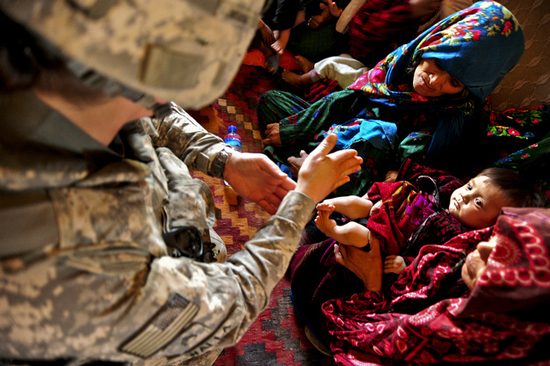
Photo Credit: “3-6 Soldiers Provide Medical Aid,” courtesy of flickr user expertinfantry. -
Working With the Private Sector to Improve Maternal, Newborn, and Child Health
Innovations From Development to Delivery
›“Challenging and dynamic partnerships [with the private sector] are difficult to pull together, but when you look at sustainability, impact, and effectiveness, they can also be great levers of change,” said Kari Stoever, senior advisor for global advocacy at the Global Alliance for Improved Nutrition (GAIN) at the Wilson Center on March 22. [Video Below]
Stoever was joined by panelists Laura McLaughlin, environmental engineer at Cascade Designs, Inc., Hugh Chang, director of special initiatives at the NGO PATH, and Laura Birx, senior food security and nutrition specialist at the U.S. Agency for International Development (USAID) for a discussion of the private sector’s role in developing innovative health technologies to increase access to safe water, prevent infectious diseases, and improve maternal health nutrition.
Collaborating to Provide Safe Water
“NGOs have different strengths and different perspectives from the private sector, and we’ve found an area where we can really complement each other,” said McLaughlin. Cascade Designs, Inc., collaborated with PATH to create a smart electrochlorinator, which produces a chlorine solution to purify water using just salt water and a simple battery, because “we wanted to make a bigger difference than we could do with philanthropy alone,” said McLaughlin.
“Products need to be designed specifically for the end user, particularly for women and children, who are often times left out of the design process,” said McLaughlin. Cascade’s smart electrochlorinator was designed with this in mind. One charged battery can treat up to 40,000 liters of water, 200 liters at a time. The device is easy to use, requires simple resources, is significantly more affordable than existing solutions, and lends itself to an entrepreneurial business model that can deliver safe water to small community households. The current prototype is being field-tested in 10 countries globally, with the aim of providing safe water in resource-poor communities while generating income for local entrepreneurs.
The PATH-Cascade partnership was successful in part because it combined “private-sector expertise in efficiency, cost-effectiveness, and meeting market demands” with knowledge about the health needs in developing countries, said McLaughlin. By “pushing each other to a common end goal, this partnership really multiplied our strengths.”
Engaging the Private Sector
“One of the reasons we work closely with the private sector…is because we recognize an efficiency of resource usage that comes with building bridges between the public sector and the private sector,” said Chang of PATH’s work with Cascade and others. Engaging the private sector to advance health technologies can complement PATH’s goals, like encouraging healthy behaviors and strengthening health systems, he said. “But, we are not averse to profits,” he added, stressing that partnerships with NGOs can be mutually beneficial. “We understand for this to be sustainable, these companies need to make a profit.”
PATH is working with the private sector to develop injection and vaccine technologies that “produce a product that not only benefits the recipient of the vaccine but also produces a revenue stream,” said Chang. The SoloShot, for example, is a low-cost, disposable syringe that locks after a single injection, preventing needle reuse and contamination that can increase the risk of HIV, hepatitis B, and other infections. To address the challenge of maintaining the proper refrigeration of vaccines in low-resource settings, private sector collaboration has helped to develop the vaccine vial monitor (a sticker that changes color when a vaccine has been exposed to too much heat) and to create more stable vaccine formulas that are less vulnerable to extreme temperatures. “By combining innovation with on-the-ground presence,” concluded Chang, “private sector engagement can be a powerful tool for global health.”
A “Win-Win Partnership”
“There is a tremendous role for the private sector to play in the intersection of agriculture and health as they relate to nutrition,” said Birx. Engaging the private sector can be a “win-win partnership,” she said. The Obama Administration’s hunger initiative, Feed the Future, for example, uses the resources, expertise, and innovation of the private sector to encourage sustainable, market-driven approaches to reducing poverty and food insecurity, said Birx.
USAID sees innovation as a “research-to-use continuum,” said Birx. “When we look at innovation, it’s not just about the development of a specific product, but about the entire system that goes around that product,” she added. New technologies must not only respond to a major development challenge in poor and rural communities but need to be affordable, culturally appropriate, gender sensitive, easy to use, and durable.
But solutions don’t have to be complicated. “Often times it’s about a really simple technology that can improve accessibility,” said Birx. The nevirapine pouch, for example, a simple foil packet that allows health care workers to give women single doses of nevirapine syrup, can reduce the risk of mother-to-child transmission of HIV by more than half.
“There’s a lot of excitement, but we need to do some serious work to capitalize on [it],” said Birx. Moving forward, health, development, and private-sector organizations must work together to create innovative financing mechanisms, build institutions in developing countries, and encourage enabling policy environments.
Sources: PATH.
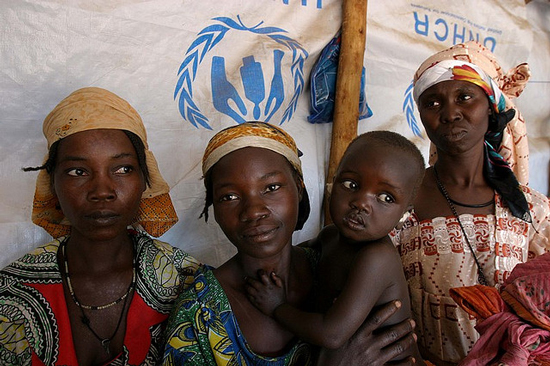
Photo Credit: “Mission to Ouanda Djallé,” courtesy of flickr user hdptcar. -
Tunisia Predicted: Demography and the Probability of Liberal Democracy in the Greater Middle East
›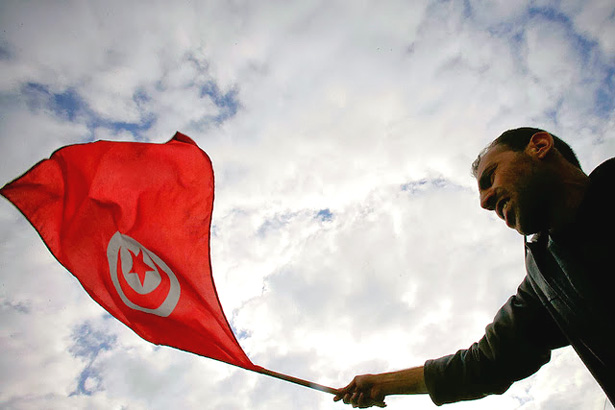
In 2008, demographer Richard Cincotta predicted that between 2010 and 2020 the states along the northern rim of Africa – Morocco, Algeria, Tunisia, Libya, and Egypt – would each reach a demographically measurable point where the presence of at least one liberal democracy (and perhaps two), among the five, would not only be possible, but probable. Recent months have brought possible first steps to validate that prediction. [Video Below]
-
Biofuels: Food, Fuel, and Future?
›The Wilson Center’s Program on America and the Global Economy (PAGE) together with the Brazil Institute, have held a series of conferences focused on the field of biofuels and its impact both internationally and domestically. As part of the series, PAGE has published the results of a conference held last July on the current “state-of-play” for the biofuels industry in the United States.
In the brief, Biofuels: Food, Fuel, and Future?, C. Ford Runge and Robbin S. Johnson, of the University of Minnesota, and Calestous Juma, of Harvard University, provide context on the various federal mandates, subsidies, and policies that affect the U.S. biofuels market. They also present recommendations to improve what is now a not-so-new market, with the aim of reducing damaging effects on food prices and creating more international competition. The brief was edited by PAGE Director Kent H. Hughes and Elizabeth A. Byers.
Read more from PAGE on their blog, America and the Global Economy, and download the full brief and other PAGE publications from their website at the Wilson Center. -
What’s the Link Between Population and Nuclear Energy?
›The popular Big Green Purse blog, written by best-selling author Diane MacEachern, recently asked the Worldwatch Institute’s Robert Engelman, “What’s the Link between Population and Nuclear Energy?” The blog, which encourages women to use the “power of the purse” to improve the environment, wanted to know: “Why aren’t we talking about reducing population as part of our global strategy to minimize dependence on power sources [like nuclear energy] that pollute the environment and threaten people’s health?”
While “reducing population” is not possible, slowing population growth may be, if fertility rates continue to fall. As always, Engelman answered the tough question with thoughtful aplomb, offering three core values as a starting point:One: see the global environmental dilemma not as a problem to be solved but as a predicament to be responded to. We can’t control our future, but we can act with integrity as we aspire to build just societies in an environmentally-sound world. Addressing our numbers can become part of that.
But I’m wondering how the readers of Big Green Purse – which is replete with media-friendly lists like “Top Ten Eco-Tricks” – can translate population and its messy intersection of human rights, health care, and consumption levels into an individual purchasing decision.
Two, embrace human rights as a foundation for our actions. All people – even if too many or consuming too much – have dignity and a right to be here. As it happens, population policies based on the right of all women to choose whether and when to bear a child actually slow the growth of population. …
Three, acknowledge that no one can claim a greater right than anyone else to use energy and natural resources. This is called equity. We cannot object if the poorest people living today and yet to be born succeed in gaining the means to consume as much as Americans do.
As Engelman writes, “The idea that we can easily trim our individual consumption to come into balance with nature – worthy as that effort is – looks increasingly naïve. If people in the developed world slash their per capita greenhouse emissions by half, their effort could be counterbalanced by people in developing countries boosting theirs by just 11 percent.”
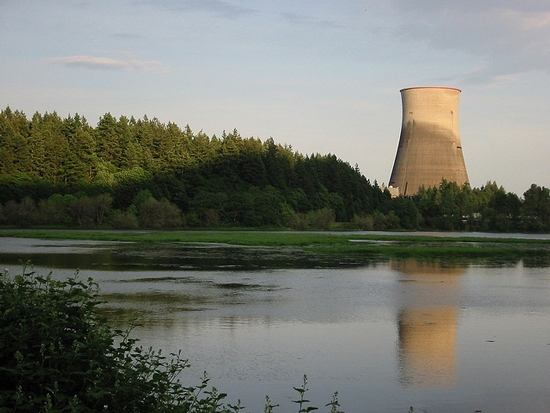
Photo Credit: “Trojan Nuclear Power Plant,” courtesy of flickr user tobo. -
Top 10 Posts for March 2011
›South Asia – from the Mekong to India’s Maoists – was popular last month, along with continuing interest in Tunisia’s demography, the recent rise in staple food prices, and ECSP’s on-the-ground reporting from Ethiopia:
1. Managing the Mekong: Conflict or Compromise?
2. Tunisia’s Shot at Democracy: What Demographics and Recent History Tell Us
3. Eye on Environmental Security: Mapping the Hot Spots of the 2010/11 Food Crisis
4. India’s Maoists: South Asia’s “Other” Insurgency
5. From Ethiopia: The Continuing Challenges of Integrated Development6. Carrying Capacity: Should We Be Aiming to Survive or Flourish?
7. Congressional Report: Avoiding “Water Wars” in Central and South Asia; Scarcity and Stability in Afghanistan and Pakistan
8. DRC’s Conflict Minerals: Can U.S. Law Impact the Violence?
9. Dot-Mom: Celebrating Ordinary Women Doing Extraordinary Things to Improve Gender Equality and Maternal Health Worldwide
10. Guest Contributor Frederick M. Burkle: Reading the QDDR; Civil-Military Interface Still Lacks Operational Clarity -
Forest Conservation Method a Fit for Canada’s Oil Sands?
›In Wednesday’s speech on U.S. energy security, President Obama stated clearly that the United States would continue to rely on oil imports from Canada and other stable nations. But serious environmental concerns continue to dog the Canadian oil sands industry. Could an agreement reached by Canada’s Forest Products Association provide a model for a way forward?
In May 2010, the Canadian Boreal Forest Agreement (CBFA) was signed by 21 members of the Forest Products Association of Canada (FPAC) and nine major environmental groups, including Greenpeace, the Nature Conservancy, and the Pew Charitable Trusts, without government involvement. The three-year agreement represents the largest forest conservation plan in history and protects more than 72 million hectares of Canada’s Boreal Forest. It also ended a long “do not buy” campaign of FPAC products, previously spearheaded by environmental organizations.
The CBFA essentially commits FPAC to the highest environmental standards of forest management and conservation, as well as the suspension of logging in environmentally sensitive areas, in part to protect endangered caribou populations. In return, environmental organizations agreed to support FPAC members.
The oil sands industry faces a similar challenge. In both cases, industry and environmental NGOs have clashed in a long and bitter battle over industry practices and their impact on the environment. The difference is that FPAC realized that directly engaging environmental groups in reasoned discussion might be a more intelligent approach to resolving environmental challenges than shouting back and forth at one another. FPAC also believes that buyers will be attracted to their newfound reputation for sustainable practices and higher ethical standards.
Model Agreements
Oil sands producers have much to gain by engaging the environmental community in new and innovative ways Should the CBFA model be followed, the oil sands industry may be able to negotiate an agreement with environmental organizations and voluntarily agree to higher environmental standards in return for recognition and support of their efforts from key environmental organizations.This wouldn’t be the first initiative where creative engagement between environmental organizations and industry served to mutually benefit both sides. For instance, in 1999, WWF and Unilever created the Marine Stewardship Council (MSC), a program that rewards fisheries employing environmentally sustainable practices by recognizing their efforts through MSC certification and eco-labeling. Member fisheries maintain that MSC labeling has helped them retain existing markets, expand into others, and in some cases obtain a price premium for their product.
Such an initiative would go a long way to allow oil sands producers to shed their damaging reputation for producing “dirty oil.” Even if an agreement could not be reached, the oil sands industry would be viewed at the very least as willing to listen to the concerns of environmental organizations and take such issues seriously.
Not Perfect, But It’s a Start
The CBFA model may not be a perfect fit for the oil sands but it demonstrates that environmental groups and industry can find common ground on extremely contentious issues.
Finding this common ground must begin with accepting that the oil sands will never be “green.” According to a study by the Royal Society of Canada, in 2008, oil sands mining and development operations covered an area roughly the size of the state of Illinois and was responsible for emitting nearly 37 million tons of CO2. The study also found that there are legitimate concerns regarding the impact of oil sands development on the quality and quantity of regional freshwater supplies.
Nevertheless, the oil sands also represent a critical source of stable energy supplies for Canada and the United States, and calls by some environmental NGOs to halt oil sands production are unrealistic. More than 20 percent of U.S. oil is sourced from Canada, making it the United States’ leading supplier, and roughly half of that comes from the oil sands.
A CBFA-style agreement could help oil sands producers secure the U.S. market, which currently takes 99 percent of Canada’s oil exports, by quelling campaigns in the United States to stop imports from the oil sands. And under an agreement similar to the CBFA, the environmental community could have a larger say in how it is developed and extracted
As it stands, both industry and the environmental community remain engaged in a heated war of words, with neither side really listening to the other. Until they are willing to sit down and engage each other in new ways, both groups are likely to continue to talk over one another and make little progress on striking an environmental and economic balance that could ultimately benefit both sides.
Ken Crist is a program associate with the Canada Institute at the Woodrow Wilson International Center for Scholars.
Sources: Sources: The Canadian Boreal Forest Agreement, National Resources Defense Council, The New York Times, Royal Society of Canada, Vancouver Sun.
Photo Credit: “Athabasca oil sands digger,” courtesy of flickr user . Shell, and “Boreal forest 2009,” courtesy of flickr user Gord McKenna. -
The Impact of Environmental Change and Geography on Conflict
›“Environmental Change, Strategic Foresight, and Impacts on Military Power,” published in Parameters by Chad M. Briggs, the Minerva Chair of Energy and Environmental Security at the Air University, USAF, tackles the changing definition of “environmental security” and how the concept can help planners better prepare for the effects of climate change and an elevated focus on energy security. New potentially destabilizing issues like glacial melt, sea-level rise, and Arctic ice melt are on the horizon, writes Briggs. China and others are already planning for these events, and it’s important that the United States does the same, starting with a greater appreciation for the impact of environmental security on vulnerability and risk. “Due to past practices and bureaucratic stovepipes, implementation is limited more by initiative and imagination than actual resources,” he writes.Clionadh Raleigh of Trinity College Dublin and the International Peace Research Institute finds in “Seeing the Forest for the Trees: Does Physical Geography Affect a State’s Conflict Risk?” that a region’s geography does not have a uniform effect on its likelihood of experiencing conflict. Raleigh’s conclusions, published in International Interactions, run counter to traditional histories which often emphasize the importance of physical geography, specifically with regard to civil war and insurgencies. Focusing on the Great Lakes region of Africa, Raleigh finds that other factors – like how populated an area is and its proximity to valuable natural resources – correlate higher with an area’s propensity for violence than any other factor.