-
Women’s Health: Key to Climate Adaptation Strategies
›
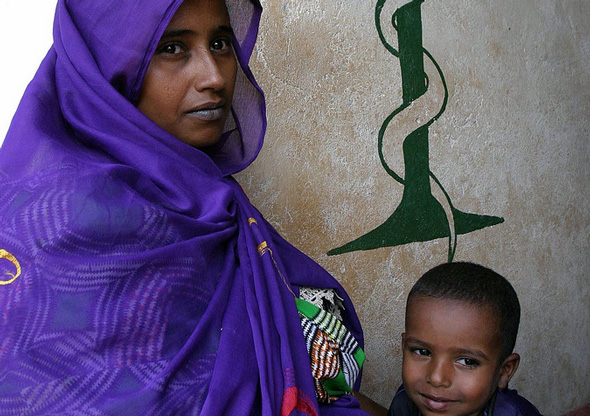
The discussion about family planning and reproductive rights “needs to be in a place where we can talk thoughtfully about the fact that yes, more people on this planet – and we’ve just crossed seven billion – does actually put pressure on the planet. And no, it is not just black women or brown women or Chinese women who create that problem,” said Kavita Ramdas, executive director for programs on social entrepreneurship at Stanford University. [Video Below]
-
Geoff Dabelko on Finding Common Ground Among Conservation, Development, and Security at the 2011 WWF Fuller Symposium
›Bridging the divide between the conservation and security communities “requires that we check some stereotypes at the door,” said ECSP’s Geoff Dabelko at the World Wildlife Fund’s Conservation Forward: Ideas That Work and How Science Can Effect Change symposium. Changes in global climate, as well as environmental threats more local in origin, require us to “find ways to minimize threats [and] maximize opportunities…from the dialogue between these different communities – and get out of our silos to do that,” said Dabelko.
However, this dialogue faces real challenges and concrete trade-offs. “There are big imbalances in terms of the resources that these different communities have,” and this often cuts the conversation short, he said. The conservation and security communities are also orientated towards some very different objectives and toolsets. But “given the levels of stress that our natural systems are under, given the level of dysfunction that are political systems are exhibiting, to me, it suggests that it’s a call for all hands on deck,” asserted Dabelko.
“The relationship between environment, natural resources, and violent conflict” is not the “only part of the story,” he said. Conservation goals can be achieved by preserving biodiversity on military sites and demilitarized zones, and through the Department of Defense’s new focus on reducing energy consumption. In the past, Russian-Norwegian-U.S. cooperation around de-commissioning Soviet-era nuclear submarines protected fragile Arctic habitats, prevented potentially dangerous technology from reaching world markets, and built confidence between recent adversaries. The dual potentials of “peace parks” in fragile and insecure borders across the Middle East have also garnered attention.
Environmental Peacebuilding
“Too often…natural resources are viewed as luxury items – what you worry about once you get rich, democratic, and peaceful,” yet, the environment is an “essential ingredient” for peace, Dabelko said. It is often “key to restoring livelihoods and jump-starting the economy” in conflict affected countries.
“Under a rubric or umbrella that we’re calling ‘environmental peacebuilding’ we have systematic efforts to…break those links with conflict,” he said. The future “concern is that because of environmental change, growth in population, growth in consumption,” and rampant inequities, climate change will act as a “threat multiplier.” “A risk analysis frame” is required to think through not only the risk of failing to act but also the risk of acting in ways that have the potential to create conflict if done poorly.
“We’re talking about changing access to resources and introducing money into uncertain political contexts – who gets it for what. That can be done well and that can be done poorly, and if you are talking to the folks in the conflict community, that’s often an inflection point for when conflict is a potential,” Dabelko said. In the context of potentially troublesome adaptations such as biofuel production, hydropower projects, and REDD+, this means taking seriously the well-worn, but apt, mantra of “do no harm” and working to maximize the “triple bottom line” of development, peace, and climate stability.
A question and answer period, moderated by USAID’s Cynthia Gill, followed the presentation with fellow speakers Anne Salomon of Fraser University, Michael Jenkins of Forest Trends, and Martin Palmer from the Alliance of Religions and Conservation (available below). -
International Research Institute for Climate and Society
Ethiopia Provides Model for Improving Climate, Other Data Services in Africa
›The original version of this article appeared on the International Research Institute for Climate and Society (IRI).
In developed countries, we are accustomed to having access to long and detailed records on weather and climate conditions, demographics, disease incidence, and many other types of data. Decisionmakers use this information for a variety of societal benefits: they spot trends, fine-tune public health systems, and optimize crop yields, for example. Researchers use it to test hypotheses, make forecasts, and tweak projections from computer models. What’s more, much of these data are just a mouse click away, for anyone to access for free (see examples for climate and health).
Across much of Africa, however, it’s a different story. By most measures, Africa is the most “data poor” region in the world. Wars and revolutions, natural and manmade disasters, extreme poverty, and unmaintained infrastructure, have left massive gaps in socioeconomic and environmental data sets. Reliable records of temperature, rainfall, and other climate variables are scarce or nonexistent. If they do exist, they’re usually deemed as proprietary and users must pay to get access. This is not an inconsequential matter. Without readily available, reliable data, policy makers’ ability to make smart, well-informed decisions is hobbled.
The problem of data access persisted even in Ethiopia, regarded as having one of the better meteorological services on the continent. Thanks to the recent efforts of Tufa Dinku, a climate scientist at the International Research Institute for Climate and Society, the situation has improved considerably.
Continue reading on IRI.
Video Credit: Overview of Ethiopia Climate Maprooms, courtesy of IRI. -
Reaching Out to Environmentalists About Population Growth and Family Planning
›“Promoting women’s empowerment is an effective strategy for looking at climate and the environment but also is important in its own right,” said the Sierra Club’s Kim Lovell at the Wilson Center on February 22. “Increasing access to family planning for women around the world is a climate adaptation and climate mitigation solution.” [Video Below]Drawing on research by Brian O’Neill (National Center for Atmospheric Research) and others Lovell explained that meeting the unmet need for family planning around the world could provide up to 16 to 29 percent of the emissions reductions required by 2050 in order to avoid more than two degrees of warming (the target set by nations to prevent the most damaging effects of climate change).
For environmentalists and those concerned with climate change, “sometimes the idea has been that population is toxic, that we can’t talk about population growth,” said Nancy Belden of Belden Russonello and Stewart Consulting, but the results of a recent survey and several focus groups conducted in association with Americans for UNFPA demonstrate that there is great potential for engaging the environmental community in such a discussion.
Belden and Lovell were joined by Kate Sheppard from Mother Jones to discuss how the population and environment communities can come together in the lead-up to the Rio+20 UN sustainable development conference.
Besides providing a basic health commodity, empowering women through access to family planning also improves adaptation outcomes, said Lovell. “Climate change is already happening and women and families around the world are suffering from the effects of water scarcity [and] of erratic weather patterns,” she said. But “when women have the ability to plan their family size and have more choices about their families and about their reproductive health and rights, that makes it easier to adapt to those climate change effects that are already taking place.”
Resonating With Environmental Priorities
“The people who really care about the environment are generally the same people who care about access to contraception and birth control and family planning…they’re a ready audience to hear about these connections and they’re a ready audience to take action about them,” said Kate Sheppard. Reproductive rights issues are something that people can really connect with, she said; “most women, most men too…understand why it’s an important issue and they’ve understood it in their own life and they have [a] very strong response to it.”
When we approach the linkages between environment and population, said Sheppard, it is important to recognize the role of empowering language – language about access to services, education, and resources for women.
The aim of the Americans for UNFPA survey was to find out whether environmentalists can be engaged in discussions of population issues such as family planning and international voluntary contraception, and if so, how?
The results show that “environmentalists are ready to talk about population, they’re ready to listen – it’s not toxic,” said Belden. She outlined three key findings:
First, environmentalists prioritize the environment but they also give a high priority to empowering women, said Belden. “Population pressures are seen as an environmental problem…they don’t dismiss it,” yet the “strongest framework that we could come up with…for engaging people on the issues around voluntary family planning and contraception focuses on women.”
Second, the environmental community is relatively optimistic about the potential outcomes of family planning programs and of foreign aid in general. When queried, half of the environmentalists strongly supported the idea of U.S. contributions to UN programs that provide voluntary access to contraception in developing countries, said Belden.
When asked to mark their top priority among a list of possible outcomes of providing voluntary access to contraception, 47 percent of the environmentalists selected either “improving living conditions for women and their families” or “ensuring women have options and can make reproductive decisions” as their top priority. While a significant number are also concerned about stalling population growth, this integrative focus on improving the lives of women and their families is heartening, said Belden.
In the Run-Up to Rio+20, More Than Pop
One point that all three speakers stressed is the need to integrate consumption into the integrated population message. In her survey work, Belden found that “if you don’t talk about consumption in the same breath, [environmentalists] start wanting to put it in there because otherwise…this is someone blaming others.”
Lovell similarly highlighted that “if we’re working to ensure a sustainable planet for future generations to come, we have to think about consumption and population.” For instance, “the United States makes up five percent of the world’s population but consumes 25 percent of the world’s resources,” she said.
Said Sheppard: “It’s not simply a problem that the numbers of people here on the Earth are going up, it’s a problem of how people, especially here in the U.S., live.”
It is imperative – especially from a sustainable development standpoint – that while working towards integrating environment and population we remain focused on a message that includes “using less but still having a high quality of life” here at home, said Sheppard.
Event ResourcesSources: Proceedings of the National Academy of Sciences.
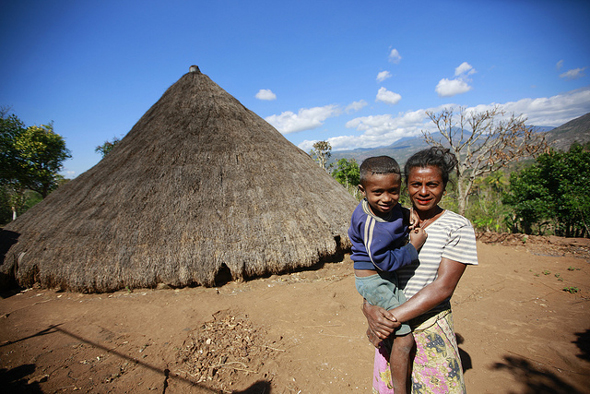
Photo Credit: “Timorese Traditional Home,” courtesy of United Nations Photo. -
Melanne Verveer and Others at Heinrich Böll Gender Equity and Sustainable Development Conference
›The Gender Equity and Sustainable Development conference, hosted last month by the Heinrich Böll Foundation, was a testament to the increasing importance of gender and sustainability within the international development community. Representatives from the U.S. government, UN, and countless international non-profits, aid organizations, and corporations demonstrated the vital need for collaboration and innovative action when working towards a more sustainable world.
The conference kicked off with an invigorating speech by the Honorable Melanne Verveer, U.S. Ambassador-at-Large for Global Women’s Issues, who called on the international community to acknowledge the “vital role that women can and must play in sustainable development.”
“Putting a spotlight on the critical role of women in stopping climate change will help to harness the immense human capacity of women worldwide,” said Verveer. By advocating for consideration of gender at every level – from grassroots organizing to policymaking – the ambassador painted a picture of a new era of sustainable development.
Step One: Recognize the Problem
A series of four panels followed the keynote address and focused on the intersections between gender inequity, the economy, trade, food and agriculture, and climate change.
There was clear consensus among all the participants that worldwide consciousness of gender inequity can lead to vast improvements in the status of women while also opening the door for new, innovative approaches to sustainable development. The 16 panel members represented numerous groups, from Oxfam America to Gender Action to the Stockholm Environment Institute, and all spoke to the importance of working for larger structural changes while simultaneously shifting more economic, social, and political power into the hands of women by any means possible.
The panelists described a world in which women represent a tremendous, untapped resource for change. Although women only own approximately one percent of titled land worldwide, they own close to 33 percent of business in the developing world and spend two-thirds of consumer dollars worldwide, which they tend to invest in sectors like health and education that benefit the larger community. Verveer said that data also shows women are more likely to pass environmental legislation and that forestry projects involving women have a higher rate of success.
Humanizing Climate Change
The big question of the conference seemed to be: in a world where women are disproportionately vulnerable to the effects of climate change, why aren’t women given more of a voice in the process of creating a more sustainable world?
Marie Brill, a senior policy analyst at Action Aid USA, pointed to the production of biofuels as a poignant example of a sustainable development plan that has had unintended negative consequences for women around the world. In the developing world, women are primarily responsible for food provisioning, yet many social and legal restrictions prevent women from owning land. If women had better access to land ownership and food insecurity would decrease, she said, and crops yields could increase by as much as 20 to 30 percent.
Foreign ownership of large tracts of land, common in the production of biofuels, makes land title even more difficult for women to acquire or maintain. The industry has also led to price spikes for staple crops like corn, said Brill, meaning poor women are sometimes unable to feed their families.
While biofuels provide an alternative fuel source, their production has been managed in a way that ignores the gender-specific implications of the process. By maintaining an awareness of gender, we can ensure that women do not become victims as we move towards a more sustainable world, Brill said.
Liane Schalatek, the associate director of the Heinrich Böll Foundation North America, suggested that a paradigm shift is needed regarding our approach to climate change.
Approaching climate change from a purely scientific and technological perspective is offensively simplistic, Schalatek said. “We need to humanize climate change and bring social equity into the discourse,” she said, emphasizing that “it is our obligation under international human rights objectives and vital to the success of sustainable development to take a rights-centered approach.”
Molly Shane was an intern for the Sierra Club’s Global Population and Environment Program.
Sources: Boston Consulting Group, Council on Foreign Relations, Food and Agriculture Organization of the United Nations, USAID, U.S. State Department, Women Deliver.
Photo Credit: “Climate Risk and Resilience: Securing the Region’s Future,” courtesy of the Asian Development Bank. -
Top 10 Posts for February 2012
›Great guest contributions and a couple of book previews helped fill out the top 10 last month, from Laurie Mazur on water and limits to growth, Pamela Griffin on the Ramsar Convention, and Elizabeth Leahy Madsen’s comprehensive look at Afghanistan’s first demographic and health survey to Jack Goldstone’s Political Demography and Marc Sommers’ Stuck.
1. Water and Population: Limits to Growth?
2. India’s Maoists: South Asia’s “Other” Insurgency
3. Guest Contributor Pamela Griffin: The Ramsar Convention: A New Window for Environmental Diplomacy?
4. Tunisia’s Shot at Democracy: What Demographics and Recent History Tell Us
5. UNEP Maps Conflict, Migration, Environmental Vulnerability in the Sahel
6. In Search of a New Security Narrative: The National Conversation Series Launches at the Wilson Center
7. Afghanistan’s First Demographic and Health Survey Reveals Surprises (Part One)
8. Stuck: Rwandan Youth and the Struggle for Adulthood (Book Preview)
9. Political Demography: How Population Changes Are Reshaping International Security and National Politics (Book Launch)
10. Peter Gleick: Population Dynamics Key to Sustainable Water Solutions -
Programming to Address the Health and Livelihood Needs of Adolescent Girls
›“There are 750 million adolescent girls in the world today, and this is by far one of the world’s most marginalized and vulnerable demographics,” said Denise Dunning, the Public Health Institute’s program director for emergency contraception in Latin America during a February 2 panel at the Wilson Center. Dunning, who also leads the Adolescent Girls’ Advocacy and Leadership Initiative (AGALI), was joined by Margaret Greene, director of Greeneworks, and Jennifer Pope, the deputy director of sexual and reproductive health at Population Services International, to discuss how to better reach underserved adolescent girls in developing countries with health and livelihood programs.
-
The U.S. Military, Climate Change, and Maritime Boundaries
›The Defense Science Board, which advices the U.S. military on scientific and technical matters, writes in a recent task force report that the most immediate and destabilizing effects of climate change will impact U.S. security indirectly, through American reliance on already-vulnerable states that are “vital” sources of fuel and minerals or key partners in combatting terrorism. The report singles out three specific themes as particularly important to responding to near-term climate-driven threats and adapting to climate change’s long-term impacts: providing “better and more credible information [about climate change] to decision makers,” improving water management, and building better local adaptation capacity, particularly in African nations. Ultimately, the report concludes that the most effective, most efficient way the United States can respond to climate change is not militarily but “through anticipatory and preventative actions using primarily indigenous resources.”In “Maritime Boundary Disputes in East Asia: Lessons for the Arctic,” published in International Studies Perspectives, James Manicom writes that as climate change makes access and exploration easier, there are lessons to be learned from East Asian states’ handling of maritime disputes for Arctic nations. Manicom finds that simply because a state may be party to the UN Convention on the Law of the Sea (UNCLOS), disputes over boundaries and “over the methods used to settle disputes” persist. Domestic identity politics also can and do affect the extent to which a state attempts to exert influence over disputed areas – a noteworthy conclusion given growing rhetoric in Arctic states over the national importance of disputed territories. Finally, Manicom points out that, while “high expectations of resource wealth” may fuel disputes and “political tension,” those expectations do not inevitably doom competing states to conflict over resources.
Showing posts from category *Blog Columns.