-
Top 10 Posts for March 2013
›Not too hot, not too cold – Goldilocks had it right, says Laurie Mazur in a new series on the concept of resilience. Joining her in the top posts last month (measured by unique pageviews) was the World Resources Institute’s water risk atlas, an illustration of the effect of the demographic dividend using new Human Development Index data, and an update on Uganda’s population-development challenges by Gladys Kalema-Zikusoka. The Wilson Center’s China Environment Forum also continued their new Choke Point column with a discussion with activist Wang Canfa on China’s current environmental difficulties.
-
Demography and Political-Socioeconomic Change
›
In “On Demographic and Democratic Transitions,” published in the February edition of Population and Development Review, author Tim Dyson postulates that the so-called “demographic transition” – a two-step process in which diminishing mortality rates are followed by decreases in total fertility – is an important predictor of a society’s transition from autocracy to democracy. Specifically, Dyson suggests that the population surge resulting from a decline in mortality may tend to destabilize pre-democratic regimes, while a subsequent drop in fertility rates may empower women and raise the median age of a population, thus paving the way for democracy to emerge. Dyson demonstrates a statistically significant correlation between population aging and inclination toward democracy, echoing the work of New Security Beat contributor, Richard Cincotta.
-
Family Planning an Important Component of Resilience to Climate Change, Says Roger-Mark De Souza
›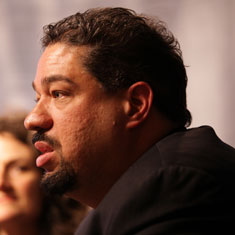
“We believe that if you want to respond to critical development issues like climate change, that you need to address the social dimensions of resilience,” says Roger-Mark De Souza of Population Action International (PAI) in this week’s podcast.
“If you want to address climate change and you only look at mitigation, you are missing some of the important components,” he said. PAI, which advocates for better access to family planning in developing countries, starts from the standpoint that allowing couples to decide how many children they have leads to “investments in education and technology, providing opportunities for additional economic growth, enhanced development, and ultimately helping to build resilience and adaptive capacity.”.
-
After Cyclone Haruna, Blue Ventures Leverages Its PHE Program for Disaster Response in Madagascar
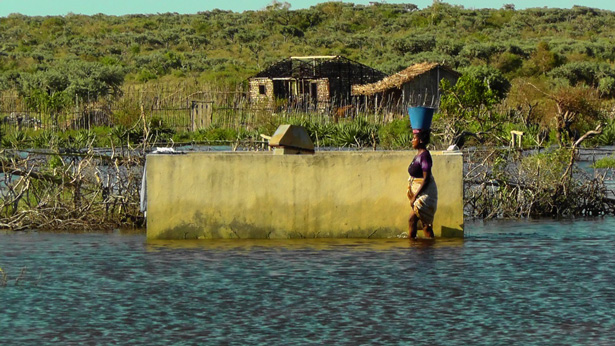
›Balbine is moving through her coastal village of Andavadoaka with a sense of urgency. Normally she works as a community-based distributor for Blue Ventures’ integrated population, health, and environment (PHE) program in southwest Madagascar, providing health information and products to her community. However, since Cyclone Haruna swept through the region several weeks ago, Balbine has been especially busy distributing diarrhea treatment kits to mothers caring for sick infants, providing families sleeping out in the open with mosquito nets to protect against malaria, setting up water filtering stations, and emphasizing the importance good hygiene practices.
-
Making ‘Healthy People, Healthy Environment’: A Look Inside Integrated Development
›“We need dynamic approaches. We can’t just keep going with the single sector approach and hoping that a conservation project will do really more than it’s intended to do,” said ECSP’s Multimedia Editor Sean Peoples in an interview with Dialogue at the Wilson Center. “These people are living integrated lives. How can we have integrated solutions for them?”
-
‘National Geographic’ Reports on “Water Grabbers” From Mali to India
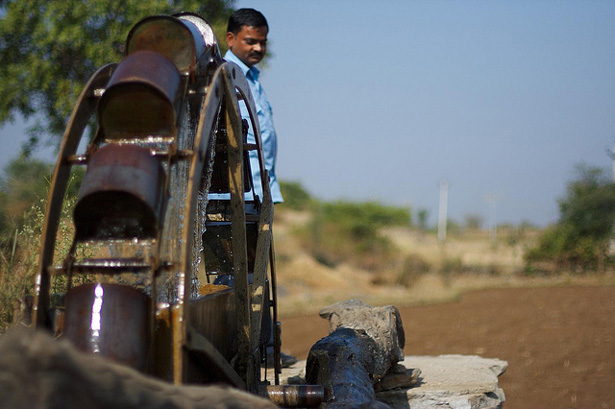
›Much ink has been spilled on the growing trend of global land grabs – land purchased en masse in developing countries like Ethiopia by foreigners mainly for agricultural export. But along with land, investors often also gain the right to use local water, and sometimes with little consideration for local livelihoods. Fred Pearce recently looked into these “water grabs” in a series for National Geographic.
-
Demographic and Environmental Dynamics Shape ‘Global Trends 2030’ Scenarios
›“However rapid change has been over the past couple decades, the rate of change will accelerate in the future,” states the newest quadrennial report from the National Intelligence Council (NIC), Global Trends 2030: Alternative Worlds. Released late last year, the report identifies the “game-changers, megatrends, and black swans” that may determine the trajectory of world affairs over the next 15 years, including demographic dynamics and natural resource scarcity. [Video Below]
-
Imelda Abano on the Challenges of Reporting on Population and the Environment in the Philippines
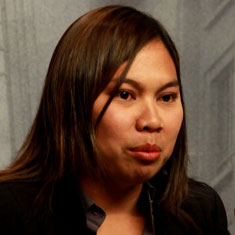
›In this podcast, Imelda Abano, who writes for Eco-Business in the Philippines, discusses her experiences reporting on population and environmental issues.
“It’s a very tough job for us to be reporting on these issues, but we have the responsibility to raise awareness…and we have to push for government action,” Abano says.
Showing posts from category *Blog Columns.