-
What Does It Take to Cooperate? Transboundary Water Management Around the World
›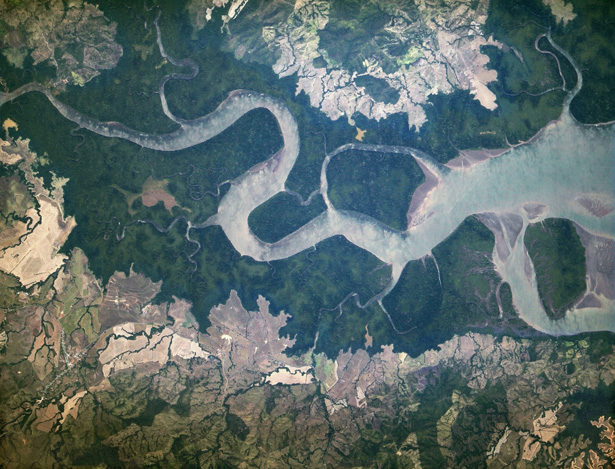
Water is the foundation of human society and will become even more critical as population growth, development, and climate change put pressure on already-shrinking water resources in the years ahead. But will this scarcity fuel conflict between countries with shared waters, as some have predicted, or will it create more impetus for cooperation?
-
Jay Silverman on the Impact of Domestic Violence on Maternal and Child Health
›
“Violence against women is obviously a major factor in maternal and reproductive health,” says Jay Silverman, co-director of the Program on Gender Inequities and Global Health at the University of California, San Diego, in this week’s podcast. From hypertension to early delivery, “all of these things occur at significantly higher rates among women who have an abusive partner.” Silverman gives an overview of the “state of knowledge” about the effect of abuse on mothers and children and suggested that interventions during antenatal care that targets both women and their partners can reduce this important source of child and maternal morbidity.
-
Lessons From Kenya and Malawi on Combining Climate Change, Development, and Population Policy
›“The combined effects of rapid population growth and climate change are increasing food insecurity, environmental degradation, and poverty levels in Malawi and Kenya,” said Clive Mutunga, a senior research associate at Population Action International (PAI).
-
Clive Mutunga: Addressing Population Growth Can Build Resilience to Climate Change in Kenya and Malawi
›“We know that a number of these countries in Africa have the least to do with climate change in terms of emissions, but they are the most vulnerable, and they are the ones with the least capacity to deal with the effects of climate change,” says Clive Mutunga in this week’s podcast. Mutunga, a senior associate at Population Action International, discusses the results of a study PAI conducted looking at the entwined and related impacts of climate change and population growth, as well as other factors like water scarcity, on Kenya and Malawi.
-
Petro-Aggression: When Oil Causes War
›One year ago, the United States government froze all property of the Central Bank of Iran and other Iranian financial institutions within the United States. The move was part of a broader effort to compel the Islamic Republic to give up its alleged nuclear weapons program. How is it working out?
-
Addressing Urban Environmental Health and Maternal Mortality in Developing Countries
›Although climate change is a global phenomenon, developing countries – especially urban centers – are the most vulnerable to the negative health impacts of climate change. In “Urban Governance of Climate Change and Health,” a working paper for the Norwegian Institute for Urban and Regional Research, author Siri Bjerkreim Hellevik reviews the existing literature on governments’ responses to climate change and health in developing urban centers. Overall, Hellevik concludes that there is a substantial need for more research specifically linking the two. She offers several recommendations for urban policymakers to consider, including developing an integrated and multi-level approach, and recognizing that human health and urban development are issues of global justice. -
Eliya Zulu on the Integration Imperative in African Development
›“[Family planning] has great value for women’s health, for children’s health, but it also has great value for the environment, and it can also help…to promote economic development,” says Eliya Zulu in this week’s podcast. Zulu talks about the research he has conducted as executive director of the African Institute for Development Policy and emphasizes the need to pay attention to population and climate issues both at higher levels of development policy discussion and grassroots action. “We need to make sure we integrate at all levels,” he says.
-
Maternal Health in India: Making Progress in a Key Arena
›Maternal mortality causes 56,000 deaths every year in India, accounting for 20 percent of maternal deaths around the world, said John Townsend, vice president and director of the Population Council’s reproductive health program. It is a key battleground for maternal health advocates. But maternal health is sometimes eclipsed by other major health and development issues on the sub-continent. For example, nearly five times as many people suffer from HIV/AIDS and more than 400 million people live on less than $1.25 a day. [Video Below]
Showing posts from category *Blog Columns.