-
Can Mexico Harness Its Demographic Dividend?
›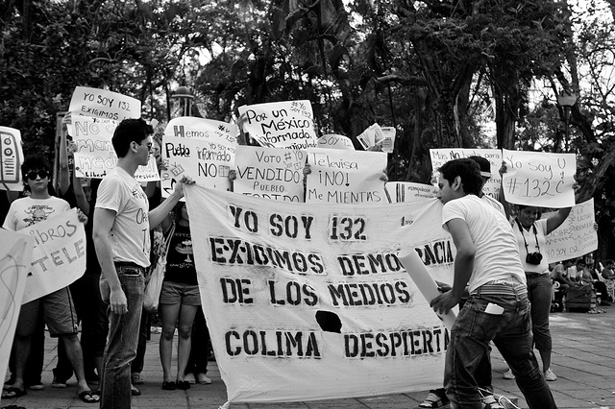
Mexico’s 2012 elections were important for a host of reasons: the PRI party returned to power after 12 years of rule by the more conservative PAN; there was the first female presidential candidate from a major political party; and turn-out was historically high. They also proved that Mexico’s young people are not as apathetic as some may have thought, with the emergence of the #YoSoy132 student movement demanding fair press coverage.
-
What’s Worth Saving? Maoists, Forests, and Development in India’s Western Ghats
›
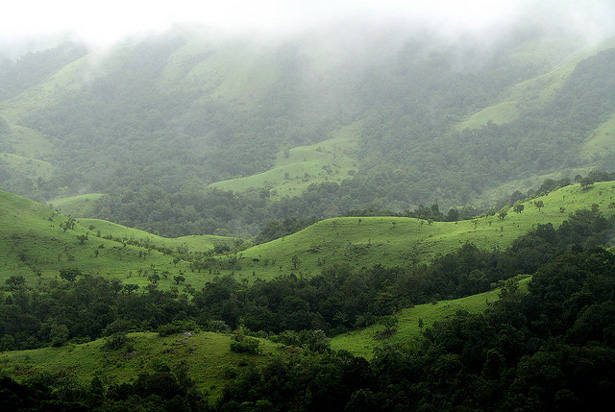
Arrayed along India’s southwest coast is a 1,600-kilometer-long mountain chain with forests older than the Himalayas: the Western Ghats. The mountains are one of the top biodiversity hotspots in the world, and UNESCO recently recognized the region as a World Heritage site. They’re also one of the tensest of India’s emerging battlegrounds between development and conservation and a potential recruiting ground for its Maoist insurgency, called the country’s “greatest threat to internal security.”
-
‘At the Desert’s Edge’ Gives a Glimpse of China’s Massive Desertification Challenge
›In may not be surprising that China, home to so many other superlatives, also faces desertification on a grand scale. According to China’s State Forestry Administration, over 27 percent of the country now suffers from desertification – more than 1,000,000 square miles, or about one-third of the continental United States – impacting the lives of more than 400 million people.
-
Lisa Dabek on How Papua New Guinea’s Tree Kangaroo Conservation Project Does More Than Conserve
›“All through Papua New Guinea, in every province, there is logging and mining, but we are the first conservation area,” says Lisa Dabek in this week’s podcast.
Dabek is the director of the Tree Kangaroo Conservation Project (TKCP), an effort of the Seattle Woodland Park Zoo that works to protect tree kangaroos while empowering communities in Papua New Guinea’s YUS Conservation Area to manage their natural resources, health care, and food security.
-
The Leopard in the Well: Wilson Center and Circle of Blue Launch ‘Choke Point: India’
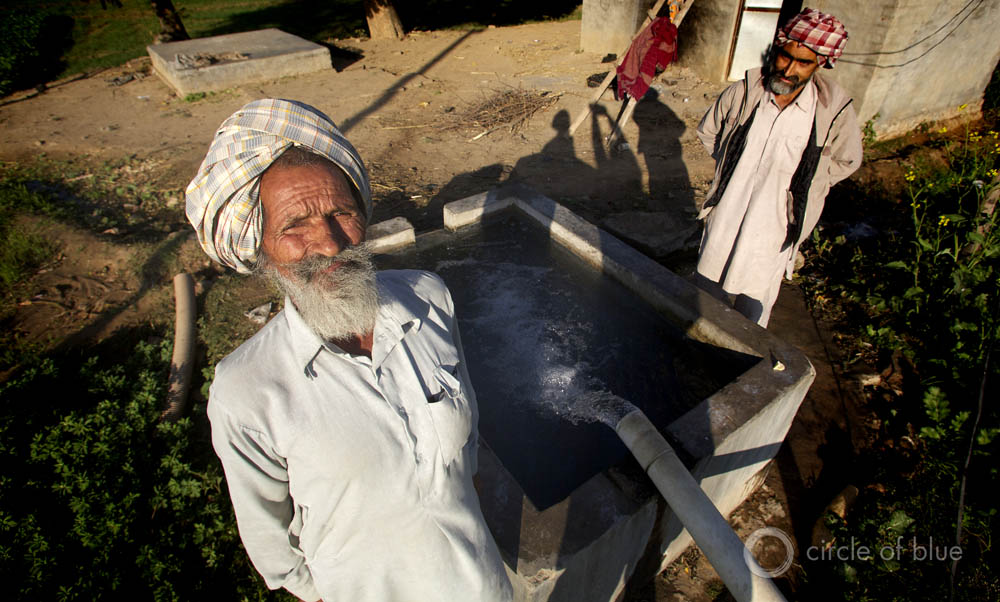
›The original version of this article, by Keith Schneider, appeared on Circle of Blue. Choke Point: India is a research and reporting initiative produced in partnership between Circle of Blue and the Wilson Center’s China Environment Forum and Asia Program.
Perhaps because India is so big, so bewildering and chaotic, and so determined to update its elusive rural identity with sleek urban flare, Indians and the national press are fascinated by how the nation’s wild animals are faring amid the dizzying change. In many cases, not well.
-
From India to Jordan, Intimate Partner Violence Affects Maternal and Child Health
›Physical, sexual, or psychological harm by a spouse or partner is a major factor in maternal and reproductive health, said Jay Silverman at the Wilson Center last month.
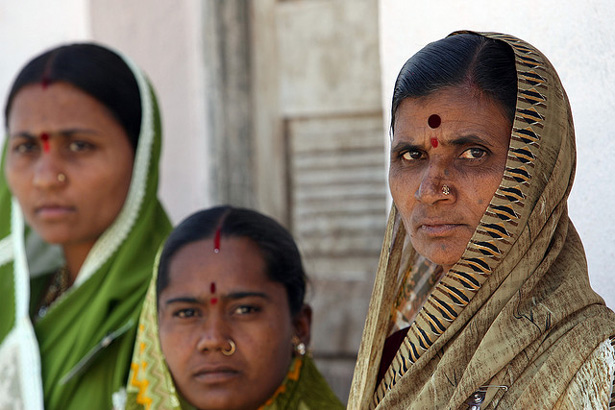
Silverman, a professor of medicine at the University of California, San Diego, cited a 15-country study of both developed and developing countries that found 25 to 75 percent of women have suffered from intimate partner violence at least once. And the effects are very significant, both in terms of the health of mothers and their children. [Video Below]
-
Beyond Arctic Conflict: Prospects for Peace and International Cooperation
›Temperatures in the Arctic have increased at twice the global rate over the past 40 years, vaulting the region to international prominence as an emerging theater for maritime transportation and competition over newly uncovered resources.
The international community should start strategizing now to manage the ambitions of circumpolar states and minimize the potential for conflict, write authors Rob Huebert, Heather Exner-Pirot, Adam Lajeunesse, and Jay Gulledge in a report. Published by the Center for Climate and Energy Solutions, Climate Change and International Security: The Arctic as a Bellwether explores the geopolitical implications of climate change in the Arctic and puts forth several recommendations for policymakers to consider. Huebert et al. write that “maintaining security and peace in the Arctic will require adapting policies and institutions to the emerging environment there.” They recommend that Arctic states strengthen existing multilateral agreements by, for example, advocating the accession of the United States into the UN Convention on the Law of the Sea. Further, they propose that the Arctic Council lifts its ban on discussing security issues in order to become a forum for meaningful discussion. -
Is Resilience Too Accurate to Be Useful?
›Resilience is a wonderful metaphor. It somehow conveys in a single word the qualities of bending without breaking, of healing after an injury, of tensile rather than brittle strength. Oak and palm trees are resilient to the power of strong winds, before which they bend and then straighten again. Resilient people pick themselves up after being knocked down, draw on their reserves of ideas and strength to deal with difficult challenges, or hunker down until the gale has blown itself away. Resilient economies bounce back, and resilient ecosystems restore themselves after the fire or the flood has passed.
Showing posts from category *Blog Columns.