

-
Enhancing Water Security and the Role of Diplomacy in Africa’s Mara River Basin and Beyond
›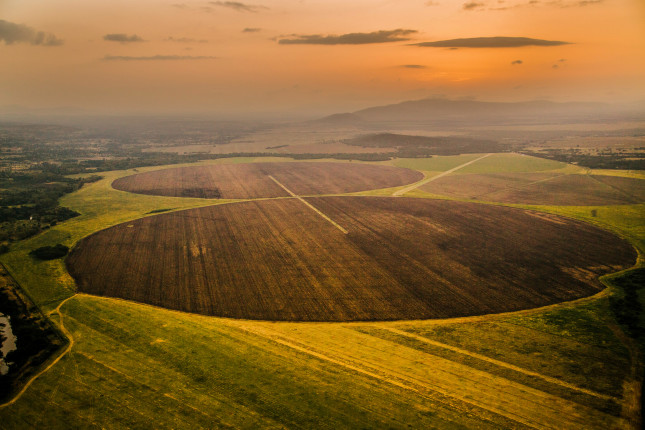
The Mara River traverses nearly 14,000 kilometers in Kenya and Tanzania, flowing through the Masai Mara National Reserve in Kenya and the Serengeti National Park in Tanzania. It is a vital water source for more than 1 million people in the area, as well as for 2 million zebras and wildebeests. In fact, the Mara River Basin is “one of the most ecologically important basins in the world,” according to Basil Mahayni, Deputy Director of USAID’s Sustainable Water Partnership’s (SWP). Communities in Kenya and Tanzania depend on the Mara River Basin for a variety of needs, including drinking water, livelihoods, and ecosystem preservation. Therefore, water security in this basin is essential to ecological health of the basin and its wildlife and the region’s economic development.
-
To End Fistula by 2030, First Strengthen the Healthcare Workforce
› When childbirth takes place without skilled birth attendants or adequate emergency obstetric care, a woman may suffer from obstetric fistula. Women with fistula live with uncontrollable urinary and/or fecal incontinence, because a hole has formed between the birth canal and bladder or rectum. They have usually survived prolonged/obstructed labor, often lost their child to stillbirth, and frequently face severe social isolation and stigma. There are also now more and more women suffering from iatrogenic fistula caused by injuries during pelvic surgery, especially obstetric or gynecological surgery. Between 1 million and 2 million women currently need fistula repair, with thousands of new cases each year. However, most fistulas can be treated, enabling women to resume healthy, productive lives in their communities. Recognizing this, the United Nations has issued a call to end fistula by 2030.
 -
Are We Radically Underestimating the Effects of Climate on Armed Conflict?
›Climate change is widely recognized as a “threat multiplier.” From the United Nations to the G7 to the US Department of Defense, there is emerging consensus that climate change poses risks to both human and natural security through a variety of complex and interrelated channels. The extent of those risks, and how they connect to armed conflict, however, remain widely debated. -
To Fight for a Living Planet, Restore its Biology
› We face the greatest environmental challenges ever relating to climate change, biodiversity, land use, and more. Humans are driving 1 million species to extinction, according to a report by the UN-backed Intergovernmental Science-Policy Platform on Biodiversity and Ecosystem Services. Some $44 trillion of annual global economic product that depend on nature are in jeopardy. Fires have ravaged large swathes of the Amazon—Brazil and Bolivia in particular—and Australia. -
Why Climate and Conflict Are Shaping the Crises of Our Time (And What To Do About It)
›Humanitarian need is increasing. Crises are becoming more complex through the interactions between climate change, disasters, and conflicts. Not only are humanitarian crises on the rise, but the nature of crises is changing, largely due to climate change-driven extremes such as floods, droughts and typhoons. Over 90 percent of disasters are believed to be related to climate. -
Advancing One Health: Protecting People, Gorillas, and the Land on Which They Live
›In 2003, a scabies skin disease outbreak affecting mountain gorillas in Bwindi Impenetrable National Park was traced to people living around the national park—people with limited access to basic health and social services. To protect the people and wildlife of this special park, we launched Conservation Through Public Health (CTPH), an NGO that promotes biodiversity conservation by enabling people, gorillas, and other wildlife to coexist harmoniously through improved health and wellbeing. -
Common Climate Impact Assessments Underestimate Future Vulnerability
›Climate-related disasters are a major source of human and material losses. Poverty and low level of economic development are important determinants of environmental vulnerability. Achieving stable and sustainable development thus represents an important strategy to reduce adverse impacts of climate change. However, present efforts to evaluate possible consequences of climate change in the future suffer from too optimistic assumptions about economic growth in poor countries, as we document in a new article just published in the journal Global Environmental Politics.
-
To Envision a More Sustainable Future Tell the Story of Conservation Technology
›Last summer, I stood on a cliff 100 feet above the Madre De Dios River, in Southern Peru near the Bolivian border, to watch the rosy gift of an Amazon sunset. It was quiet, in a tropical rainforest way, with the light clamor of parrots, macaws, and cicadas. Then, a peke-peke motorized canoe broke through the soft din. It arrived from the east, carrying a new supply of diesel fuel for the gold miners who were prepping the generator that would operate a suction-pump and dredge for gold across the river and around the bend. Before nightfall, the fuel ignited the baritone of a diesel generator. It moaned all night and all day, barely stopping. In subsequent days, instead of a light clamor of birds and primates, the thrum of a gold mining operation seemed like all I could hear.
Showing posts from category Guest Contributor.
 When childbirth takes place without skilled birth attendants or adequate emergency obstetric care, a woman may suffer from obstetric fistula. Women with fistula live with uncontrollable urinary and/or fecal incontinence, because a hole has formed between the birth canal and bladder or rectum. They have usually survived prolonged/obstructed labor, often lost their child to stillbirth, and frequently face severe social isolation and stigma. There are also now more and more women suffering from iatrogenic fistula caused by injuries during pelvic surgery, especially obstetric or gynecological surgery. Between 1 million and 2 million women currently need fistula repair, with thousands of new cases each year. However, most fistulas can be treated, enabling women to resume
  Climate change is widely recognized as a “threat multiplier.” From the
  We face the greatest environmental challenges ever relating to climate change, biodiversity, land use, and more. Humans are driving 1 million species to extinction, according to a
 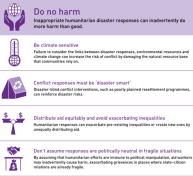 Humanitarian need is increasing. Crises are becoming more complex through the interactions between climate change, disasters, and conflicts. Not only are humanitarian crises on the rise, but the nature of crises is changing, largely due to climate change-driven extremes such as floods, droughts and typhoons. Over
 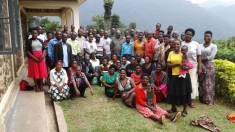 In 2003, a scabies skin disease outbreak affecting mountain gorillas in Bwindi Impenetrable National Park was traced to people living around the national park—people with limited access to basic health and social services. To protect the people and wildlife of this special park, we launched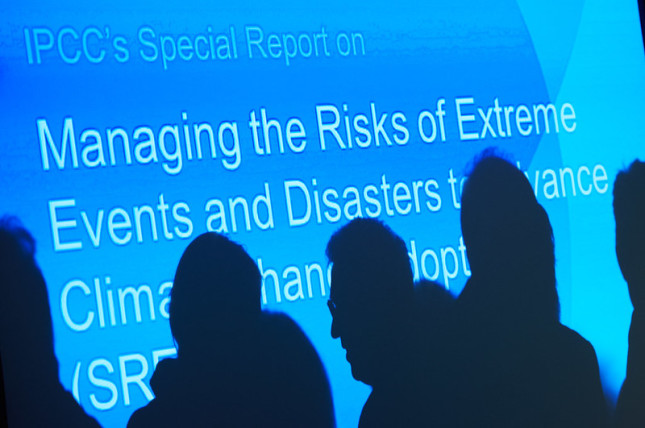
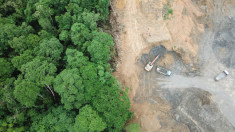 Last summer, I stood on a cliff 100 feet above the Madre De Dios River, in Southern Peru near the Bolivian border, to watch the rosy gift of an Amazon sunset. It was quiet, in a tropical rainforest way, with the light clamor of parrots, macaws, and cicadas. Then, a peke-peke motorized canoe broke through the soft din. It arrived from the east, carrying a new supply of diesel fuel for the gold miners who were prepping the generator that would operate a suction-pump and dredge for gold across the river and around the bend. Before nightfall, the fuel ignited the baritone of a diesel generator. It moaned all night and all day, barely stopping. In subsequent days, instead of a light clamor of birds and primates, the thrum of a gold mining operation seemed like all I could hear.

