-
Gender and the “War” on Covid-19
›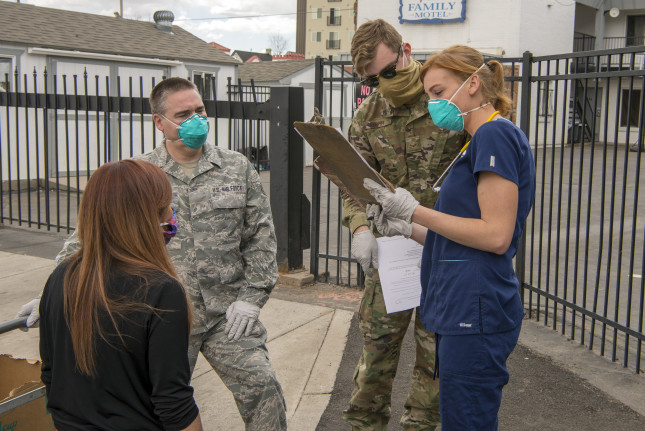
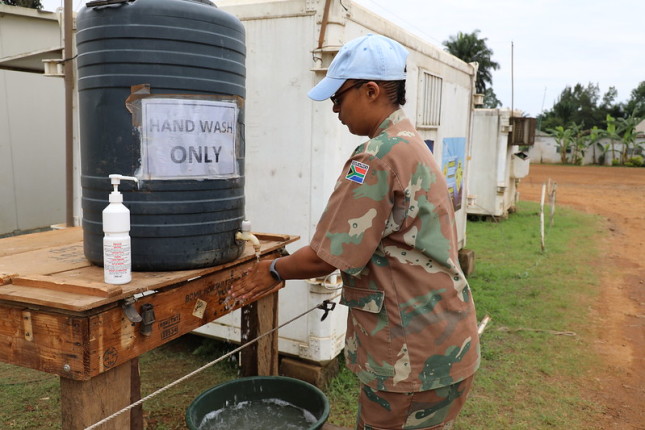
The rhetoric of war is all around us during the Covid-19 pandemic, from the World Health Organization to historical takes. More critical assessments note that this war, like others, will hurt the most vulnerable. In a recent essay, feminist political scientist Cynthia Enloe takes issue with this rhetoric, pointing to the historic ways in which wars have led to “racist, homophobic, and anti-Semitic practices.” Whether or not war rhetoric is helpful at this crucial moment, the current pandemic should be a wake-up call to expand what investments we consider essential to our national security, how we value work, and who gets called a hero.
-
Migrant Workers in India: Insecurity in the Time of Coronavirus
›
“The only certainty is uncertainty,” Pliny the Elder reportedly said. Though all historical times are full of uncertainties, some seem more so than others. This is one of those times.
A major slowdown of the Indian economy was brewing and completely spilled over when I got to India in September 2019 to start my dissertation fieldwork on Indian women construction workers’ experiences and conceptualizations of Human Security. Wages stagnated. Consumer spending fell. Construction, real estate, and other industries were sent reeling. Construction workers’ livelihoods were teetering on the brink. Uncertainty became the backbone of their existence.
-
The Greatest Story Never Told
› “If the pope is interested, everyone is interested,” said Alexandre Roulin, accepting the 2019 Environmental Peacebuilding Research Award in Irvine, California. The University of Lausanne professor’s project—on how conserving barn owls in the Middle East brings together people in Israel, Jordan, and Palestine across political divides—is certainly unique and intriguing. (Also, cute owls!)The spiritual leader of the world’s 1 billion Catholics reached out to Roulin because the “Barn Owls Know No Boundaries” project promises a possible way to build peace in one of the world’s most intractable religious conflicts. A tremendous story, right?
But despite having all the hallmarks of a great tale, a quick Google search finds only a handful of stories about it. This lack of media attention is unfortunately an ongoing challenge for what I have long viewed as “the greatest story never told.”
-
Real-time Data Could Save More People from Covid-19
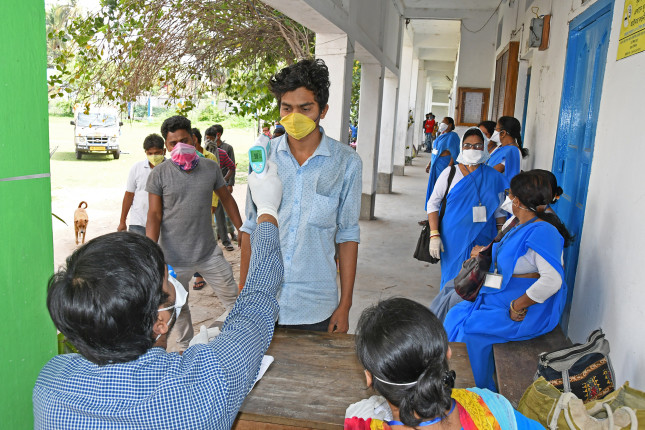
›It’s clear that the virus that causes Covid-19 travels freely. It needs no visa, having breached many points of entry. Experts at Imperial College London estimate that “in the absence of interventions, Covid-19 would have resulted in 7 billion infections and 40 million deaths globally this year.” Now is the time for governments to get ahead of the curve and respond to the emergency. It’s time to take a whole-of-government approach to strengthen testing at points of entry and institute mass testing at various points as South Korea did.
-
Toward a New Regional Approach to Water Security and Governance in the Horn of Africa
›Guest Contributor // April 7, 2020 // By Anniek Barnhoorn, Florian Krampe, Luc van de Goor, Elizabeth Smith & Dan SmithAs the global climate changes, climate-related security risks are making the existing political, social, and economic challenges even more complicated. The 230 million people who live in the Horn of Africa are highly vulnerable to the impacts of climate change such as droughts and floods. Political fragility and transnational complexities make water governance a matter of regional high-level politics as well as geopolitical tensions. In short, sustainable water governance is critical for achieving resilient peace.
-
Covid-19 and Conflict Zones: Prepare Now or Face Catastrophe
›As we have seen over recent weeks, the impact of Covid-19 has caused unprecedented disruption, deaths, and confusion in developed countries. The public health capacity of countries such as the United States and UK has been overwhelmed.
-
Show Me! Laying the Foundation for the Next Generation of Environmental Peacebuilding
›As documented by the New Security Beat, environmental peacebuilding has grown dramatically as a field in recent years. Across the security, development, and diplomatic communities, there is increased recognition that disputes related to natural resources and the environment can escalate to violence, fund armed conflict, and provide an incentive for peace spoilers. At the same time, practitioners and researchers have highlighted numerous ways that natural resources and the environment can be a catalyst of peace by supporting livelihoods and economic recovery, underpinning basic services, and providing a context for dialogue and cooperation. -
How Gum Acacia Trees Could Help Build Peace in the Sahel
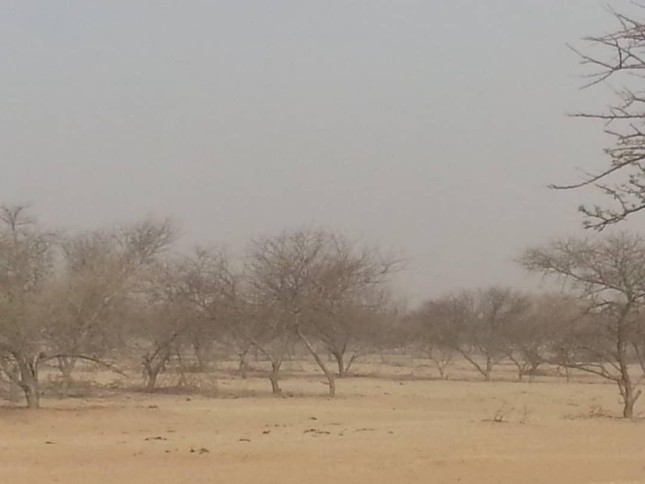
›A special type of tree could facilitate peacebuilding in the Sahel. A stretch of semi-arid land south of the Sahara that runs from the Red Sea to the Atlantic Ocean through 10 countries (Eritrea, Sudan, Chad, Niger, Nigeria, Burkina Faso, Mali, Algeria, Mauritania, and Senegal). But the western subregion covering the Lake Chad area (the intersection of Chad, Cameroon, Nigeria, and Niger) and Liptako-Gourma (the tri-border zone of Burkina Faso, Mali, and Niger) in the Sahel has been the scene of a growing humanitarian crisis. Armed groups are terrorizing local populations. Rampant insecurity has forced 1 million people to flee their homes. People have been cut off from their livelihoods. Food insecurity is worsening. Casualties continue to mount. And climate change will likely exacerbate conditions, forcing more people to compete for depleted forest resources and land. More food shortages and instability will surely follow.
Showing posts from category Guest Contributor.
 “If the pope is interested, everyone is interested,” said Alexandre Roulin, accepting the 2019 Environmental Peacebuilding Research Award in Irvine, California. The University of Lausanne professor’s project—on how
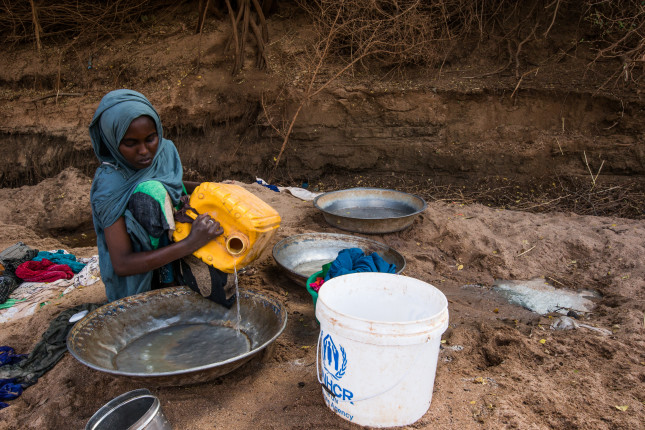
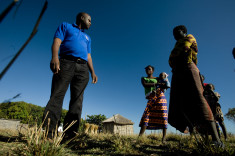 As documented by the New Security Beat, environmental peacebuilding has grown dramatically as a field in recent years. Across the security, development, and diplomatic communities, there is increased recognition that disputes related to natural resources and the environment can escalate to violence, fund armed conflict, and provide an incentive for peace spoilers. At the same time, practitioners and researchers have highlighted numerous ways that natural resources and the environment can be a catalyst of peace by supporting livelihoods and economic recovery, underpinning basic services, and providing a context for dialogue and cooperation.