• woodrow wilson center
  • ecsp

New Security Beat

Subscribe:
  • rss
  • mail-to
  • Who We Are
  • Topics
    • Population
    • Environment
    • Security
    • Health
    • Development
  • Columns
    • China Environment Forum
    • Choke Point
    • Dot-Mom
    • Friday Podcasts
    • Navigating the Poles
    • Reading Radar
  • Multimedia
    • Water Stories (Podcast Series)
    • Backdraft (Podcast Series)
    • Tracking the Energy Titans (Interactive)
  • Films
    • Water, Conflict, and Peacebuilding (Animated Short)
    • Paving the Way (Ethiopia)
    • Broken Landscape (India)
    • Scaling the Mountain (Nepal)
    • Healthy People, Healthy Environment (Tanzania)
  • Publications
  • Events
  • Contact Us

NewSecurityBeat

The blog of the Wilson Center's Environmental Change and Security Program
Showing posts from category From the Wilson Center.
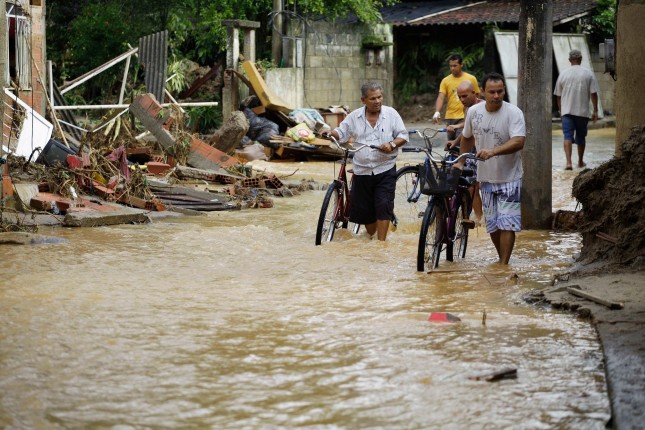
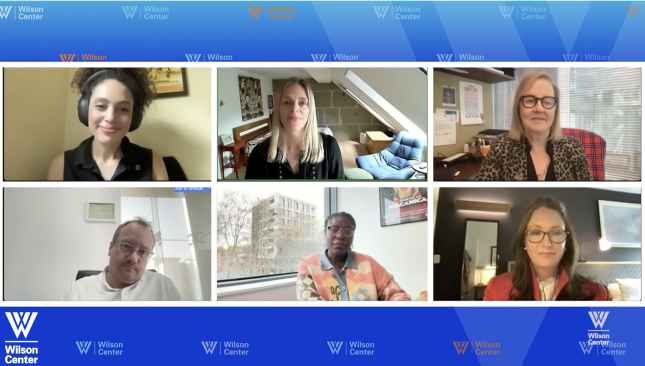
  • Women, Race, and COVID-19: A Conversation with Representative Alma Adams

    ›
    Covid-19  //  Dot-Mom  //  From the Wilson Center  //  July 15, 2020  //  By Amanda King
    ASA Official Photo

    “The pandemic has shown us in the starkest terms how wide the gaps are in health outcomes between Black and White America and between men and women,” said Representative Alma Adams (D-NC-12) at a recent Wilson Center event on women, race, and COVID-19 in the United States. “COVID-19 has revealed what the Black community and communities of color have known for a long time, health outcomes are further compounded by systemic and structural racism,” said Rep. Alma Adams. And COVID-19 has exposed what women have known for a long time. Gender inequality exists, it threatens economic empowerment, and it increases vulnerabilities.

    MORE
  • Refugees and COVID-19: A Closer Look at the Syrian and Rohingya Crises

    ›
    Covid-19  //  From the Wilson Center  //  July 13, 2020  //  By Eliana Guterman
    EG Event Summary Photo

    “We all know that while no one is immune from the Covid-19 virus—and people of all types have caught the virus and died from it—it is the world’s most vulnerable communities that have suffered disproportionately from the pandemic,” said Michael Kugelman, Deputy Director and Senior Associate for the Wilson Center’s Asia Program. He spoke at a recent Wilson Center event on the impact of the COVID-19 pandemic on refugee communities. As of 2019, 1 percent of humanity was displaced. That’s more than 79.5 million people. The COVID-19 pandemic has exacerbated the vulnerabilities of these people. “The health pandemic is fostering a new pandemic of poverty,” said Matthew Reynolds, Regional Representative for the U.S. and the Caribbean at the United Nations High Commissioner for Refugees (UNHCR).

    MORE
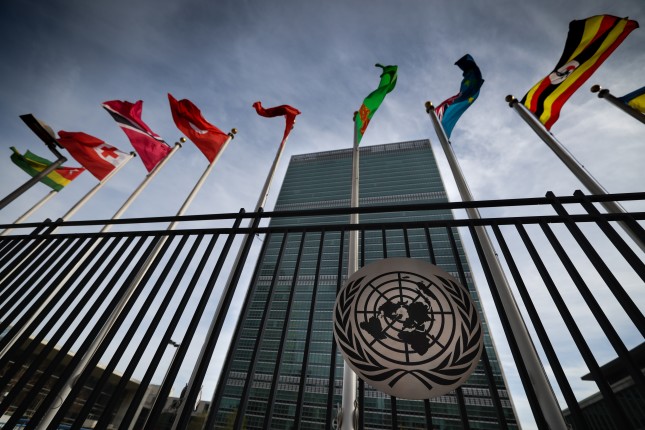
  • From Crises to Building Resilience for U.S. National Security

    ›
    From the Wilson Center  //  July 6, 2020  //  By Johnny Quispe
    190317-F-IT794-1053

    This year, three pandemics have shaken the fabric of our society, said Les Williams, Co-Founder and Chief Revenue Officer at Risk Cooperative at a recent event co-hosted by the Wilson Center and Stanford Woods Institute for the Environment on building greater resilience for U.S national security. The spread of COVID-19 highlighted the vulnerabilities in our healthcare system. The murder of George Floyd became the tipping point in communicating the risk that Black Americans have been facing for more than 400 years. And a number of natural disasters exposed society’s vulnerability to climate change.

    MORE
  • Global Cooperation for the Environment: Policy, Technology, and Community Action

    ›
    From the Wilson Center  //  June 9, 2020  //  By Elizabeth M.H. Newbury, Alex Long, Metis Meloche & Magdalena Baranowska
    shutterstock_1074166649-2

    “50 years ago, 20 million young people protested about the damage to our Earth. Over the past 5 decades, a lot has happened. Our ozone layer is healing, renewable energy is booming worldwide, environmental awareness has never been higher. But some risks are even more acute than before,” said Denis Hayes, coordinator of the first Earth Day and founder of Earth Day Network, in a video message at a recent Wilson Center event commemorating the 50th Earth Day. 

    MORE
  • How to Create a Successful Cross-Sectoral Collaboration

    ›
    From the Wilson Center  //  June 2, 2020  //  By Leah Emanuel
    CCVA 2

    It helps to think of collaboration as a skill to develop, rather than a value to impart, said Francesca Gino, Professor and Unit Head of Negotiation, Organization and Markets at Harvard Business School, at a recent Wilson Center virtual event on the importance of cross-sectoral collaboration. Many organizations make collaboration one of their values, she said. However, this has no substantial effect. “It could be a first step, but on its own it doesn’t create a culture where all of a sudden people are collaborating effectively,” Gino said.

    MORE
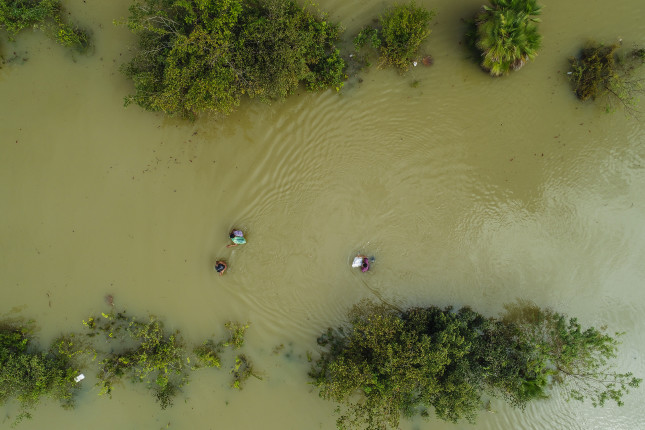
  • How to Think and Work Politically to Reach Biodiversity Conservation Goals

    ›
    From the Wilson Center  //  May 28, 2020  //  By Wania Yad & Amanda King

    Women fishing in the Terai region of Nepal. The USAID Paani program will enhance Nepal’s ability to manage water resources for multiple uses and users through climate change adaptation and the conservation of freshwater biodiversity. Photo by Olaf Zerbock, USAID.

    “You might know what to do,” said Rachel Kleinfeld, a Senior Fellow for Democracy, Conflict, and Governance Program at the Carnegie Endowment for International Peace. “But if you don’t think about how to do it, your reform isn’t going to move forward.” She spoke at a recent Wilson Center virtual event on how to think and work politically while supporting biodiversity conservation goals. It may sound counterintuitive, she said, but undertaking what’s considered the best intervention may not be the best approach.

    MORE
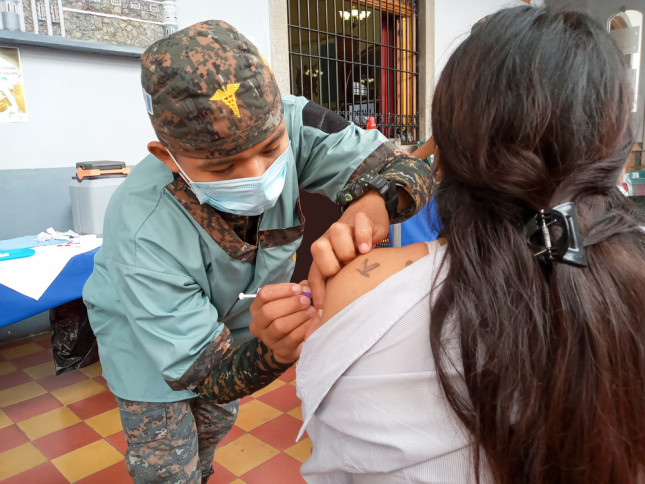
  • Pandemic of Violence: Protecting Women during COVID-19

    ›
    Covid-19  //  Dot-Mom  //  From the Wilson Center  //  May 27, 2020  //  By Anya Prusa, Beatriz García Nice & Olivia Soledad
    women covid

    This article originally appeared on the Weekly Asado, a blog of the Wilson Center’s Latin American Program and Argentina Project.

    COVID-19 is having a profound impact on Latin American women. Gender-based violence increased drastically after governments imposed lockdowns, leaving policymakers and law enforcement scrambling to prevent attacks. Latin America was already one of the most dangerous regions for women, with the highest rate of sexual violence and some of the highest femicide numbers in the world. The Economic Commission for Latin America and the Caribbean registered 3,529 femicides in 2018, or one woman killed every two hours due to her gender. For many women living through the coronavirus pandemic in Latin America, the greater health risk might be staying home.

    MORE
  • Improve Biodiversity Conservation, Enhance Public Health and Food Security

    ›
    From the Wilson Center  //  May 21, 2020  //  By Eliana Guterman
    4996533374_d49df1ddc6_c

    Our collective development objectives will not be achieved if they come at the expense of biodiversity and natural resource management, said Jeff Haeni, Acting Deputy Assistant Administrator in the Bureau for Economic Growth, Education, and Environment at USAID. He spoke at a recent Wilson Center virtual event, co-hosted with USAID, that explored the links between conservation and public health with examples from USAID’s BRIDGE project, which aims to build the evidence base for integrating biodiversity conservation considerations into policy discussions and decision-making across sectors. “The ability of societies around the world to develop and thrive is dependent on the health of the forests, fisheries, and natural systems around them,” he said.

    MORE
Newer Posts   Older Posts
View full site

Join the Conversation

  • RSS
  • subscribe
  • facebook
  • G+
  • twitter
  • iTunes
  • podomatic
  • youtube
Tweets by NewSecurityBeat

Trending Stories

  • unfccclogo1
  • Pop at COP: Population and Family Planning at the UN Climate Negotiations

Featured Media

Backdraft Podcast

play Backdraft
Podcasts

More »

What You're Saying

  • Volunteers,At,The,Lagos,Food,Bank,Initiative,Outreach,To,Ikotun, Pan-African Response to COVID-19: New Forms of Environmental Peacebuilding Emerge
    Rashida Salifu: Great piece 👍🏾 Africa as a continent has suffered this unfortunate pandemic.But it has also...
  • A desert road near Kuqa An Unholy Trinity: Xinjiang’s Unhealthy Relationship With Coal, Water, and the Quest for Development
    Ismail: It is more historically accurate to refer to Xinjiang as East Turkistan.
  • shutterstock_1779654803 Leverage COVID-19 Data Collection Networks for Environmental Peacebuilding
    Carsten Pran: Thanks for reading! It will be interesting to see how society adapts to droves of new information in...

What We’re Reading

  • Rising rates of food instability in Latin America threaten women and Venezuelan migrants
  • Treetop sensors help Indonesia eavesdrop on forests to cut logging
  • 'Seat at the table': Women's land rights seen as key to climate fight
  • A Surprise in Africa: Air Pollution Falls as Economies Rise
  • Himalayan glacier disaster highlights climate change risks
More »
  • woodrow
  • ecsp
  • RSS Feed
  • YouTube
  • Twitter
  • Facebook
  • Home
  • Who We Are
  • Publications
  • Events
  • Wilson Center
  • Contact Us
  • Print Friendly Page

© Copyright 2007-2021. Environmental Change and Security Program.

Woodrow Wilson International Center for Scholars. All rights reserved.

Developed by Vico Rock Media

Environmental Change and Security Program

Woodrow Wilson International Center for Scholars

Ronald Reagan Building and International Trade Center

  • One Woodrow Wilson Plaza
  • 1300 Pennsylvania Ave., NW
  • Washington, DC 20004-3027

T 202-691-4000