• woodrow wilson center
  • ecsp

New Security Beat

Subscribe:
  • rss
  • mail-to
  • Who We Are
  • Topics
    • Population
    • Environment
    • Security
    • Health
    • Development
  • Columns
    • China Environment Forum
    • Choke Point
    • Dot-Mom
    • Friday Podcasts
    • Navigating the Poles
    • Reading Radar
  • Multimedia
    • Water Stories (Podcast Series)
    • Backdraft (Podcast Series)
    • Tracking the Energy Titans (Interactive)
  • Films
    • Water, Conflict, and Peacebuilding (Animated Short)
    • Paving the Way (Ethiopia)
    • Broken Landscape (India)
    • Scaling the Mountain (Nepal)
    • Healthy People, Healthy Environment (Tanzania)
  • Publications
  • Events
  • Contact Us

NewSecurityBeat

The blog of the Wilson Center's Environmental Change and Security Program
Showing posts from category From the Wilson Center.
  • Knowledge Keepers: Why We Need Indigenous Midwives

    ›
    Dot-Mom  //  From the Wilson Center  //  October 7, 2020  //  By Hannah Chosid
    6814704723_4690c57fac_k

    The World Health Organization (WHO) has designated 2020 as The Year of the Nurse and the Midwife. In celebration, the Maternal Health Initiative is publishing a series of articles to recognize the importance of these two professions towards improving maternal and women’s health outcomes and to illuminate the impact made by both nurses and midwives the world over.

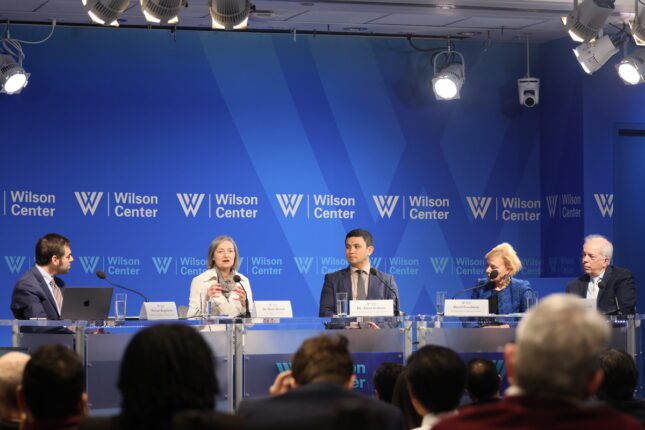
    “We need more Indigenous midwives,” said Claire Dion Fletcher, an Indigenous Potawatomi-Lenape Registered Midwife and co-chair of the National Aboriginal Council of Midwives (NACM), at a recent Wilson Center event with the United Nations Population Fund (UNFPA) and the International Confederation of Midwives about Indigenous midwifery. Globally, Indigenous women experience worse maternal health outcomes than non-Indigenous women. In the United States, risk of maternal death is twice as high for Native women than white women, while in Australia the risk is four and a half times higher.

    MORE
  • 21st Century Diplomacy: Foreign Policy is Climate Policy (Report & Project Launch)

    ›
    From the Wilson Center  //  October 1, 2020  //  By Lauren Herzer Risi & Alexander Carius

    This article is an excerpt from “21st Century Diplomacy: Foreign Policy is Climate Policy,” a new report by the Wilson Center and adelphi.

    Climate change will upend the 21st century world order. It will redefine how we live and work, and change the systems of production, trade, economics, and finance. Even now, in the midst of a global pandemic, it is clear that climate change will be the defining issue of this century. In fact, COVID-19 has only underscored the inadequacy of our responses to global crises and heightened the urgency of this call to action. 21st century diplomacy will have to raise climate ambition, shape the transformative systems change needed, and promote and facilitate new modes of multilateral collaboration.

    MORE
  • Protecting Brazil’s Forests Could Boost Economic Development

    ›
    From the Wilson Center  //  September 21, 2020  //  By Amy Erica Smith & Anya Prusa
    shutterstock_1486225025

    The dry season returned to Brazil’s Amazon region in late July—and with it, forest fires, largely human-made. After making substantial progress in reducing deforestation in the 2000s and early 2010s, Brazil has reversed course and deforestation is rising. In the Amazon, this season has been the worst in more than a decade in number of fires, and second worst in terms of total deforestation, according to satellite data from Brazil’s National Institute of Space Research (INPE), which monitors the situation.

    MORE
  • Meeting Women’s Modern Contraceptive Needs Could Yield Dramatic Benefit

    ›
    Dot-Mom  //  From the Wilson Center  //  September 9, 2020  //  By Deekshita Ramanarayanan
    shutterstock_759578407

    “Achieving true progress on sexual and reproductive health and rights requires a comprehensive approach and a commitment to tackling deeply entrenched inequities and injustices of which marginalized communities continue to bear the brunt,” said Dr. Herminia Palacio, President and CEO of the Guttmacher Institute. She spoke at a recent Wilson Center event where speakers analyzed findings from the Guttmacher Institute on the state of sexual and reproductive health and rights (SRHR) globally.

    MORE
  • Tensions Surrounding the Grand Ethiopian Renaissance Dam: A Wilson Center NOW Interview with Aaron Salzberg

    ›
    From the Wilson Center  //  August 28, 2020  //  By Amanda King
    shutterstock_1126445387

    Dams can be a double-edged sword, said Aaron Salzberg, a Wilson Center Global Fellow, Director of the Water Institute at the University of North Carolina, and former Special Coordinator for Water Resources for the U.S. Department of State. He spoke in a recent episode of Wilson NOW about the Grand Ethiopian Renaissance Dam, which will become Africa’s largest hydroelectric dam, once it’s fully operational.

    MORE
  • How Biodiversity Conservation Promotes Economic Growth in Latin America

    ›
    From the Wilson Center  //  August 20, 2020  //  By Leah Emanuel
    31712243226_f2d8b63f7e_c

    What happens to economic output if we expand protected areas to 30 percent of land and sea worldwide? Anthony Waldron, the lead author of a new study about the economic benefits of land conservation, posed this question at a recent Wilson Center virtual event on the role of Latin America in global biodiversity conservation.

    MORE
  • Better Governance Needed to Overcome Africa’s Resource Curse

    ›
    From the Wilson Center  //  July 24, 2020  //  By Magdalena Baranowska

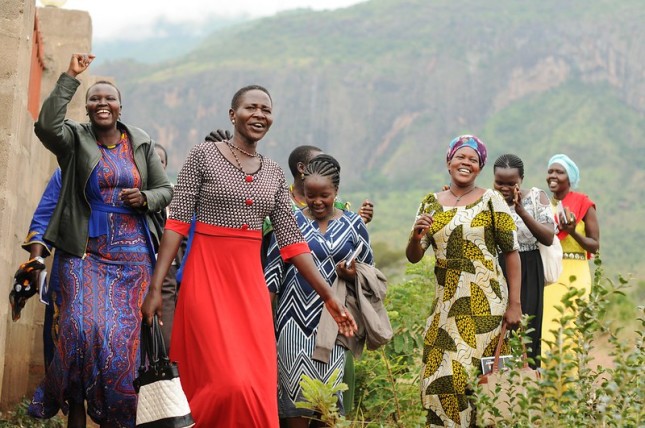
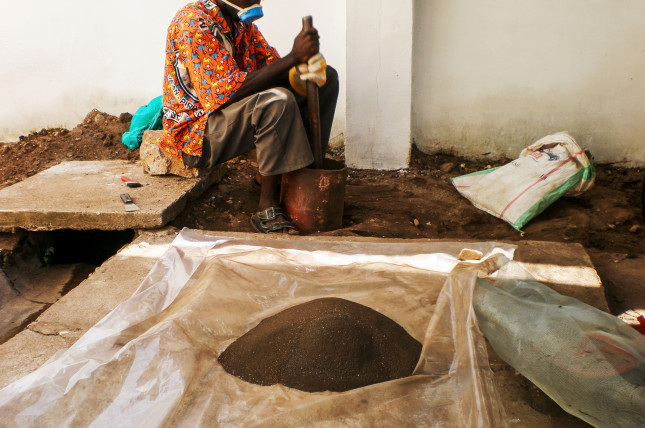
    Pisciculture workshop in Kisangani - DRC. Photo by Axel Fassio/CIFOR cifor.org forestsnews.cifor.org If you use one of our photos, please credit it accordingly and let us know. You can reach us through our Flickr account or at: cifor-mediainfo@cgiar.org and m.edliadi@cgiar.org

    “Africa, as you all know, is one of the most resource-rich regions of the world,” said Cyril Obi, Program Director of the African Peacebuilding Network at the Social Science Research Council. “But many observers have noted that in spite of all this natural wealth, Africa seems to have quite a substantial proportion of its population living under poverty.” He spoke at a recent Wilson Center Africa Program event that examined the relationship between natural resources, sustainable development, and peace in Africa. How do you explain a continent rich with natural resources where so many people live in poverty, he asked.   

    MORE
  • Accessing Justice: Femicide and the Rule of Law in Latin America

    ›
    Dot-Mom  //  From the Wilson Center  //  July 17, 2020  //  By Annelise Gilbert, Beatriz García Nice, Olivia Soledad & Anya Prusa
    18256074579_6616a81ea2_c

    “The pandemic is just making visible a reality that has been going on for decades,” said Claudia Calvin, Founder of Mujeres Construyendo (Women Building) and a member of Nosotras Tenemos Otros Datos (We Have Other Data). She spoke at a recent Wilson Center event on femicide and the rule of law in Latin America. The panelists discussed the longstanding roots of this issue and new barriers to protecting women and preventing violence during the pandemic in the launch event for a project examining gender-based violence in Latin America, co-hosted by the Brazil Institute, Latin America Program, Mexico Institute, and Maternal Health Initiative. “Violence against women and femicides are not new,” Calvin said. But what is new is the fact that the media and civil society are bringing this topic to our attention, she said.

    MORE
Newer Posts   Older Posts
View full site

Join the Conversation

  • RSS
  • subscribe
  • facebook
  • G+
  • twitter
  • iTunes
  • podomatic
  • youtube
Tweets by NewSecurityBeat

Trending Stories

  • unfccclogo1
  • Pop at COP: Population and Family Planning at the UN Climate Negotiations

Featured Media

Backdraft Podcast

play Backdraft
Podcasts

More »

What You're Saying

  • Volunteers,At,The,Lagos,Food,Bank,Initiative,Outreach,To,Ikotun, Pan-African Response to COVID-19: New Forms of Environmental Peacebuilding Emerge
    Rashida Salifu: Great piece 👍🏾 Africa as a continent has suffered this unfortunate pandemic.But it has also...
  • A desert road near Kuqa An Unholy Trinity: Xinjiang’s Unhealthy Relationship With Coal, Water, and the Quest for Development
    Ismail: It is more historically accurate to refer to Xinjiang as East Turkistan.
  • shutterstock_1779654803 Leverage COVID-19 Data Collection Networks for Environmental Peacebuilding
    Carsten Pran: Thanks for reading! It will be interesting to see how society adapts to droves of new information in...

What We’re Reading

  • Rising rates of food instability in Latin America threaten women and Venezuelan migrants
  • Treetop sensors help Indonesia eavesdrop on forests to cut logging
  • 'Seat at the table': Women's land rights seen as key to climate fight
  • A Surprise in Africa: Air Pollution Falls as Economies Rise
  • Himalayan glacier disaster highlights climate change risks
More »
  • woodrow
  • ecsp
  • RSS Feed
  • YouTube
  • Twitter
  • Facebook
  • Home
  • Who We Are
  • Publications
  • Events
  • Wilson Center
  • Contact Us
  • Print Friendly Page

© Copyright 2007-2021. Environmental Change and Security Program.

Woodrow Wilson International Center for Scholars. All rights reserved.

Developed by Vico Rock Media

Environmental Change and Security Program

Woodrow Wilson International Center for Scholars

Ronald Reagan Building and International Trade Center

  • One Woodrow Wilson Plaza
  • 1300 Pennsylvania Ave., NW
  • Washington, DC 20004-3027

T 202-691-4000