-
Environmental Security Weekly Watch: July 28-August 1, 2025
›
A window into what we’re reading at the Stimson Center’s Environmental Security Program
Low Political Will and Depleted Supplies: Inside Iran’s Water Crisis (The New York Times)
Water shortages are a day-to-day reality for many Iranians, as reservoirs shrink, taps run dry for hours, and water pressure remains so low that it doesn’t reach above the second floor. This acute water crisis is driven by a confluence of climatic changes and poor water policies, as Iran’s five-year drought has combined with overdevelopment, excessive dam development, and draining groundwater for agriculture to push already dwindling supplies to the brink.
-
Environmental Security Weekly Watch: July 21-25, 2025
›
A window what we’re reading at the Stimson Center’s Environmental Security Program
Community Patrols Offer a Blueprint to Enforcement of Conservation Law (Mongabay)
In the remote reaches of the Brazilian Amazon, an experiment in grassroots enforcement is yielding results. The Voluntary Environmental Agents Program, which trains and funds residents to patrol their own territories, has reduced illegal fishing, hunting, and logging by 80%. Operating in the Mamirauá and Amanã reserves, the program equips communities with surveillance tools, environmental education, and leadership training, weaving traditional knowledge into conservation efforts.
-
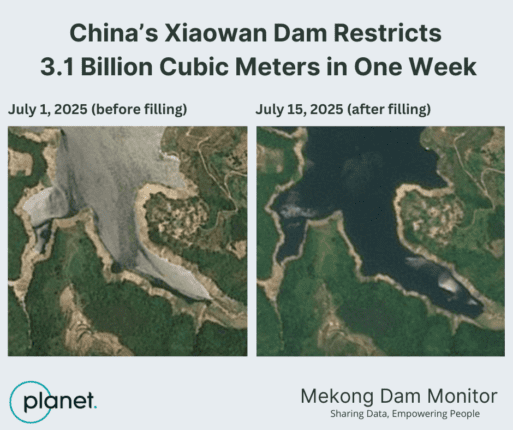
The Mekong Dam Monitor Tracks a River Under Pressure
›The Mekong River’s seasonal floods nurture the world’s most productive inland fishery and irrigate rice paddies that feed millions. Approximately 70 million people live in the lower Mekong Basin, and 75% of them depend on fishing and farming for their livelihoods. But hydropower expansion and other development projects are fragmenting the river and disrupting its natural rhythms, with severe consequences for those living downstream.
-
Environmental Security Weekly Watch | July 14-18
›A window what we’re reading at the Stimson Center’s Environmental Security Program
The World’s Children Face the Most Severe Impacts from Wildfire Smoke (Mongabay)
Evidence of the alarming impacts of wildfire smoke on child health is growing. Children’s developing lungs, faster breathing rates, and greater outdoor exposure make them uniquely vulnerable, and the threat is intensifying as wildfires grow more extreme, incinerating not just forests but urban areas, releasing toxic heavy metals and chemicals.
-
Environmental Security Weekly Watch | July 7 – 11
›A window into what we’re reading at the Stimson Center’s Environmental Security Program
Heat-Related Deaths May Have Tripled during Europe’s Heat Wave (Washington Post)
A record-breaking heat wave in late June and early July pushed temperatures well above 100°F across Europe. Analysis from Imperial College London and the London School of Hygiene and Tropical Medicine found that of the 2,300 heat-related deaths in 12 major European cities between June 23 and July 2, 1,500 would not have occurred without the additional 1.3°C of warming caused by climate change.
-
ECSP Weekly Watch | March 24 – 28
›A window into what we’re reading at the Wilson Center’s Environmental Change and Security Program
Marine Protected Areas in Tanzania Boost Living Standards (Mongabay)
In the 1990s, Tanzania established five multiuse Marine Protected Areas (MPAs) to help the country protect 30% of its oceans by 2030. However, a new study has found that the MPAs offered benefits beyond marine ecosystems by also improving the quality of life in nearby communities.
-
ECSP Weekly Watch | March 17 – 21
›A window into what we’re reading at the Wilson Center’s Environmental Change and Security Program
Canal Projects Endanger Water Security in Pakistan’s Indus Delta (Al Jazeera)
Dozens of villages in the Indus Delta have been submerged by the encroaching sea over recent years, pushing thousands to migrate inland. Now, local residents in Pakistan fear that new canal projects may further exacerbate water shortages in the region.
-
Environmental Peacebuilding: The Year in Review and the Year Ahead
›As 2025 marches into its third month, the governance challenges that accompany rising demand for natural resources are not only on the front burner—they are proliferating—and becoming entangled with the drivers of conflict and cooperation.
The heated competition for resources has bubbled up in a proposed billion-dollar deal for Ukrainian minerals now making global headlines. The view that critical minerals like lithium, manganese, and others could become bargaining chips in potential peace talks demonstrates how central they’ve become to global competition—and to the economic and political future of countries around the world.
Showing posts from category Eye On.