-
The Grades Are In: The Biden Administration Makes Progress on SRHR
›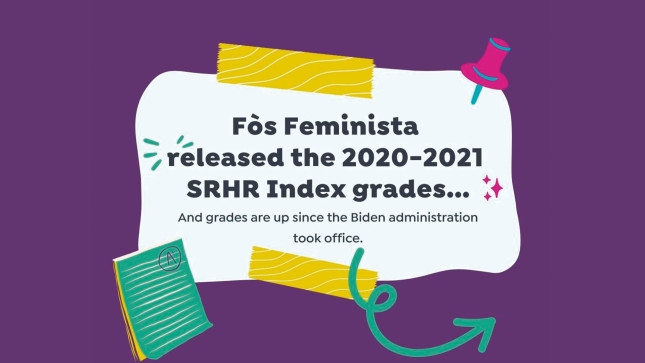
For six years, the Sexual and Reproductive Health and Rights (SRHR) Index has been a tool to hold the United States accountable to the commitments made nearly three decades ago at the International Conference on Population and Development (ICPD) in Cairo in 1994, where 180 countries developed a human rights framework for global development that explicitly promoted SRHR for women and girls globally.
-
Reproductive Autonomy: The Goal in Family Planning
›
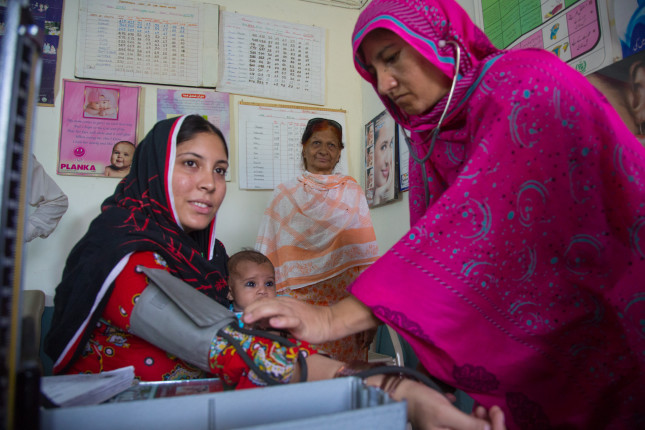
The 15th anniversary of World Contraception Day (WCD) on September 26th was a perfect moment to renew the commitment to increase awareness and knowledge about contraceptive methods. But the availability of safe and effective methods is not enough. Reproductive autonomy, which is defined as “having the power to decide about and control matters associated with contraceptive use, pregnancy, and childbearing,” is also a central tenet of both WCD and the Sustainable Development Goals for 2030. People must be supported in making their own decisions about their sexual and reproductive health, including if and how they become pregnant.
-
New Global Health & Gender Policy Brief: Mental Health and COVID-19
›The COVID-19 pandemic has had far-reaching, negative impacts on health and well-being, particularly in population mental health. Mental health is strongly related to people’s social environment, and the COVID-19 pandemic disrupted this greatly. Many countries instituted shutdowns early in the pandemic restricting people’s movement both within and between countries. Shutdowns socially isolated people from one another and often led to poor mental health. The highest rates of mental distress occurred during time periods when COVID-19 mitigation measures were strictest and the number of COVID-19 related deaths was highest.
-
The Missing Link: Stillbirth & Self-Care
›For many people, stillbirth— the occurrence of a fetal death at 20+ week’s gestation—is a concept. A statistic. Each year, at least 23,000 stillbirths occur in the United States. It occurs in one out of every 160 pregnancies. Yet when these numbers become a reality in your own life, they take on a new meaning.
-
Decolonising Sex Education
›We should be outraged by sexuality education’s colonialist connections. As a researcher and trainer based in the UK, I see how deeply blatant colonialist influences run in the field of sex education. The British empire was obsessed with the sexualities of their subjects and imagined their societies to be exotic licentious places where upper class British men could live out illicit fantasies. Yet, at the same time, these societies were deemed to be wells of immorality that needed Victorian moral education. These dual imaginaries were used to justify colonialism itself as a force to civilize non-western bodies and sexualities, and remain as ideas which echo in more contemporary discourses around controlling population and HIV.
-
Sharing Stories: Prioritizing Sexual and Reproductive Health in Universal Health Coverage
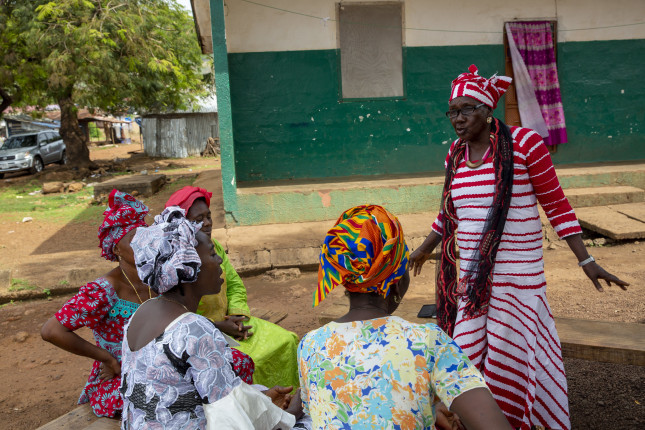
›“Globally women and girls continue to face barriers to access healthcare services—whether it be transport costs, financial costs, or even language barriers,” said Shakira Choonara, Technical Specialist with the World Health Organization (WHO) at a recent launch event of the Sexual and Reproductive Health (SRH) and Universal Health Coverage (UHC) Learning by Sharing Portal (LSP).
-
Moving in Opposite Directions: Abortion Rights in Latin America and the United States
›In its June 2022 decision, Dobbs v. Jackson Women’s Health Organization, the U.S. Supreme Court abandoned decades of precedent to strike down the constitutional right to abortion. This ruling—and a shift in regulatory power over abortion to individual states—is having a profound impact in American society. Already, a record number of abortion measures are on ballots to protect or abolish abortion rights. In many states, the fight over abortion access continues to take place in courtrooms. Far from settling the matter, the Supreme Court’s ruling showcases the deep divide over abortion in American society.
-
Turning Power on its Head: A Meaningful Shift Toward Localization
›Of COVID-19’s many lessons, one is most critical to our collective next steps:
Business as usual in global health is no longer possible.
The pandemic exposed weaknesses in health systems across the world, and particularly in the delivery of equitable, high-quality reproductive, maternal, newborn, adolescent, and child health (RMNCAH) services. It also reinforced that effectively addressing these challenges requires rapid, responsive approaches driven and owned by countries and local institutions.
Showing posts from category Dot-Mom.