• woodrow wilson center
  • ecsp

New Security Beat

Subscribe:
  • rss
  • mail-to
  • Who We Are
  • Topics
    • Population
    • Environment
    • Security
    • Health
    • Development
  • Columns
    • China Environment Forum
    • Choke Point
    • Dot-Mom
    • Friday Podcasts
    • Navigating the Poles
    • Reading Radar
  • Multimedia
    • Water Stories (Podcast Series)
    • Backdraft (Podcast Series)
    • Tracking the Energy Titans (Interactive)
  • Films
    • Water, Conflict, and Peacebuilding (Animated Short)
    • Paving the Way (Ethiopia)
    • Broken Landscape (India)
    • Scaling the Mountain (Nepal)
    • Healthy People, Healthy Environment (Tanzania)
  • Publications
  • Events
  • Contact Us

NewSecurityBeat

The blog of the Wilson Center's Environmental Change and Security Program
Showing posts from category biodiversity.
  • Imagine There Are No Countries: Conservation Beyond Borders in the Balkans

    ›
    Guest Contributor  //  March 19, 2010  //  By Todd Walters
    International peace parks have captured the imagination of visionaries like Nelson Mandela, who called them a “concept that can be embraced by all.” Such parks—also known as transboundary protected areas—span national boundaries, testifying to the peaceful collaborative relationship between neighboring countries and to the co-existence of humans and nature.

    Peace parks seek to simultaneously promote regional peace and stability, conserve biodiversity, and stimulate job creation. How can they accomplish such ambitious goals?
    • Biodiversity: The political borders and physical barriers within the park are removed, allowing animals and humans to migrate freely. In addition, surveys of the area’s biodiversity don’t stop at sovereign borders, but are instead conducted on an ecosystem basis.
    • Job creation: Developing eco-tourism—one of the fastest-growing industries in the world—provides people living near peace parks an incentivized alternative to exhausting the very resource base on which their survival depends.
    • Peace and stability: To jointly manage natural resources successfully requires countries to collaborate through cross-boundary committees on conservation, safety and security, finance, human resources, legislation, and tourism.
    My organization, International Peace Park Expeditions, uses experiential peacebuilding, academic programs, and professional trainings in international peace parks to integrate theory with practice. We seek to develop leadership and collaboration among three distinct, but complementary, groups: students and professors, transboundary protected area professionals, and youth from the peace park countries.

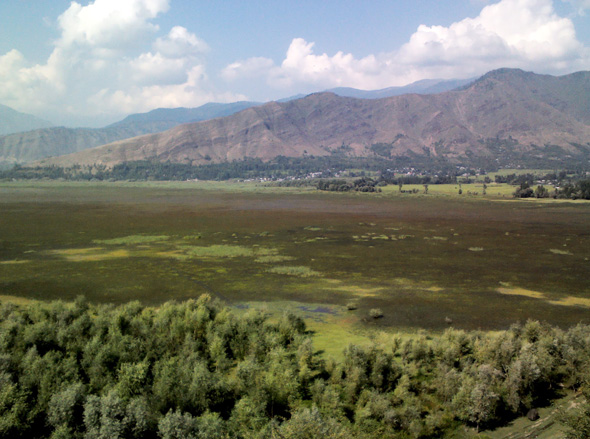
    Our Summer 2010 programs focus on the proposed peace park in the Western Balkans’ Prokletije/Bjeshket e Namuna mountains, between Albania and the newly independent countries of Montenegro (2006) and Kosovo (2008), which were formerly part of Yugoslavia. The Balkans Peace Park Project, a UK charity and their local network of partner organizations and individuals, first conceptualized the Balkans Peace Park, an area of approximately 4000 square km, in 2001.

    This summer, participants in our professional training symposium will collaboratively develop a more precise and dynamic map. Students and young leaders in our other two programs will learn about peace parks while trekking together across the borders into all three countries.

    Experiential Peacebuilding (July 19-25, 2010)

    Experiential Peacebuilding programs combine outdoor experiential education and practical skills training in peacebuilding to foster the development of a community of young leaders capable of catalyzing positive peaceful changes in their communities. This summer’s program is being developed in conjunction with our local partner organizations (ERA and Marimangut in Kosovo; Outdoor Albania and High Albania in Albania; and PSD Prokletija in Montenegro). The primary goals of these programs are to unite youth from conflict-affected communities to develop relationships across borders; transform negative attitudes and stereotypes; and create a core group of young leaders with the skills, tools, and motivation to generate and direct changes in their communities.

    Academic Expedition (June 7-26 and August 2-21, 2010)

    This three-week, three-credit course, “Conservation Beyond Borders,” will combine traditional academic teaching with proven experiential learning methodologies to create a unique, dynamic expedition that will provide students with a strong understanding of the theory and practice of international peace parks. Course readings and lectures will provide the academic base, and guest lectures from subject-matter experts working in the field will create the bridge; both will address sustainable forestry management, biodiversity surveys, eco-tourism plans, development and infrastructure planning, environmental conservation, water resource management, peacebuilding initiatives, and cross-border projects. First-hand experience trekking through the proposed Balkans Peace Park, crossing the borders of Albania, Kosovo, and Montenegro, and living among the local people will bring theory to life.

    Professional Training Symposium (July 8-9, 2010)

    This year’s Professional Field Training Symposium, “Critical Transboundary Environmental Linkages,” will bring together experts, policymakers, and stakeholders from the Prokletije/Bjeshket e Namuna region to discuss cross-border ecotourism, biodiversity mapping, and sustainable forestry management. The symposium seeks to build trust through cross-border collaboration, and to improve environmental management in the peace park region. Participants will create a Google Earth map to house shared environmental data and visit two project sites in the proposed peace park.

    Todd Walters is the founder and executive director of International Peace Park Expeditions. He holds a master’s degree in International Peace and Conflict Resolution from American University’s School of International Service, and is a National Outdoor Leadership School (NOLS) certified wilderness guide. While at AU, he worked as an intern for the Environmental Change and Security Program.

    Photos courtesy IPPE/Cory Wilson.
    MORE
  • Video—Ken Conca: ‘Green Planet Blues: Four Decades of Global Environmental Politics’

    ›
    February 19, 2010  //  By Julia Griffin
    “Much of the conversation about the global environment, frankly, is an elite conversation,” says Ken Conca, professor of government and politics at the University of Maryland. “But at the same time there are community-level voices, there are voices of indigenous people, there are voices of the powerless, as well as the powerful…. I think it’s important to capture them and not just limit [the conversation] to the most easily accessible voices.”

    Conca and co-editor Geoff Dabelko include these oft-muted voices in the newly released 4th edition of Green Planet Blues: Four Decades of Global Environmental Politics. “One of the things we were really trying to achieve was to give people a sense of the history,” said Conca. To fully understand the origins of today’s debates, students must go back to the beginning of the last four decades of international environmental politics.

    Three key paradigms—sustainability, environmental security, and ecological justice—frame the debates in Green Planet Blues. “Ideas do matter,” says Conca. “They really do change the world, and one of the premises of our work and of the book is to try to understand what sorts of ideas people bring to the table when they think of global environmental problems.”
    MORE
  • Glaciers, Cheetahs, and Nukes, Oh My! EP in the FT

    ›
    August 7, 2009  //  By Geoffrey D. Dabelko
    Financial Times South Asia Bureau Chief James Lamont has written a flood of environment-as-political-dialogue stories this week! (Well, only two, but that constitutes a deluge in the world of environmental peacebuilding.)

    On Monday he wrote about India and China’s agreement to work together to monitor Himalayan glacial melt. The potential decline in water availability from seasonal snow and glacier melt is finally seeping into the consciousness of policymakers outside the climate world, including the diplomatic and security communities. Lamont frames the step as a rare instance of cooperation in a strategically sensitive area at the center of a 1962 territorial war between the countries.

    While it would be easy to make too much of such an agreement, it is a tangible recognition of the importance of the ecological unit rather than the national one. It highlights how environmental interdependence across national boundaries can force cooperation in the face of politically difficult relations.

    On Wednesday Lamont used cheetah diplomacy between India and Iran as an entry point for his story on international attempts to address Iran’s nuclear proliferation threat. India is asking Iran to help reintroduce cheetahs on the subcontinent, where they are now extinct. In what Lamont said would be an “unusual” example of “high-profile cooperation” for the two countries, diplomats are arranging for talks ahead of a regional wildlife conference. This baby step in relations could be even more significant since the United States publicly acknowledged that India may be able to play an interlocutor role with Iran on the hot button nuclear program question.

    While both of these developments are relatively small in the scheme of the larger strategic relationships, they are fundamentally aimed at (re)building relationships between countries by establishing patterns of cooperation where interdependence is obvious and necessary. Such efforts are just one tool in the often-neglected toolbox of environmental peacebuilding.

    Photo: Yawning cheetah cub courtesy Flickr user Tambako.
    MORE
  • Post-Conflict Recovery in Biodiversity Hotspots

    ›
    Guest Contributor  //  July 14, 2009  //  By Adrienne Stork

    The prevalence of armed conflict in areas of high biodiversity is alarming, though not entirely surprising. According to “Warfare in Biodiversity Hotspots” (abstract online), which was published earlier this year in Conservation Biology, 80 percent of the major armed conflicts between 1950 and 2000 took place in biodiversity hotspots. While natural resources are rarely the principal causes of conflict, their allocation and ownership are frequently among its drivers.

    MORE
Newer Posts  
View full site

Join the Conversation

  • RSS
  • subscribe
  • facebook
  • G+
  • twitter
  • iTunes
  • podomatic
  • youtube
Tweets by NewSecurityBeat

Trending Stories

  • unfccclogo1
  • Pop at COP: Population and Family Planning at the UN Climate Negotiations

Featured Media

Backdraft Podcast

play Backdraft
Podcasts

More »

What You're Saying

  • Volunteers,At,The,Lagos,Food,Bank,Initiative,Outreach,To,Ikotun, Pan-African Response to COVID-19: New Forms of Environmental Peacebuilding Emerge
    Rashida Salifu: Great piece 👍🏾 Africa as a continent has suffered this unfortunate pandemic.But it has also...
  • A desert road near Kuqa An Unholy Trinity: Xinjiang’s Unhealthy Relationship With Coal, Water, and the Quest for Development
    Ismail: It is more historically accurate to refer to Xinjiang as East Turkistan.
  • shutterstock_1779654803 Leverage COVID-19 Data Collection Networks for Environmental Peacebuilding
    Carsten Pran: Thanks for reading! It will be interesting to see how society adapts to droves of new information in...

What We’re Reading

  • Rising rates of food instability in Latin America threaten women and Venezuelan migrants
  • Treetop sensors help Indonesia eavesdrop on forests to cut logging
  • 'Seat at the table': Women's land rights seen as key to climate fight
  • A Surprise in Africa: Air Pollution Falls as Economies Rise
  • Himalayan glacier disaster highlights climate change risks
More »
  • woodrow
  • ecsp
  • RSS Feed
  • YouTube
  • Twitter
  • Facebook
  • Home
  • Who We Are
  • Publications
  • Events
  • Wilson Center
  • Contact Us
  • Print Friendly Page

© Copyright 2007-2021. Environmental Change and Security Program.

Woodrow Wilson International Center for Scholars. All rights reserved.

Developed by Vico Rock Media

Environmental Change and Security Program

Woodrow Wilson International Center for Scholars

Ronald Reagan Building and International Trade Center

  • One Woodrow Wilson Plaza
  • 1300 Pennsylvania Ave., NW
  • Washington, DC 20004-3027

T 202-691-4000