• woodrow wilson center
  • ecsp

New Security Beat

Subscribe:
  • rss
  • mail-to
  • Who We Are
  • Topics
    • Population
    • Environment
    • Security
    • Health
    • Development
  • Columns
    • China Environment Forum
    • Choke Point
    • Dot-Mom
    • Friday Podcasts
    • Navigating the Poles
    • Reading Radar
  • Multimedia
    • Water Stories (Podcast Series)
    • Backdraft (Podcast Series)
    • Tracking the Energy Titans (Interactive)
  • Films
    • Water, Conflict, and Peacebuilding (Animated Short)
    • Paving the Way (Ethiopia)
    • Broken Landscape (India)
    • Scaling the Mountain (Nepal)
    • Healthy People, Healthy Environment (Tanzania)
  • Publications
  • Events
  • Contact Us

NewSecurityBeat

The blog of the Wilson Center's Environmental Change and Security Program
Showing posts from category biodiversity.
  • Scott Wallace, National Geographic

    A Death Foretold

    ›
    June 23, 2011  //  By Wilson Center Staff
    The original version of this article, by Scott Wallace, appeared on National Geographic News Watch.

    Late last month the Brazilian Congress passed a bill that if it becomes law would ease restrictions on rain-forest clearing and make it easier than ever to mow down the Amazon. That same day, 800 miles north of the parliamentary chamber in Brasilia, assailants ambushed and killed a married couple whose opposition to environmental crimes had placed them in the crosshairs of those who most stand to gain from the new legislation.

    It’s a nauseatingly familiar story. Over the past 20 years, there have been more than 1,200 murders related to land conflict in Brazil’s Amazon region. Most of the victims, like the married activists Zé Claudio Ribeiro and Maria do Espírito Santo, were defenders of the rain forest – people seeking sustainable alternatives to the plunder-for-profit schemes that characterize much of what passes for “development” in the Amazon.

    The state of Pará – where Zé Claudio and Maria were ambushed on their motorbike as they crossed a rickety bridge – holds an especially notorious reputation for environmental destruction and organized violence. Pará is the bloodiest state in Brazil, accounting for nearly half of all land-related deaths in recent decades. It sprawls across an area larger than the states of Texas, Oklahoma, and New Mexico combined. Picture a tropical version of the Wild West, stripped of the romance, where loggers and ranchers muscle their way onto public land as though they own the place and impose a law of the jungle with their hired thugs. Those who have the nerve to protest soon find themselves the targets of escalating threats. If they persist, they find themselves staring down the gun barrels of those come to make good on the threats.

    Continue reading on National Geographic.

    Photo Credit: “Toras,” courtesy of flickr user c.alberto.
    MORE
  • Tim Siegenbeek van Heukelom, State-of-Affairs

    Food Security in Kenya’s Yala Swamp

    ›
    June 21, 2011  //  By Wilson Center Staff
    The original version of this article, by Tim Siegenbeek van Heukelom, appeared on State-of-Affairs.

    In West Kenya on the Northeastern shore of Lake Victoria, the Yala swamp wetland is one of Kenya’s biodiversity hotspots. The Yala swamp also supports several communities that utilize the wetland’s natural resources to support their families and secure their livelihoods. Even more, many people recognize the swamp’s extraordinary potential as agricultural land to significantly boost Kenya’s food security. These are three widely diverse interests, which may seem to be difficult to reconcile. Yet, with proper management, sufficient investment and effective communication, a differentiated utilization of the Yala swamp can be realized through a system of multiple land use. This will be a difficult but certainly not unrealistic objective.

    A Brief History

    The most recent development of the Yala swamp was undertaken by Dominion Farms, a subsidiary of a privately held company from the United States investing in agricultural development. The reclamation and development of the swamp, however, is far from a new phenomenon.

    The intention of the Kenyan government to transform parts of the Yala swamp into agricultural land for food production goes back as far as the early 1970s. Around that time, the Ministry of Foreign Affairs of the Netherlands was consulted extensively by the Kenyan government for technical assistance on reclamation of the swamp and the feasibility of agricultural production.

    Throughout the 1980s numerous reports were commissioned by the Kenyan Ministry for Energy and Regional Development and the Lake Basin Development Authority to the Dutch Ministry of Foreign Affairs. Reports like the “Yala Integrated Development Plan” and the “Yala Swamp Reclamation and Development Project” focused in depth on the potential of the development of the swamp and made recommendations on practical matters, such as drainage and irrigation, soil analysis, agriculture, marketing, environmental aspects, employment opportunities, human settlement, management, and financial planning.

    As a result, small-scale reclamation and development of the swamp land was undertaken throughout the 1980s and 1990s under the supervision of the Lake Basin Development Authority. The development of the swamp was partially successful, yet its scale was small and financial benefits were too marginal. Major investment was therefore required to extend the scale of the project.

    Then, in 2003, an American investor expressed interest to make significant long-term investments into bringing parts of the swamp into agricultural production. Subsequently, a lease for 45 years was negotiated between Dominion Farms and the Siaya and Bondo County Councils to bring into agricultural production some 7,000 hectares of the Yala swamp. The whole Yala swamp wetland covers 17,500 hectares, which means that Dominion Farms is allowed to reclaim and develop roughly 40 percent of the swamp.

    Protracted Conflict

    Since the early days of the arrival of the foreign investor in 2004, there has been lingering tension and occasional flares of conflict between the communities surrounding the project site, third parties (i.e. government officials, politicians, NGOs, CBOs, environmentalists), and the investor.

    The most commonly touted complaint is that Dominion Farms “grabbed” the communities’ land. While it is hard to trace back the exact procedures and individuals that were involved, there are clear contracts with the Siaya and Bondo County Councils that substantiate the transfer of land-use to Dominion Farms for a period of 45 years. Some claim, however, that the negotiation process for the lease was entrenched in bribery and corruption, yet no one has been able to show this author a single trace of evidence to substantiate these accusations. Similarly, there are complaints by local residents that they were never consulted in the negotiation process – where they should have been, as they rightly point out that the swamp is community trust land. However, the land is held in trust by the relevant county council for the community. The county council should therefore initiate consultations with the local communities and residents to get their approval to lease the land to third parties. So it appears that some of the resentment over the loss of parts of the swamp should not be directed at the foreign investor but rather target the local county council and their procedures.

    Continue reading on State-of-Affairs.
    MORE
  • Book Launch: ‘Human Population: Its Influence on Biological Diversity’

    ›
    From the Wilson Center  //  June 9, 2011  //  By Ramona Godbole
    Measurements of “human population density and growth can be used to identify changes in the viability of native species, and more directly, in changes in ecological systems or habitat quality,” said Richard Cincotta, consultant at the Environmental Change and Security Program and demographer-in-residence at the Stimson Center, speaking at the book launch of Human Population: Its Influence on Biological Diversity.

    Cincotta was joined by coeditor L.J. Gorenflo, associate professor of landscape architecture at Penn State University, and contributing author Christopher Small, research professor at the Lamont-Doherty Earth Observatory and adjunct professor at Columbia University, to discuss the book’s objectives, its diverse and multidisciplinary contributors, and its policy implications. [Video Below]

    Establishing a Handbook for the Field


    “Human Population: Its Influence on Biological Diversity establishes a handbook for the field,” said Cincotta. While the scientific volume is specifically geared towards researchers and conservation managers rather than policymakers, “there are a few Washington-type policy messages that are useful,” he added.

    Human population affects biological diversity in multiple ways. While population density alone can be strongly indicative of the viability of different populations of native species, human activities and their chemical and energetic byproducts can also have a strong impact, even when human population density is low, said Cincotta.

    Conserving Biodiversity in Different Settings

    “Planned solutions, based on strategic actions, increasingly are essential,” said Gorenflo, a professor at Penn State University. “The days of letting nature take care itself are probably gone.” Gorenflo presented results from the two chapters he worked on: “Human Demography and Conservation in the Apache Highlands Ecoregion, U.S.-Mexico Borderlands” and “Exploring the Association Between People and Deforestation in Madagascar.”

    “Population density seems to be a reasonably good indicator of biodiversity loss,” said Gorenflo. Data from the Apache Highland Ecoregion (a 12 million-hectare area located along the U.S.-Mexico border) indicate that biodiversity tends to drop off at population densities of more than 10 people per square kilometer. Conservation efforts in areas within the ecoregion that are at, or close to, this density threshold will likely encounter challenges to maintaining biodiversity, he said.

    Human mobility is a major consideration, said Gorenflo: “Whereas high fertility can create population growth over generations, high mobility can create population growth in a matter of months or years.” In the Apache Highlands, for example, the 40 percent increase in population between 1990 and 2000 was largely caused by migration into U.S. cities in the region.

    In Madagascar, Gorenflo and colleagues examined whether population growth and poverty were systematically driving deforestation and loss of biodiversity. Using data from the 1990s, they found that higher population density only slightly raises rates of deforestation and large increases in income only modestly decrease deforestation.

    Not surprisingly, they found that the likelihood of deforestation decreased dramatically in protected areas. In addition, proximity to roads or footpaths was associated with significantly higher rates of deforestation. “Roads, footpaths, and protected areas are all policy decisions,” Gorenflo pointed out. “So when bilateral or multilateral organizations decide to invest in development in a place like Madagascar, they can look at these sorts of investments as being important.”

    While there are some similarities to be drawn between regions’ experience with population and biodiversity, said Gorenflo, “every locality likely has a slightly different story; you need to do context-specific studies to get a real handle on what is going on.”

    The Human Habitat

    In his chapter, “The Human Habitat,” Christopher Small of the Lamont-Doherty Earth Observatory said his goal was “to set the stage for some of the more detailed studies by taking a look at the global distribution of human population.”

    Using census data and satellite-derived maps of night lights to serve as a “proxy for development,” Small found that “people are everywhere, but they are not evenly distributed.”

    At least half the world’s population lives on less than three percent of the inhabitable land, and most people live at densities between 100 and 1000 people per square kilometer. At both local and global scales, population density and city size are dominated by extremes: There are large numbers of small groups of people, and small numbers of large groups of people, he said.

    “The environments where people live are more strongly correlated with features of the landscape than they are with climatic parameters,” said Small. While humans have effectively adapted to a range of climates, the majority of people tend to cluster close to rivers, at low elevations, and close to coastlines. Although it was once thought that three-quarters of the world’s population lived in coastal regions, Small’s results show that the actual number is close to half of these previous assumptions.

    Understanding the spatial and environmental distribution of population and managing population growth may therefore help minimize negative impacts on specific habitats and biomes, said Small.

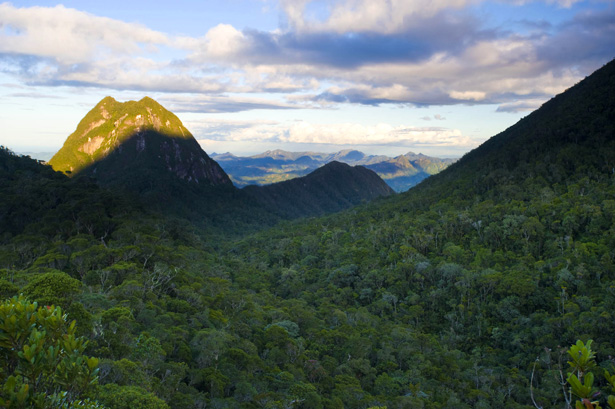
    Image Credit: “View from a Madagascar Train,” courtesy of flickr user cr01.
    MORE
  • Population Growth and its Relation to Poverty, the Environment, and Human Rights

    ›
    Reading Radar  //  April 26, 2011  //  By Schuyler Null
    “Population, Poverty, Environment, and Climate Dynamics in the Developing World,” in the Interdisciplinary Environmental Review, by Jason Bremner, David Lopez-Carr, Laurel Suter, and Jason Davis, attempts to illuminate and clarify the complex relationships between environmental degradation, population dynamics, and poverty. Population growth is a key driver for the degradation of ecosystem services which has a direct impact on livelihoods and human well-being, write the authors, especially for the poor. They argue that “population growth itself, however, remains an insufficient explanation of the relationship between population, ecosystems, and poverty.” While the field has a come a long way since its “original Malthusian roots,” they write, the relationships between these dynamics differ greatly depending on the area in question, and much work remains to be done on the less well-studied ecosystems.

    In “An End to Population Growth: Why Family Planning Is Key to a Sustainable Future” from the Solutions Journal, Robert Engelman reminds us that population projections are not set in stone and that the widespread belief that population has to reach nine billion before leveling off is wrong. Nor is coercive “population control” necessary, he writes: “Population growth rates and average family size worldwide have fallen by roughly half over the past four decades, as modern contraception has become more accessible and popular.” Unfortunately, there remains a large number of people around the world without access to family planning, the majority of whom live in developing countries. Engelman points out that while the number of people of reproductive age has steadily increased in these countries over the last decade, donor support has declined. He argues that research, courage, and creativity are needed to reverse this situation, but in a world where most of all pregnancies were intended, population growth would slow long before reaching nine billion.
    MORE
  • Madagascar, Past and Future: Lessons From Population, Health, and Environment Programs

    ›
    From the Wilson Center  //  April 14, 2011  //  By Christina Daggett
    In Madagascar, “today’s challenges are even greater than those faced 25 years ago,” said Lisa Gaylord, director of program development at the Wildlife Conservation Society. At an event at the Woodrow Wilson Center on March 28, Gaylord and her co-panelists, Matthew Erdman, the program coordinator for the Population-Health-Environment Program at Blue Ventures Conservation, and Kristen Patterson, a senior program officer at The Nature Conservancy, discussed the challenges and outcomes of past and future integrated population, health, and environment (PHE) programs in Madagascar. [Video Below]

    Nature, Health, Wealth, and Power


    Gaylord, who has worked in Madagascar for nearly 30 years, gave a brief history of USAID’s activities on the unique island, which she called a “mini-continent.” She used the “nature, health, wealth, and power” framework to review the organization’s environment, health, and livelihoods programs in Madagascar and their results. Governance, she said, is the centerpiece of this framework, but this piece “maybe didn’t have an adequate foundation” in Madagascar to see the programs through the political crisis.

    Though its programs started at the community level, Gaylord said USAID’s objective was to scale up to larger levels. “You can’t always work on that level and have an impact,” she said, and there was “tremendous hope” in 2002 for such scaling up when Madagascar elected a new president, Marc Ravalomanana.

    Unfortunately, changes in funding, a lack of economic infrastructure, and poor governance forced development programs to scale down. After President Ravalomanana was overthrown in a military coup in 2009, the situation got worse – the United States and other donors pulled most funding, and only humanitarian programs were allowed to continue.

    “What worries me is that I think we have gone back” to working on a village level, Gaylord said. “We want to go up in scale, and I think that we felt that we could in Madagascar, but that’s where you have the political complexities that didn’t allow us to continue in that direction.”

    Going forward, Gaylord said that it is important to maintain a field-level foundation, take the time to build good governance, and maintain a balance in the funding levels so that no one area, such as health, dominates development activities.

    Living With the Sea

    Based in southwestern Madagascar, the Blue Ventures program began as an ecotourism outfit, said Erdman, but has since grown to incorporate marine conservation, family planning, and alternative livelihoods. One of its major accomplishments was the establishment of the largest locally managed marine protection area in the Indian Ocean, called Velondriake, which in Malagasy means “to live with the sea.” This marine area covers 80 kilometers of coastline, incorporates 25 villages, and includes more than 10,000 people. The marine reserves for fish, turtles, and octopus, as well as a permanent mangrove reserve, protect stocks from overfishing.

    One of the biggest challenges facing the region is its rapidly growing population, which threatens the residents’ health and their food security, as well as the natural resources on which they depend. More than half the population is under the age of 15 and the infant and maternal mortality rates are very high, Erdman explained. Blue Ventures, therefore, set up a family planning program called Safidy, which means “choice” in Malagasy.

    “If you have good health, and family size is based on quality, families can be smaller and [there will be] less demand for natural resources, leading to a healthier environment,” said Erdman.

    The region’s isolation and lack of education and health services are a challenge, said Erdman, but over the past three years, the contraceptive prevalence rate has increased dramatically, as has the number of clinic visits. The program uses a combination of clinics, peer educators, theater presentations, and sporting events, such as soccer tournaments, to spread information about health and family planning.

    A Champion Community

    “There is a long history of collaborative work in Madagascar,” Patterson said. Focusing on the commune (county) level, she worked in conjunction with USAID, Malagasy NGOs, and government ministries to try to scale up PHE programs in Madagascar’s Fianarantsoa province, which has a target population of 250,000 people.

    “We essentially worked at two different levels,” said Patterson. At the regional level, a coordinating body for USAID and local partners called the “Eco-Regional Alliance” met monthly. The “Champion Commune” initiative, which worked at local levels, had three main goals, she explained:
    • Create a strong overlap with neighboring communes;
    • Promote activities that benefited more than one sector (such as reforesting with vitamin-rich papaya trees); and
    • Capitalize on the prior experiences of Malagasy NGOs in implementing integrated projects to help build up civil society.
    Though working in such remote areas is expensive, and all non-humanitarian U.S. foreign aid has been suspended since the coup, Patterson hopes that development programs will return to Madagascar. Pointing to its vast rural areas, she stressed the importance of integrated efforts: “The very nature of multi-sectoral programs is that they have the highest benefit in the areas that are most remote. These are the areas where people are literally left out in the cold.”

    Image credit: “Untitled,” courtesy of flickr user Alex Cameron.

    Sources: The New York Times, Velondriake.
    MORE
  • Watch: David Lopez Carr and Liza Grandia on Rural Population Growth and Development in Guatemala

    ›
    March 22, 2011  //  By Hannah Marqusee
    Demographers today are largely concerned with two trends: aging in the developed world, and rapid urbanization in the developing world. The majority of people in the world now live in cities, “but this tiny fraction of people that live in rural areas – concealed by the data because it’s a small fraction – still have very high fertility rates, precisely where protected areas are,” said David Lopez-Carr, associate professor of geography at the University of California, Santa Barbara in this ECSP interview.

    “You see a gradient. The more rural, the more remote, the higher fertility,” said Carr. In Guatemala, for example, fertility rates range from below four children per woman in Guatemala City, to as high as eight in the remote Maya biosphere reserve, which is mostly indigenous. “These are the populations that are growing the fastest and the ones who are living in direct proximity and whose livelihoods are predicated directly on the rainforest, whether it’s through resource extraction or…agricultural expansion,” said Carr.

    Liza Grandia, assistant professor of international development and social change at Clark University, spent many years working in the Maya biosphere reserve with the Guatemalan NGO ProPeten to address deforestation. However, after years of alternative livelihood projects, “it became clear that many of those efforts would be undermined by population growth and continued migration into the region,” she said in an interview with ECSP.


    Grandia and ProPeten conducted a study as part of the Demographic and Health Surveys to examine the linkages between health, population, and environmental trends in the Peten region. Based on these findings, Grandia founded Remedios, a program that partnered with International Planned Parenthood Foundation and the Guatemala Ministry of Health to provide family planning services to “one of the most remote places in Latin America.”

    Remedios used mass media, such as the radio soap opera “Between Two Roads,” broadcast in Spanish and Q’eqchi’ Maya, to reach people across this remote region. In the popular soap opera, “the villain is a cattle rancher, the heroine is a midwife, and through the tales of daily life in this village we weave in messages about domestic violence, use of family planning, agrarian problems, like land speculation, and a whole host of other issues that come up in people’s daily lives,” said Grandia. “In three years as a result of that work, the total fertility went from 6.8 to 5.8. To date, 10 years later, it’s dropped to 4.3.”
    MORE
  • Managing the Planet’s Freshwater

    ›
    From the Wilson Center  //  March 14, 2011  //  By Ramona Godbole
    “The impact of human activities on the planet and on its biology has risen to a scale that deserves a commensurate response,” said Tom Lovejoy, professor at George Mason University, introducing a discussion on “Managing the Planet’s Freshwater,” the second of a monthly series led jointly by George Mason University and the Woodrow Wilson Center. Karin M. Krchnak, director of International Water Policy at The Nature Conservancy (TNC), and Dann Sklarew, sustainability fellow at George Mason University, joined Lovejoy to discuss the increasing stress placed by population growth, urbanization, and environmental change on freshwater resources and potential solutions to global water insecurity. [Video Below]

    Water: “A Global Crisis”


    Water insecurity and pollution is “a global crisis,” said Sklarew. Water scarcity is growing and aquatic biodiversity is declining around the world. According to the World Water Council, over one billion people do not have safe drinking water.

    Inadequate water management contributes to these problems, said Sklarew. But, human activities “impact water connectivity, quality, and flows” at all scales, he said, and combined with climate change, have fundamentally altered the global water cycle.

    “The water-rich and the water-poor are intimately connected,” said Sklarew. National, international, and global trade “water transfers” often move water from dry rural areas to urban centers, he said. “We’re taking from areas that don’t have [water] and moving water, by itself or via food products, to places where they might actually have more water in their local environment.”

    But there are many opportunities – from the incremental to the bold, exciting, and revolutionary – to address these problems, said Sklarew, including growing more food with less water, reducing destructive subsidies, restoring natural river flows via dam re-design or removal, encouraging greener infrastructure in urban areas, and supporting participatory decision-making about water. He also pointed to promoting lower population growth and allowing migration that “brings the people to the water rather than the water to the people” as additional ways to improve water security. In the future, “bio-mimicking and techno-fixes,” may also provide promising solutions, he said.

    Clear national goals and a global-scale response are critical to making these solutions a reality, said Sklarew: “Even though these challenges are often local, in the end, we have one interconnected water system.”

    Watershed Protection: Innovative Solutions

    “I know we all wish that there was a silver bullet for global water challenges,” said Krchnak, “but there’s not just one solution.”

    As population grows by an additional 2 billion people before 2050, “solutions must take population growth into account,” said Krchnak. One-third of the world’s population is now subject to water scarcity, which is expected to double in the next 30 years

    More water will be necessary to meet growing demands for food, energy, and other commodities, said Krchnak. In particular, “the poor in urban centers will be the dominant challenge for us in the next decades.”

    Krchnak described three possible strategies to protect watersheds: market-based mechanisms, integrated water resource management, and incentive approaches.

    Water funds, a market-based mechanism in which downstream water users pay for protection of the upper watershed, are one possible way to better manage freshwater, said Krchnak. With the help of local partners, TNC’s Quito Water Fund, for example, creates a sustainable finance mechanism and protects watersheds that supply 2 million people. Similar programs “can be taken to other geographies and replicated across the globe,” she said.

    Another TNC program, the Great River Partnership, uses an integrated water resource management strategy that focuses on stakeholder collaboration and working with public and private partners to help create “one vision” for major rivers like the Mississippi, Magdalena, Paraguay-Parana, Yangtze, and Zambezi, said Krchnak.

    The Alliance for Water Stewardship uses an incentive-based approach to promote “responsible use of fresh water that is socially beneficial and environmentally and economically sustainable.” One of the main objectives of the Alliance is to develop performance standards and create a certification program that recognizes water providers who work to protect freshwater resources.

    Strategies like these may not be appropriate everywhere, and programs need to be adapted to make local implementation possible, said Krchnak, but effectively managing the planet’s freshwater is vital for human health, spiritual and cultural well-being, ecosystems and biodiversity, and economic opportunity.

    Sources: World Water Council, UNDP.

    Photo Credit: “Rio Magdalena,” courtesy of flickr user Esparta.
    MORE
  • Mapping Demographics in WWF Priority Conservation Areas

    ›
    February 25, 2011  //  By Hannah Marqusee
    “The developing world is urbanizing at a dizzying pace,” yet rural populations living in developing countries are also rapidly increasing, threatening many of the planet’s most biodiverse regions, says a new study, Mapping Population onto Priority Conservation Areas, by David López-Carr, Matthew Erdman, and Alex Zvoleff.

    Using comprehensive data from the USAID-sponsored Demographic Health Surveys (DHS), the researchers analyzed population, mortality, and fertility indicators for 10 of the 19 priority places for conservation identified by the World Wildlife Foundation (WWF). These biological hotspots represent parts of 25 countries throughout South Asia, sub-Saharan Africa, and South America, including the Democratic Republic of the Congo, Colombia, Guatemala, Indonesia, Kenya, Nepal, Madagascar, and Thailand.

    Urban vs. Rural

    The findings confirmed the researchers’ hypothesis that rural areas within WWF priority regions are at a lower state of demographic transition than their urban counterparts, meaning they have higher fertility and infant mortality rates and a younger age structure due to poor access to primary health care, including family planning. Furthermore, women in these regions desire more children than those in urban, non-priority areas, but experience a greater difference between ideal and actual number of children.

    For many of the indicators, the differences between urban and rural, and priority and non-priority, regions of the developing world are striking. In urban Asia, the mean predicted population doubling time is 86.1 years; in rural Africa it is only 24.6 years. Urban Asia and South America also have total fertility rates of 1.8 children per woman, while rural Africa’s is 5.2. Infant mortality also ranged from a low of 20 deaths per every 1,000 births in some developing urban areas, to over 100 in rural parts of Coastal East Africa. In the developed world it is less than 10.

    There is also consistently less desire among women in priority areas to limit their childbearing. Worldwide, 49.4 percent of women living within priority areas want to limit childbearing, compared to 56.2 percent outside priority areas.

    Rural areas in all regions had the highest unmet need for family planning, with the exception of the Congo Basin, where high infant mortality has persisted and dampened women’s desire to limit childbearing. “If much needed health services were provided in the Congo Basin, along with family planning services, child survival rates would increase, and couples would be more inclined to limit overall births,” the study says.

    Lower demand for family planning in priority areas is consistent with Caldwell’s theory of intergenerational wealth flows, the paper noted, which explains how in rural agricultural societies, children are economic assets who move wealth to their parents. As countries develop and people gain access to education, healthcare and female empowerment, wealth flows reverse and children become financial burdens. This transition decreases fertility and increases demand for family planning.

    Setting Priorities

    As WWF plans to scale up its population, health and environment (PHE) programs, this study will help to prioritize places within priority areas that are most in need of PHE intervention and “are most likely to help alleviate negative environmental and social impacts of rapid population growth.” The results of this study show that many areas are ripe for such intervention:
    Nearly a quarter of households in Coastal East Africa and the Mesoamerican Reef wish to have access to contraception yet their desire remains unfulfilled. Similarly, households within priority places in Coastal East Africa, the Mesoamerican Reef, Amazon and the Guianas, and the Eastern Himalayas wish to have nearly one child fewer than they currently have.
    The findings of this study have already informed the planning of several of WWF’s projects in Madagascar and Namibia.

    The limited availability and detail of the DHS data was the primary limitation of the study, the researchers noted. The 25 countries examined did not fully cover all WWF’s priority areas – 17 other countries within the priority areas lacked sufficiently comprehensive data for the study. Furthermore, the district or municipality was the smallest unit of analysis possible with DHS data, making it difficult to exactly pinpoint priority communities.

    “Geography matters,” write the authors. “Only with further refined data accompanied by qualitative on-the-ground field research can we credibly answer remaining questions.”

    Image Credit:“Family Planning: Unmet Need for Family Planning Services” and “Mortality Rate: Child Mortality Rate (Under Age 5)” courtesy of World Wildlife Fund.

    Sources: Population Council, World Wildlife Fund.
    MORE
Newer Posts   Older Posts
View full site

Join the Conversation

  • RSS
  • subscribe
  • facebook
  • G+
  • twitter
  • iTunes
  • podomatic
  • youtube
Tweets by NewSecurityBeat

Trending Stories

  • unfccclogo1
  • Pop at COP: Population and Family Planning at the UN Climate Negotiations

Featured Media

Backdraft Podcast

play Backdraft
Podcasts

More »

What You're Saying

  • Volunteers,At,The,Lagos,Food,Bank,Initiative,Outreach,To,Ikotun, Pan-African Response to COVID-19: New Forms of Environmental Peacebuilding Emerge
    Rashida Salifu: Great piece 👍🏾 Africa as a continent has suffered this unfortunate pandemic.But it has also...
  • A desert road near Kuqa An Unholy Trinity: Xinjiang’s Unhealthy Relationship With Coal, Water, and the Quest for Development
    Ismail: It is more historically accurate to refer to Xinjiang as East Turkistan.
  • shutterstock_1779654803 Leverage COVID-19 Data Collection Networks for Environmental Peacebuilding
    Carsten Pran: Thanks for reading! It will be interesting to see how society adapts to droves of new information in...

What We’re Reading

  • Rising rates of food instability in Latin America threaten women and Venezuelan migrants
  • Treetop sensors help Indonesia eavesdrop on forests to cut logging
  • 'Seat at the table': Women's land rights seen as key to climate fight
  • A Surprise in Africa: Air Pollution Falls as Economies Rise
  • Himalayan glacier disaster highlights climate change risks
More »
  • woodrow
  • ecsp
  • RSS Feed
  • YouTube
  • Twitter
  • Facebook
  • Home
  • Who We Are
  • Publications
  • Events
  • Wilson Center
  • Contact Us
  • Print Friendly Page

© Copyright 2007-2021. Environmental Change and Security Program.

Woodrow Wilson International Center for Scholars. All rights reserved.

Developed by Vico Rock Media

Environmental Change and Security Program

Woodrow Wilson International Center for Scholars

Ronald Reagan Building and International Trade Center

  • One Woodrow Wilson Plaza
  • 1300 Pennsylvania Ave., NW
  • Washington, DC 20004-3027

T 202-691-4000