

Showing posts from category agriculture.
-
Prostitution, Agriculture, Development Fuel Human Trafficking in Brazil
›October 28, 2008 // By Ana Janaina NelsonModern-day slavery, also known as human trafficking, is the third most lucrative form of organized crime in the world, after trade in illegal drugs and arms trafficking. Today, 27 million people are enslaved—mostly as a result of debt bondage. The UN Office on Drugs and Crime (UNODC) report Trafficking in Persons: Global Patterns found that Brazil is the third-largest source of human trafficking in the Western hemisphere, after Mexico and Colombia. According to the U.S. Department of State’s Trafficking in Persons Report 2008, 250,000-500,000 Brazilian children are currently exploited for prostitution, both domestically and abroad. NGOs estimate that 75,000 Brazilian women and girls—most of them trafficked—work as prostitutes in neighboring South American countries, the United States, and Europe.
In addition, notes the Trafficking in Persons Report 2008, 25,000-100,000 Brazilian men are forced into domestic slave labor. “Approximately half of the nearly 6,000 men freed from slave labor in 2007 were found exploited on plantations growing sugar cane for the production of ethanol, a growing trend,” says the report. According to the International Labour Organization (ILO), the “agricultural states of the north, like Piaui, Maranhao, Pará and Mato Grosso, are the most problematic.” Agriculture and development have also been linked to sex trafficking. A 2003 study by the Brazilian NGO CECRIA found that in the Amazon, sexual exploitation of children often occurs in brothels that cater to mining settlements. The study also highlighted the prevalence of sex trafficking in regions with major development projects.
In response to growing awareness of the magnitude of this problem, the Brazilian Ministry of Justice has stepped up its efforts to combat human trafficking, adopting the ILO and UNODC’s “three-P” approach: prevention, prosecution, and protection. Prevention measures in Brazil focus on sexual exploitation, the most common type of forced labor for trafficked Brazilians. These measures include educating vulnerable populations about avoiding human trafficking, as well as drawing tourists’ attention to criminal penalties under Brazilian law for patronizing prostitutes.
Prosecution efforts in Brazil are also improving: In 2004, Brazil ratified the Palermo Protocol (pdf), the main international legal instrument for combating human trafficking. A year later, the country adopted a National Plan to Combat Human Trafficking, which aims to train those responsible for prosecuting traffickers and protecting victims—primarily police and judges. In addition, notes the Trafficking in Persons Report 2008:The Ministry of Labor’s anti-slave labor mobile units increased their operations during the year, as the unit’s labor inspectors freed victims, forced those responsible for forced labor to pay often substantial amounts in fines and restitution to the victims, and then moved on to others locations to inspect. Mobile unit inspectors did not, however, seize evidence or attempt to interview witnesses with the goal of developing a criminal investigation or prosecution because inspectors and the labor court prosecutors who accompany them have only civil jurisdiction. Because their exploiters are rarely punished, many of the rescued victims are ultimately re-trafficked.
The U.S. Department of State established a four-tiered assessment system to rate countries’ compliance with international trafficking mandates. In 2006, Brazil was listed on the Tier 2 Special Watch List, the second-worst rating, despite recognition that the government made “significant efforts” to combat human trafficking. Brazil recently moved into the Tier 2 category, however, due to more concerted interagency efforts, as well as greater compliance with international guidelines. Yet one wonders whether Brazil will be able to achieve Tier 1 status any time soon, given the Brazilian government’s focus on biofuel- and agriculture-fueled economic growth and the fact that the global financial crisis is likely to drive people into increasingly desperate economic straits.
By Brazil Institute Intern Ana Janaina Nelson.
Photo: A poster warns African women of the dangers of human trafficking; Brazilian women are subject to similar dangers. Courtesy of Flickr user mvcorks. -
A Roadmap for Future U.S. International Water Policy
›When I tell people I have been working on a report about U.S. international water policy, they usually respond with the same sardonic question: “The United States has an international water policy?” The answer, of course, is complicated. Yes, we have localized approaches to water challenges in parts of the developing world, and we have more than 15 government agencies with capacities to address water and sanitation issues abroad. And yes, the State Department and the U.S. Agency for International Development published a joint strategic framework this year for action on water issues in the developing world.
However, the U.S. government (USG) does not yet have an overarching strategy to guide our water programs abroad and maximize synergies among (and within) agencies. Furthermore, the 2005 Senator Paul Simon Water for the Poor Act—which calls for increased water and sanitation assistance to developing countries—has yet to be funded and implemented in a fashion that satisfies lawmakers. In fact, just last week, legislation was introduced in both the House and the Senate to enhance the capacity of the USG to fully implement the Water for the Poor Act.
Why has implementation been so slow? An underlying problem is that water still has no institutional home in the USG, unlike other resources like agriculture and energy, which have entire departments devoted to them. In the current system, interagency water coordination falls on a small, under-resourced (yet incredibly talented and dedicated) team in the State Department comprised of individuals who must juggle competing priorities under the broad portfolio of Oceans, Environment, and Science. In part, it is water’s institutional homelessness that hinders interagency collaboration, as mandates and funding for addressing water issues are not always clearly delineated.
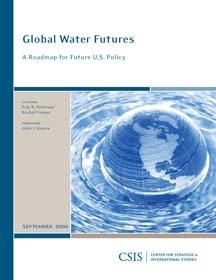
So, what should be done? For the last year and a half, the Center for Strategic and InternationalStudies’ (CSIS) Global Strategy Institute has consulted with policy experts, advocates, scientists, and practitioners to answer this million-dollar question. In our report, Global Water Futures: A Roadmap for Future U.S. Policy, we conclude that if we are serious about achieving a range of our strategic national interests, water must be elevated as a priority in U.S. foreign policy. Water is paramount to human health, agricultural and energy production, education, economic development, post-conflict stabilization, and more—therefore, our government’s organizational structure and the resources it commits to water should reflect the strategic importance of this resource.
We propose the creation of a new bureau or “one-stop shop” for water policy in the State Department to lead in strategic planning, implementation, and evaluation of international water programs; mobilize resources in support of water programming overseas; provide outreach to Congress and important stakeholders; and serve as a research and information clearinghouse. This would require significant support from the highest levels of government, increased funding, and greater collaboration with the private and independent sectors.
The current economic crisis means we are likely to face even greater competition for scarce foreign aid resources. But I would argue—paraphrasing Congressman Earl Blumenauer at our report rollout—that relatively little funding toward water and sanitation can have a significant impact around the world. As we tighten our belts during this period of financial instability, it is even more important that we invest in cross-cutting issues that yield the highest returns across defense, development, and diplomacy. Water is an excellent place to start.
Rachel Posner is a research associate at the Center for Strategic and International Studies’ Global Strategy Institute.
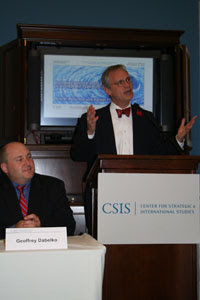
Photo: Environmental Change and Security Program Director Geoff Dabelko and Congressman Earl Blumenauer (D-OR) at the launch of Global Water Futures: A Roadmap for Future U.S. Policy. Courtesy of CSIS. -
Senators McCain, Obama Announce Priorities for Alleviating Poverty, Tackling Climate Change at Clinton Global Initiative
›September 25, 2008 // By Rachel WeisshaarSpeaking at a Clinton Global Initiative plenary session (webcast; podcast) this morning, Senator John McCain (R-AZ) and Senator Barack Obama (D-IL) laid out their proposals for addressing the interconnected problems of global poverty, climate change, and disease. Excerpts from each senator’s speech are below.
Senator McCain:
“We can never guarantee our security through military means alone. True security requires a far broader approach using non-military means to reduce threats before they gather strength. This is especially true of our strategic interests in fighting disease and extreme poverty across the globe.”
“Malaria alone kills more than a million people a year, mostly in Africa….To its lasting credit, the federal government in recent years has led the way in this fight. But of course, America is more than its government. Some of the greatest advances have been the work of the Gates Foundation and other groups. And you have my pledge: Should I be elected, I will build on these and other initiatives to ensure that malaria kills no more. I will also make it a priority to improve maternal and child health. Millions around the world today—and especially pregnant women and children—suffer from easily prevented nutritional deficiencies….An international effort is needed to prevent disease and developmental disabilities among children by providing nutrients and food security. And if I am elected president, America will lead that effort, as we have done with the scourge of HIV and AIDS.”
“America helped to spark the Green Revolution in Asia, and…[we] should be at the forefront of an African Green Revolution. We should and must reform our aid programs to make sure they are serving the interests of people in need, and not just serving special interests in Washington. Aid’s not the whole answer, as we know. We need to promote economic growth and opportunities, especially for women, where they do not currently exist. Too often, trade restrictions, combined with costly agricultural subsidies for the special interests, choke off the opportunities for poor farmers and workers abroad to help themselves. That has to change.”
Senator Obama:
“Our security is shared as well. The carbon emissions in Boston or Beijing don’t just pollute the immediate atmosphere, they imperil our planet. Pockets of extreme poverty in Somalia can breed conflict that spills across borders. The child who goes to a radical madrassa outside of Karachi can end up endangering the security of my daughters in Chicago. And the deadly flu that begins in Indonesia can find its way to Indiana within days. Poverty, climate change, extremism, disease—these are issues that offend our common humanity. They also threaten our common security….We must see that none of these problems can be dealt with in isolation; nor can we deny one and effectively tackle another.”
“Our dependence on oil and gas funds terror and tyranny. It’s forced families to pay their wages at the pump, and it puts the future of our planet in peril. This is a security threat, an economic albatross, and a moral challenge of our time.”
“As we develop clean energy, we should share technology and innovations with the nations of the world. This effort to confront climate change will be part of our strategy to alleviate poverty because we know that it is the world’s poor who will feel—and may already be feeling—the effect of a warming planet. If we fail to act, famine could displace hundreds of millions, fueling competition and conflict over basic resources like food and water. We all have a stake in reducing poverty….It leads to pockets of instability that provide fertile breeding-grounds for threats like terror and the smuggling of deadly weapons that cannot be contained by the drawing of a border or the distance of an ocean. And these aren’t simply disconnected corners of an interconnected world. And that is why the second commitment that I’ll make is embracing the Millennium Development Goals, which aim to cut extreme poverty in half by 2015. This will take more resources from the United States, and as president, I will increase our foreign assistance to provide them.”
“Disease stands in the way of progress on so many fronts. It can condemn populations to poverty, prevent a child from getting an education, and yet far too many people still die of preventable illnesses….When I am president, we will set the goal of ending all deaths from malaria by 2015. It’s time to rid the world of a disease that doesn’t have to take lives.” -
Drought, War, Refugees, Rising Prices Threaten Food Security in Afghanistan
›September 23, 2008 // By Rachel WeisshaarDrought, continuing violence, returning refugees, and the spike in global food prices are combining to produce a serious threat to Afghan food security, reports the New York Times. The World Food Program has expanded its operations in Afghanistan to cover a total of nearly 9 million people through the end of next year’s harvest, sending out an emergency appeal to donors to cover the costs.
According to a report published earlier this year by Oxfam UK,[W]ar, displacement, persistent droughts, flooding, the laying of mines, and the sustained absence of natural resource management has led to massive environment degradation and the depletion of resources. In recent years Afghanistan’s overall agricultural produce has fallen by half. Over the last decade in some regions Afghanistan’s livestock population has fallen by up to 60% and over the last two decades, the country has lost 70% of its forests.
A post-conflict environment assessment conducted by the UN Environment Programme (UNEP) in 2003 confirms these dire trends in further detail. “In some areas, we found that up to 95 percent of the landscape had been deforested during the conflict—cut for fuel, bombed to remove cover, or removed to grow crops and graze livestock. Many people were fundamentally dependant on these forests for livelihoods. Without them, and without alternatives, Afghans were migrating to the cities or engaging in other forms of income generation—such as poppy production for the drug trade—in order to survive,” writes UNEP’s David Jensen in a forthcoming article in ECSP Report 13.
Despite the fact that agriculture has traditionally employed or supported approximately 80 percent of Afghans, says Oxfam, donors have vastly underinvested in the sector, spending only $300-400 million over the past six years directly on agricultural projects—a sliver of overall aid to Afghanistan.
Not only does hunger have negative impacts on health and economic growth, it could also make the security situation worse. “Development officials warn that neglecting [agriculture and development in] the poorest provinces can add to instability by pushing people to commit crimes or even to join the insurgency, which often pays its recruits,” reports the Times. In addition, an Oxfam International survey of six Afghan provinces found that land and water were the top two causes of local disputes.
To head off greater food insecurity and potential threats to overall stability, Oxfam UK recommends the development of a comprehensive national agricultural program; improved land and water management capacities; and greater support for non-agricultural income-generating activities, such as carpet-making.
Photo: An irrigated area near Kunduz, in northern Afghanistan. Courtesy of UN Environment Programme (source: Afghanistan Post-Conflict Environmental Assessment). -
Weekly Reading
›A report from the Center for Strategic and International Studies argues that the global food crisis poses a moral and humanitarian threat; a developmental threat; and a strategic threat. The authors recommend that the United States: modernize emergency assistance; make rural development and agriculture top U.S. foreign policy priorities; alter the U.S. approach to biofuels; ensure U.S. trade policy promotes developing-country agriculture; and strengthen relevant U.S. organizational capacities.
In an article in Scientific American, Jeffrey Sachs argues that the global food shortages Thomas Malthus predicted in 1798 may still come to pass if we do not slow population growth and begin using natural resources more sustainably.
A report by the Government Accountability Office finds that food insecurity in sub-Saharan African persists, despite U.S. and global efforts to halve it by 2015, due to “low agricultural productivity, limited rural development, government policy disincentives, and the impact of poor health on the agricultural workforce. Additional factors, including rising global commodity prices and climate change, will likely further exacerbate food insecurity in the region.”
In an article in the Belgian journal Les Cahiers du Réseau Multidisciplinaire en Etudes Stratégiques, Thomas Renard argues that climate change is likely to increase the risk of environmental terrorism (attacks that use the environment as a tool or target), eco-terrorism (attacks perpetrated on behalf of the environment), nuclear terrorism, and humanitarian terrorism (attacks targeting humanitarian workers).
A Community Guide to Environmental Health, available for free online in PDF, is a field-tested, hands-on guide to community-based environmental health. Topics include waterborne diseases; sustainable agriculture; mining and health; and using the legal system to fight for environmental rights. -
Biofuels: Catalyzing Development or Excluding the Poor?
›August 25, 2008 // By Wilson Center StaffThe International Institute for Environment and Development (IIED) and the UN Food and Agriculture Organization (FAO) recently issued Fuelling exclusion? The biofuels boom and poor people’s access to land, a report that examines how the biofuels boom is likely to affect access to land. “Policy and market incentives to turn land over to biofuels production will tend to raise land values. While in some cases this could give new opportunities to poor farmers, it could also provide grounds for displacement of poorer people from land,” explain the authors. They conclude that “biofuels are not necessarily bad news for small-scale farmers and land users” but that this depends on the “security of land tenure.”
The Brazilian experience with biofuels and land tenure deserves further attention. Traditionally, land tenure has been fairly insecure in Brazil, as it is difficult for the federal government to exert its authority over the nation’s periphery.
The authors cite evidence that large-scale Brazilian soybean and sugarcane outfits have concentrated their land holdings at the expense of small-scale farmers. These findings are consistent with Brazil’s long-term trend of acreage concentration, which has diminished the participation of small-scale farmers in the country’s agro-industry. Since smaller family farms tend to employ more workers than more-efficient large-scale producers, acreage concentration may increase inequality in Brazil and further strain the provision of public goods and services in urban areas, where displaced farmers tend to migrate. Given the recent surge in biofuel production, this trend is likely to continue.
Although the report itself is fairly neutral, some of the specific claims the authors make regarding biofuels, land concentration, and violence in Brazil are undermined by weak supporting evidence. The report’s section on violence and land concentration in Brazil cites Van Gelder and Dros’ (2006) description of a 2004 labor inspection raid that “freed an unknown number of slaves” who worked in soy fields. Yet Van Gelder and Dros lack a citation for this event and provide no information regarding whether or not these soy fields were being used to produce biodiesel. We also don’t know whether this soy farm was on newly acquired land (i.e., we don’t know if it relates to the expansion of biofuel production). Slave labor exists in Brazil and is a serious problem, but it is not identical to the violent land conflicts generated by the expansion of biofuel production—the subject of this report.
Moreover, the authors of Fuelling exclusion? cite another source regarding land concentration and violence—Noronha et al. (2006)—that seems a bit questionable. A rural exodus from certain parts of Brazil is well-documented, but Noronha et al. try to argue that biofuel expansion has driven this migration, relying on macrodata showing increasing urbanization and decreasing rural populations. There is certainly some overlap between increases in biofuel production and this internal migration, but these data are not sufficient to substantiate a causal relationship. Even more troubling is that Noronha et al. maintain that over a 12-year period, there were 16 assassinations linked to the biofuels industry, citing an op-ed written by a union leader as their source. Yet the op-ed only cites the occurrence of 13 deaths—and not by assassination, but from illnesses possibly related to working in the fields. It’s not that there haven’t been deaths associated with the biofuels industry, it’s just that the sources cited by the authors of Fuelling exclusion? don’t prove as much.
There are real concerns about the social consequences of increased ethanol production in Brazil, particularly for the workers who harvest sugarcane by hand. Nevertheless, ethanol production has given Brazil a unique degree of energy independence and economic vitality. To the extent that this vitality is responsible for Brazil’s ability to (thus far) weather the latest international economic storm, it is possible to argue that it is at least indirectly responsible for the nation’s economic stability and the recent rise of the middle class. Yet until the government uses this stability to provide better land security for its rural population, the benefits of biofuels are likely to continue to accrue mainly to Brazil’s middle and upper classes.
By Brazil Institute Program Assistant Alan Wright and Brazil Institute Intern Matthew Layton.
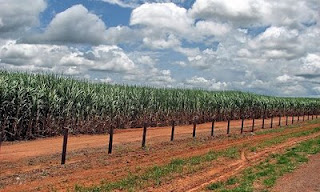
Photo: Sugarcane plantation near Capixaba in Acre, Brazil. Courtesy of Flickr user visionshare. -
Green Revolution Fallout Plagues India’s Punjab Region
›August 21, 2008 // By Sonia SchmanskiIndia’s Punjab region faces a host of troubles: In the last 10 years, 100,000 of India’s desperate farmers—many of them Punjabi—have been driven to suicide by their inability to repay loans; half a century of heavy fertilizer use in Punjab has led to soaring cancer rates; water tables in the region sink as much as 100 feet per year, the result of decades of rice production in a naturally dry area; overwatering has brought salts to the soil’s surface, making large tracts of land unusable; and by some accounts, 40 percent of Punjab’s youth and nearly half of its agricultural workforce are addicted to heroin. In a series of reports from Punjab published in Slate magazine, Mira Kamdar argues that the economic, security, and environmental problems facing India can ultimately be traced back some 40 years to the policies of the Green Revolution. The drive to feed India’s rapidly growing population put enormous pressure on Punjab’s land and left consideration for sustainability on the back burner, according to Kamdar, who argues that these issues now threaten to paralyze India’s agricultural sector.
The Green Revolution alleviated the chronic famines that historically plagued India. Hybrid seed varieties, extensive irrigation schemes, and the heavy-handed use of chemical fertilizers and pesticides transformed Punjab into an agricultural powerhouse. It comprises only 1.5 percent of India’s territory, but it produces 60 percent of the country’s wheat and 45 percent of its rice. Yet Kamdar wonders whether India will be able to “feed a growing population in the face of environmental collapse and growing political instability fueled by scarcity.”
With little hope for economic stability, Punjab’s youth are increasingly turning to the drug trade for income, and Punjab’s impoverished citizens, many of whom feel exploited and left behind by the Indian government, are attractive recruits for separatist groups. “Conditions affecting the livelihood of the majority of people in poor countries [or regions] are at the heart of the internal violence” so often found there, according to a report from the International Peace Research Institute (PRIO).
Due to the effects of climate change, the 400 million additional people projected to live in India by 2080 may have to make do with a nearly 40 percent decline in agricultural production during the same period, according to the Peterson Institute for International Economics. Current policies will do little to alleviate the pressures colliding in Punjab. The government—as well as the World Bank, international agriculture corporations, and Indian companies—favors privately funded, large-scale industrial operations. Palaniappan Chidambaram, India’s minister of finance, is focused on developing India’s agricultural capacity, and is not terribly concerned with the consequences for the environment, security, or human health. Small-scale farming is quickly becoming a thing of the past.
Many countries face the challenge of feeding a growing population with diminishing output, and find doing so in an ecologically responsible manner difficult. Ultimately, though, the case of India shows that increasing output at such dramatic cost to human and environmental health is unsustainable, as it quickly creates complex and intractable problems of its own.
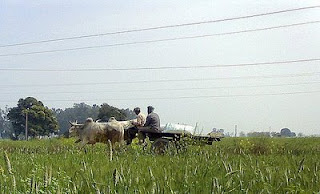
Photo: Punjabi farmers transport fertilizer from a nearby village. Courtesy of Flickr user Aman Tur.
-
Three Years Later, “Wall of Trees” Project Launches
›July 24, 2008 // By Sonia SchmanskiDesertification is a serious problem for the land bordering—one might say being swallowed up by—the Sahara desert. But help is on the way for this huge swath of the continent. Three years after the idea was initially floated, the Great Green Wall project, which is intended to slow the Sahara’s southward march, is underway, after being formally approved at the Community of Sahel-Saharan States summit in Benin last month.
The first phase of the project will last for two years and will, with a $3 million budget, create a tract of trees 7,000 kilometers long and 15 kilometers wide. Planting will begin in September 2008 and will involve representatives and consultants from a number of affected countries, including Burkina Faso, Mali, Mauritania, Niger, Senegal, and Nigeria. The second planting phase will take place on the eastern part of the continent and will be undertaken in partnership with Sudan, Ethiopia, Eritrea, Chad, and Djibouti. This second phase has not been formalized yet, but it is expected that some arrangement will be reached through the Intergovernmental Authority on Development (IGAD) in the Horn of Africa.
Desertification and the droughts that often precede it have significant effects on life in the Sahel, the region bordering the Sahara. A 2007 UN Environment Programme report warns that “climate change and desertification threaten the livelihoods of millions of Sudanese living on the edge of the dry Sahara belt,” and the UN Convention to Combat Desertification reports that “[i]n many African countries, combating desertification and promoting development are virtually one and the same.”
Photo courtesy Flickr user Christing-O-.

 When I tell people I have been working on a report about U.S. international water policy, they usually respond with the same sardonic question: “The United States has an international water policy?” The answer, of course, is complicated. Yes, we have localized approaches to water challenges in parts of the developing world, and we have
  Studies’ (CSIS)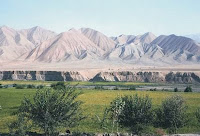
 The International Institute for Environment and Development (IIED) and the UN Food and Agriculture Organization (FAO) recently issued
  India’s Punjab region faces a host of troubles: In the last 10 years, 100,000 of India’s desperate farmers—many of them Punjabi—have been


