-
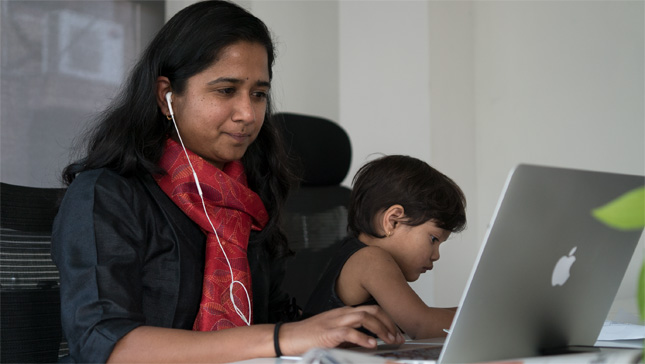
This Indian Women’s Union Invented a Flexible Childcare Model
› In 1971, the wives of textile workers in Ahmedabad, western India, became the main earners in their families overnight, after several large textile mills closed down. They were part of the 94 percent of India’s female labor force working in the informal sector—recycling waste, embroidering fabric, and selling vegetables—and thus they remained largely invisible to the government and to formal labor unions. In response, Ela Bhatt, a young lawyer, met with 100 of the women in a public park to establish the Self-Employed Women’s Association (SEWA), which would later register as a trade union and swell to the two million members it boasts today.
 -
Age-structure and Intra-state Conflict: More or Less Than We Imagined?
›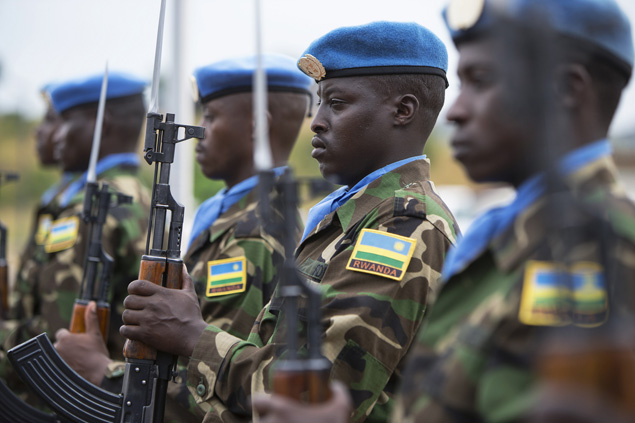
Are younger countries at higher risk of civil conflict? The International Crisis Group’s 2018 list of 10 conflicts to watch suggests they might be: Like last year, intra-state conflicts (civil and ethnic conflicts within states, rather than wars between states) dominate the list, and among those, about 70 percent are within youthful countries, or states with a median age of 25.5 years or younger. The only multi-state cluster mentioned in both 2017 and 2018 lists is the Sahel, the world’s most youthful region.
-
Dr. Belen Garijo: “I Believe We Need To Do Better” For Caregivers Across The World
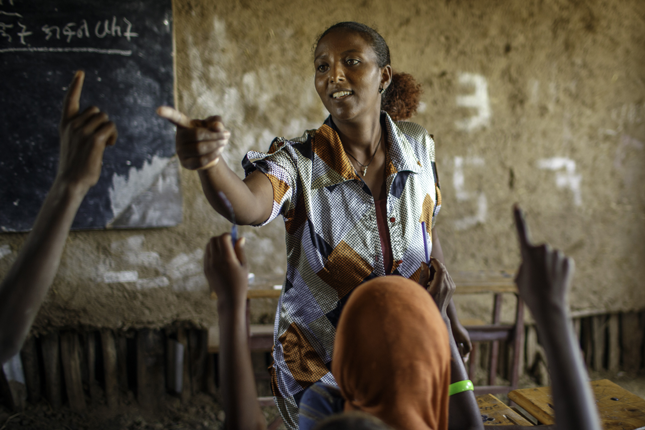
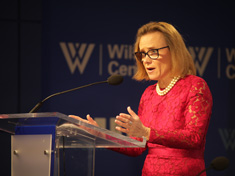
›“As many as 865 million of our mothers, daughters, [and] sisters across the globe are not reaching their full potential to contribute to their national economies,” said Dr. Belén Garijo, CEO for healthcare and executive board member of Merck KGaA, Darmstadt, Germany, at a recent Wilson Center event. The act of caregiving, and the physical and mental health impacts that accompany it, often disproportionately rest on the shoulders of society’s women. -
The Costs of Caring: Balancing the Burden of Caregiving for Women and Men
›“The act of caregiving has unique impacts on women, in terms of economic, emotional, and physical well-being,” said Dr. Belén Garijo, the CEO for healthcare and executive board member of Merck KGaA, Darmstadt, Germany, at a recent Wilson Center event.
-
Opening the Demographic Window: Age Structure in Sub-Saharan Africa
›Over the past 25 years, economic and political demographers have documented how declines in fertility rates have preceded improvements in state capacity, income, and political stability in much of East Asia, Latin America, and, most recently, in the Maghreb region of North Africa (Tunisia, Morocco, Algeria). Nonetheless, social scientists still debate over where and when this “demographic dividend” will occur in the youthful, low-income countries of sub-Saharan Africa. Elizabeth Leahy Madsen of the Population Reference Bureau and I find that, for most youthful countries—like those in sub-Saharan Africa—changes in population age structure provide a means to gauge the timing of their future development.
-
8 Rules of Political Demography That Help Forecast Tomorrow’s World
›In a world rapidly churning out unpredictable political shocks, intelligence analysts occasionally need to clear their heads of the daily barrage of newsworthy events and instead work with simple theories that discern the direction and speed of trends and help predict their outcomes. Political demography, the study of population age structures and their relationships to political trends and events, has helped some analysts predict geopolitical changes in a world that, from time to time, appears utterly chaotic. -
Predicting the Geopolitical Landscape of 2035, and a More Holistic Measure for Disaster Risk Assessment
›The world of 2035 will be facing global and regional insecurities that could be “more dangerous than the second half of the Cold War era,” according to a 2016 report from the Atlantic Council. -
Overcoming the Barriers Between Demography and Climate Science
›The 2015 edition of the annual Vienna Yearbook of Population Research is a special issue on differential demographic vulnerability to climate-related disasters. Many of the 16 articles are worth reading, but here are 2 of particular interest.
Showing posts from category aging.
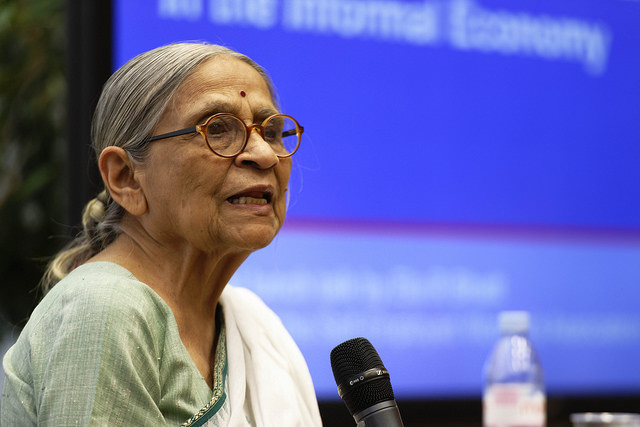 In 1971, the wives of textile workers in Ahmedabad, western India, became the main earners in their families overnight, after several large textile mills closed down. They were part of the 94 percent of India’s female labor force working in the informal sector—recycling waste, embroidering fabric, and selling vegetables—and thus they remained largely invisible to the government and to formal labor unions. In response, Ela Bhatt, a young lawyer, met with 100 of the women in a public park to establish the Self-Employed Women’s Association (SEWA), which would later register as a trade union and swell to the two million members it boasts today.
 “As many as