-
How Gender Inequality Drives the Global Crisis of Unintended Pregnancy
›
“Half. This is the proportion of all pregnancies that are unintended. That is 121 million pregnancies every year,” said Sarah Craven, Director of the Washington D.C. Office at UNFPA during a recent U.S. launch event for the 2022 UNFPA State of World Population (SWOP) report. “For these women, the most life altering reproductive choice, whether to become pregnant or not, is no choice at all. This is an unseen crisis unfolding right before our eyes.”
-
World Population Day Shines a Spotlight on Inequities
›
July 11 is World Population Day—a day designated annually by the United Nations that should prompt us, in the words of the International Institute for Sustainable Development, to “focus attention on the urgency and importance of population issues.”
Examining population trends helps describe where we’ve been and suggests where we’re headed. Yet these facts about human existence on our planet also offer insights into how we got here—including a window into places where inequities exist and rights have been denied.
-
Sustainable Partnerships: A Future for Maternal, Child Health, and Family Planning
›“Building strong and inclusive partnerships for maternal, newborn, child health, and family planning programs is not future work,” said Dr. Koki Agarwal, Director of USAID’s MOMENTUM Country and Global Leadership at a recent Wilson Center event. “It’s urgent and it’s ‘right now’ work.”
This exploration of country perspectives and expertise on improving maternal, newborn, child, and adolescent health and family planning programs was the third event in a series that placed regional experiences and voices in the foreground.
-
Silencing the Stigma of Menstruation
›Every month, young women and girls in the villages of Nepal make their way into makeshift huts where they will reside for the week until their menstruation has finished. Some of them will turn to nearby sheds whereas others will travel through dense forests to reach these huts. Venomous snake bites, asphyxiation, and rape are just a few of the harsh realities of living in these poorly ventilated and weakly protected menstrual huts. This practice of self-isolation called “chhaupadi” is an ancient tradition of “untouchability” rooted in the belief that menstruation is sinful and impure. Considered bringers of misfortune, menstruating girls and women are forbidden from taking part in any household, religious, and social activities under this tradition, forcing them to distance themselves from their family and community during this time. Although chhaupadi seems like an extreme case or isolated custom, it actually represents a common global issue—menstrual stigma.
-
No Progress Without Quality: Why Quality of Care Matters
›Evidence shows that in low- and middle-income countries, the expansion of health coverage or access to care has not always reduced overall mortality, said Dr. Patricia Jodrey, Child Health Team Lead in the Office of Maternal and Child Health and Nutrition at the U.S. Agency for International Development (USAID). “However, the analysis also showed that when countries have progressed in improving the quality of their health systems, the survival rate tends to improve,” she said.
-
Through the COVID-19 Lens: Essential Services Needed to Prevent Unintended Pregnancies
›“The current pandemic is straining human resources, disrupting supply chains and service delivery, and negatively impacting service seeking among women and girls in countries across the globe,” said Sarah Barnes, Project Director of the Wilson Center’s Maternal Health Initiative. She spoke at a recent event, co-hosted by the UN Population Fund (UNFPA), on unintended pregnancies during the COVID-19 pandemic. The increasing rates of unintended pregnancies during the pandemic have exacerbated the vulnerabilities of many women, said Anneka Knutsson, Chief of the Sexual and Reproductive Health Branch at UNFPA.
-
We Have to Put the Last Mile First: Ensuring Sexual and Reproductive Health for All
›Whether marginalized populations, such as adolescents, LGBTQ+ people, migrant workers, and sex workers are included in health services can be a “litmus test” of our progress towards universal health coverage (UHC), said Sivananthi Thanenthiran, Executive Director of Asian-Pacific Resource and Research Centre for Women (ARROW). Thanenthiran spoke at a recent Wilson Center event with the United Nations Population Fund (UNFPA) and the World Health Organization (WHO) Department of Sexual and Reproductive Health and Research about the importance of engaging stakeholders in sexual and reproductive health (SRH) to achieve UHC for all. In SRH services, the most marginalized and most vulnerable populations are often left out, she said. When engaging stakeholders, representatives from these groups must be included to ensure equity in healthcare services.
-
Most LGBTQ+ Individuals Remain in the “Global Closet”–At Great Cost to Global Health
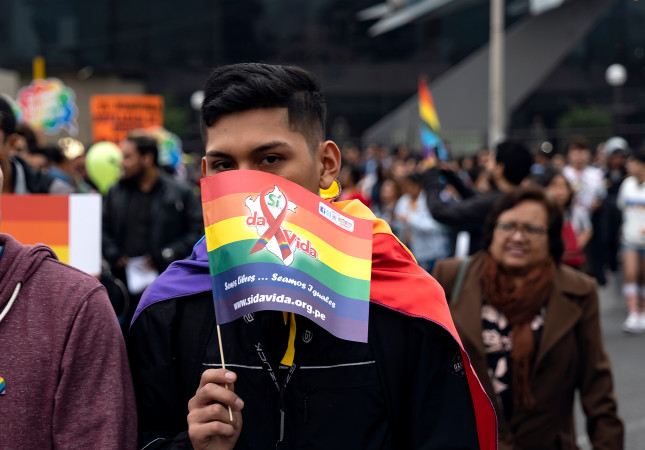
›Pride month 2021 is underway, with parades, celebrations, and advocacy movements all over the world. Given the month’s celebratory nature—along with the increasing acceptance of and recent victories for LGBTQ+ * (lesbian, gay, bisexual, transgender, queer or questioning, and others) communities in some countries—it might be easy to assume that most lesbian, gay, and bisexual individuals are “out.” However, according to a study by the Yale School of Public Health, this is far from the case. The vast majority of lesbian, gay, and bisexual individuals remain in the closet, concealing their sexual orientation from “all or most” people in their lives.
Showing posts from category adolescent health.