-
Robin Bronen: To Help Alaskans Adapt, Make it Easier to Relocate
›
“Human rights and climate change are completely interlinked,” says Robin Bronen in this week’s podcast, and “climate change is happening in Alaska faster than anywhere else on the planet.”
-
New Data Explorer Explains Assumptions Behind Population Projections
›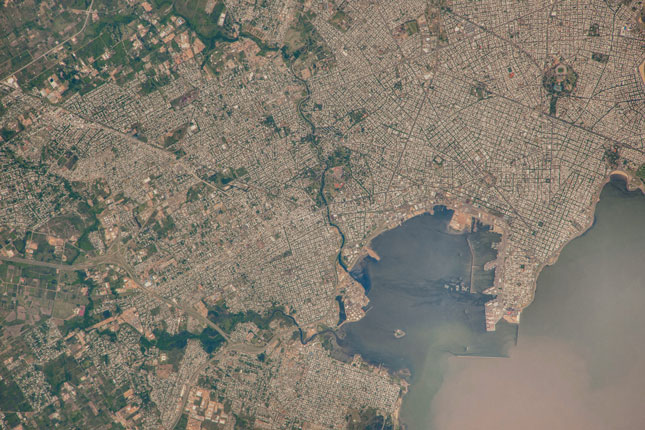
Population projections undergird many important policy decisions, from the U.S. government’s Feed the Future program to the Sustainable Development Goals. But they’re not as straightforward as they appear. Demographers often base their estimates on complicated assumptions that aren’t obvious to the end user.
-
Judy Oglethorpe: Fighting Environmental Change in Nepal Through Community Empowerment
›“We believe that ecosystems can help people to adapt,” says Judy Oglethorpe in this week’s podcast. “But at the same time, people have to help ecosystems to adapt in order to continue to provide environmental services.”
-
Bridging the Gap: Family Planning, Rights, and Climate-Compatible Development
›“There is no magic bullet or solution to resolving climate change quickly,” said the Population Reference Bureau’s Jason Bremner at the Wilson Center on October 28. “Our next 100 years will be far different from the last 100 or the last 1000…and it has become clear that nations will have to pursue many strategies in order to reduce emissions, build resilience, and adapt.” [Video Below]
-
David Lewis: To Avoid Reinforcing Status Quo, Focus on Understanding Livelihood Systems
›As the idea of resilience has received more attention from policymakers as a guiding principle for climate change response and development, so too has it garnered more criticism, says David Lewis in this week’s podcast. By implying a “natural” return to a previous condition, resilience thinking could inadvertently promote limited policies that don’t go as far as they could in aiding those most at-risk.
-
Living Through Extremes: Livelihood Systems Key to Effective, Empowering Resilience Measures
›As climate change upends established patterns of life, resilience – the ability of social and ecological systems to mitigate, endure, and adapt to short-term shocks and long-term stressors – has become a buzzword in development and humanitarian circles. [Video Below]
-
What Climate Conflict Looks Like: Recent Findings and Possible Responses
›Climate change and conflict – what’s the relationship? In a recently completed set of field-based studies for USAID, the Foundation for Environmental Security and Sustainability set aside “yes-or-no” questions about whether climate change causes conflict and replaced them with pragmatic and politically informed questions about how climate change is consequential for conflict in specific fragile states.
-
William Butz: Investment in Human Capital, Not Engineering, Central to Climate Resilience
›“How does climate change affect people by age and sex, and where they live?” asks William Butz, director of coordination and outreach at the Wittgenstein Center for Demography and Global Human Capital, in this week’s podcast. “And how to do they respond? How do they adapt or fail to adapt?”
Showing posts from category adaptation.