• woodrow wilson center
  • ecsp

New Security Beat

Subscribe:
  • rss
  • mail-to
  • Who We Are
  • Topics
    • Population
    • Environment
    • Security
    • Health
    • Development
  • Columns
    • China Environment Forum
    • Choke Point
    • Dot-Mom
    • Friday Podcasts
    • Navigating the Poles
    • Reading Radar
  • Multimedia
    • Water Stories (Podcast Series)
    • Backdraft (Podcast Series)
    • Tracking the Energy Titans (Interactive)
  • Films
    • Water, Conflict, and Peacebuilding (Animated Short)
    • Paving the Way (Ethiopia)
    • Broken Landscape (India)
    • Scaling the Mountain (Nepal)
    • Healthy People, Healthy Environment (Tanzania)
  • Publications
  • Events
  • Contact Us

NewSecurityBeat

The blog of the Wilson Center's Environmental Change and Security Program
Showing posts from category adaptation.
  • Gerald Stang, European Union Institute for Security Studies

    Climate Change and EU Security: When and How Do They Intersect?

    ›
    December 3, 2014  //  By Wilson Center Staff
    bosnia-flooding

    The original version of this article, by Gerald Stang, appeared on the European Union Institute for Security Studies (via the International Relations and Security Network).

    The potential security challenges linked with climate change can make for great headlines. While sensationalist claims about water wars, states collapsing in chaos, or the forced migration of hundreds of millions cannot be completely discounted for the long term, intelligent mitigation and adaptation efforts can help avoid the worst of these – and manage the rest.

    MORE
  • Next Stop, Lima: Building Momentum for a New Global Agreement on Climate Change

    ›
    December 1, 2014  //  By Kathleen Mogelgaard
    Lima_circle

    This fall, a series of significant events signaled what many see as a shift toward meaningful collective action on climate change.

    MORE
  • World Population and Human Capital in the 21st Century

    ›
    From the Wilson Center  //  November 24, 2014  //  By Sarah Meyerhoff
    LutzES

    With UN demographers more certain than ever that global population will reach between 10 and 12 billion by the end of the century, the challenge of building a sustainable future seems daunting. But according to Wolfgang Lutz, founding director of the Vienna-based Wittgenstein Center for Demography and Global Human Capital, these projections miss one crucial variable: increasing levels of education. [Video Below]

    MORE
  • Pentagon Sustainability Report, IPCC Synthesis Highlight Climate Challenges and Responses

    ›
    Reading Radar  //  November 20, 2014  //  By Schuyler Null

    IPCCThe culmination of five years of work by three working groups comprising hundreds of scientists around the world, the Intergovernmental Panel on Climate Change’s Fifth Assessment was released in parts throughout this year. A newly released synthesis presents their findings in one document.

    MORE
  • Pentagon Releases New Climate Roadmap, Plans for Constrained Training, Challenged Infrastructure, Expanding Missions

    ›
    October 13, 2014  //  By Schuyler Null
    Katrina

    A series of executive orders signed by President Obama since his first year in office requires all federal agencies to begin planning for climate change and produce an updated adaptation plan by May of this year. The Pentagon is a little late, but today they released their second-ever climate roadmap.

    MORE
  • New Approaches to Projecting Population Yield Divergent Forecasts and Valuable Insights

    ›
    Reading Radar  //  October 1, 2014  //  By Sarah Meyerhoff

    As the UN General Assembly begins charting a course toward sustainable growth, population projections will likely undergird many of their most important assumptions about the future. As two new papers released last week demonstrate, however, there are differing opinions about how much the world’s population will grow and when it will stabilize.

    MORE
  • Short Films on Cuba, France, Australia Reminders of Immediacy of Climate Challenge

    ›
    Eye On  //  September 30, 2014  //  By Schuyler Null
    australia

    Much of the time, discussion about climate change is focused on the future – How bad will it be? Will it lead to more conflict? Who will be most vulnerable? But it is in fact a current phenomenon. The climate system is already, for all intents and purposes, irrevocably changed and millions of lives have been changed along with it.

    MORE
  • Hydro-Diplomacy Can Build Peace Over Shared Waters, But Needs More Support

    ›
    Guest Contributor  //  September 22, 2014  //  By Benjamin Pohl & Susanne Schmeier
    outflow

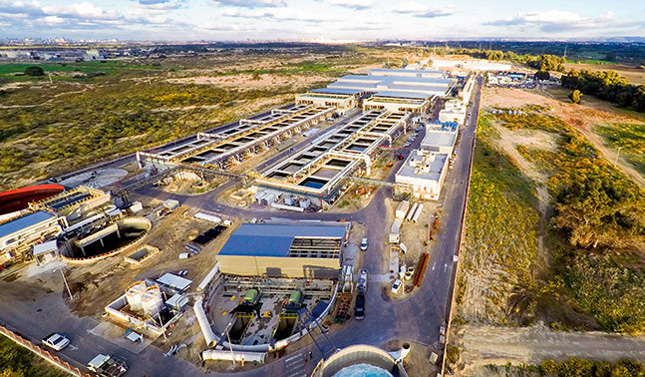
    From Ukraine and the Middle East to sub-Saharan Africa and East Asia, the world is engulfed in a series of significant international crises. But despite such urgent issues, it would be a grave mistake to forget about the structural foreign policy challenges – such as access to water – that could become the crises of the future.

    MORE
Newer Posts   Older Posts
View full site

Join the Conversation

  • RSS
  • subscribe
  • facebook
  • G+
  • twitter
  • iTunes
  • podomatic
  • youtube
Tweets by NewSecurityBeat

Trending Stories

  • unfccclogo1
  • Pop at COP: Population and Family Planning at the UN Climate Negotiations

Featured Media

Backdraft Podcast

play Backdraft
Podcasts

More »

What You're Saying

  • Volunteers,At,The,Lagos,Food,Bank,Initiative,Outreach,To,Ikotun, Pan-African Response to COVID-19: New Forms of Environmental Peacebuilding Emerge
    Rashida Salifu: Great piece 👍🏾 Africa as a continent has suffered this unfortunate pandemic.But it has also...
  • A desert road near Kuqa An Unholy Trinity: Xinjiang’s Unhealthy Relationship With Coal, Water, and the Quest for Development
    Ismail: It is more historically accurate to refer to Xinjiang as East Turkistan.
  • shutterstock_1779654803 Leverage COVID-19 Data Collection Networks for Environmental Peacebuilding
    Carsten Pran: Thanks for reading! It will be interesting to see how society adapts to droves of new information in...

What We’re Reading

  • Rising rates of food instability in Latin America threaten women and Venezuelan migrants
  • Treetop sensors help Indonesia eavesdrop on forests to cut logging
  • 'Seat at the table': Women's land rights seen as key to climate fight
  • A Surprise in Africa: Air Pollution Falls as Economies Rise
  • Himalayan glacier disaster highlights climate change risks
More »
  • woodrow
  • ecsp
  • RSS Feed
  • YouTube
  • Twitter
  • Facebook
  • Home
  • Who We Are
  • Publications
  • Events
  • Wilson Center
  • Contact Us
  • Print Friendly Page

© Copyright 2007-2021. Environmental Change and Security Program.

Woodrow Wilson International Center for Scholars. All rights reserved.

Developed by Vico Rock Media

Environmental Change and Security Program

Woodrow Wilson International Center for Scholars

Ronald Reagan Building and International Trade Center

  • One Woodrow Wilson Plaza
  • 1300 Pennsylvania Ave., NW
  • Washington, DC 20004-3027

T 202-691-4000