

-
ECSP Weekly Watch | December 16 – 20
›
A window into what we’re reading at the Wilson Center’s Environmental Change and Security Program
Humanitarians Highlight the Climate-Conflict Nexus (The New Humanitarian)
Climate change’s disproportionate impacts on vulnerable populations exacerbate socioeconomic inequalities and conflict, particularly during natural disasters. This vexed connection has led humanitarians and peacebuilders increasingly to address climate and conflict challenges together in order to provide integrated relief, recovery, and aid.
-
The Arc | Inclusive Green Energy: Accelerating Just Transitions
› In today’s episode of The Arc, we are featuring a panel discussion on how to accelerate just energy transitions around the globe from the Forum on Advancing Inclusive Climate Action in Foreign Policy and Development, hosted by the Wilson Center in collaboration with the White House and USAID’s Bureau for Humanitarian Assistance, with support from the USAID Climate Adaptation Support Activity.
 -
US-Africa Energy Development: An Opportunity for the Trump Administration?
›China Environment Forum // Guest Contributor // December 12, 2024 // By Kalim Shah & Etchu TabenyangWhile traditional fuels likely will remain part of Africa’s energy portfolio for some time to come, the fossil fuel industry does face strong headwinds from a continuing global march towards alternative sources of clean energy. Indeed, the energy poverty experienced by nearly a billion Africans seems incomprehensible given the combination of massive untapped oil and gas resources, as well as available hydropower, solar and wind potential across the continent.
-
The Arc | Financing Inclusive Climate Action: Investing in and Empowering Local Communities
›In today’s episode of The Arc, we’re sharing a panel discussion from the Forum on Advancing Inclusive Climate Action in Foreign Policy and Development, an event hosted by the Wilson Center in collaboration with the White House and USAID’s Bureau for Humanitarian Assistance, and with support from the USAID Climate Adaptation Support Activity. -
Guam and Vanuatu: Different Paths from Environmental Change to Human Insecurity
›Our present ecocrisis drives human insecurity. Single weather events killed hundreds in 2024, even in wealthy countries such as the United States or Spain. And beyond that staggering toll in human lives lurk staggering amounts of money required to repair and rebuild. In the United States alone, inflation-adjusted disaster-attributable costs have reached on average $153 billion each year. These factors and others make global environmental change a severe risk to human security.
-
The 2024 Montreal Climate Security Summit: Four Takeaways
›“I think we need to approach climate security completely differently,” said Sharon Burke, Founder and President of Ecospherics and Wilson Center Global Fellow, at the recent 2024 Montreal Climate Security Summit. “It’s not just that climate change is an opportunity cost in combat power, or that it’s effecting our bases and operating environment, or that it is an accelerant to instability. It is itself the threat.”
-
Swathi Veeravalli on the Importance of Climate Security for US Strategic Interests
›In today’s episode of New Security Broadcast, ECSP Program Director Lauren Risi sits down with Swathi Veeravalli on her last day as the Director for Climate Security and Adaptation at the National Security Council (NSC) to discuss the new US Framework for Climate Resilience and Security, its significance for the future of US security and economic interests, and what success in building climate security looks like over the next decade. -
ECSP Weekly Watch | November 12 – 15
›A window into what we’re reading at the Wilson Center’s Environmental Change and Security Program
Shell Wins Appeal to Overturn Landmark Emissions Ruling (Al Jazeera)
Three years ago, a court in the Netherlands ruled in favor of environmentalists and required energy giant Shell to drastically reduce its greenhouse gas (GHG) emissions. The decision would compel the company to cut the absolute carbon emissions it created in 2019 by 45% by the year 2030—including emissions caused by its products. This ruling was the first of its kind by requiring companies to adhere to the Paris Agreement, and it ignited further attempts by climate activists to take legal measures against other fossil fuel companies.
Showing posts from category adaptation.
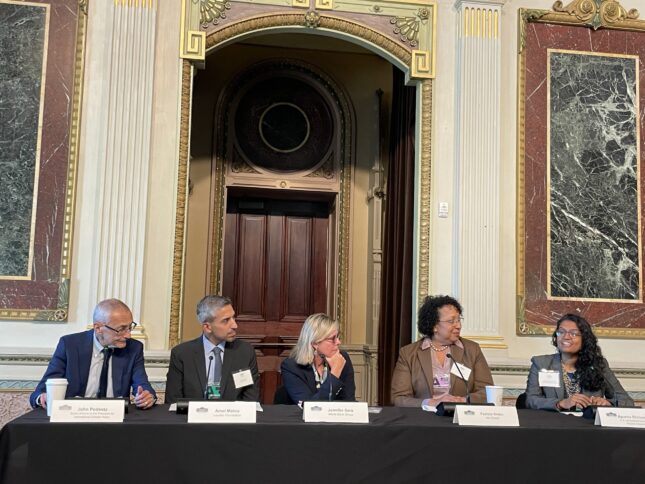 In today’s episode of The Arc, we are featuring a panel discussion on how to accelerate just energy transitions around the globe from the Forum on Advancing Inclusive Climate Action in Foreign Policy and Development, hosted by the Wilson Center in collaboration with the White House and USAID’s Bureau for Humanitarian Assistance, with support from the USAID Climate Adaptation Support Activity.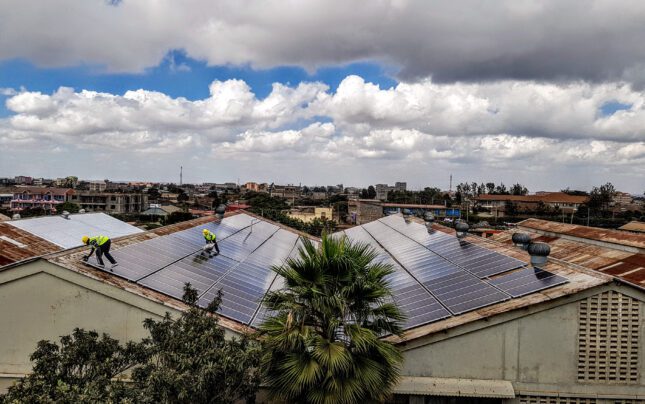
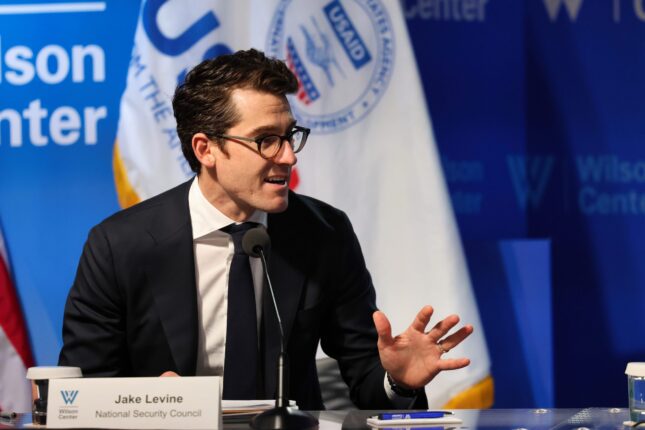 In today’s episode of The Arc, we’re sharing a panel discussion from the Forum on Advancing Inclusive Climate Action in Foreign Policy and Development, an event hosted by the Wilson Center in collaboration with the White House and USAID’s Bureau for Humanitarian Assistance, and with support from the USAID Climate Adaptation Support Activity.

 In today’s episode of New Security Broadcast, ECSP Program Director Lauren Risi sits down with Swathi Veeravalli on her last day as the Director for Climate Security and Adaptation at the National Security Council (NSC) to discuss the new US Framework for Climate Resilience and Security, its significance for the future of US security and economic interests, and what success in building climate security looks like over the next decade.

