-
Five Questions for Population, Health, and Environment Projects in Ethiopia
›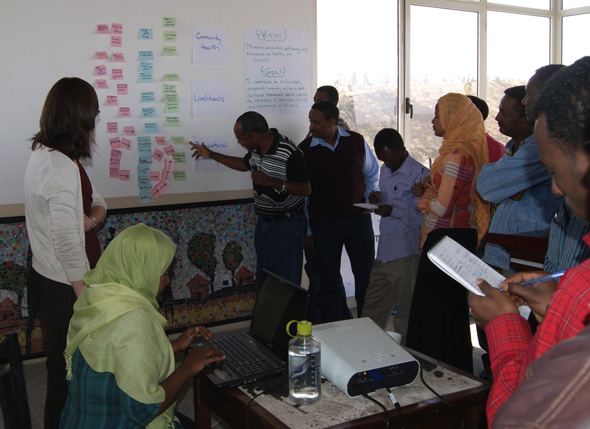
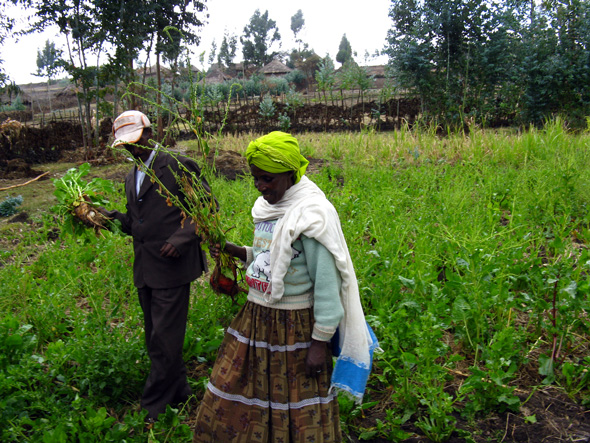
Since the integrated population, health, and environment (PHE) approach is relatively new in international development, donors, partners, and implementers want to know how it’s improving people’s lives. In the PHE community, we believe that combining efforts to address natural resource management, reproductive health, and livelihoods is making a difference in places where rapid population growth combines with poverty and environment degradation. But to know for sure and be able to convince others, we need to have data to support those beliefs.
-
Stronger Evidence Base Needed to Demonstrate Added Value of PHE
›
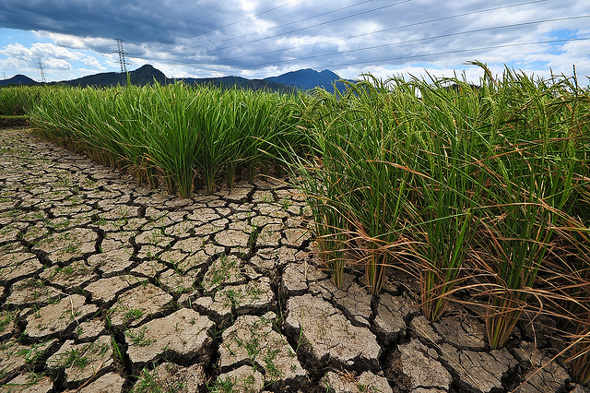
It is well known that public health issues that affect the world’s most vulnerable populations – food insecurity, maternal and child health, water- and sanitation-related disease, and resource scarcity – are inextricably linked. Where these linkages are strongest, experience on the ground has shown that community-based integrated approaches to development provide more effective and sustainable solutions over vertical, sector-based programs. But so far, there are very few comprehensive evaluations providing strong quantitative evidence of this advantage.
-
Elisabeth Rosenthal, The New York Times
As Biofuel Demand Grows, So Do Guatemala’s Hunger Pangs
›January 8, 2013 // By Wilson Center StaffThe original version of this article, by Elisabeth Rosenthal, appeared in The New York Times.
In the tiny tortillerias of this city, people complain ceaselessly about the high price of corn. Just three years ago, one quetzal – about 15 cents – bought eight tortillas; today it buys only four. And eggs have tripled in price because chickens eat corn feed.
-
How Does Climate Change Figure Into the Feed the Future Initiative?
›January 7, 2013 // By Kathleen Mogelgaard1.8 million food producers using improved technologies or management practices. Nearly 9 million children reached through nutrition programs. 2.4 million hectares under improved technologies or management practices. New mechanisms for donor coordination. A forward-looking agricultural research agenda. Innovative private-sector partnerships to support smallholder farmers. These are among the successes reported for the first three years of Feed the Future, the U.S. government’s new global hunger and food security initiative.
-
Building Sustainable Cities in a Warmer, More Crowded World
›January 3, 2013 // By Laurie MazurThe future is urban – but is it sustainable?
For decades – centuries, really – warnings have been issued: The burgeoning human population will outgrow the planet’s capacity to sustain us. The formula seems simple. More people equals fewer resources and greater environmental damage.
-
Africa’s Urban Youth Cohort, and Women’s Health in Forest Communities
›As recently discussed by the National Intelligence Council, sub-Saharan Africa is home to both the most rapidly growing populations in the world and its fastest expanding cities. Save the Children’s recent report, Voices From Urban Africa: The Impact of Urban Growth on Children, explores the challenges faced by the continent’s youngest age cohort, revealing what forces are driving children and families to migrate to urban areas and the poverty many are experiencing upon getting there. In response to the report’s findings, the authors recommend training and deploying more health care workers, facilitating public-private dialogue to identify long-term water and sanitation solutions, improving access to jobs and skills training, expanding access to early childhood care, and strengthening the education system to ensure widespread attendance. Compiled from 1,050 interviews, the report is unique for its first-hand accounts of the daily lives of children, their families, and community members. -
New Support for International Family Planning: The Significance of the London Summit
›December 21, 2012 // By Carolyn LamereAt a major summit in London this summer the Bill and Melinda Gates Foundation launched one of the most significant efforts yet to revitalize commitments around the world towards providing universal access to family planning. More than 220 million women around the world – mostly in developing countries – want to delay or avoid pregnancy but are not using effective methods of contraception. Meeting the unmet needs of these women could save the lives of hundreds of thousands of mothers and millions of infants, not to mention significantly impact the future of human development. But the last decade has been a period of relative neglect by international donors.
-
The Challenges of the 21st-Century City (Policy Brief)
›The Wilson Center Policy Briefs are a series of short analyses of critical global issues facing the next administration that will run until inauguration day.
We live in a world that is different from that inhabited by our ancestors in many profound ways. Among the most important changes is that, for the first time, almost half of the world’s people live in cities. According to the United Nations, in 2008 the global urban population surpassed half of the world’s population of 6.7 billion compared with 13 percent a century ago and 3 percent a century before that. This trend will require profound changes in the way the U.S. government addresses everything from development policy to international security.
Showing posts from category development.