-
Environmental Security Weekly Watch: May 25-29, 2026
›
A window into what we’re reading at the Stimson Center’s Environmental Security Program
As the Dead Sea Recedes, Local Ecology and Economies are at Risk (CNN)
A mix of human activity and climate change impacts shrink the Dead Sea by around four feet each year. The result is that over the past five decades, its surface area has shrunk by approximately a third, creating an unappealing landscape of sinkholes and salt-encrusted shorelines. Former resorts have been closed, and freshwater has seeped into the ground to dissolve ancient layers of salt and create underground cavities that can cause erosion and sudden ground collapse. The Dead Sea’s 6,000 sinkholes now threaten business and residents with no simple solution in sight.
-
ECSP Weekly Watch | October 15 – 18
›
A window into what we’re reading at the Wilson Center’s Environmental Change and Security Program
Global Water Stress May Create a Food Crisis (Guardian)
In its recent report, The Economics of Water, the Global Commission on the Economics of Water examined world hydrological systems and their impact on water availability—and warn of imminent shortcomings in food production. The study asserts that the demand for freshwater will outweigh the supply by 40% in 2030, highlighting a significant shift in previous freshwater requirement estimates.
-
ECSP Weekly Watch | August 19 – 23
›A window into what we are reading at the Wilson Center’s Environmental Change and Security Program
What’s Next for the Teesta Water Disputes? (The Hindu)
The recent political upheaval in Bangladesh which led to the resignation of Prime Minister Sheikh Hasina and the return of Nobel Peace Prize laureate Muhammed Yunus as leader of an interim government is not the only tumult in this nation. A worsening trend in weather events there has heightened Bangladesh’s exposure to climate shocks and allowed a dispute over the Teesta River to reemerge.
-
Embracing Risk: Lessons Learned from Integrating Climate Adaptation and Biodiversity Conservation in Nepal
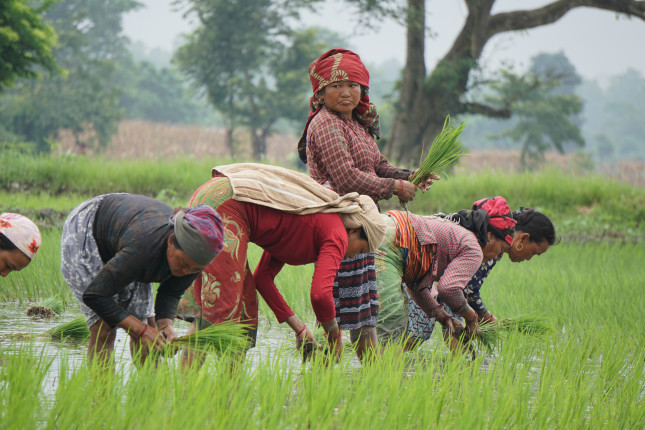
›The Hariyo Ban Program is one of the best examples of a sustainable development initiative that I’ve ever seen, said Nik Sekhran, Chief Conservation Officer of the World Wildlife Fund-US during a recent Wilson Center event on lessons learned from a decade of building resilience through participatory and inclusive natural resource management, climate adaptation, and biodiversity conservation in Nepal.
-
COVID-19 Causes Dire Disruptions in Maternal, Child, and Reproductive Health Services
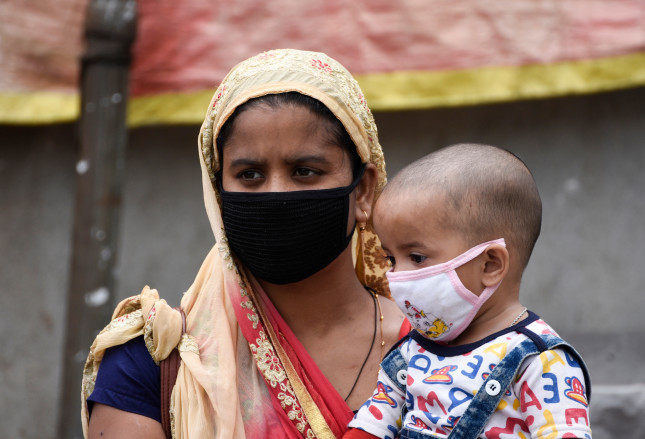
›“The pandemic has undoubtedly resulted in more deaths and more illness – particularly for the most vulnerable women and children,” write the authors of a new United Nations International Children’s Emergency Fund (UNICEF) report examining the direct and indirect effects of the COVID-19 pandemic in South Asia. The report found that the disruptions in several essential health services due to the COVID-19 pandemic had a “substantial impact” on maternal and child mortality in the region.
-
Gender Equality and Food Security in Rural South Asia: A Holistic Approach to the SDGs
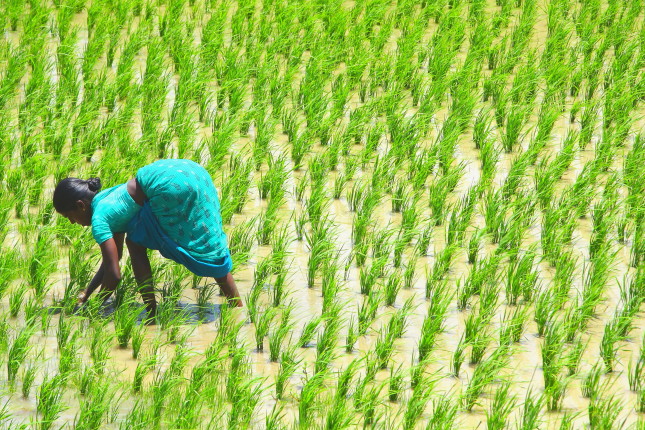
›January 4, 2021 // By Cindy ZhouGlobally, nearly 690 million people were hungry in 2019. Though the number of people who experience hunger in Asia has declined since 2015, the continent still accounts for more than half of the world’s hungry, or undernourished, at approximately 381 million people. Working toward Sustainable Development Goal 2 (SDG 2), “Zero Hunger,” will require major changes to the world’s food production systems.
-
Starting at the Top: Environmental Security in the Himalayas
›As an inhabitant of the Himalayan region of Nepal, where 8 of the 10 highest peaks of the world are situated, I am experiencing first hand several environmental stresses and insecurities. Many of the high mountains I can see from my village, once covered in snow, are turning black. Neighboring areas are experiencing massive out-migration and demographic changes. Consequently, agriculture in the region is facing an unprecedented crisis.Droughts, irregular rainfall and erratic floods, landslides and mudslides, forest fires, pollution of our land and water, and energy insecurity are frequently observed in Nepal. River systems born out of the Himalayas are shrinking. Erratic climate behavior is heavily affecting the flora and fauna and contributing to biodiversity loss.
-
Evaluating Enterprise: Twenty Years of Conservation Through Sustainable Livelihoods
›“It’s not often that we have the opportunity to go back to a site 20 years later and see what happened,” said Cynthia Gill, Director of USAID’s Office of Forestry and Biodiversity during a recent Wilson Center event on a retrospective evaluation of the “conservation enterprise” approach to biodiversity. Conservation enterprises are income-generating activities that provide social and economic benefits and help meet conservation goals.
Showing posts from category Nepal.
 As an inhabitant of the Himalayan region of Nepal, where 8 of the 10 highest peaks of the world are situated, I am experiencing first hand several