Showing posts from category Kenya.
-
Tim Siegenbeek van Heukelom, State-of-Affairs
Food Security in Kenya’s Yala Swamp
›June 21, 2011 // By Wilson Center StaffThe original version of this article, by Tim Siegenbeek van Heukelom, appeared on State-of-Affairs.
In West Kenya on the Northeastern shore of Lake Victoria, the Yala swamp wetland is one of Kenya’s biodiversity hotspots. The Yala swamp also supports several communities that utilize the wetland’s natural resources to support their families and secure their livelihoods. Even more, many people recognize the swamp’s extraordinary potential as agricultural land to significantly boost Kenya’s food security. These are three widely diverse interests, which may seem to be difficult to reconcile. Yet, with proper management, sufficient investment and effective communication, a differentiated utilization of the Yala swamp can be realized through a system of multiple land use. This will be a difficult but certainly not unrealistic objective.
A Brief History
The most recent development of the Yala swamp was undertaken by Dominion Farms, a subsidiary of a privately held company from the United States investing in agricultural development. The reclamation and development of the swamp, however, is far from a new phenomenon.
The intention of the Kenyan government to transform parts of the Yala swamp into agricultural land for food production goes back as far as the early 1970s. Around that time, the Ministry of Foreign Affairs of the Netherlands was consulted extensively by the Kenyan government for technical assistance on reclamation of the swamp and the feasibility of agricultural production.
Throughout the 1980s numerous reports were commissioned by the Kenyan Ministry for Energy and Regional Development and the Lake Basin Development Authority to the Dutch Ministry of Foreign Affairs. Reports like the “Yala Integrated Development Plan” and the “Yala Swamp Reclamation and Development Project” focused in depth on the potential of the development of the swamp and made recommendations on practical matters, such as drainage and irrigation, soil analysis, agriculture, marketing, environmental aspects, employment opportunities, human settlement, management, and financial planning.
As a result, small-scale reclamation and development of the swamp land was undertaken throughout the 1980s and 1990s under the supervision of the Lake Basin Development Authority. The development of the swamp was partially successful, yet its scale was small and financial benefits were too marginal. Major investment was therefore required to extend the scale of the project.
Then, in 2003, an American investor expressed interest to make significant long-term investments into bringing parts of the swamp into agricultural production. Subsequently, a lease for 45 years was negotiated between Dominion Farms and the Siaya and Bondo County Councils to bring into agricultural production some 7,000 hectares of the Yala swamp. The whole Yala swamp wetland covers 17,500 hectares, which means that Dominion Farms is allowed to reclaim and develop roughly 40 percent of the swamp.
Protracted Conflict
Since the early days of the arrival of the foreign investor in 2004, there has been lingering tension and occasional flares of conflict between the communities surrounding the project site, third parties (i.e. government officials, politicians, NGOs, CBOs, environmentalists), and the investor.
The most commonly touted complaint is that Dominion Farms “grabbed” the communities’ land. While it is hard to trace back the exact procedures and individuals that were involved, there are clear contracts with the Siaya and Bondo County Councils that substantiate the transfer of land-use to Dominion Farms for a period of 45 years. Some claim, however, that the negotiation process for the lease was entrenched in bribery and corruption, yet no one has been able to show this author a single trace of evidence to substantiate these accusations. Similarly, there are complaints by local residents that they were never consulted in the negotiation process – where they should have been, as they rightly point out that the swamp is community trust land. However, the land is held in trust by the relevant county council for the community. The county council should therefore initiate consultations with the local communities and residents to get their approval to lease the land to third parties. So it appears that some of the resentment over the loss of parts of the swamp should not be directed at the foreign investor but rather target the local county council and their procedures.
Continue reading on State-of-Affairs. -
Watch: Catherine Kyobutungi on Monitoring the Health Needs of Urban Slums
›Addressing the maternal health needs of the nearly 60 percent of urban residents who live in slums or slum-like conditions will be a critical step to improving maternal health indicators of a rapidly urbanizing Kenya, said Catherine Kyobutungi, director of health systems and challenges at the African Population Health Research Center in Nairobi.
“In some respects, [the urban poor] are doing better than rural communities, but in other ways they are behind,” said Kyobtungi. But, she said, there are many unique opportunities to improve maternal health in slums: “With these very high densities, you do have advantages; with very small investments, you can reach many more people.”
Output-based voucher schemes – in which women pay a small fee for a voucher that entitles them to free, high-quality antenatal care, delivery services, and family planning – have been implemented to help poor, urban women access otherwise expensive services. But poor attitudes towards health care workers, transportation barriers, and high rates of crime still prevent some women from taking advantage of these vouchers, said Kyobtungi. -
Watch: Richard Cincotta on Political Demography and Unrest in the Middle East
›March 9, 2011 // By Schuyler Null“Countries that have a high proportion of young people are typically more prone to political violence,” said demographer-in-residence at the Stimson Center, Richard Cincotta, in this interview with ECSP. “That is, not necessarily international war [but] internal conflict, which may take different forms,” including civil and ethnic strife, domestic terrorism, and violent political demonstrations.
The role of unemployed and angry youths in the recent unrest that has swept the Middle East has received a great deal of coverage, but though the region in general is very young, some countries are more so than others.
Tunisia (median age of 29) is actually well into its demographic transition, where fertility declines towards replacement level. “Fertility – the number of children women have in their lifetime – is now lower than it is in the United States,” said Cincotta. As a result, Tunisia’s prospects for achieving a stable, liberal democracy – based on the historical relationship between age structure and political freedoms (see Cincotta’s full post on Tunisia and the two follow-ups for a more complete treatment of that relationship) – are about even.
In contrast, Egypt’s age structure remains young (median age of 24) and Yemen’s (median age of 17) is extremely young. “Those difference are very stark,” said Cincotta, and they play out in the risk of political violence: Tunisia is less likely to experience continuing political violence; Egypt, more so; and Yemen, even more likely.
The relationships between age structure and political violence and the emergence of democratic institutions can be useful in other conflict-prone regions as well. “Afghanistan, Pakistan, Iraq, the Palestinian Authority, most of the central band of sub-Saharan Africa – from Nigeria to the Congo, to Kenya and Ethiopia – we know that these countries are volatile, we’re not always sure why,” said Cincotta. But “age structure gives you a clue, because it tells you something about a lot of barriers that are important to development.”
Sources: UN Population Division. -
Carrying Capacity: Should We Be Aiming to Survive or Flourish?
›“In the eyes of many governments, population has, as we all know, been a rather uncomfortable topic for a number of years,” said Nobel Laureate Sir John Sulston, FRS, chair of the Institute for Science, Ethics, and Innovation at the University of Manchester and chair of the Royal Society’s People and the Planet working group. At an event at the Wilson Center on February 22, Sulston and his co-panelists, Martha Campbell, president of Venture Strategies for Health and Development, and Professor Parfait Eloundou-Enyegue of Cornell University, encouraged active debate on a range of population dynamics and their connections to economic, environmental, and political futures. [Video Below]
The Nexus of Population and Consumption
The dialogue between population and environmental communities has been pushed aside for many years but has lately been climbing its way back onto national agendas, said Sulston. However, the debate remains polarized. Scientists need to “sort out the facts as best we can” to help bring the communities together, he said. The Royal Society’s People and the Planet study, which will be completed by early 2012, will “provide policy guidance to decision-makers as far as possible” and “play our part in engendering constructive dialogue,” he said.
“What we should be aiming to do is to ensure that every individual on the planet can come to enjoy the same high quality of life whilst living within the Earth’s natural limits,” said Sulston. Instead of talking about the maximum number of people the Earth can hold, we should also focus on “the quality of life of those people,” he said. People are happier, healthier, and wealthier than ever before, according to human development indexes. But, Sulston said, 200 million women worldwide have an unmet need for family planning, ecosystems are degraded, biodiversity has decreased, and there are widespread shortages of food and water.
For centuries humanity has pursued a policy of “competitive growth,” both in population and consumption. But in preparation for the UN “Rio+20” summit on sustainable development in 2012, policymakers should be discussing “pathways to sustainability within the context of population,” said Sulston.
“Humanity needs to learn to act collectively and constructively in the face of these long-term and therefore rather elusive threats, just as we do rather well when we’re faced with immediate and tangible ones,” Sulston said. “So we need the best technology, but we need it in the context of a thoughtful society, and then we can both survive and happily flourish.”
A Demographic Crossroads
“No longer is population growth or population size the only issue of the day,” said Parfait Eloundou-Enyegue. “You have to worry about both population growth and population decline, you have to worry about immigration, you have to worry about aging, you have to worry about HIV and adult mortality, et cetera.”
Some people, Eloundou-Enyegue said, take this diversity of demographic issues as “grounds for complacency” by thinking they do not share in others’ problems. Yet, he said, population and ecology are areas where the risks are shared by all.
These challenges demand a “more comprehensive framework” that details the interactions between population, affluence, environment, technology, and inequality, said Eloundou-Enyegue. Tensions persist between these different areas, and breaking them will require “call[ing] on other qualities of the human spirit,” he said. The world is, Eloundou-Enyegue concluded, at a “demographic crossroads.”
The Timing of Declining Fertility
The key to ending the sensitivity to the issue of population growth is to “understand that this is about options: options for women and options for families,” said Martha Campbell. Strong attention and funding support can meet needs and lead to declining birth rates, as in the case of Kenya before the mid-1990s. But with the broader emphasis on reproductive health and concerns about coercion that followed the 1994 United Nations International Conference on Population and Development (ICPD) in Cairo, funding for family planning declined. As a result, Kenya’s fertility rates leveled off instead of continuing to decline, said Campbell, contributing to an upward revision of global population projections.Campbell illustrated the impact of delays in achieving replacement-level fertility on the overall population size of individual states. In the case of Pakistan, for example, analysis by Venture Strategies for Health and Development and the African Institute for Development Policy projects that the country will have a total population of 350 million if replacement-level fertility is reached by 2020, and a population of almost 600 million if that same mark is reached by 2060.
Looking ahead to the “Rio+20” summit in 2012, Campbell emphasized the need for continued discussion about population growth and family planning. The silence on these issues after Cairo in 1994 and the subsequent global impact should serve as a warning for future generations, she said: “It is important for this next generation and the current generation to understand what happened so that it will never, ever happen again. The silence on population must not occur.”
Photo Credit: “Rush hour,” courtesy of flickr user Jekkone, and Pakistan fertility chart, courtesy of Martha Campbell and Venture Strategies. -
PRB’s Jay Gribble at Kenya’s National Leaders Conference on Population and Development
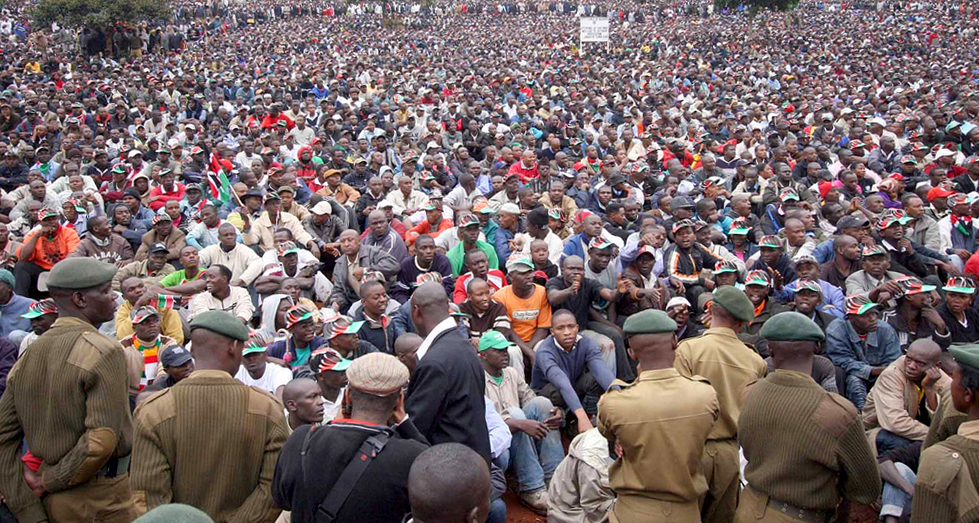
›November 29, 2010 // By Wilson Center StaffJay Gribble, vice president of International Programs at the Population Reference Bureau (PRB), recently attended the Kenya National Leaders Conference on Population and Development, November 15-17, at the Kenyatta International Conference Center in Nairobi. During the conference, he produced a series of posts for PRB’s Behind the Numbers on some of his impressions. Gribble focuses on Kenya’s resurgent interest in integrating population issues into the development agenda, the country’s ongoing HIV/AIDS epidemic, and the importance of family planning.
Below are the introductory excerpts from his posts; to read the full posts, please visit Behind the Numbers.
“Anticipating Change in Kenya”
Sitting in the hall where Kenya’s National Leaders Conference will be starting in a few minutes, I can’t help but feel that there is an opportunity to refocus national attention to development…to the goal that I have heard repeatedly of becoming a Middle Income country. And to achieve this goal, they must first recognize that population is an underpinning development issue that cannot be ignored.
In the 1980s and 1990s, Kenya was a leader in reproductive health and maternal health, really setting a pace for the continent. But during the 2000s, Kenya turned its attention to other pressing issues – namely HIV/AIDS – and began to give less attention to population issues. Though HIV continues to be a plague, it is now time to return to the importance of slowing population growth, for until this fundamental issues is addressed, there will be less opportunity for education, jobs, and better health. At the same time, as a predominantly rural country with agriculture representing a major part of the economy, smaller families will be critical to maintaining farms that are large enough to feed families and the country.
Continue on PRB.
“As the Rich Get Richer, the Poor Get Children”
The Kenya National Leaders Conference has begun, representing the first time since 1989 that Kenya’s national population policy has been discussed in a large, open forum. With a new national constitution, Kenya is poised to redress many of the social and economic inequalities that have stood in the way of its development. In fact, the current population policy expires in December, 2010, and one of the purposes of this conference is to gather the input from leaders throughout the country on how a new policy should be framed. I find it impressive that such a large conference is convened to ensure that a new policy reflects the needs of the nation. The conference is also a forum for reaching leaders with important information about the need to address population growth through family planning if Kenya is to achieve its Vision 2030 development plan.
Continue on PRB.
“In Kenya, Prioritizing Population…and Family Planning”
As Kenya’s National Leaders Conference on Population and Development winds down today, it offers leaders an opportunity not only to think and talk about how population growth is an issue that underlies the country’s development, but to act on it too. Whether thinking about business, agriculture, or the environment, it is impossible to be strategic about Kenya’s future without also considering how rapid population growth will affect it.
In talking with Kenyans who grew up in the 1970s and 1980s – back when family planning and population growth were a priority – they remember the messages that were at the tips of people’s tongues – smaller families live better. Before the HIV/AIDS epidemic, family planning and slowing population growth was a priority and a source of national pride because it put Kenya on track for prosperity and development.
Continue on PRB.
Photo Credit: Adapted from “King Kenyatta?” courtesy of flickr user rogiro. -
Tackling Youth Unemployment, Instability in Kenya
›
Today, Kenya’s youth unemployment rate stands at 65 percent, among the highest in the world. Three in five unemployed Kenyans are 15 – 35 years old. The situation is exacerbated by a shrinking economy, political instability, and pervasive income inequality.
Significantly, youth are engaged in the informal sector, which is largely unregulated and subjects workers to low earnings and long hours, without any formal contract. Suffering under a slow-growing economy, youth, whether well educated or uneducated, have increasingly turned to crime and violence, serving as watu wa mkono (handymen) to the ruling elite and intimidating and harassing their political opponents.Violence during Kenya’s disputed 2007 elections left approximately 1,133 people dead and 650,000 displaced from their land. Many of these atrocities were committed by youth, for sums as low as $6. With the 2012 elections fast approaching, Kenya risks renewed violence if its daunting youth unemployment rate is not properly addressed.
Against this backdrop, the Kenyan government has established the Youth Enterprise Development Fund (YEDF) and Kazi kwa Vijana (KKV), which means “jobs for youth,” to boost employment and entrepreneurship among people 18 to 35 years old.
Through YEDF, groups of up to 12 people can submit a business plan and apply for funding, as well as other services such as training, mentorship, and market access. The fund also connects youth with local and international job markets. KKV facilitates access to temporary, labor-intensive jobs for generally low wages, and also offers some business training.
Given the high poverty levels among youth in Kenya, temporary jobs can help young people learn the marketable skills they need to find decent work. But it’s not a long-term solution, as these low-paying jobs can also trap people in poverty, making crime and violence seem like the only viable exit.
Kenya would do well to learn from other countries’ efforts, where similar programs have long existed. For example, Italy’s Imprenditorialita Giovanile, or “Young Entrepreneurs’ Company,” and the UK’s Prince Trust exist solely to support young people’s start-up businesses.
Like Kenya’s efforts, these two programs provide training and mentoring to young people. However, they also have autonomy from their respective governments, which gives them freedom to operate without political interference and burdensome bureaucracy. Services are delivered by highly competent, successful entrepreneurs, who inspire youth to become entrepreneurs, not as an alternative to joblessness, but as a genuine career path with financial reward and work satisfaction. Through these programs, youth have managed to start and sustain viable businesses, and attain financial independence and stability.
Compared to these cases, Kenya’s KKV and YEDF fall short. Their activities overlap, and their objectives are too broad, which makes them unachievable within a reasonable timeframe.
They are also constrained by heavy government control. The prime minister’s office oversees KKV, while the Ministry of Sports and Youth Affairs manages YEDF. As a consequence, the programs are burdened by politics rather than buoyed with professionalism.
The tendency to treat youth as a homogenous group could isolate some young people who cannot fulfill YEDF’s requirements, such as a business development plan, a registered group, or an existing bank account. The rules should be more flexible and needs-based in order to benefit some of the needy and illiterate youth who require more rigorous training and support to succeed.
Finally, the programs’ near-sighted focus on temporary employment is but a bandage; Kenya needs long-term strategies to enable youth to access more rewarding and productive work.
Fundamentally, the problem requires properly planned, well-structured, and broad-based programs, and so far the government seems to be tinkering at the superficial level without a long-term, comprehensive plan. Accelerating economic growth is central to creating employment opportunities for youth, as well as providing market-driven education, training, and life skills.
In order to make a smooth transition to adulthood, young people require decent work and the ability to actively contribute to economic and political development and stability. Short of this, youth will remain at the margin of the economy, to serve as the violent watu wa mkono in 2012 and beyond.
Margaret Wamuyu Muthee is Programs Manager for Kenya’s University of Nairobi Center for Human Rights and Peace, and is currently an Africa Program Scholar at the Woodrow Wilson Center.
Photo Credit: Adapted from “Promulgation,” courtesy of flickr user ActionPixs (Maruko). -
The Feed for Fresh News on Population
›August 24, 2010 // By Wilson Center StaffRT @NewSecurityBeat: New: Royal Society Calls for Submissions: “People and the Planet” Study – http://ht.ly/2oOju #Population @royalsociety
RT @NewSecurityBeat: New: #Land, #Education, and #Fertility in Rural #Kenya – http://ht.ly/2nvJL #Demography #Population #Youth #ECSP #fb
Spoke on need for integration in climate, food, water, & health on #USAID @PressClubDC panel. @NewSecurityBeat coverage http://ow.ly/2n0K4
Great to see Colin Kahl this morning. Here’s a @NewSecurityBeat podcast w/ him on environment, demography, & conflict http://ow.ly/2n0qG
My take on @Revkin on @dotearth asking how much is enough? Look to Durning & Pirages to help redefine the good life http://ow.ly/2mG2T
Follow Geoff Dabelko and The New Security Beat on Twitter for more population, health, environment, and security updates. -
Land, Education, and Fertility in Rural Kenya
›August 10, 2010 // By Wilson Center StaffExcerpted from a summary on the Population Reference Bureau‘s website, by Karina Shreffler and F. Nii-Amoo Dodoo. The original version of this article appeared in Population and Environment 30, no. 3 (2009): 75-92.
Little is known about the role of land inheritance in the link between land availability and fertility. The recent transition from high to lower levels of fertility in some African countries presents an opportunity to clarify the underlying causes of this decline, since the individuals involved in the transitions are still alive.
Using data from focus group discussions with people whose childbearing occurred before and during the rapid and unexpected fertility decline in Nyeri District in rural Kenya, we examined the impact of diminishing land availability, farm size, and inheritance patterns on fertility decisionmaking and behavior. The results shed new light on the role of education, long considered the key determinant of fertility transition.
Our research suggests that rather than inheritance being an external factor affecting fertility behavior, parents in Nyeri District chose to educate their children after realizing they would not be able to bequeath a sufficient amount of land. Our work provides evidence of the importance of considering the influence of environmental factors on demographic processes, particularly in regions of resource dependence.
Continue reading on PRB.
For more on Kenya’s youth, see New Security Beat‘s interview with Wilson Center Scholar Margaret Wamuyu Muthee.
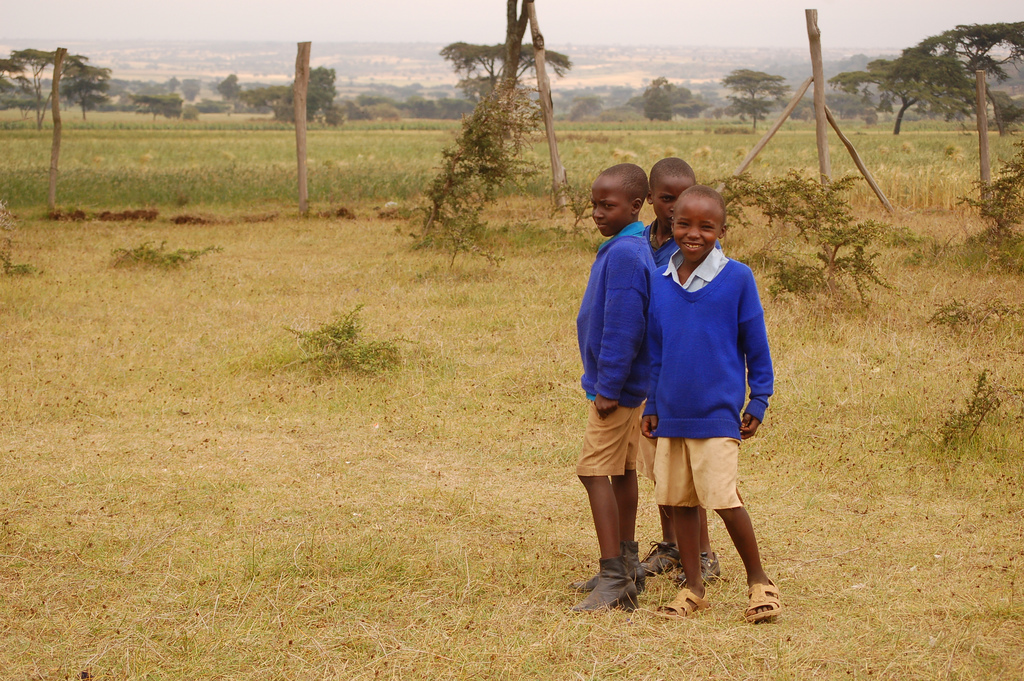
Photo Credit: “Olaimutiai Primary School (Maasai Land, Kenya),” courtesy of flickr user teachandlearn.