-
Edna Wangui on East Africa’s Changing Pastoralists
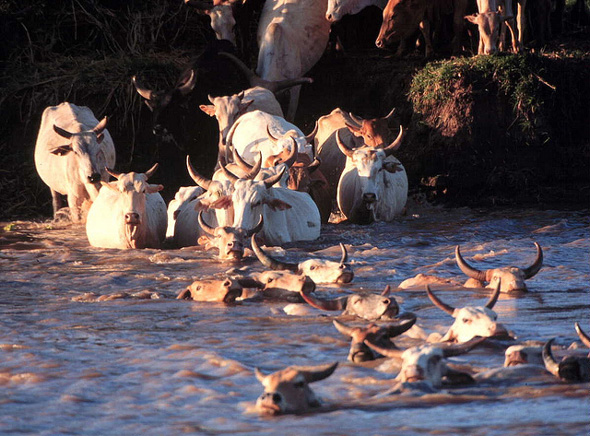
›November 20, 2012 // By Carolyn LamereThe fault line between nomadic pastoralists and sedentary agriculturalists in sub-Saharan Africa has emerged as one of the most dominant stories of climate-related conflict. But according to Edna Wangui, a professor at Ohio University who studies communities in Kenya and Tanzania, pastoralism is different from many people’s perceptions.
-
Making ‘Beyond Seven Billion’: Reporting on Population, Environment, and Security
›
“When I embarked on this series, I approached it as an environmental reporter: What does a growing number of us and growing consumption mean for our planet?” said Los Angeles Times reporter Ken Weiss at the Wilson Center on October 9. Weiss, along with photographer Rick Loomis, recently completed a five-part series and multimedia presentation on global population that was the culmination of a year of research and travel through more than six countries. [Video Below]
-
Social Interaction Key to Urban Resilience, Says Harvard’s Diane Davis
›November 7, 2012 // By Payal Chandiramani“Resilience is the capacity of individuals and institutions to cope and adapt in the stress of chronic violence in ways that allow them room for maneuver and hope for the future,” said Diane Davis, Harvard professor of urbanism and development, in an interview at the Wilson Center.
-
Water and Land Conflict in Kenya in the Wake of Climate Change
›
Earlier this month, there was a flurry of stories about brutal mass killings in clashes between the Pokomo and Orma communities over water and land in southeast Kenya’s Tana River County. The Kenyan media reported that about 30 people, including eight security personnel, had been killed and scores wounded, and reports on the death toll since last month are more than 100.
-
Nile Basin at a Turning Point as Political Changes Roil Balance of Power and Competing Demands Proliferate
›September 4, 2012 // By Carolyn LamereIn 1979, Egyptian President Anwar Sadat famously said that “the only matter that could take Egypt to war again is water.” Sadat’s message was clear: the Nile is a matter of national security for Egypt.
Indeed, Egypt relies on the Nile for 95 percent of its water. But it is not the only state with an interest in the world’s longest river. There are 11 states in the Nile River basin, which stretches from Africa’s Great Lakes region – Tanzania, Uganda, Kenya, Rwanda, Burundi, and the Democratic Republic of the Congo – to the Ethiopian and Eritrean highlands through South Sudan, Sudan, and Egypt to the Mediterranean Sea.
-
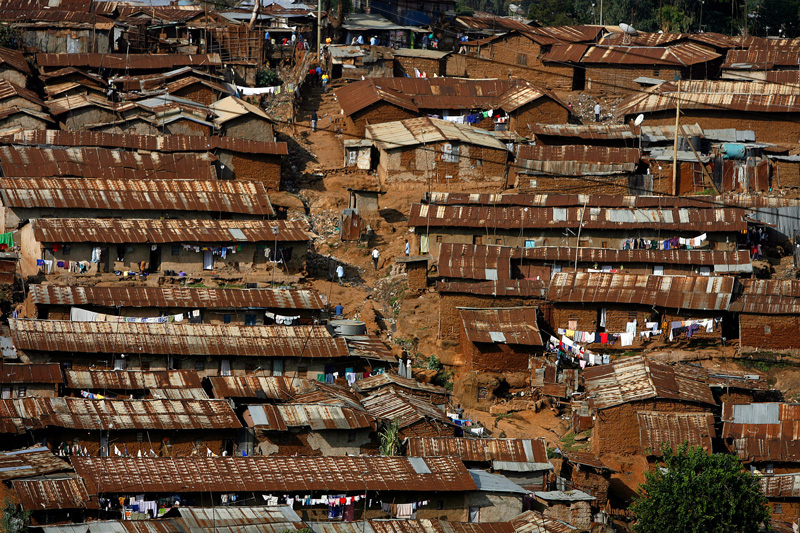
Changing Cities: Climate, Youth, and Land Markets in Urban Areas
›The number of urban slum dwellers worldwide is staggering. According to UN-Habitat, 827.6 million people live in slums around the world. Despite meeting a Millennium Development Goal to significantly improve the lives of at least 100 million slum dwellers by 2020, the total number of people living in these areas still increased by 55 million between 2000 and 2010. By 2020, the world slum population is projected to reach 889 million. With the majority of people now living in cities, urban priorities are synonymous with human security and environmental sustainability and must be accounted for in the global development agenda.
-
Michael Kugelman, Sustainable Security
The Global Land Rush: Catalyst for Resource-Driven Conflict?
›July 31, 2012 // By Wilson Center StaffThe original version of this article, by Michael Kugelman, appeared on SustainableSecurity.org.
On May 11, the UN approved new international rules to govern how land is acquired abroad. These Voluntary Guidelines (VGs), the outcome of several years of protracted negotiations, are a response to growing global concern that nations and private investors are seizing large swaths of overseas agricultural land owned or used by small farmers and local communities for food, medicinal, or livelihood purposes. FAO head Jose Graziano da Silva describes the VGs as “a starting point that will help improve the often dire situation of the hungry and poor.”
It’s hard to quibble with the intent of the guidelines. They call for, among other things, protecting the land rights of local communities; promoting gender equality in land title acquisition; and offering legal assistance during land disputes.
Unfortunately, however, any utility deriving from the VGs will be strictly normative. As their name states explicitly, they are purely optional. A toothless set of non-obligatory rules will prove no match for a strategy that is striking both for its scale and for the tremendous power of its executioners.
Oxfam estimates that nearly 230 million hectares of land (an area equivalent to the size of Western Europe) have been sold or leased since 2001 (with most of these transactions occurring since 2008). According to GRAIN, a global land rights NGO, more than two million hectares were subjected to transactions during the first four months of 2012 alone. One of the largest proposed deals – an attempt by South Korea’s Daewoo corporation to acquire 1.3 million hectares of farmland in Madagascar – failed back in 2009. Still, even larger investments are being planned today, including a Brazilian effort to acquire a whopping six million hectares of land in Mozambique to produce corn and soy (Mozambique offered a concession last year).
Continue reading on SustainableSecurity.org.
Sources: BBC, Food and Agriculture Organization, GRAIN, MercoPress, Oxfam, Reuters.
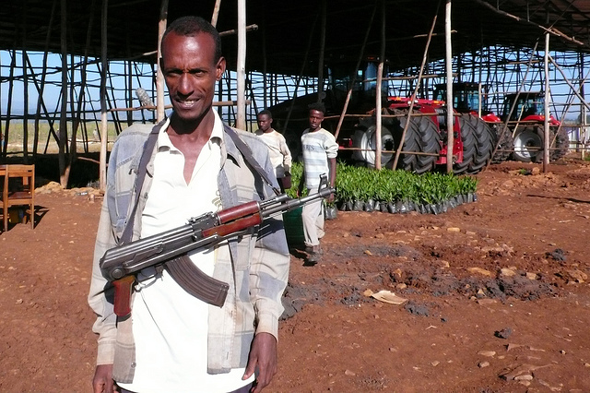
Photo Credit: “Garde armé,” courtesy of flickr user Planète à vendre. -
IPPF and Partners Connect Reproductive Rights With the Environment and Development
›A new framework for sexual and reproductive health is needed, argued panelists in a recent event at the Wilson Center, and the Rio+20 conference on sustainable development would have been the place to start. An international consensus around women’s human rights was developed at the International Conference on Population and Development in Cairo in 1994, but Carmen Barroso, director of the International Planned Parenthood Federation’s Western Hemisphere Region, said there has been slow implementation, little funding, and furthermore the world has changed significantly since then.
Barroso was joined by Latanya Mapp Frett, vice president of Planned Parenthood Global, as well as two representatives of Planned Parenthood partner organizations, Marco Cerezo of FUNDAECO and Ben Haggai of Carolina for Kibera.
New challenges to the reproduce rights landscape include the rapid spread of HIV/AIDS and decreased funding for international programs. But new opportunities include rapid dissemination provided by the internet and globalization and a subsequent mobilization of youth. “Young people are the largest cohort in history,” Barroso said in an interview with ECSP, both in absolute numbers and in percent of the population. “We have a historical opportunity [to incorporate] them in these decision-making processes.” Additionally, gender and health issues are incresaingly seen by many as linked with the environment and development.
Intersection of Health and the Environment
Marco Cerezo’s FUNDAECO (Foundation for Ecodevelopment and Conservation) is an example of Planned Parenthood’s partnership with other organizations. Based, in rural Guatemala, they shifted from primarily focusing on conservation and sustainable development to incorporating women’s health after finding a vicious cycle of poverty, high fertility, and environmental degradation in the places they worked.
Women’s health was so dire it was holding development back, Cerezo said. “Sustainable community development will not be possible without the education, empowerment, and support to rural women,” they write in their mission statement.
FUNDAECO now acts as a model for the intersection between reproductive health and the environment. Cerezo reported that once women are healthy and empowered through clinics established by FUNDAECO, they become more active in all aspects of the community, including ecological preservation.
Building Healthy Communities
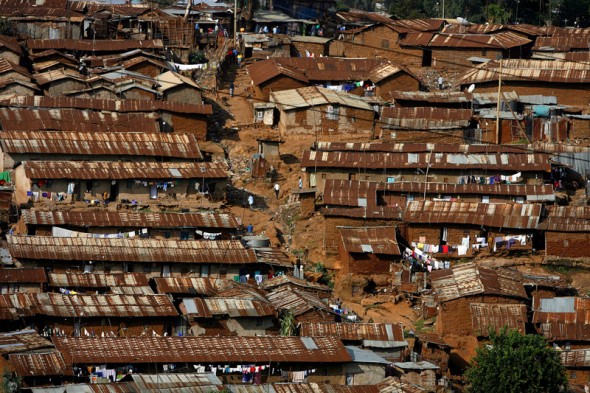
Ben Haggai, who works in Nairobi’s biggest slum, Kibera, further reiterated the need for integrated programs. Carolina for Kibera has a number of programs to improve the quality of life for residents, he said, and has a particular focus on youth with sports associations and education programs.
Youth are the best reproductive health educators, Haggai said, as they are able to talk frankly with their peers. The NGO trains peer youth educators to reach out to community members about reproductive health and other issues like substance abuse. Since the young people work as volunteers, Haggai said, they are motivated only by a desire to improve their communities.
A Natural Intersection
Latanya Mapp Frett agreed that sexual and reproductive health aligns quite naturally with issues of sustainability. “We try to work in the countries overseas in Latin America and Africa where we focus particularly on non-traditional health sectors,” she said in an interview with ECSP following the panel. “One of those sectors is the environment.”
While emphasizing that contraceptive use is a cost-effective way to ensure sustainable development, Mapp Frett cautioned against framing sexual and reproductive health only in the context of reducing fertility. While this may have been common in the past, she noted, it’s important to ensure that women have the right to make childbearing choices for themselves.
Mapp Frett also urged policymakers in the United States to look to developing countries for intersections between development, the environment, and reproductive health. She said that Planned Parenthood’s partner organizations, including FUNDAECO and Carolina for Kibera, have found these connections and successfully partnered with already existing networks like churches to more effectively reach the community.
Translating Into Effective Action
Each member of the panel spoke about the challenge of articulating the need for sexual and reproductive health programs to people outside the field. Barroso mentioned research conducted by Brian O’Neill which found that meeting the current unmet need for contraception would slow population growth enough to reduce emissions by 17 percent.
Cerezo emphasized the importance of consensus among the staff of a given organization, saying it is difficult to make a case to agronomists and farmers if a culture clash exists within the institution. Haggai agreed, adding that focusing on reproductive issues is an important measure of prevention which helps protect both the environment and the health of women in a community.
For Mapp Frett, women’s reproductive and sexual health is indivisible from other aspects of development. “As you talk about sustainable development, you talk about ensuring that women are empowered to make sure that our earth is sustainable,” she said.
Assessing Rio+20
The panel took place before the UN Conference on Sustainable Development got underway in Rio. Participants had high hopes for a renewed focus on gender and reproductive rights at the conference. Unfortunately, language on reproductive rights was first weakened and then omitted entirely from the final outcome document (see the account written by ECSP’s Sandeep Bathala at Rio for more on the conference).
While pressure from the Vatican and the G-77 kept reproductive health out of the outcome document, it was not entirely forgotten at the conference. A number of side events highlighted the importance of reproductive rights, especially in the context of the environment and development.
Hillary Clinton also re-affirmed U.S. commitment to access to contraception and reproductive health care. “Women must be empowered to make decisions about whether and when to have children,” she said at the conference on Friday. “And the United States will continue to work to ensure that those rights are respected in international agreements.”
Clinton shared the urgency expressed by the panelists at the Wilson Center. “There is just too much at stake, too much still to be done,” she said. “We simply cannot afford to fail.”
Event Resources:Sources: FUNDAECO, UN Conference on Sustainable Development, U.S. Department of State.
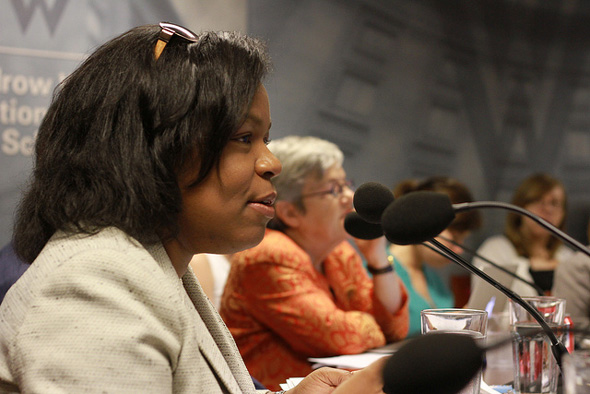
Photo Credit: Sean Peoples/Wilson Center.
Showing posts from category Kenya.