-
Environmental Security Weekly Watch: October 6-10, 2025
›
A window into what we’re reading at the Stimson Center’s Environmental Security Program
“Intractable” systemic problems mean carbon offsets fail to cut global heating (The Guardian)
A recent review of 25 years of evidence found that carbon credit quality issues stem from deep-seated structural flaws, and not isolated cases of fraud. Researchers point to four major flaws that undermine most carbon offset projects. The worst problems include issuing credits for already-planned projects, impermanent solutions (forests that later burn), incidences of leakage (such as protecting one forest area while pushing logging elsewhere), and double-counting which allows both seller and buyer to claim the same emission reduction.
-
Environmental Security Weekly Watch: August 25-29, 2025
›
Amazon Nations Sign Political Blueprint for Rainforest Protection (Associated Press)
Presidents from South America’s Amazon nations gathered in Colombia’s capital to sign the Declaration of Bogotá on August 22, 2025,. This political blueprint establishes cooperation across a region that spans over 2.5 million square miles and has a crucial role in to play as a massive carbon sink that slows global warming. Signatories hope that it is a sign that the region will move past political rhetoric to concrete actions.
-
Deep Currents: Assessing Threats to the Indus Waters Treaty
›The Indus Waters Treaty of 1960 has kept two nuclear-armed rivals – India and Pakistan – in a stable river sharing arrangement for more than six decades. Yet that significant achievement now seems to be at risk.
India’s government has stated it is holding the treaty in abeyance and is threatening to cut off water to Pakistan after a terrorist attack killed more than 20 Indian citizens in late April 2025. India’s Prime Minister Narendra Modi described the treaty as a “blunder” and a “betrayal” of India’s dignity committed by then Prime Minister Jawaharlal Nehru, and proclaimed that “blood and water cannot flow together.”
-
Swachh Bharat Mission: Intended and Unintended Consequences
›Open defecation (OD) has been demonstrated to be a major contributing factor to poor health, resulting in adverse social and economic impacts due to work and educational disruptions. Despite various policy-driven efforts since 1954 to eradicate OD, it remains highly prevalent in India—especially in rural areas where there is a lack of toilets. A survey conducted in 2012 revealed that 60% of rural households (and 9% of urban households) had no toilet access. India’s open defecation rate of 40% was one of the highest in the world—more than three times the global average of 12%.
-
ECSP Weekly Watch | November 4 – 8
›A window into what we’re reading at the Wilson Center’s Environmental Change and Security Program
Can Fighting Smog Be a Bridge in India-Pakistan Relations? (Al Jazeera)
The Swiss group IQAir has compiled and analyzed data from 14 regional monitoring stations and declared Pakistan’s capital Lahore to be the world’s most polluted city. Last Wednesday, for instance, Lahore’s air quality index (AQI) score was 1165, which then increased in a staggering fashion to 1900 AQI by the following Monday. India’s capital, New Delhi, was a close second for most-polluted city in the same survey, however. This cross-border pollution issue now has led government officials in both countries to reignite stagnant relations to pursue solutions.
-
“Men Will Be Men” Taints India’s Efforts to Safeguard Women
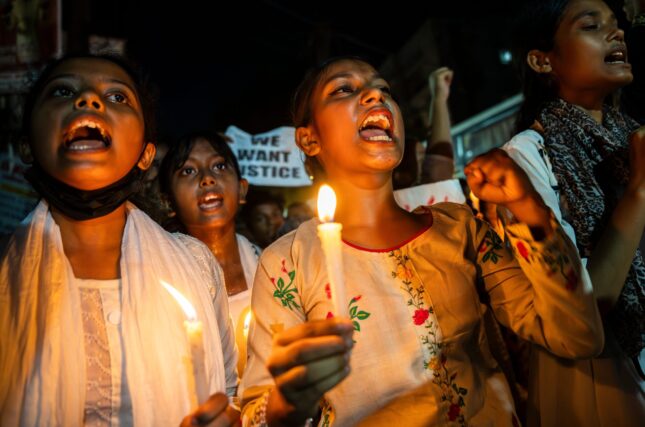
›As Indians celebrated the nation’s 78th Independence Day on August 15, its women cried for freedom on the same streets where their forebears shouted: “Vande Mataram” or “I salute thee, motherland.” That battle slogan was built for nonviolent resistance, and India’s women now stand united to fight against the continued violation of their dignity and their bodies.
-
War and Climate Change Intensify Global Water-related Conflicts
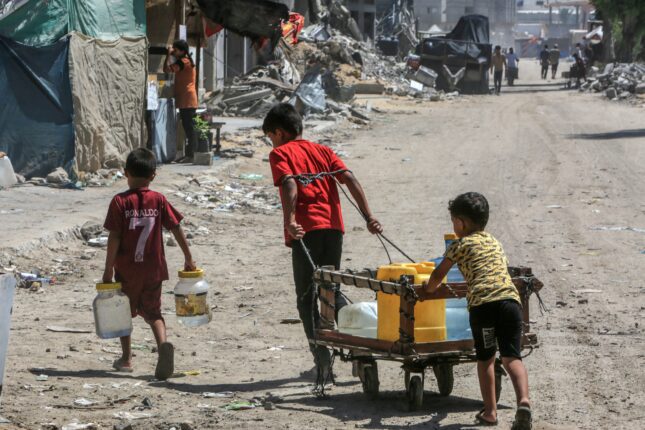
›The Pacific Institute recently updated its Water Conflict Chronology—a database of water-conflict events that began to take form in the 1980s. The recent updates include the addition of 300 new entries to the database, highlighting the alarming rise of water-related conflicts in the last few years. Despite this overwhelming evidence of a growing trend in water-related conflicts, global attention toward addressing them remains negligible.
-
ECSP Weekly Watch | August 19 – 23
›A window into what we are reading at the Wilson Center’s Environmental Change and Security Program
What’s Next for the Teesta Water Disputes? (The Hindu)
The recent political upheaval in Bangladesh which led to the resignation of Prime Minister Sheikh Hasina and the return of Nobel Peace Prize laureate Muhammed Yunus as leader of an interim government is not the only tumult in this nation. A worsening trend in weather events there has heightened Bangladesh’s exposure to climate shocks and allowed a dispute over the Teesta River to reemerge.
Showing posts from category India.
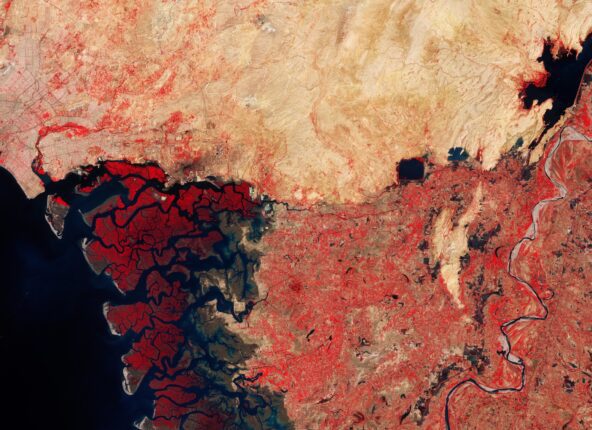
 Open defecation (OD) has been demonstrated to be a major contributing factor to poor health, resulting in adverse social and economic impacts due to work and educational disruptions. Despite various policy-driven efforts since 1954 to eradicate OD, it remains highly prevalent in India—especially in rural areas where there is a lack of toilets. A survey conducted in 2012 revealed that 60% of rural households (and 9% of urban households) had no toilet access. India’s open defecation rate of 40% was one of the highest in the world—more than three times the global average of 12%.