-
New UN Population Projections Released: Pockets of High Fertility Drive Overall Increase
›June 26, 2013 // By Elizabeth Leahy Madsen
October 31, 2011, was notable not only for the annual ritual of candy and costumes, but also for its designation by the United Nations as the date when global population reached seven billion. Although just an estimate – demographers are not able to count individuals in real time on such a large scale – the event was an important opportunity to present population trends to the media and public dialogue. Several babies born that day were named the “seven billionth;” in Russia, where various incentives have been implemented to try to boost an ultra-low fertility rate, Vladimir Putin visited a maternity ward to greet one of them.
-
The Farmer’s Dilemma: Climate Change, Food Security, and Human Mobility
›
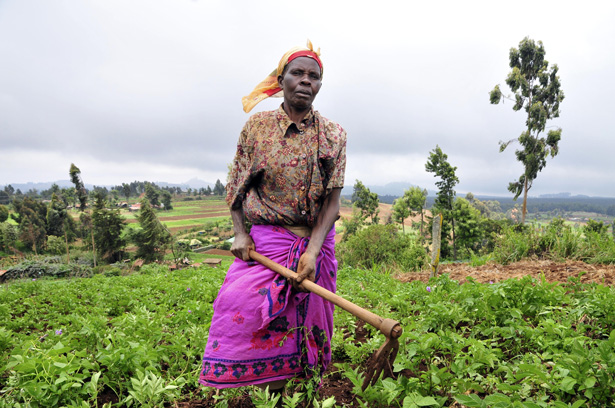
“Most of the world’s poor are farmers; they share the same profession and the same challenges,” said One Acre Fund’s Stephanie Hanson at a recent Wilson Center event on small-scale farming, climate change, food security, and migration. They are tasked with growing enough food to support their families with only tenuous access to land and natural resources, the most basic of tools, and increasingly unpredictable weather patterns to deal with. [Video Below]
-
From Dakar to Abidjan, Population Finally Finding Its Place in Food Security Assessments
›June 20, 2013 // By Kathleen MogelgaardA woman sat crouched on the side of a busy road in Dakar, a baby in a sling on her back and a basket of peanuts in front. I know only a little French, and no Wolof, but I decided to try anyway. “Bonsoir,” I said, and smiled at the toddler beside her. “Combien?” I asked, pointing at the peanuts.
She smiled back at me, we negotiated a sale, and in exchange for the coins in my pocket I walked away with a few bags of the small, tasty nuts that are grown throughout the “peanut basin” of central Senegal.
-
Carl Haub, Demographics Revealed
What Does “Urbanization” Really Mean?
›The original version of this article, by Carl Haub, appeared on Demographics Revealed.
Few terms in demography can cause more confusion than “urbanization.” News stories reporting projections of world urbanization are nearly always accompanied by photographs of places such as London or Shanghai, and it does seem rather natural to think of urbanization in those terms.
-
Eugenie Maiga, Africa Up Close
Can Indigenous Soil and Water Conservation Techniques Help Solve Africa’s Food Crisis?
›June 5, 2013 // By Wilson Center StaffThe original version of this article, by Eugenie Maiga, appeared on the Wilson Center’s Africa Up Close blog.
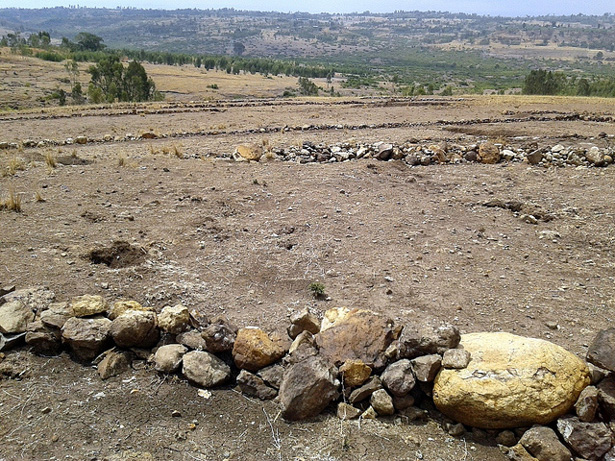
With the 2011 and 2012 food crises in the Horn of Africa and the Sahel, calls for urgent action and sustainable solutions to food insecurity in Africa have intensified. While many factors, like rising commodity prices, have been contributing factors, land degradation stands out as a main catalyst. In the search for a solution, indigenous farming techniques may offer some quick wins.
-
Youth Farming and Aquaculture Initiatives Aim to Reduce Food and Political Insecurity in Senegal
›The 2011-12 West African food crisis led to riots in Senegal and Burkina Faso as well as food insecurity for millions of rural and urban poor across the region. The crisis emerged from a number of factors, including instability in northern Mali, increases in global food prices, and low rainfall in the 2010-2011 and 2011-2012 growing seasons. Many countries in the region are now reassessing and expanding domestic agricultural capabilities. At the top of the agenda for Senegal, a democratic republic on track to reach many Millennium Development Goals, is reducing youth unemployment and increasing domestic agricultural capacity.
-
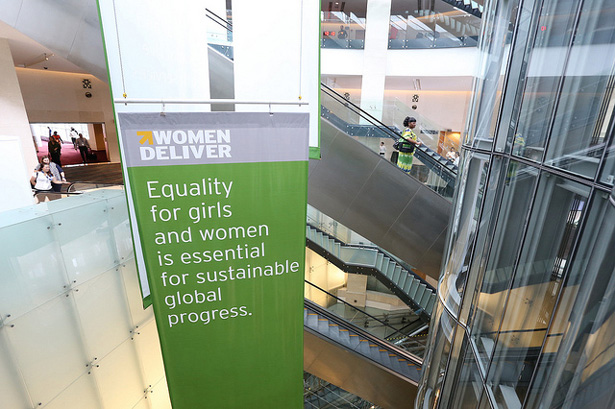
Can Women Deliver a New Development Agenda in 2015?
›The disempowerment of women and girls is the single biggest driver of inequality today, said Helen Clark, administrator of the UN Development Program, during a plenary on the final day here at the Women Deliver conference in Kuala Lumpur, where more than 4,500 people from 149 countries and 2,200 organizations gathered to discuss women’s health, equity, and international development.
-
It’s Not a Drug, It’s Not a Device – It’s Women Working Together
›“Cooperative nurturing is the natural state of humans,” said Anthony Costello, director of the University College London’s Institute for Global Health, during a side event yesterday here at the Women Deliver conference in Kuala Lumpur. Children and mothers are healthier when they have a support network, so the Institute for Global Health has partnered with a number of NGOs over the last two decades to form thousands of community-based women’s groups in Bangladesh, India, Nepal, and Malawi.
Showing posts from category Africa.