-
South Sudan’s Broken Oil Industry Increasingly Becoming a Hazard
›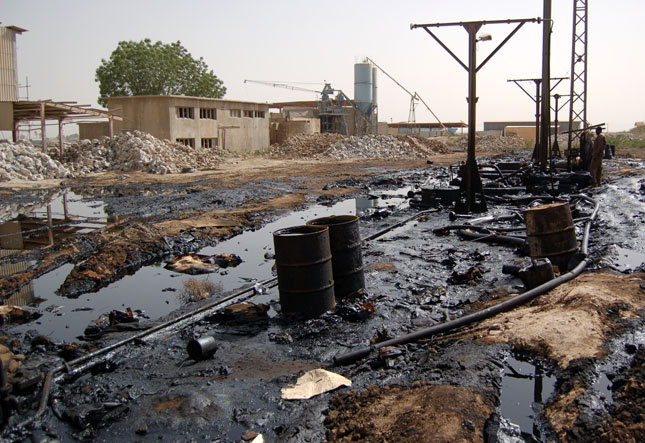
The environment has long been a factor in violent conflict in South Sudan, especially with respect to control over oil. The first oil was discovered in 1999, and by 2007, hydrocarbons accounted for over 95 percent of Sudan’s income. South Sudan became independent in 2011 after years of war with the Sudanese government in Khartoum, intensified by local conflicts over access to oil-rich border areas. But beyond conflict, South Sudanese communities have also been ringing the alarm bell about pollution and health hazards caused by the oil industry.
-
Eric Holthaus, Ensia
New Rainfall Data: “Now, We Can Accurately Identify How Horrible Things Are”
›April 28, 2016 // By Wilson Center Staff
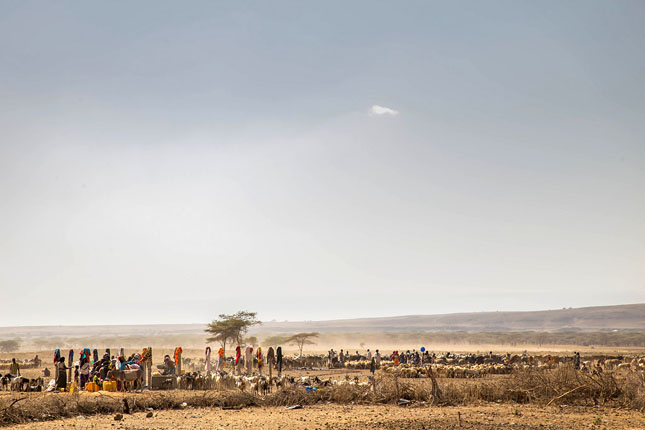
People in developed countries rarely think of weather in life-or-death terms. But millions in the developing world have no choice but to do so. The global rich have stable governments, savings accounts, insurance, and more to fall back on when disaster strikes. People in poorer countries don’t, so they’re often faced with tough decisions in times of drought: Sell the only ox for food and plow by hand next year? Take the kids out of school and put them to work chopping firewood for extra cash? Abandon the farm and family to look for work in the city?
-
Pathways to Resilience: Evidence on Links Between Conflict Management, Natural Resources, and Food Security
›In 2015, the NGO Mercy Corps released some surprising findings from conflict management programs in the Horn of Africa. Interventions from 2013 to 2015 focused on building community-level cooperation, strengthening institutions, and enhancing resilience. The results indicate that natural resource management can be a key governance pillar to build around and that such cooperation can strengthen household resilience to climate and food security shocks. [Video Below]
-
Culture and Rights: The Struggle From Within to End Female Genital Cutting
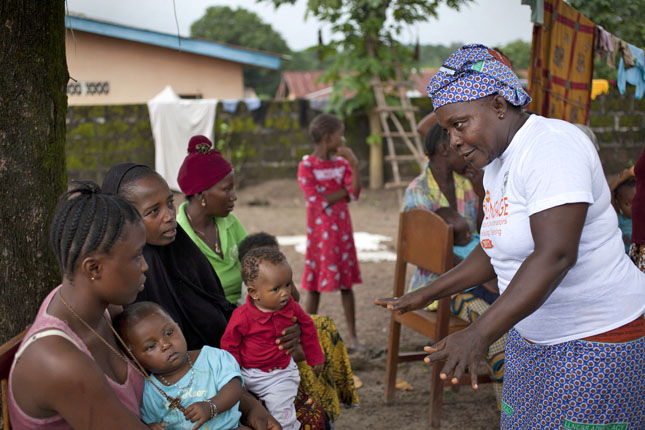
›Ashraf and Shazia use the word “guilt” often.* Their voices tremble as they rewind to the day when they read an article in an Indian magazine, Manorama, that opened their eyes to the reality of khatna – the practice of female genital mutilation among their community. “We felt guilt – immense, powerful guilt – when we realized that this was not needed, that we didn’t need to put our elder daughter through this,” the parents say. “We had no idea this was just going on, prevalent, generation after generation.”
-
Can Citizen Science Help Small Communities Combat Big Fishing Fleets?
›This Earth Day weekend, the U.S. Department of State is hosting more than 2,000 coders in more than 40 cities to encourage creative thinking about technological solutions to ocean issues. The third annual Fishackathon could produce new tools for local communities to track long-distance fishing, a growing problem in some places, as China, in particular, scales up its efforts.
-
Changing the Narrative on Fertility Decline in Africa
›Today, Africa has the world’s highest fertility rates. On average, women in sub-Saharan Africa have about five children over their reproductive lifetime, compared to a global average of 2.5 children. Research shows that the “demographic transition,” the name for the change from high death and fertility rates to lower death and eventually lower fertility rates, has proceeded differently here from other regions in the developing world.
-
Joan Whelan on a New Strategy at the Office of Food for Peace: Address Conflict
›Since its inception more than 60 years ago, USAID’s Office of Food for Peace has provided critical food assistance to billions of people around the world. Yet, despite its name, the office lacked a strategy to address the effects of conflict on its work. -
A More Extreme Sea-Level Rise Scenario, and the Global Environmental Burden of Disease
›Though governments have agreed to try to limit global warming to no more than two degrees Celsius above pre-industrial levels, a paper by James Hansen et al. in Atmospheric Chemistry and Physics finds that goal may not prevent major changes on an irreversible and unadaptable scale. Studying the last interglacial period, about 120,000 years ago, when the temperature was less than one degree Celsius warmer than today, Hansen et al. estimate sea level was six to nine meters higher than today.
Showing posts from category Africa.

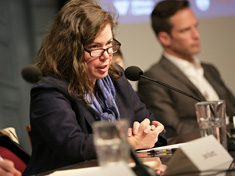 Since its inception more than 60 years ago, USAID’s