Showing posts by Todd Walters.
-
Imagine There Are No Countries: Conservation Beyond Borders in the Balkans
›International peace parks have captured the imagination of visionaries like Nelson Mandela, who called them a “concept that can be embraced by all.” Such parks—also known as transboundary protected areas—span national boundaries, testifying to the peaceful collaborative relationship between neighboring countries and to the co-existence of humans and nature.
Peace parks seek to simultaneously promote regional peace and stability, conserve biodiversity, and stimulate job creation. How can they accomplish such ambitious goals?- Biodiversity: The political borders and physical barriers within the park are removed, allowing animals and humans to migrate freely. In addition, surveys of the area’s biodiversity don’t stop at sovereign borders, but are instead conducted on an ecosystem basis.
- Job creation: Developing eco-tourism—one of the fastest-growing industries in the world—provides people living near peace parks an incentivized alternative to exhausting the very resource base on which their survival depends.
- Peace and stability: To jointly manage natural resources successfully requires countries to collaborate through cross-boundary committees on conservation, safety and security, finance, human resources, legislation, and tourism.
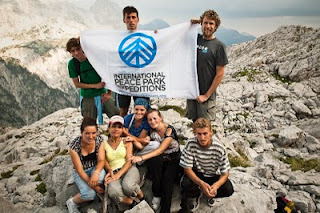 My organization, International Peace Park Expeditions, uses experiential peacebuilding, academic programs, and professional trainings in international peace parks to integrate theory with practice. We seek to develop leadership and collaboration among three distinct, but complementary, groups: students and professors, transboundary protected area professionals, and youth from the peace park countries.
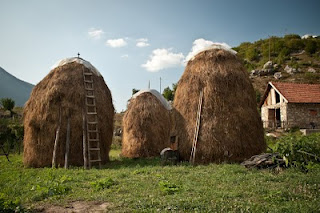
Our Summer 2010 programs focus on the proposed peace park in the Western Balkans’ Prokletije/Bjeshket e Namuna mountains, between Albania and the newly independent countries of Montenegro (2006) and Kosovo (2008), which were formerly part of Yugoslavia. The Balkans Peace Park Project, a UK charity and their local network of partner organizations and individuals, first conceptualized the Balkans Peace Park, an area of approximately 4000 square km, in 2001.
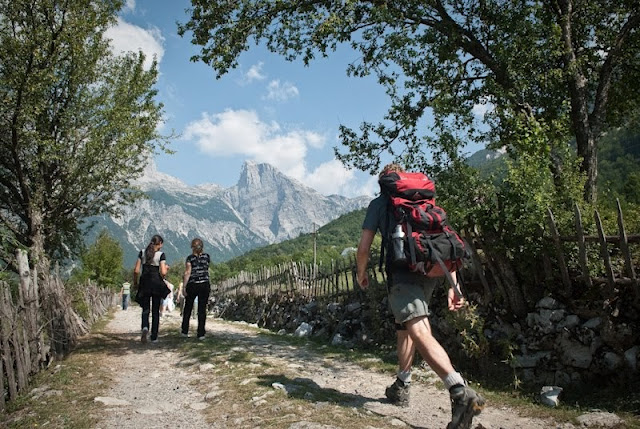
This summer, participants in our professional training symposium will collaboratively develop a more precise and dynamic map. Students and young leaders in our other two programs will learn about peace parks while trekking together across the borders into all three countries.
Experiential Peacebuilding (July 19-25, 2010)
Experiential Peacebuilding programs combine outdoor experiential education and practical skills training in peacebuilding to foster the development of a community of young leaders capable of catalyzing positive peaceful changes in their communities. This summer’s program is being developed in conjunction with our local partner organizations (ERA and Marimangut in Kosovo; Outdoor Albania and High Albania in Albania; and PSD Prokletija in Montenegro). The primary goals of these programs are to unite youth from conflict-affected communities to develop relationships across borders; transform negative attitudes and stereotypes; and create a core group of young leaders with the skills, tools, and motivation to generate and direct changes in their communities.
Academic Expedition (June 7-26 and August 2-21, 2010)This three-week, three-credit course, “Conservation Beyond Borders,” will combine traditional academic teaching with proven experiential learning methodologies to create a unique, dynamic expedition that will provide students with a strong understanding of the theory and practice of international peace parks. Course readings and lectures will provide the academic base, and guest lectures from subject-matter experts working in the field will create the bridge; both will address sustainable forestry management, biodiversity surveys, eco-tourism plans, development and infrastructure planning, environmental conservation, water resource management, peacebuilding initiatives, and cross-border projects. First-hand experience trekking through the proposed Balkans Peace Park, crossing the borders of Albania, Kosovo, and Montenegro, and living among the local people will bring theory to life.
Professional Training Symposium (July 8-9, 2010)
This year’s Professional Field Training Symposium, “Critical Transboundary Environmental Linkages,” will bring together experts, policymakers, and stakeholders from the Prokletije/Bjeshket e Namuna region to discuss cross-border ecotourism, biodiversity mapping, and sustainable forestry management. The symposium seeks to build trust through cross-border collaboration, and to improve environmental management in the peace park region. Participants will create a Google Earth map to house shared environmental data and visit two project sites in the proposed peace park.Todd Walters is the founder and executive director of International Peace Park Expeditions. He holds a master’s degree in International Peace and Conflict Resolution from American University’s School of International Service, and is a National Outdoor Leadership School (NOLS) certified wilderness guide. While at AU, he worked as an intern for the Environmental Change and Security Program.
Photos courtesy IPPE/Cory Wilson.