• woodrow wilson center
  • ecsp

New Security Beat

Subscribe:
  • rss
  • mail-to
  • Who We Are
  • Topics
    • Population
    • Environment
    • Security
    • Health
    • Development
  • Columns
    • China Environment Forum
    • Choke Point
    • Dot-Mom
    • Friday Podcasts
    • Navigating the Poles
    • Reading Radar
  • Multimedia
    • Water Stories (Podcast Series)
    • Backdraft (Podcast Series)
    • Tracking the Energy Titans (Interactive)
  • Films
    • Water, Conflict, and Peacebuilding (Animated Short)
    • Paving the Way (Ethiopia)
    • Broken Landscape (India)
    • Scaling the Mountain (Nepal)
    • Healthy People, Healthy Environment (Tanzania)
  • Publications
  • Events
  • Contact Us

NewSecurityBeat

The blog of the Wilson Center's Environmental Change and Security Program
Showing posts by Wilson Center Staff.
  • Christian Holmes, Global Waters

    USAID Effort Joins Women’s Groups to Improve Sanitation in Vizag, India

    ›
    July 14, 2016  //  By Wilson Center Staff
    Vizag

    The original version of this article, by Christian Holmes, appeared on USAID’s Global Waters.

    At USAID we recognize the threat poor sanitation combined with rapid urbanization presents to human health, dignity, and prosperity. This is why we have made urban sanitation a global priority for the Agency. During a recent visit to India, I was able to see some of the work being done to bring sanitation services to urban areas, and had the good fortune to meet some inspiring women who are advancing these efforts in their communities.

    MORE
  • Climate Diplomacy

    Chad Briggs on Managing Environmental Risks and Military, Intelligence, and Diplomacy Roles

    ›
    June 30, 2016  //  By Wilson Center Staff

    The original version of this article appeared on adelphi’s Climate Diplomacy platform.

    Chad Briggs, strategy director of global interconnections and lecturer at the American University in Kosovo, spoke with adelphi about the role of diplomacy as well as that of the intelligence and military communities in reducing disaster risk and vulnerability.

    MORE
  • Christopher Golden et al., Nature

    Declining Fisheries Threaten Micronutrient Deficiencies for Millions

    ›
    June 17, 2016  //  By Wilson Center Staff

    The original version of this article, by Christopher Golden et al., appeared on Nature.

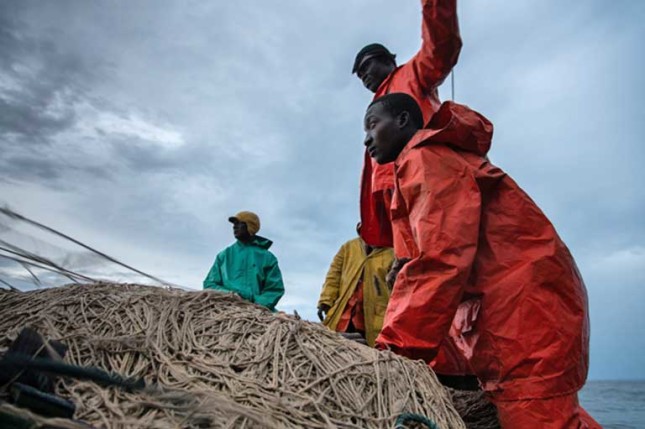
    How will the 10 billion people expected to be living on Earth by 2050 obtain sufficient and nutritious food? This is one of the greatest challenges humanity faces. Global food systems must supply enough calories and protein for a growing human population and provide important micronutrients such as iron, zinc, omega-3 fatty acids, and vitamins.

    MORE
  • Christina Cauterucci, Slate

    Gates Foundation to Invest $80 Million for Better Economic Data on Women and Girls

    ›
    June 3, 2016  //  By Wilson Center Staff
    Gates

    The original version of this article, by Christina Cauterucci, appeared on Slate.

    Melinda Gates announced a new $80 million Bill and Melinda Gates Foundation commitment to global data collection in a May 17 address at the Women Deliver conference in Copenhagen. Over three years, the foundation’s efforts will focus on filling gaps in data about women’s unpaid labor, improving the accuracy of data around land and property ownership, and using that data to inform civil and government decision-makers about the effects of their existing programs and recommend areas for improvement.

    MORE
  • Solomon Greene et al., Urban Wire

    To Foster Sustainable Development, Cities Need Data – and Permission to Use It

    ›
    From the Wilson Center  //  May 13, 2016  //  By Wilson Center Staff

    The original version of this article, by Solomon Greene, Benjamin Edwards, and G. Thomas Kingsley, appeared on the Urban Institute’s Urban Wire.

    Cities are where sustainable development challenges like poverty and disaster risk are felt most acutely, particularly as the world’s population shifts to urban areas. But cities can also be incubators for the policies to address those challenges, and local leaders increasingly hold the keys to fostering inclusive growth and mitigating climate change.

    MORE
  • Lisa Palmer, Yale Environment 360

    New Explanation for Bee Die-Offs and What It Means for Human and Environmental Health

    ›
    May 12, 2016  //  By Wilson Center Staff
    bee pollen2

    The original version of this article, by Lisa Palmer, appeared on Yale Environment 360.

    Specimens of goldenrod sewn into archival paper folders are stacked floor to ceiling inside metal cabinets at the Smithsonian National Museum of Natural History. The collection, housed in the herbarium, dates back to 1842 and is among five million historical records of plants from around the world cataloged there. Researchers turned to this collection of goldenrod – a widely distributed perennial plant that blooms across North America from summer to late fall – to study concentrations of protein in goldenrod pollen because it is a key late-season food source for bees.

    MORE
  • Russell Sticklor, Global Waters

    How One Philippine City Is Preparing for a Water-Scarce Future

    ›
    May 10, 2016  //  By Wilson Center Staff
    Philippines-water

    The original version of this article, by Russell Sticklor, appeared on USAID’s Global Waters.

    Surrounded by water, the Philippines is especially vulnerable to climate change. Its islands and its people are enduring increasingly unpredictable rains, intensifying cycles of flood and drought, and strengthening storms forming in the Pacific. These changing weather patterns have not only derailed livelihoods and agricultural productivity in rural areas, they have also worsened water insecurity in cities, where 45 percent of the population live.

    MORE
  • Christine Parthemore, Center for Climate and Security

    How Are Climate Plans Affecting Nuclear Security?

    ›
    May 5, 2016  //  By Wilson Center Staff
    Kalpakkam-Complex

    The original version of this article, by Christine Parthemore, appeared at the Center for Climate and Security.

    Today, new nations are pursuing civilian but dual-use nuclear capabilities, the threat of non-state actors seeking nuclear materials may be growing, and countries continue to debate proper ways to enhance nuclear safety, security, and nonproliferation systems to keep up with the pace of change. At the same time, governments worldwide are having difficulty managing the effects of a rapidly changing climate, such as more damaging natural disasters and resource stress. The relationships among nuclear, climate, and security risks are growing more complex and interconnected, and these issues are likely to begin converging in new ways. By early 2016, it has become clear that the international community must take a fresh look at the ways in which they are likely to connect and potentially collide in the years ahead, and foster deeper dialogue on what should be done about it.

    MORE
Newer Posts   Older Posts
View full site

Join the Conversation

  • RSS
  • subscribe
  • facebook
  • G+
  • twitter
  • iTunes
  • podomatic
  • youtube
Tweets by NewSecurityBeat

Trending Stories

  • unfccclogo1
  • Pop at COP: Population and Family Planning at the UN Climate Negotiations

Featured Media

Backdraft Podcast

play Backdraft
Podcasts

More »

What You're Saying

  • Volunteers,At,The,Lagos,Food,Bank,Initiative,Outreach,To,Ikotun, Pan-African Response to COVID-19: New Forms of Environmental Peacebuilding Emerge
    Rashida Salifu: Great piece 👍🏾 Africa as a continent has suffered this unfortunate pandemic.But it has also...
  • A desert road near Kuqa An Unholy Trinity: Xinjiang’s Unhealthy Relationship With Coal, Water, and the Quest for Development
    Ismail: It is more historically accurate to refer to Xinjiang as East Turkistan.
  • shutterstock_1779654803 Leverage COVID-19 Data Collection Networks for Environmental Peacebuilding
    Carsten Pran: Thanks for reading! It will be interesting to see how society adapts to droves of new information in...

What We’re Reading

  • Rising rates of food instability in Latin America threaten women and Venezuelan migrants
  • Treetop sensors help Indonesia eavesdrop on forests to cut logging
  • 'Seat at the table': Women's land rights seen as key to climate fight
  • A Surprise in Africa: Air Pollution Falls as Economies Rise
  • Himalayan glacier disaster highlights climate change risks
More »
  • woodrow
  • ecsp
  • RSS Feed
  • YouTube
  • Twitter
  • Facebook
  • Home
  • Who We Are
  • Publications
  • Events
  • Wilson Center
  • Contact Us
  • Print Friendly Page

© Copyright 2007-2021. Environmental Change and Security Program.

Woodrow Wilson International Center for Scholars. All rights reserved.

Developed by Vico Rock Media

Environmental Change and Security Program

Woodrow Wilson International Center for Scholars

Ronald Reagan Building and International Trade Center

  • One Woodrow Wilson Plaza
  • 1300 Pennsylvania Ave., NW
  • Washington, DC 20004-3027

T 202-691-4000