• woodrow wilson center
  • ecsp

New Security Beat

Subscribe:
  • rss
  • mail-to
  • Who We Are
  • Topics
    • Population
    • Environment
    • Security
    • Health
    • Development
  • Columns
    • China Environment Forum
    • Choke Point
    • Dot-Mom
    • Friday Podcasts
    • Navigating the Poles
    • Reading Radar
  • Multimedia
    • Water Stories (Podcast Series)
    • Backdraft (Podcast Series)
    • Tracking the Energy Titans (Interactive)
  • Films
    • Water, Conflict, and Peacebuilding (Animated Short)
    • Paving the Way (Ethiopia)
    • Broken Landscape (India)
    • Scaling the Mountain (Nepal)
    • Healthy People, Healthy Environment (Tanzania)
  • Publications
  • Events
  • Contact Us

NewSecurityBeat

The blog of the Wilson Center's Environmental Change and Security Program
Showing posts by Dhanasree Jayaram.
  • Stormy Weather: Human Security Should Include Freedom from Hazard Impacts

    ›
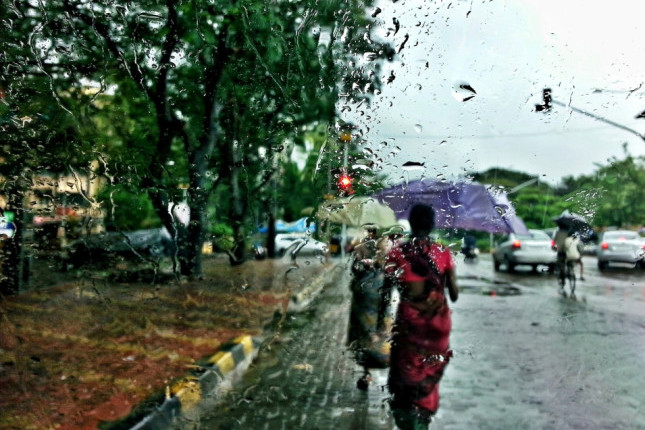
    Guest Contributor  //  November 7, 2018  //  By Dhanasree Jayaram
    Mumbai Rain Storm

    The original version of this article by Dhanasree Jayaram was published by Climate Diplomacy.

    It is imperative that countries adopt a human security approach to achieve “freedom from hazard impacts”—nationally through a scientific disaster risk reduction strategy and internationally through climate diplomacy.

    MORE
  • Indian Military Recognizes Environment as “Critical” Security Issue, But Response Is Still Fragmented

    ›
    Guest Contributor  //  January 29, 2018  //  By Dhanasree Jayaram
    India-UK-Joint-Exercise

    For the first time, the Joint Doctrine of the Indian Armed Forces acknowledges that the “environment has emerged as a critical area of the security paradigm,” and warns that if environmental degradation and related issues increase security risks, the military will need to respond. Released in 2017, the doctrine lists a series of non-traditional security challenges linked to the environment that could influence conflict and war, including “climate change, ecosystem disruption, energy issues, population issues, food-related problems, economic issues of unsustainable modes of production, and civil strife related to environment.” While the military has taken steps to address its impacts on the environment, it can do much more to support the nation’s environmental goals and mitigate environment-related security risks.

    MORE
  • Under Modi, India’s Climate Goals Tied to Clean Energy Development

    ›
    Choke Point  //  Guest Contributor  //  May 8, 2015  //  By Dhanasree Jayaram
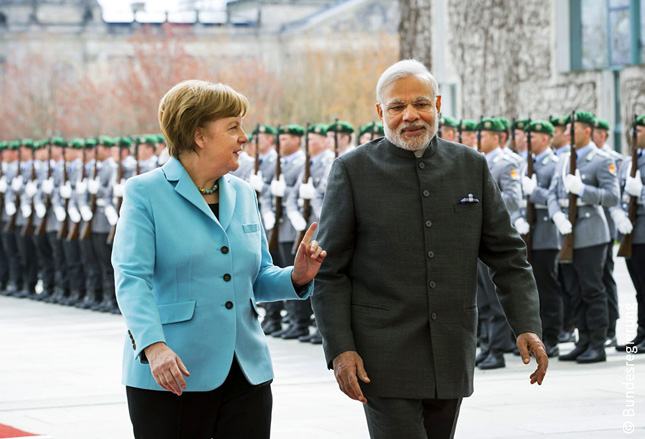
    modi-merkel

    India occupies a precarious position in the global climate change order. It trails only China, the United States, and the European Union in total emissions, but per capita emissions are far lower. India’s Prime Minister Narendra Modi won the 2014 elections on a strong pro-development platform and continues to wave this flag at all levels, making energy security a major priority and pledging to expand the country’s coal mining industry. But he also insists he will work with the international community on mitigating climate change. During a recent visit to France, Germany, and Canada, he declared, “India will set the agenda for the upcoming Conference of Parties” in Paris this fall.

    MORE
  • Flooding in Uttarakhand Shows Why India Needs to Take Environmental Security More Seriously

    ›
    Guest Contributor  //  August 19, 2013  //  By Dhanasree Jayaram
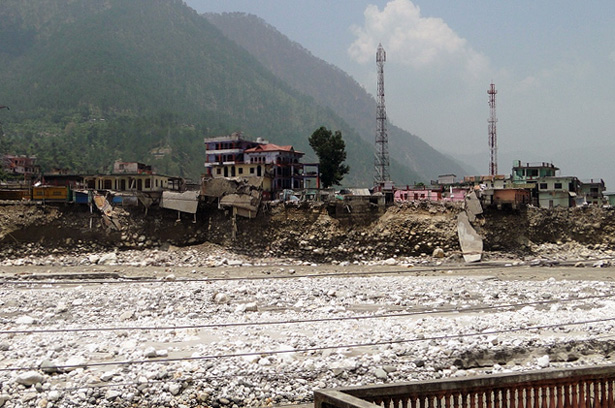
    Uttarkhand Flooding

    The disastrous flooding in the Himalayan state of Uttarakhand this summer, which claimed more than 6,000 lives, was the outcome of a changing climate and poorly planned development. It was also another case in point of the increasing importance of environmental security in India – especially for the military.

    MORE
  • What’s Worth Saving? Maoists, Forests, and Development in India’s Western Ghats

    ›
    Guest Contributor  //  June 18, 2013  //  By Dhanasree Jayaram

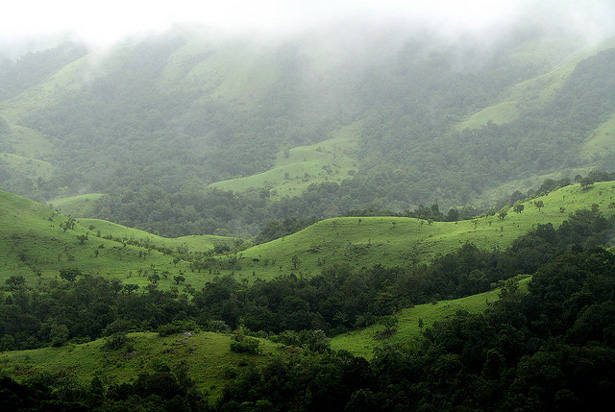
    Arrayed along India’s southwest coast is a 1,600-kilometer-long mountain chain with forests older than the Himalayas: the Western Ghats. The mountains are one of the top biodiversity hotspots in the world, and UNESCO recently recognized the region as a World Heritage site. They’re also one of the tensest of India’s emerging battlegrounds between development and conservation and a potential recruiting ground for its Maoist insurgency, called the country’s “greatest threat to internal security.”

    MORE
  • Breaking Out of the Green House: Indian Leadership in Times of Environmental Change (Book Preview)

    ›
    Guest Contributor  //  March 7, 2013  //  By Dhanasree Jayaram

    The 2009 Copenhagen summit was a watershed moment in the history of climate change negotiations, especially from an Indian perspective. Brazil, South Africa, India, and China – the “BASIC” group – asserted their position, which led to a virtual collapse in talks, ostensibly marking the ascent of the global “south” and relative descent of the “north.”

    MORE
 
View full site

Join the Conversation

  • RSS
  • subscribe
  • facebook
  • G+
  • twitter
  • iTunes
  • podomatic
  • youtube
Tweets by NewSecurityBeat

Trending Stories

  • unfccclogo1
  • Pop at COP: Population and Family Planning at the UN Climate Negotiations

Featured Media

Backdraft Podcast

play Backdraft
Podcasts

More »

What You're Saying

  • Volunteers,At,The,Lagos,Food,Bank,Initiative,Outreach,To,Ikotun, Pan-African Response to COVID-19: New Forms of Environmental Peacebuilding Emerge
    Rashida Salifu: Great piece 👍🏾 Africa as a continent has suffered this unfortunate pandemic.But it has also...
  • A desert road near Kuqa An Unholy Trinity: Xinjiang’s Unhealthy Relationship With Coal, Water, and the Quest for Development
    Ismail: It is more historically accurate to refer to Xinjiang as East Turkistan.
  • shutterstock_1779654803 Leverage COVID-19 Data Collection Networks for Environmental Peacebuilding
    Carsten Pran: Thanks for reading! It will be interesting to see how society adapts to droves of new information in...

What We’re Reading

  • Rising rates of food instability in Latin America threaten women and Venezuelan migrants
  • Treetop sensors help Indonesia eavesdrop on forests to cut logging
  • 'Seat at the table': Women's land rights seen as key to climate fight
  • A Surprise in Africa: Air Pollution Falls as Economies Rise
  • Himalayan glacier disaster highlights climate change risks
More »
  • woodrow
  • ecsp
  • RSS Feed
  • YouTube
  • Twitter
  • Facebook
  • Home
  • Who We Are
  • Publications
  • Events
  • Wilson Center
  • Contact Us
  • Print Friendly Page

© Copyright 2007-2021. Environmental Change and Security Program.

Woodrow Wilson International Center for Scholars. All rights reserved.

Developed by Vico Rock Media

Environmental Change and Security Program

Woodrow Wilson International Center for Scholars

Ronald Reagan Building and International Trade Center

  • One Woodrow Wilson Plaza
  • 1300 Pennsylvania Ave., NW
  • Washington, DC 20004-3027

T 202-691-4000