-
Bogotá to Belém: The Unfinished Business of Integrating SRHR into Climate Action
December 18, 2025 By Nakuya Niona Kasekende Ssebukulu
Journeying from November 2025’s International Conference on Family Planning (ICFP) in Bogotá to the UN climate negotiations in Belém the following month revealed a fundamental tension. Evidence increasingly shows that climate justice requires reproductive justice, yet translating that recognition into policy commitments continues to raise political apprehensions among stakeholders.
Both conferences demonstrated unprecedented momentum through new declarations, frameworks, and coalitions. Yet persistent obstacles remain, and, as a result, language that makes the importance of sexual and reproductive health and rights (SRHR) explicit was stripped from key climate agreements, despite strong advocacy for their retention.
A Declaration Born from Evidence
More than 3,500 participants gathered in Colombia at ICFP 2025 for a watershed moment. For the first time, the conference featured a dedicated Environment and Climate Change track.
The message sent by this new initiative was clear and evidence-based. Climate shocks—floods, droughts, heatwaves—disrupt access to contraception, increase maternal mortality, and drive unintended pregnancies. Yet allocations to insure sexual and reproductive health and rights (SRHR) remain almost entirely absent from the hundreds of billions of dollars that flow through global climate funds.
Research from Uganda and other climate-vulnerable countries has shown that women face disproportionate health risks during climate disasters while also being systematically excluded from adaptation planning. A potent new rallying cry—”There is no climate justice without SRHR and gender justice”— is grounded in this evidence.
ICFP 2025 culminated in the Bogotá-Belém Declaration, which was endorsed by organizations across the SRHR and climate communities. It made specific demands for the agenda at COP30, including the integration of SRHR into the UNFCCC Gender Action Plan, the inclusion of reproductive health in Global Goal on Adaptation indicators, and measures to ensure that climate finance mechanisms support SRHR services as legitimate adaptation strategies.
Political Compromise at COP30
When negotiators gathered in Belém for COP30, there was a direct collision between advocacy and politics.
On the plus side, COP30 delegates did adopt a nine-year Belém Gender Action Plan—a significant achievement that will guide gender-responsive climate policy through 2034. This plan serves as a binding framework across five priority areas: capacity-building and communication; gender balance and women’s leadership; coherence; gender-responsive implementation; and monitoring and reporting.
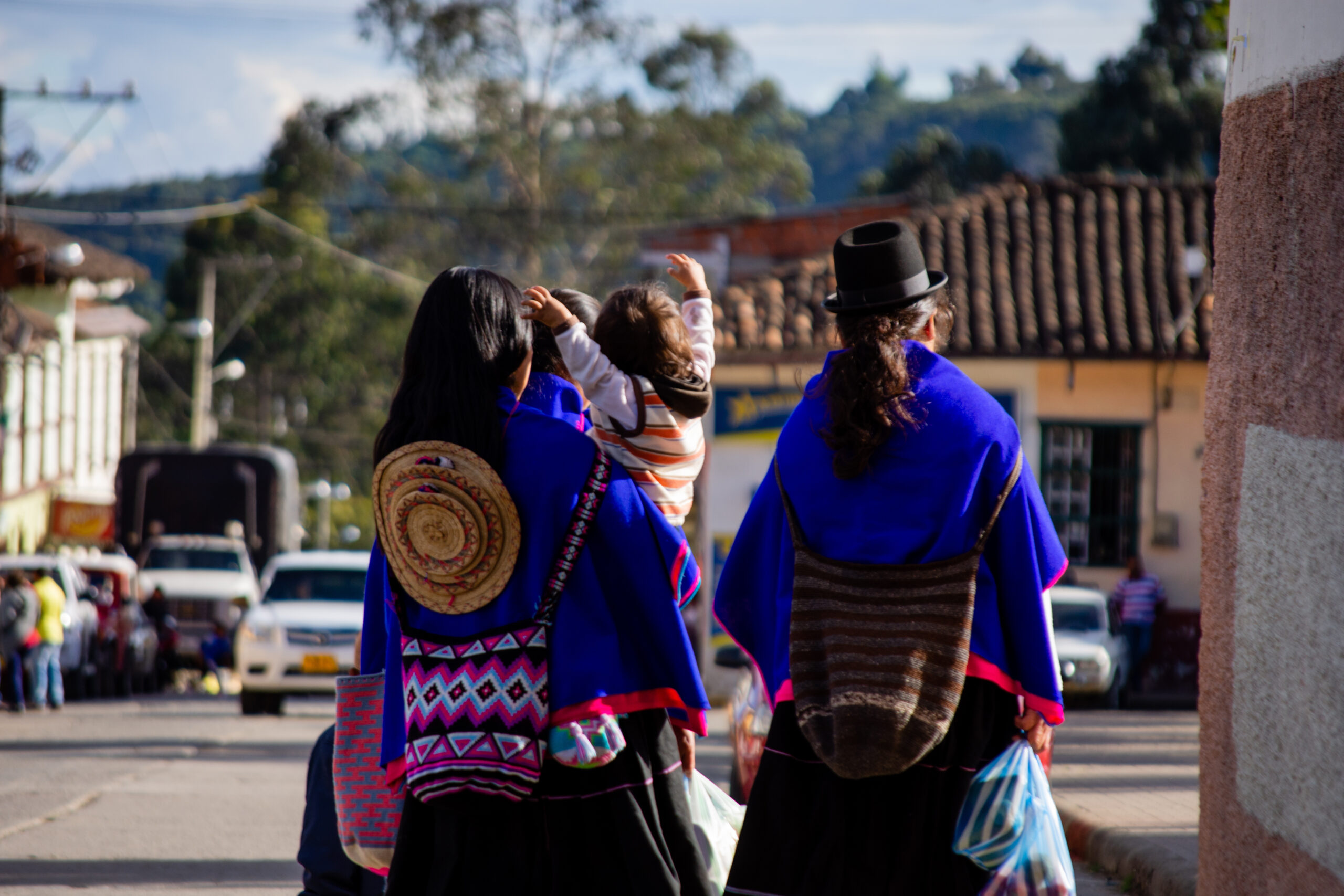
The Belém Gender Action Plan also recognizes an essential principle: climate change impacts are not gender neutral. Thus, it mandates that gender considerations be mainstreamed across all UNFCCC workstreams, including mitigation, adaptation, finance, technology, capacity-building, and transparency. The plan also contains a commitment to track adaptation progress using health indicators, as well as to elevate women’s full, meaningful, and equal participation in climate action. (This commitment contains a particular focus on Indigenous, Afro-descendant, and rural women.)
Yet that victory was matched by a defeat for advocates: language that explicitly set forth the importance of SRHR was removed from this key document. Assertions made in Activity A.7 which focused attention on “sexual and reproductive health and rights, gender-based violence, and unpaid care work” became a contentious battleground at COP30.
Several countries attempted to delete terms including “sexual” and “rights,” or to replace SRHR with broader “health” terminology. In a historic first, however, six countries introduced formal footnotes defining “gender,” shaping the final compromise.
The original SRHR activity draft was not adopted. Instead, health was integrated into Activity A.3.9, which calls for submissions and national assessments to address “the differentiated impacts of climate change on women,” including health, care work, and violence against women.
A Win for Health Systems
Beyond the Belém Gender Action Plan, health also achieved unprecedented visibility at the conference through at via the creation of a dedicated Health Day at the conference, as well as a new landmark framework. WHO and Brazil’s COP Presidency launched the Belém Health Action Plan at COP30—the first international climate adaptation framework dedicated to health.
The Belém Health Action Plan outlines 60 concrete actions to help countries adapt health systems to climate impacts. Importantly, the plan also forthrightly calls for gender-responsive approaches across all climate and health adaptation efforts, including maintaining “the continuity of sexual and reproductive health and rights, pediatric, and psychosocial care during and after climate-related emergencies.”
Over 30 countries endorsed the new framework, and committed to report their progress by the 2028 Global Stocktake. Yet its launch was announced without any new government funding commitments to ensure its success. Rather, a coalition of over 35 philanthropies agreed to a $300 million one-time grant to support climate-health adaptation.
This specific inclusion of SRHR in the Belém Health Action Plan represents a significant victory. It demonstrates that when these rights are framed within emergency response and health system resilience, reproductive health can gain traction within climate frameworks.
Strategic Entry Points
The loss of explicit SRHR language in the Gender Action Plan disappointed advocates, but its retention in the health plan creates important openings. And even the call for national assessments, workshops, and submissions on emerging issues affecting women in the gender action plan’s Activities A.3.9 and A.3.11 provide strategic entry points to reintroduce SRHR into climate policy processes.
The national gender assessments included under Activity A.3.9 offer opportunities to document how climate change specifically affects reproductive health services, maternal mortality, and access to contraception. Mandated dialogues and workshops called for in A.3.10 and A.3.11 can support dissemination of the evidence that links climate adaptation to reproductive health outcomes on international platforms.
The negotiation dynamic at COP30 revealed that while many countries support gender equality in principle, translating that sentiment into specific commitments to women’s health and bodily autonomy remains politically fraught. And this tension exists even within climate forums that acknowledge gender-differentiated climate impacts.
The Road Ahead
The journey from Bogotá to Belém did clarify concrete pathways forward. Health advocates must strategically leverage the openings provided in the Gender Action Plan, and prepare robust submissions under Activities A.3.9 and A.3.11. This will allow them to systematically document links between climate and SRHR, as well as push for stronger language in future iterations.
Climate finance architecture also requires fundamental reform. Advocacy aimed at fund governance bodies and model proposals must demonstrate the essential need for health-climate integration. The goal is to push Green Climate Fund, Adaptation Fund, and other mechanisms to explicitly recognize SRHR as eligible for adaptation funding.
Powerful coalitions have formed around the Bogotá-Belém Declaration, which united SRHR organizations, climate groups, and health advocates. These alliances must be sustained with multi-year funding and/or coordinated advocacy in order to maintain pressure and build the evidence base that will ultimately make SRHR integration politically inevitable.
The work at both conferences revealed a fundamental truth: climate resilience is people resilience, and people resilience is impossible without protecting reproductive health and rights. Yet the political battles at COP30 made clear that progress will not be automatic.
Fortunately, the infrastructure is now in place—through the Belém Gender Action Plan, the Belém Health Action Plan, Global Goal on Adaptation health indicators, and growing networks linking SRHR and climate communities—to continue pushing until climate action truly centers the health, rights, and dignity of women and communities most affected by climate change.
Nakuya Niona Kasekende Ssebukulu is the Gender, Health & Environment Lead at Regenerate Africa, where she advances integrated, evidence-based action at the intersection of gender equality, public health, and climate change.
Sources: Frontiers Media; Green Climate Fund; Health Policy Watch; ICFP2025 Environment and Climate Change Sub-Committee;; UNFCCC; WHO
Photo Credit: Licensed by Adobe Stock.
 A Publication of the Stimson Center.