• woodrow wilson center
  • ecsp

New Security Beat

Subscribe:
  • rss
  • mail-to
  • Who We Are
  • Topics
    • Population
    • Environment
    • Security
    • Health
    • Development
  • Columns
    • China Environment Forum
    • Choke Point
    • Dot-Mom
    • Friday Podcasts
    • Navigating the Poles
    • Reading Radar
  • Multimedia
    • Water Stories (Podcast Series)
    • Backdraft (Podcast Series)
    • Tracking the Energy Titans (Interactive)
  • Films
    • Water, Conflict, and Peacebuilding (Animated Short)
    • Paving the Way (Ethiopia)
    • Broken Landscape (India)
    • Scaling the Mountain (Nepal)
    • Healthy People, Healthy Environment (Tanzania)
  • Publications
  • Events
  • Contact Us

NewSecurityBeat

The blog of the Wilson Center's Environmental Change and Security Program
  • Guest Contributor

    “Journalist on Water Beat Helped Cape Town Avoid ‘Day Zero’”

    April 18, 2018 By Wilson Center Staff
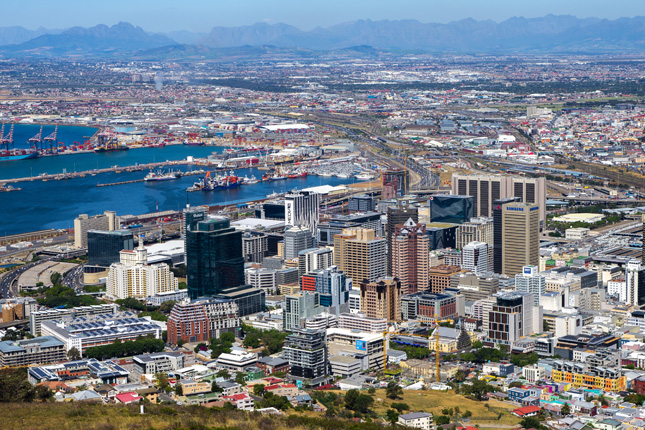
    Cape-Town

    This story by Daniella Cheslow comes courtesy of PRI’s The World and  originally appeared on pri.org.

    Saya Pierce-Jones got a cactus for Valentine’s Day and she keeps a bottle of treated wastewater on her desk. These are the souvenirs Pierce-Jones has kept as the water reporter for Cape Town’s Smile 90.4 FM over the past year.

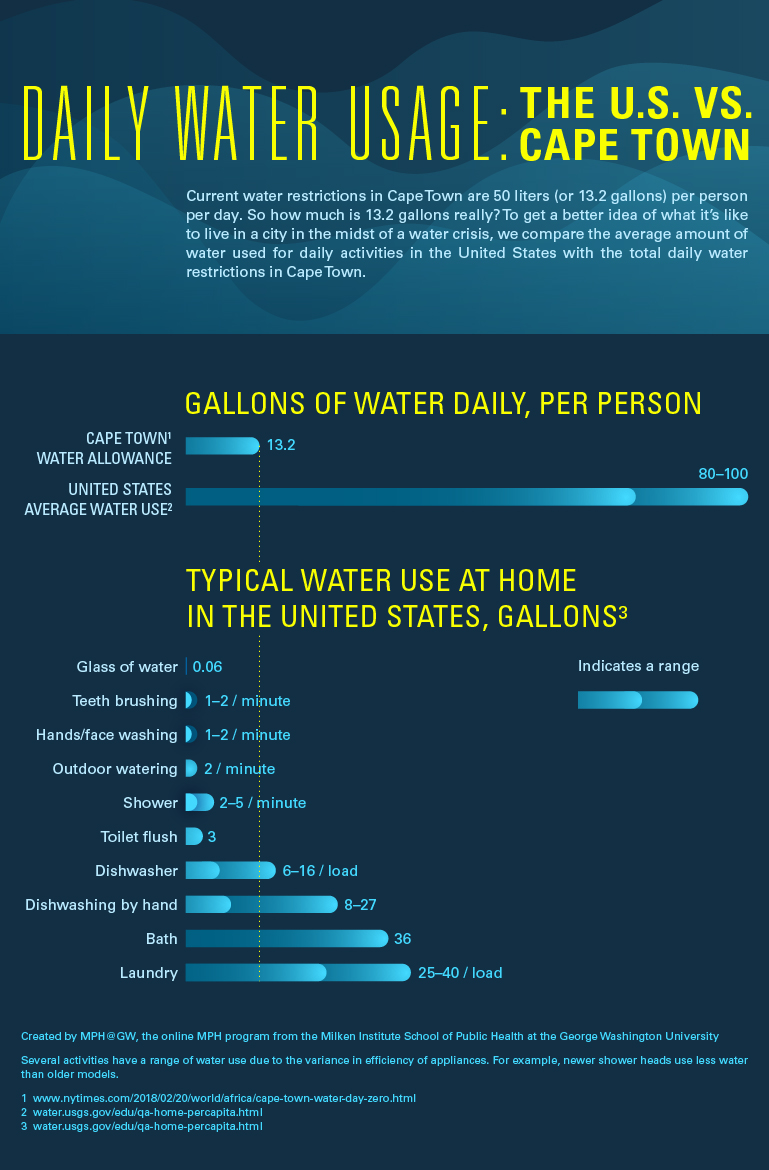
    water-us-vs-cape-town_graphic

    The station’s mix of music and news in English and Afrikaans reaches about 170,000 listeners in this city of nearly four million. Since the city’s drought-induced water crisis boiled over in early 2017, the station has become a leading source of water and drought information for local residents, and Pierce-Jones has become its leading voice on the issue.

    Until last January, Pierce-Jones was working as a general assignment reporter at the station. That’s when she got an unsettling piece of news.

    “I got an email from the city telling us about the consumption levels and the dam levels,” Pierce-Jones said in a recent interview at the station. “And when I worked out some of the numbers, it was really scary.”


    Read more at PRI.

    Photo credit: City Center, Cape Town, November 2017, courtesy of Gilbert Sopakuwa

    Graphic credit: Provided by MPH@GW, the online MPH program from the George Washington University

    Topics: consumption, development, Guest Contributor, urbanization, water

Join the Conversation

  • RSS
  • subscribe
  • facebook
  • G+
  • twitter
  • iTunes
  • podomatic
  • youtube
Tweets by NewSecurityBeat

Trending Stories

  • unfccclogo1
  • Pop at COP: Population and Family Planning at the UN Climate Negotiations

Featured Media

Backdraft Podcast

play Backdraft
Podcasts

More »

What You're Saying

  • Volunteers,At,The,Lagos,Food,Bank,Initiative,Outreach,To,Ikotun, Pan-African Response to COVID-19: New Forms of Environmental Peacebuilding Emerge
    Rashida Salifu: Great piece 👍🏾 Africa as a continent has suffered this unfortunate pandemic.But it has also...
  • A desert road near Kuqa An Unholy Trinity: Xinjiang’s Unhealthy Relationship With Coal, Water, and the Quest for Development
    Ismail: It is more historically accurate to refer to Xinjiang as East Turkistan.
  • shutterstock_1779654803 Leverage COVID-19 Data Collection Networks for Environmental Peacebuilding
    Carsten Pran: Thanks for reading! It will be interesting to see how society adapts to droves of new information in...
  • woodrow
  • ecsp
  • RSS Feed
  • YouTube
  • Twitter
  • Facebook
  • Home
  • Who We Are
  • Publications
  • Events
  • Wilson Center
  • Contact Us
  • Print Friendly Page

© Copyright 2007-2021. Environmental Change and Security Program.

Woodrow Wilson International Center for Scholars. All rights reserved.

Developed by Vico Rock Media

Environmental Change and Security Program

Woodrow Wilson International Center for Scholars

Ronald Reagan Building and International Trade Center

  • One Woodrow Wilson Plaza
  • 1300 Pennsylvania Ave., NW
  • Washington, DC 20004-3027

T 202-691-4000