• woodrow wilson center
  • ecsp

New Security Beat

Subscribe:
  • rss
  • mail-to
  • Who We Are
  • Topics
    • Population
    • Environment
    • Security
    • Health
    • Development
  • Columns
    • China Environment Forum
    • Choke Point
    • Dot-Mom
    • Friday Podcasts
    • Navigating the Poles
    • Reading Radar
  • Multimedia
    • Water Stories (Podcast Series)
    • Backdraft (Podcast Series)
    • Tracking the Energy Titans (Interactive)
  • Films
    • Water, Conflict, and Peacebuilding (Animated Short)
    • Paving the Way (Ethiopia)
    • Broken Landscape (India)
    • Scaling the Mountain (Nepal)
    • Healthy People, Healthy Environment (Tanzania)
  • Publications
  • Events
  • Contact Us

NewSecurityBeat

The blog of the Wilson Center's Environmental Change and Security Program
  • Michael Kimmelman, The New York Times

    Mexico City, Parched and Sinking, Faces a Water Crisis

    February 20, 2017 By Wilson Center Staff
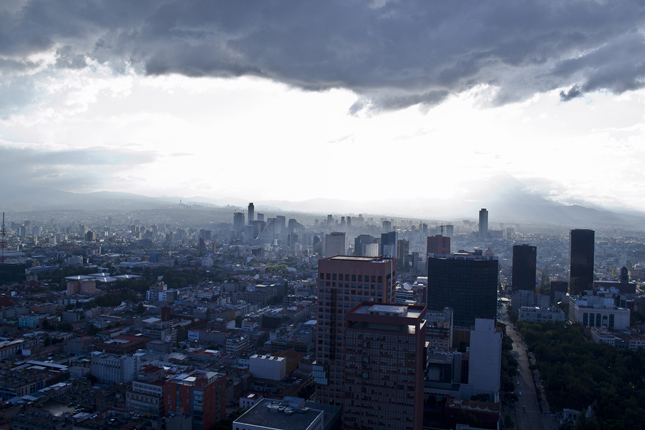
    Mexico-City

    The original version of this article, by Michael Kimmelman, appeared on The New York Times.

    MEXICO CITY – On bad days, you can smell the stench from a mile away, drifting over a nowhere sprawl of highways and office parks.

    When the Grand Canal was completed, at the end of the 1800s, it was Mexico City’s Brooklyn Bridge, a major feat of engineering and a symbol of civic pride: 29 miles long, with the ability to move tens of thousands of gallons of wastewater per second. It promised to solve the flooding and sewage problems that had plagued the city for centuries.

    Only it didn’t, pretty much from the start. The canal was based on gravity. And Mexico City, a mile and a half above sea level, was sinking, collapsing in on itself.

    It still is, faster and faster, and the canal is just one victim of what has become a vicious cycle. Always short of water, Mexico City keeps drilling deeper for more, weakening the ancient clay lake beds on which the Aztecs first built much of the city, causing it to crumble even further.

    Continue reading on The New York Times.

    Sources: The New York Times.

    Photo Credit: Mexico City, September 2011, courtesy of flickr user Kasper Christensen.

    Topics: climate change, development, environment, flooding, gender, global health, Latin America, Mexico, migration, natural resources, population, poverty, risk and resilience, sanitation, urbanization, water

Join the Conversation

  • RSS
  • subscribe
  • facebook
  • G+
  • twitter
  • iTunes
  • podomatic
  • youtube
Tweets by NewSecurityBeat

Trending Stories

  • unfccclogo1
  • Pop at COP: Population and Family Planning at the UN Climate Negotiations

Featured Media

Backdraft Podcast

play Backdraft
Podcasts

More »

What You're Saying

  • Volunteers,At,The,Lagos,Food,Bank,Initiative,Outreach,To,Ikotun, Pan-African Response to COVID-19: New Forms of Environmental Peacebuilding Emerge
    Rashida Salifu: Great piece 👍🏾 Africa as a continent has suffered this unfortunate pandemic.But it has also...
  • A desert road near Kuqa An Unholy Trinity: Xinjiang’s Unhealthy Relationship With Coal, Water, and the Quest for Development
    Ismail: It is more historically accurate to refer to Xinjiang as East Turkistan.
  • shutterstock_1779654803 Leverage COVID-19 Data Collection Networks for Environmental Peacebuilding
    Carsten Pran: Thanks for reading! It will be interesting to see how society adapts to droves of new information in...
  • woodrow
  • ecsp
  • RSS Feed
  • YouTube
  • Twitter
  • Facebook
  • Home
  • Who We Are
  • Publications
  • Events
  • Wilson Center
  • Contact Us
  • Print Friendly Page

© Copyright 2007-2021. Environmental Change and Security Program.

Woodrow Wilson International Center for Scholars. All rights reserved.

Developed by Vico Rock Media

Environmental Change and Security Program

Woodrow Wilson International Center for Scholars

Ronald Reagan Building and International Trade Center

  • One Woodrow Wilson Plaza
  • 1300 Pennsylvania Ave., NW
  • Washington, DC 20004-3027

T 202-691-4000
