
-
No Good Deed Goes Unpunished: Climate Scientists in the Policy Realm
August 14, 2008 By Geoffrey D. Dabelko As someone who sits between scholarship and policy at the Woodrow Wilson Center, I am sympathetic to Harvard Professor John Holdren’s efforts to articulate critical scientific issues in short, digestible formats. Holdren, who also directs the Woods Hole Research Center, recently tackled what he views as the dangers of climate change deniers in a Boston Globe op-ed—which is, by definition, brief. According to an email sent by Holdren, the reaction to “Convincing the climate-change skeptics” has been quite critical, with castigation running 6 or 7 to 1 over praise.
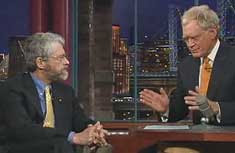
Holdren’s op-ed neglected to explicitly note that healthy skepticism is a necessary foundation for good science. In a response posted online, Holdren provides his original text including this point, which was edited out by the Globe—a common frustration of scientists who attempt to simplify complex arguments to fit the constraints of newspapers and more popular outlets (he was on Letterman in April).Those scientists who excoriate Holdren for underplaying skepticism are often the same ones who complain about bad (or no) climate policy—but refuse to engage policymakers and the media (and, therefore, forfeit their right to complain). Just as bad, some scientists assume policymakers will find their book or article, read it, understand it, and glean the correct conclusion from the scientific evidence—with no translation necessary. I’ve said it before: to reach policymakers, we have to speak their language.
I also think headline writers are the bane of every serious op-ed or news story. As someone who spends a lot of time on the faux water wars argument, I have come to believe that headline writers seeking to make a splash are a big part of the continued belief that states go to war over water.
Holdren’s experience suggests scientists should take proactive steps, such as setting up supporting web pages when the piece is published, and including the URL as part of their byline. This annotated or fully referenced and extended online version may help temper some of the outrage in cases like this. Jeff Sachs’ “Sustainable Developments” column in Scientific American, Andy Revkin’s Dot Earth blog, and Nick Kristof’s New York Times column and “On the Ground” blog commonly include links to more extensive discussions.
 A Publication of the Stimson Center.
 As someone who sits between scholarship and policy at the

