-
8 Rules of Political Demography That Help Forecast Tomorrow’s World
›In a world rapidly churning out unpredictable political shocks, intelligence analysts occasionally need to clear their heads of the daily barrage of newsworthy events and instead work with simple theories that discern the direction and speed of trends and help predict their outcomes. Political demography, the study of population age structures and their relationships to political trends and events, has helped some analysts predict geopolitical changes in a world that, from time to time, appears utterly chaotic.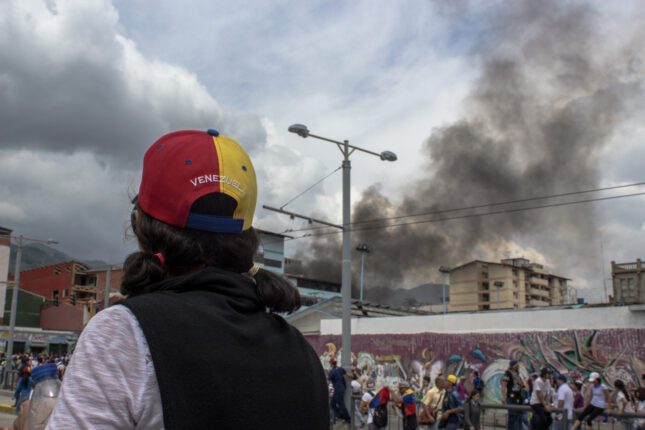
-
Strategic Ambiguity: How Loss and Damage Became a Part of Global Climate Policy
›
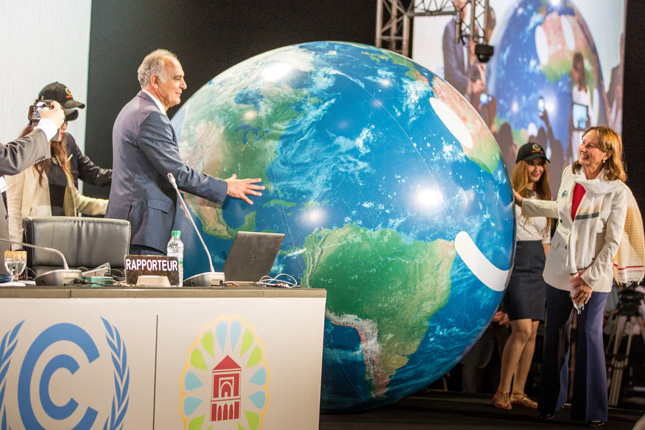
As the international community meets in Marrakesh for the climate change negotiations at COP-22, one of the most delicate issues on the table is the review of what’s called the Warsaw International Mechanism for Loss and Damage, or WIM.
-
What Next? Climate Mitigation After Paris
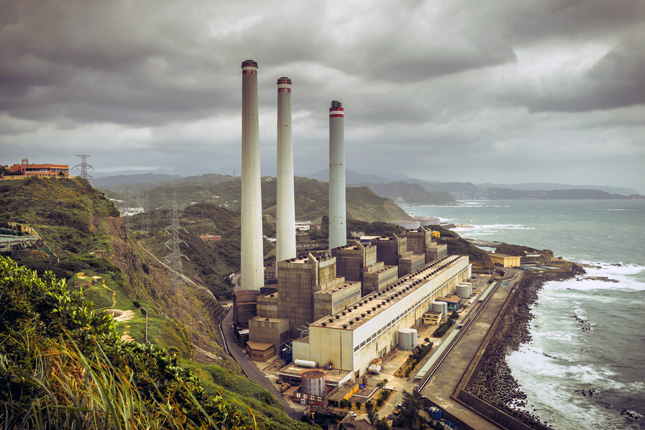
›The Paris Climate Agreement sets forth a bold goal to reduce greenhouse gas emissions, keep global temperature rise below 2.0 degrees Celsius, and employ best efforts toward no more than 1.5 degrees of warming. It also sets forth a new set of rules to achieve these goals. [Video Below]
-
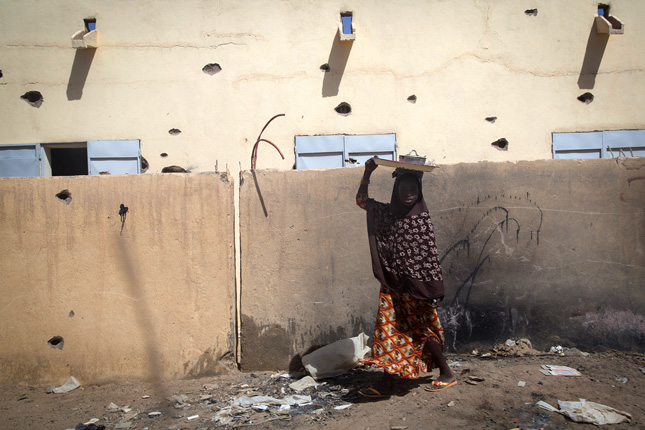
In Morocco, a Microcosm of What Leads Many to Leave Their Home Countries
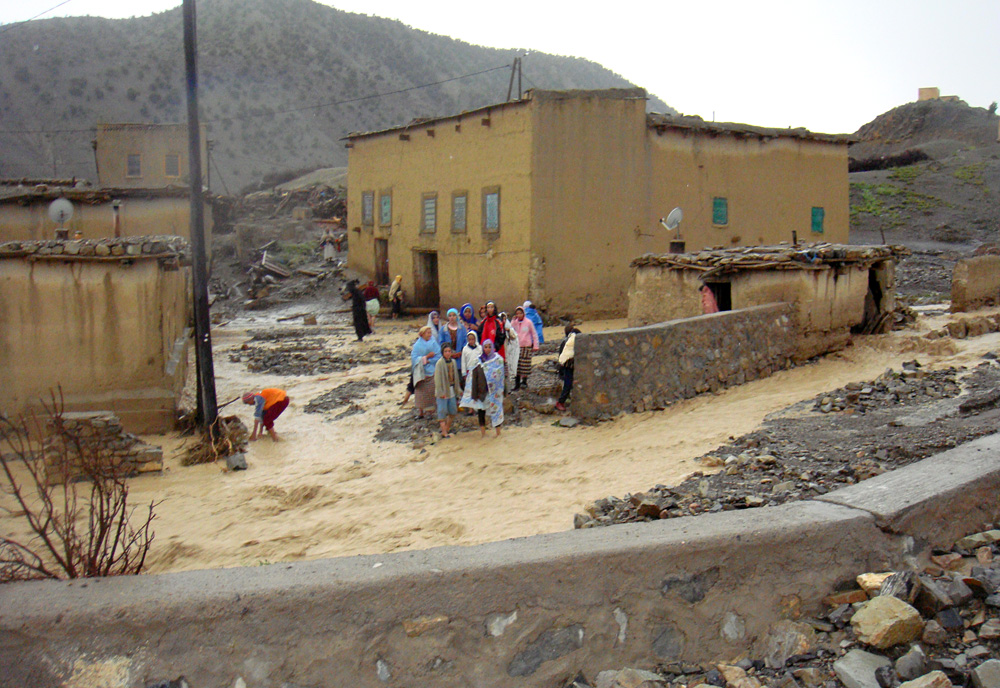
›Global attention is understandably focused on Syrian refugees, but the migration crisis in Europe is part of a bigger trend that climate and social scientists have been warning about for years.
-
Heather McGray & Kathleen Mogelgaard, World Resources Institute
Not Just Mitigation: National Climate Plans Raise Adaptation’s Profile
›August 13, 2015 // By Wilson Center StaffAs the world prepares for a pivotal climate conference in Paris this December, countries are offering their national plans to tackle a changing climate. These plans, known as intended nationally determined contributions (INDCs), contain details of what each country is prepared to do as part of a new global climate agreement. While the public focus is often on mitigation – how much countries are willing to reduce emissions, by when, and with what degree of transparency – adaptation to the impacts of climate change demands the same level of attention. In fact, the last round of international climate talks in Lima invited parties to include adaptation in their INDCs.
-
Will Tunisia’s Democracy Survive? A View from Political Demography
›May 12, 2015 // By Richard CincottaAmong the few bright spots in the 2015 Freedom in the World Report, the brightest may be Tunisia, which for the first time was assessed as “free” – Freedom House’s highest “freedom status” and for many political scientists the definitive indication of a liberal democracy. Tunisia is the only North African state to have been assessed as free since Freedom House began its worldwide assessment of political rights and civil liberties in 1972, and only the second Arab-majority state since Lebanon was rated free from 1974 to 1976.
-
Feeding Unrest: A Closer Look at the Relationship Between Food Prices and Sociopolitical Conflict
›From the Roman poet Juvenal’s observations about bread and circuses to Marie Antoinette’s proclamation, “let them eat cake!” the link between food and political stability is well established in pop culture. In academic and policy circles, however, it’s a source of considerable debate.
-
Center for American Progress Takes on Climate Change, Migration, and Why They Matter to U.S. National Security
›July 19, 2012 // By Kayly OberIn early 2012, the Center for American Progress (CAP) released Climate Change, Migration, and Conflict: Addressing Complex Crisis Scenarios in the 21st Century. Although generally in line with climate-migration pieces before it (“It is difficult to fully understand the detailed causes of migration and economic and political instability, but the growing evidence of links between climate change, migration, and conflict raise plenty of reasons for concern”), the report strays from the usual by focusing on U.S. national security interests and four particular sub-regions of concern.
Northwest Africa
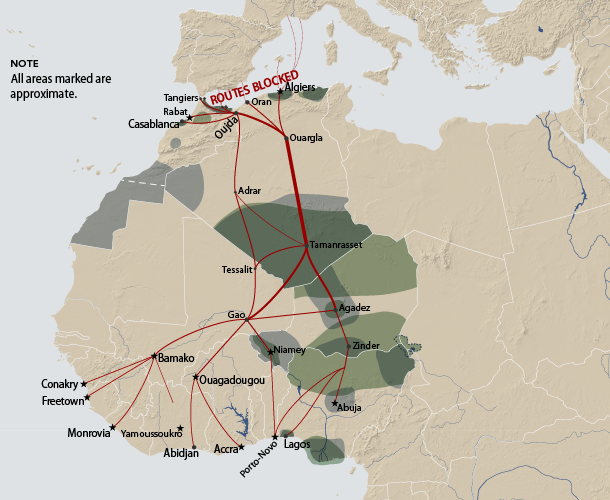
The first region examined – and the one perhaps most on the radar of security analysts at the moment – is Northwest Africa. Here the already-tenuous political stability left in the wake of the Arab Spring will most certainly be exacerbated by climate change, authors Michael Werz and Laura Conley write. “Northwest Africa is crisscrossed with climate, migration, and security challenges…rising coastal sea level, desertification, drought, and the numerous other potential effects of climate change have the potential to increase the numbers of migrants.” All of these factors combine to create what Werz and Conley define as an “arc of tension,” that will strengthen organizations that thrive on chaos, like Al Qaeda in the Islamic Maghreb, which has already taken advantage of the regional power vacuum left by Muammar Gaddafi’s ouster.
CAP investigates this arc of tension more fully in a more focused, separate brief on Northwest Africa, drilling down on Nigeria, Niger, Algeria, and Morocco. They find that these countries already grapple with a complex set of issues, including population pressures, drought, land degradation, large-scale migration, and natural resource conflicts. Climate change exacerbates all of these. Particularly worrying is the threat it poses to traditional pastoral and agricultural livelihoods, which could translate into “increasing numbers of disenfranchised youth, who security experts believe are more easily recruited to assist [terrorist groups] in return for money and food.”But environmental pressures and related conflict are not new in these areas, so how do we parse out the slow-onset climate change factors from the usual variety? That question is left unanswered and remains an open – and hotly debated – problem for researchers. The multi-faceted nature of migration, in particular, makes it hard to define the exact causes of movement.
On a larger scale, flagging the environment as the principal reason for migration has its problems, especially under the umbrella of “refugee” status. According to respected migration experts, using the term “refugee” in the case of environmental or climate scenarios is incorrect, since the environment is often simply one “push” factor, while economic opportunities make for a heavier “pull.” Furthermore, applying the term refugee in this case, they say, is misleading and undermines true political refugees.
CAP uses the less polarizing term “climate migrants” in their paper, saying “no universally accepted concepts, much less legal categories, exist to describe or define climate migrants. There is agreement, however, that factors such as drought, flooding, severe weather, and environmental degradation can cause human mobility in large numbers that are certain to increase in the near future.”
South Asia
In a case like Bangladesh and India, the second sub-region to be examined, the international community is preoccupied with rising sea levels, which is considered a more concrete example of climate change affecting migration. Ultimately, as CAP notes, it’s also a security issue:In December 2008 the National Defense University in Washington, D.C., ran an exercise that explored the impact of a flood that sent hundreds of thousands of refugees into neighboring India. The result: the exercise predicted a new wave of migration would touch off religious conflicts, encourage the spread of contagious diseases, and cause vast damage to infrastructure.
While true that India is “not in a position to absorb climate-induced pressures,” as Werz and Conley write, it’s not quite true that “foreign climate migrants” would be necessarily be an immediate problem, as they suggest.
India has a history of taking in Bangladeshi migration, with an estimated 10 to 20 million illegal Bangladeshis currently living in India, according to the Institute for Defence Studies and Analyses, an Indian think tank. Traditionally, Bangladeshis have migrated for a myriad of socioeconomic reasons, but most alluring are land availability and a stronger Indian economy. In any case, Bangladesh-India migration would not be new phenomenon.
The environment has also been a part of the equation, but in the case of large-scale sea level rise, its effect on migration can be a bit more nuanced. As the International Food Policy Research Institute noted in its study “Environmental Migrants: A Myth?,” Bangladeshis often have “risk-sharing and informal lending arrangements” to deal with idiosyncratic shocks, which include flooding. Instead, crop failure actually has the strongest effect on mobility. This suggests that it’s not just sea level rise that observers worried about environmentally-driven migration need to track in Bangladesh, but also drought and rain-induced flooding.
The Andes
The third region, the Andes of South America, also suffers from a slightly myopic security lens. Here, it’s all about melting glaciers and snowcaps. Retreating glaciers would spell disaster for countries which rely heavily on seasonal melt for agriculture and hydroelectric power. Most vulnerable are those with weak governance systems and infrastructure like Peru, Bolivia, Ecuador, and Colombia. For reference, hydropower supplies a whopping 80 percent of Peru’s electricity. However, there are more subtle impacts that could portend bigger trouble for the region.
Regional security experts concede that higher temperatures are already affecting crop production in rural Colombia, harming the ability to consolidate the security gains made by Plan Colombia over the last decade, for example. And a recent report from EUROCLIMA, the European Union’s program on climate change in Latin America, paints an even bleaker picture for agricultural production in the face of desertification and drought:Natural ecosystems, agriculture, water resources, and human health in Latin America have been impacted by unusual extreme weather events reported in the past years. For example, droughts related to El Niño impacts on the flows of the Colombia Andean region basins (particularly in the Cauca river basin), are causing a 30 percent reduction in the mean flow, with a maximum of 80 percent loss in some tributaries. Consequently, soil moisture, and vegetation activity are strongly reduced.
Perhaps more worrying is the impact on the biodiversity in the region. Considering that Latin America represents 16 percent of the world’s surface but 40 percent of its biodiversity this could have serious implications for the biomedical field and others. In a recent Nature study, scientists discovered that in situations where glacial coverage is reduced to the point where it only covers 30 to 50 percent of the drainage basin, several species begin to disappear. They calculated that the entire melting of the glaciers in these areas would result in a huge loss of biodiversity, where between 11 and 38 percent of animal and plant species could go extinct, including many of endemic species that can be found only in these areas.
China and the Third Pole
Finally, China is now in its fourth decade of ever-growing internal migration, some of it driven in recent years by environmental change. Today, across its vast territory, China continues to experience the full spectrum of climate change-related consequences that have the potential to drive migration. CAP finds that the consequences of climate change and continued internal migration in China include “water stress; increased droughts, flooding, or other severe events; increased coastal erosion and saltwater inundation; glacial melt in the Himalayas that could affect hundreds of millions; and shifting agricultural zones” – all of which will affect food supplies and the country’s seemingly relentless pace of development. Still, the most unique factor of migration in China is the power of the central government to be the main “push factor,” as in the case of the Three Gorges Dam.
Agreeing to Agree
Though they might sacrifice some nuance in the regional breakdowns, the core of CAP’s argument for why climate migration matters to U.S. national security is solid. The United States has a “vested interest in helping ensure that areas with weak or absent governance structures – where poverty, environmental degradation, and grievances over central governments and energy production coincide – do not become future recruiting grounds for extremists,” write Werz and Conley. “The possible impacts of climate-related migration in such fragile situations could be destabilizing.” Invest in people rather than just military might; invest in poverty reduction, economic development, and alternative livelihoods.Jon Barnett on migration as adaptation
In the context of climate change, this means accepting that migration is a form of adaptation. As Jon Barnett notes in an interview with ECSP:In some circumstances it might be appropriate to [invest in traditional adaptation projects like] infrastructure and hard options where we’re very certain about the nature of the risk…but in other cases, expanding the range of choices and freedoms and opportunities that people have to deal with climate change in the future is perhaps the better strategy.
This requires higher-level thinking by states to concede that migration will happen and it isn’t necessarily a bad thing. Migration bolsters origin communities through remittances and education and technology sharing. But this thinking has yet to permeate policymaking, with obvious political reasons. Until then, states that are committed to preventing migration are actually cutting off important community responses.
Ultimately, what we consider adaptation and development needs to evolve. By investing in an integrated, multi-sector development approach, we can prevent violent responses to migration at the source rather than relying on reactionary and military solutions. Or, as CAP’s Michael Werz and Laura Conley put it more boldly, “our security can no longer be guaranteed by military strength or economic clout alone, but only by our ability to compel collective action.”
Photo credit: “Villagers going to the local market in Bogoro walk past a Bangladeshi patrol unit of the United Nations Mission in the Democratic Republic of the Congo (MONUC) as the country prepares for the second round of elections. 12/Oct/2006. UN Photo/Martine Perret,” courtesy of United Nations Photo Flickr.
Sources: Center for American Progress, Institute for Defence Studies and Analyses, Inter-American Development Bank, International Food Policy Research Institute, Nature, The World Bank.
Video Credit: “The Nexus of Climate Change, Migration and Security,” courtesy of the Center for American Progress. Image: “The Arc of Tension,” courtesy of the Center for American Progress.
Showing posts from category Morocco.