

-
Life on the Edge: Climate Change and Reproductive Health in the Philippines
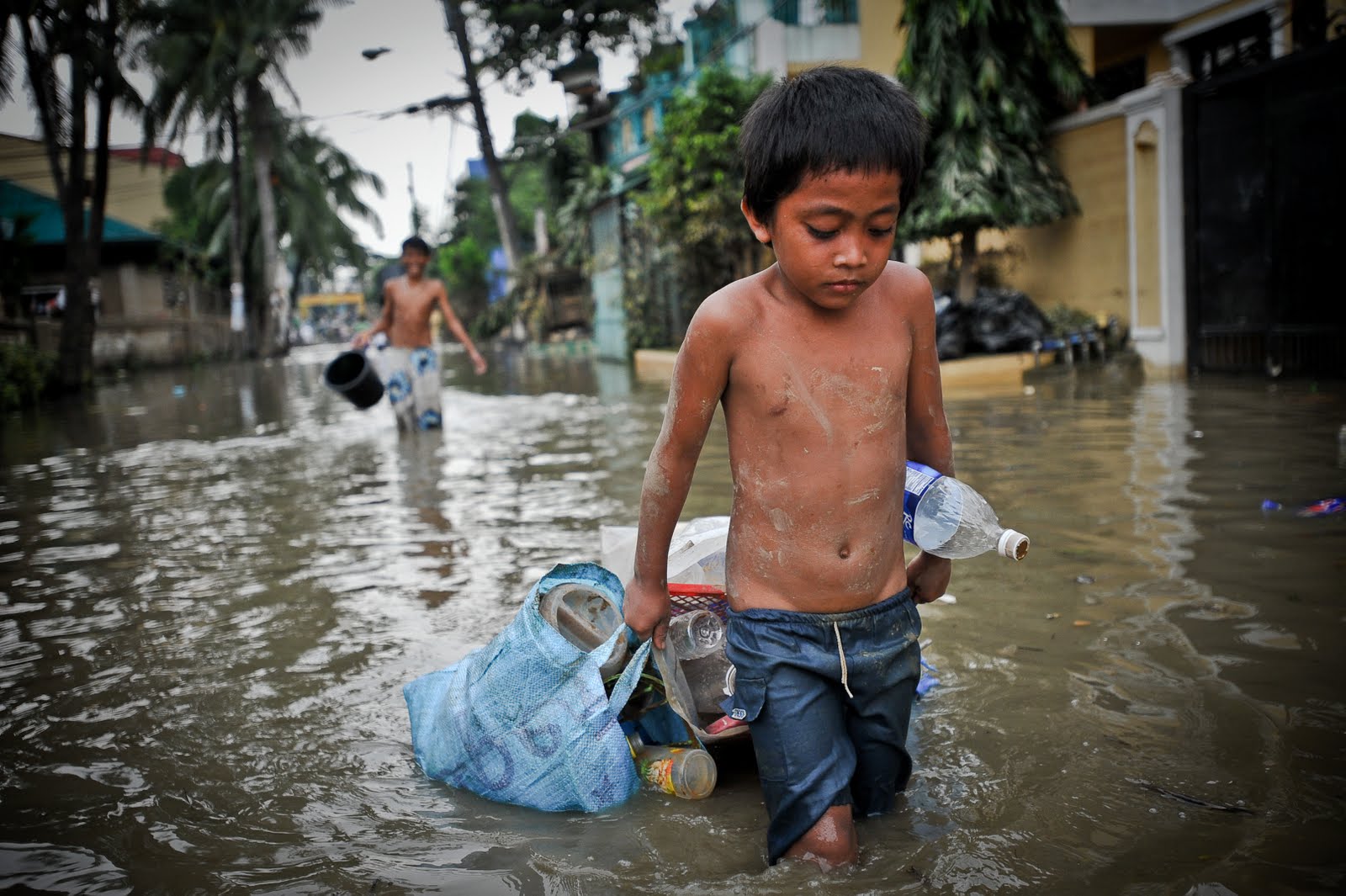
›July 18, 2011 // By Hannah MarquseeHigh population growth and population density have placed serious stress on natural resources in the Philippines. No one lives far from the coast in the 7,150-island archipelago, making the population extremely dependent on marine resources and vulnerable to sea-level rise, flooding, and other effects of climate change. The coastal megacity of Manila – one of the most densely populated in the world – is beset by poor urban planning, lack of infrastructure, and a large population living in lowland slums, making it particularly vulnerable to increased flooding and natural disasters. [Video Below]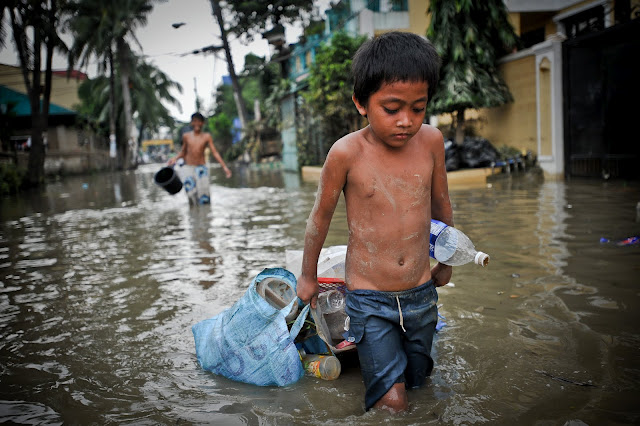
The Philippines is now home to 93 million people and by 2050 is expected to reach 155 million, according to the UN’s medium fertility variant projections. Development programs in the country have made great strides towards increasing access to family planning and reproductive health services as well as improving management of marine resources, but the underlying trends remain troubling.
The Battle Over Reproductive Health
Since 1970, the government’s Commission on Population has been addressing population growth, reproductive health, and family planning. “The impact of the high rate of population growth is intricately linked to the welfare and sustainable development for a country like the Philippines, where poverty drives millions of people to overexploit their resource base,” wrote the commission. As a result of these efforts and others, total fertility rate has dropped from 6.0 children per woman in 1970, to the present 3.2.
The Philippines has also made great gains towards achieving Millennium Development Goal targets, “particularly in the alleviation of extreme poverty; child mortality; incidences of HIV/AIDS, tuberculosis, and malaria; gender equality in education; household dietary intake; and access to safe drinking water,” according to the United Nations Development Program (UNDP). Yet, “glaring disparities across regions persist,” UNDP states.
One of the poorest regions in the country, the Autonomous Region of Muslim Mindanao, is also home to a violent separatist movement. With limited access to health services, fertility and population growth rates are the highest in the country. Women in Mindanao average 4.2 children per woman; one in four married women has an unmet need for contraception; and 45 percent of households live in poverty (compared to 24 percent nationally).
Nationally, “serious challenges and threats remain with regard to targets on maternal health, access to reproductive health services, nutrition, primary education, and environmental sustainability,” according to UNDP–in particular, indicators on maternal health are “disturbing” and of all the MDGs, are labeled “least likely to be achieved.”
Out of three million pregnancies that occur every year, half were unplanned and one-third of these end in abortions, according to a 2006 report of the Allan Guttmacher Institute conducted in the Philippines. Induced abortion was the fourth leading cause of maternal deaths, and young women accounted for 17 percent of induced abortions. Over half of births occurred at home and one-third of them were assisted by traditional birth attendants. Around 75 percent of the poorest quintile did not have access to skilled birth attendants compared to only 20 percent of the richest quintile.
The politically influential Catholic Church recently blocked passage of a reproductive health bill, despite support by President Benigno Aquino and a majority of Filipinos. The bill seeks to provide universal access to contraception and would make sex education required from fifth grade onwards, a provision that has angered Church officials.
Manila Under Water
The Philippines’ combination of high population growth and limited land area (nearly all of which is near the coast) makes the country extremely vulnerable to the effects of climate change. Sixty-five percent of Filipinos live in coastal areas and 49 percent live in urban areas. Paul Hutchcroft, in Climate Change and Natural Security, writes that “even in the best of times, the frequency of typhoons, floods, earthquakes, and volcanic eruptions makes the Philippines one of the most disaster-prone countries in the world” (p. 45).
Population growth, climate change, and deforestation will only increase the severity of these disasters, he concludes. Hutchcroft points out that by 2080, projected temperature increases of between 1.2 to 3.9 degrees Celsius could raise sea levels by an estimated 0.19 to 1.04 meters – a scary thought for the 15 million living within a one-meter elevation zone (p. 46).
In 2009, metropolitan Manila, currently home to 11 million people (18,650 per square kilometer) and projected to grow to 19 million by 2050, was hit by tropical storms that caused devastating flooding – at their peak, waters reached nearly seven meters, according to a World Bank report. “More than 80 percent of the city was underwater,” write the authors, “causing immense damage to housing and infrastructure and displacing around 280,000-300,000 people.”
“Even if current flood infrastructure plans are implemented, the area flooded in 2050 will increase by 42 percent in the event of a 1-in-100-year flood,” says the World Bank report. Climate change could also increase the cost of flooding as much as $650 million, or 6 percent of GDP. Only by considering climate-related risks in urban planning can the Philippines hope to mitigate the effects of climate change, the report concludes.
Integrated Development: One Piece of the Puzzle?
Population, health, and environment (PHE) programs that integrate family planning and natural resource management are one way to help the majority of Filipinos that live in densely populated and resource-stressed coastal areas.
In ECSP’s FOCUS Issue 15, “Fishing for Families: Reproductive Health and Integrated Coastal Management in the Philippines,” Joan Castro and Leona D’Agnes explain how Path Foundation Philippines, Inc.’s IPOPCORM project – which ran from 2000 to 2006 – helped “improve reproductive health and coastal resource management more than programs that focused exclusively on reproductive health or the environment – and at a lower total cost.” A recent peer-reviewed study, co-authored by Castro and D’Agnes and published in Environmental Conservation, proved the same point with rigorous analysis.
“When we started IPOPCORM, there was really nothing about integrating population, health, and environment,” said Castro in an interview with ECSP. IPOPCORM provided some of the first evidenced-based results showing there is value added to implementing coastal resource management and family planning in tandem rather than separately. In part due to the success of the IPOPCORM, the Philippines have become one of the major PHE development implementers in the world.
Creating sustainably managed marine sanctuaries while improving access to family planning provides a way forward for many coastal communities. However, the Philippines’ urban woes – 44 percent of urban dwellers live in slums, according to the Population Reference Bureau – internal divisions, and natural vulnerability will likely make it difficult to dodge considerable climate-related effects in the near future. Already the archipelago’s vast biodiversity is in crisis, according to studies over two thirds of native plant and animal species are endemic to the islands and nearly half of them are threatened; only seven percent of its original old-growth less than 10 percent of the islands’ original vegetation remains; and 70 percent of nearly 27,000 square kilometers of coral reefs are in poor condition.
Sources: CIA, Conservation International, Field Museum, The Guardian, The Huffington Post, Philippines National Statistics Office, Population Reference Bureau, United Nations, U.S. Census Bureau, World Bank, World Wildlife Fund.
Photo Credit: “Climate Risk and Resilience: Securing the Region’s Future” courtesy of Flickr user Asian Development Bank. -
Michael Kugelman, Foreign Policy
Pakistan’s Demographic Dilemma
›July 15, 2011 // By Wilson Center StaffThe original version of this article, by Michael Kugelman, appeared on Foreign Policy’s AfPak Channel.
Pakistan’s 2011 census kicked off in April, but less than three months later, it is embroiled in controversy. Several members of the Sindh Census Monitoring Committee have rejected as “seriously flawed” the recently completed household count. They allege that census workers, directed by an unspecified “ethnic group,” have counted Karachi’s “inns, washrooms, and even electric poles” as households in an effort to dilute the city’s native “Sindhi” presence.
These Census Monitoring Committee members are not the only Pakistani politicians to be concerned about the census. Pakistan is experiencing rapid urbanization; while a third of the country’s people have long been rurally based, at least 50 percent of the population is expected to live in cities by the 2020s. Pakistan’s political leadership draws much of its power from rural landholdings, power that could be greatly reduced if a census confirms this migration toward cities.
This politicization underscores the perils of census-taking in Pakistan. In many other nations, it is a routine process completed regularly. Yet in Pakistan, myriad factors – from catastrophic flooding and insufficient funding to the turbulent security situation and intense political opposition – have conspired to delay it for three consecutive years, making the country census-less since 1998.
Accurate census data enables governments to make decisions about how to best allocate resources and services. In Pakistan, such decisions are critical. Consider that its current population, estimated at about 175 million, is the world’s sixth-largest. It has the highest population growth, birth, and fertility rates in South Asia – one of the last regions, along with sub-Saharan Africa, still experiencing young and rapidly rising populations. Additionally, with a median age of 21, Pakistan’s population is profoundly youthful. Two-thirds are less than 30 years old, and as a percentage of total population, only Yemen has more people under 24.
Continue reading on Foreign Policy.
Michael Kugelman is a program associate for the Asia Program at the Woodrow Wilson Center and co-editor of Reaping the Divided: Overcoming Pakistan’s Demographic Challenges.
Sources: UN Population Division.
Photo Credit: “Pakistan Diaster Relief,” courtesy of flickr user DVIDSHUB. -
Watch: Michael Renner on Creating Peacebuilding Opportunities From Disasters
›Michael Renner is a senior researcher at the Worldwatch Institute working on the intersection between environmental degradation, natural resource issues, and peace and conflict. Recently, Renner has focused on water use and its effects on the Himalayan region. In particular he’s working to find positive opportunities that can turn “what is a tremendous problem, into perhaps an opportunity for collaboration among different communities, among different regions, and perhaps…ultimately across the borders of the region,” he said during this interview with ECSP.
-
Preparing for the Impact of a Changing Climate on U.S. Humanitarian and Disaster Response
›Climate-related disasters could significantly impact military and civilian humanitarian response systems, so “an ounce of prevention now is worth a pound of cure in the future,” said CNA analyst E.D. McGrady at the Wilson Center launch of An Ounce of Preparation: Preparing for the Impact of a Changing Climate on U.S. Humanitarian and Disaster Response. The report, jointly published by CNA and Oxfam America, examines how climate change could affect the risk of natural disasters and U.S. government’s response to humanitarian emergencies. [Video Below]
Connecting the Dots Between Climate Change, Disaster Relief, and Security
The frequency of – and costs associated with – natural disasters are rising in part due to climate change, said McGrady, particularly for complex emergencies with underlying social, economic, or political problems, an overwhelming percentage of which occur in the developing world. In addition to the prospect of more intense storms and changing weather patterns, “economic and social stresses from agricultural disruption and [human] migration” will place an additional burden on already marginalized communities, he said.
Paul O’Brien, vice president for policy and campaigns at Oxfam America said the humanitarian assistance community needs to galvanize the American public and help them “connect the dots” between climate change, disaster relief, and security.
As a “threat multiplier,” climate change will likely exacerbate existing threats to natural and human systems, such as water scarcity, food insecurity, and global health deterioration, said Vice Admiral Lee Gunn, USN (ret.), president of CNA’s Institute for Public Research. Major General Richard Engel, USAF (ret.), of the National Intelligence Council identified shifting disease patterns and infrastructural damage as other potential security threats that could be exacerbated by climate change.
“We must fight disease, fight hunger, and help people overcome the environments which they face,” said Gunn. “Desperation and hopelessness are…the breeding ground for fanaticism.”
U.S. Response: Civilian and Military Efforts
The United States plays a very significant role in global humanitarian assistance, “typically providing 40 to 50 percent of resources in a given year,” said Marc Cohen, senior researcher on humanitarian policy and climate change at Oxfam America.
The civilian sector provides the majority of U.S. humanitarian assistance, said Cohen, including the USAID Office of Foreign Disaster Assistance (OFDA) and the State Department’s Bureau of Population, Refugees, and Migration. These organizations provide leadership, funding, and food aid to developing countries in times of crisis, but also beforehand: “The internal rationale [of the Office of Foreign Disaster Assistance] is to reduce risk and increase the resilience of people to reduce the need for humanitarian assistance in the future,” said Edward Carr, climate change coordinator at USAID’s Bureau for Democracy, Conflict, and Humanitarian Assistance.
The U.S. military complements and strengthens civilian humanitarian assistance efforts by accessing areas that civilian teams cannot reach. The military can utilize its heavy lift capability, in-theater logistics, and command and control functions when transportation and communications infrastructures are impaired, said McGrady, and if the situation calls for it, they can also provide security. In addition, the military could share lessons learned from its considerable experience planning for complex, unanticipated contingencies with civilian agencies preparing for natural disasters.
“Forgotten Emergencies”
Already under enormous stress, humanitarian assistance and disaster response systems have persistent weaknesses, such as shortfalls in the amount and structure of funding, poor coordination, and lack of political gravitas, said Cohen.
Food-related aid is over-emphasized, said Cohen: “If we break down the shortfalls, we see that appeals for food aid get a better response than the type of response that would build assets and resilience…such as agricultural bolstering and public health measures.” Food aid often does not draw on local resources in developing countries, he said, which does little to improve long-term resilience.
“Assistance is not always based on need…but on short-term political considerations,” said Cohen, asserting that too much aid is supplied to areas such as Afghanistan and Iraq, while “forgotten emergencies,” such as the Niger food crisis, receive far too little. Furthermore, aid distribution needs to be carried out more carefully at the local scale as well: During complex emergencies in fragile states, any perception of unequal assistance has the potential to create “blowback” if the United States is identified with only one side of a conflict.
Engel added that many of the problems associated with humanitarian assistance will be further compounded by increasing urbanization, which concentrates people in areas that do not have adequate or resilient infrastructure for agriculture, water, or energy.
Preparing for Unknown Unknowns
A “whole of government approach” that utilizes the strengths of both the military and civilian humanitarian sectors is necessary to ensure that the United States is prepared for the future effects of climate change on complex emergencies in developing countries, said Engel.
In order to “cut long-term costs and avoid some of the worst outcomes,” the report recommends that the United States:
Cohen singled out “structural budget issues” that pit appropriations for protracted emergencies in places like Iraq, Afghanistan, and Darfur against unanticipated emergencies, like the 2010 earthquake in Haiti. Disaster-risk reduction investments are not a “budgetary trick” to repackage disaster appropriations but a practical way to make more efficient use of current resources, he said: “Studies show that the return on disaster-risk reduction is about seven to one – a pretty good cost-benefit ratio.”- Increase the efficiency of aid delivery by changing the budgetary process;
- Reduce the demand by increasing the resilience of marginal (or close-to-marginal) societies now;
- Be given the legal authority to purchase food aid from local producers in developing countries to bolster delivery efficiency, support economic development, and build agricultural resilience;
- Establish OFDA as the single lead federal agency for disaster preparedness and response, in practice as well as theory;
- Hold an OFDA-led biannual humanitarian planning exercise that is focused in addressing key drivers of climate-related emergencies; and,
- Develop a policy framework on military involvement in humanitarian response.
Edward Carr said that OFDA is already integrating disaster-risk reduction into its other strengths, such as early warning systems, conflict management and mitigation, democracy and governance, and food aid. However, to build truly effective resilience, these efforts must be tied to larger issues, such as economic development and general climate adaptation, he said.
“What worries me most are not actually the things I do know, but the things we cannot predict right now,” said Carr. “These are the biggest challenges we face.”
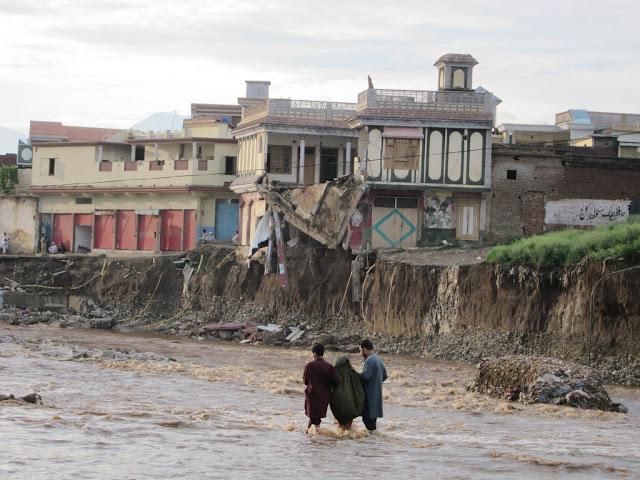
“Pakistan Floods: thousands of houses destroyed, roads are submerged,” courtesy of flickr user Oxfam International. -
Vik Mohan, Rebecca Hill, and Alasdair Harris
In FOCUS: To Live With the Sea: Reproductive Health Care and Marine Conservation in Madagascar
›July 12, 2011 // By Wilson Center StaffDownload FOCUS Issue 23: “To Live With the Sea: Reproductive Health Care and Marine Conservation in Madagascar,” from the Wilson Center.
Christine does not know how old she is. She has 16 children and lives on a remote island off the southwestern coast of Madagascar. She and her children, like other members of the Vezo ethnic group, depend entirely on the ocean for their survival. Her husband, a fisherman, struggles to catch enough to feed his family.
In this isolated area, most girls have their first child before the age of 18, and families with 10 children or more are commonplace. But since the marine conservation NGO Blue Ventures launched a family planning program in 2007, couples and women like Christine are able to make their own reproductive health choices.
Blue Ventures’ Vik Mohan, Rebecca Hill, and Alasdair Harris argue that their integrated approach, which combines reproductive health care and education with conservation and alternative livelihoods, offers these communities – and the marine environment on which they depend – the best possible chances of survival. -
World Population Day 2011: The Year of Seven Billion
›July 11, 2011 // By Schuyler NullThe UN Population Fund established World Population Day as a day of awareness about global population in 1987. As we approach seven billion just 24 years later, the UN is kicking off their 7 Billion Actions campaign, designed to raise awareness about the resource, health, and environmental challenges raised by our numbers. Population and its more detailed cousin-indicator, demography, impact the world in a great many ways – from contributing to resource scarcity and environmental destruction to creating social imbalances that can lead to civil instability.
Check out a few of New Security Beat’s most recent stories on population to get a sense of why it’s such an important but oft-simplified and misunderstood indicator and where it matters most.
Photo Credit: “World population,” courtesy of flickr user Arenamontanus.- One in Three People Will Live in Sub-Saharan Africa in 2100, Says UN
- Ten Billion: UN Updates Population Projections, Assumptions on Peak Growth Shattered
- Tunisia Predicted: Demography and the Probability of Liberal Democracy in the Greater Middle East
- Watch: Demographic Security 101 With Elizabeth Leahy Madsen
- Yemen Beyond the Headlines: Population, Health, Natural Resources, and Institutions
- Guest Contributor Michael Kugelman: Pakistan’s Population Bomb Defused?
- Dot-Mom: USAID Egypt’s Health and Population Legacy Review
- Watch: Eric Kaufmann on How Demography Is Enhancing Religious Fundamentalism
- Consumption and Global Growth: How Much Does Population Contribute to Carbon Emissions?
-
Watch ‘Dialogue’ TV on Severe Weather and Climate Change: Is There a Connection?
›This week on Dialogue, host John Milewski is joined by Heidi Cullen and Edward Maibach for a discussion on whether recent severe weather outbreaks in the United States and around the world are directly tied to the latest data on climate change. [Video Below]Dialogue is an award-winning co-production of the Woodrow Wilson International Center for Scholars and MHz Networks that explores the world of ideas through conversations with renowned public figures, scholars, journalists, and authors. The show is also available throughout the United States on MHz Networks, via broadcast and cable affiliates, as well as via DirecTV and WorldTV (G19) satellite.
Heidi Cullen is a research scientist and correspondent for Climate Central where she also served as director of communications. Previously, she served as the Weather Channel’s first on air climate expert and is also a member of the National Oceanic and Atmospheric Administration Science Advisory Board. Edward Maibach joined the George Mason University faculty in 2007 to create the Center for Climate Change Communication. He is also a principal investigator of several climate change education grants funded by the National Science Foundation and the Robert Wood Johnson Foundation.
Find out where to watch Dialogue where you live via MHz Networks. You can send questions or comments on the program to dialogue@wilsoncenter.org.



Rare Earths No More? Mineral Discoveries a Potential Game-Changer for East Asia
›
July 7, 2011 // By Schuyler Null
The authors write that an “area of just one square kilometer, surrounding one of the sampling sites, could provide one-fifth of the current annual world consumption of these elements.” The team collected data from 78 sites in total, with the largest concentrations centered east of the Hawaiian and Polynesian islands (see a map of the surveyed areas here).
Resource Relationships
The discovery could prove crucial for Japan, as it has been seeking alternative sources of rare earth minerals after an embargo earlier this year by China, which controls 97 percent of the world’s current supply. The embargo (which China denied) was imposed in October of last year after the Japanese navy arrested the captain of a Chinese fishing boat, which was alleged to be encroaching on Japanese territorial waters. China’s response increased tensions across the region and produced a flurry of warnings in Washington over the security of U.S. supplies.
Although the embargo was later lifted, Japan and Vietnam reached an agreement for development of Vietnamese mines in November. The tensions sparked by the encounter also spread to the South China Sea where Chinese, Vietnamese, and Filipino forces have stepped up their jockeying over disputed and resource-rich waters to the highest levels in years. Vietnamese and Chinese naval forces recently held mirror exercises, and Filipino officials invoked a 1950-era defense pact with the United States. Chinese Vice Foreign Minister Cui Tiankai told reporters in June: “I believe the individual countries are actually playing with fire, and I hope the fire will not be drawn to the United States.”
Secretary of State Hillary Clinton called concerns over navigability and Chinese insistence on bilateral (as opposed to multilateral) negotiations in the South China Sea a matter of “national interest” for the United States last year.
The Japanese team’s discovery has the potential to significantly impact the power dynamics behind these tensions. China has used its rare earth monopoly to pressure Japan and the United States, which in turn may have also helped embolden its recent more aggressive maritime policies. If the new rare earth discoveries prove viable, that calculus could change considerably.
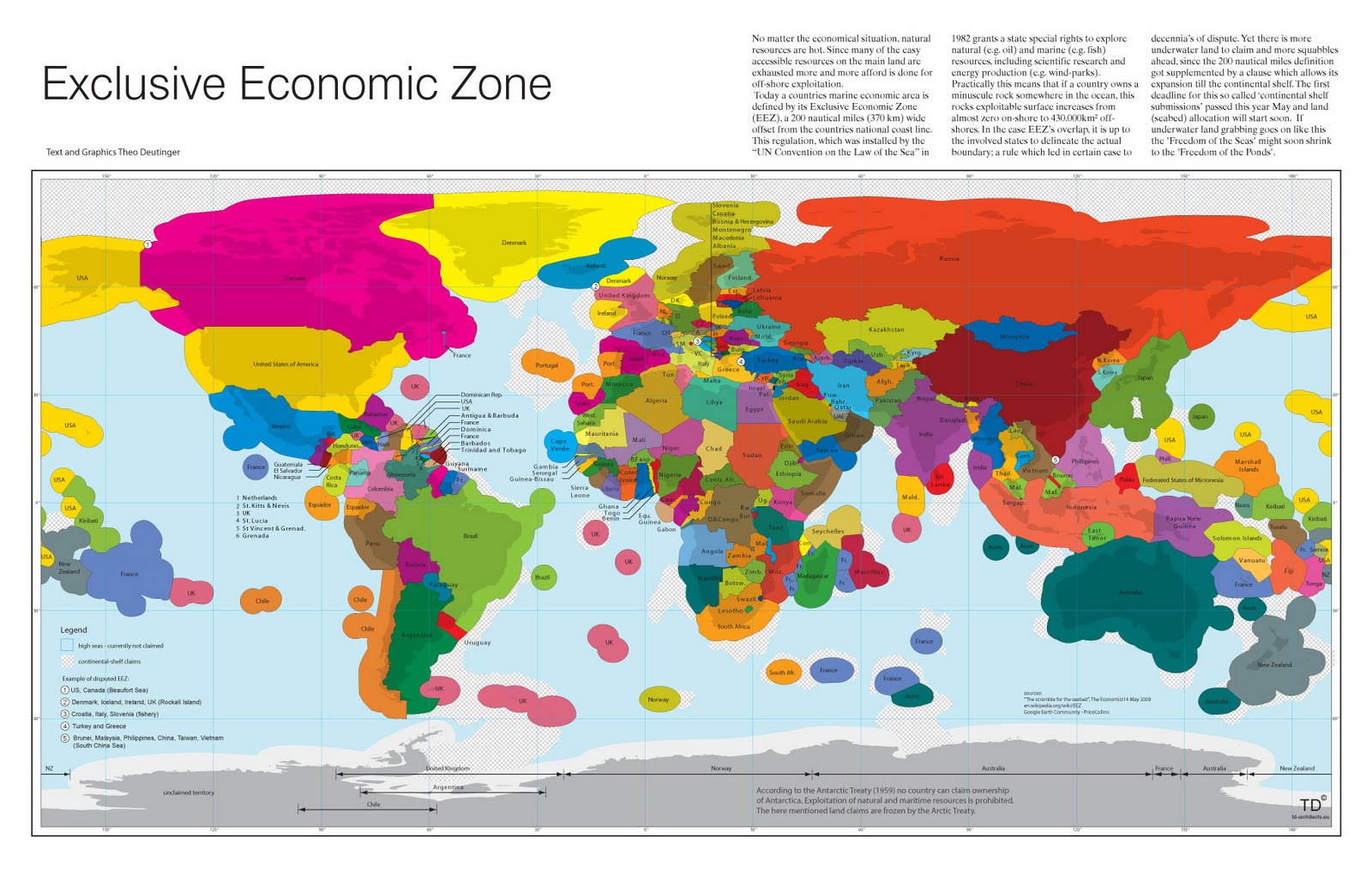
For more on the importance of rare earth minerals to the defense and electronics industries, see New Security Beat’s “Rare Earth: A New Roadblock for Sustainable Energy?” and “Reading Radar: The Mineral Security of the United States.” For more on the exclusive economic zones map, see “Eye on Environmental Security: Natural Resource Frontiers at Sea;” and on the South China Sea and what it reveals about future diplomatic fault lines between the United States and China, see “U.S. v. China: The Global Battle for Hearts Minds and Resources.”
Sources: Asia Sentinel, The Atlantic, BBC, Government Accounting Office, Nature Geoscience, The New York Times, Reuters, Tech News Daily, U.S. Department of State.
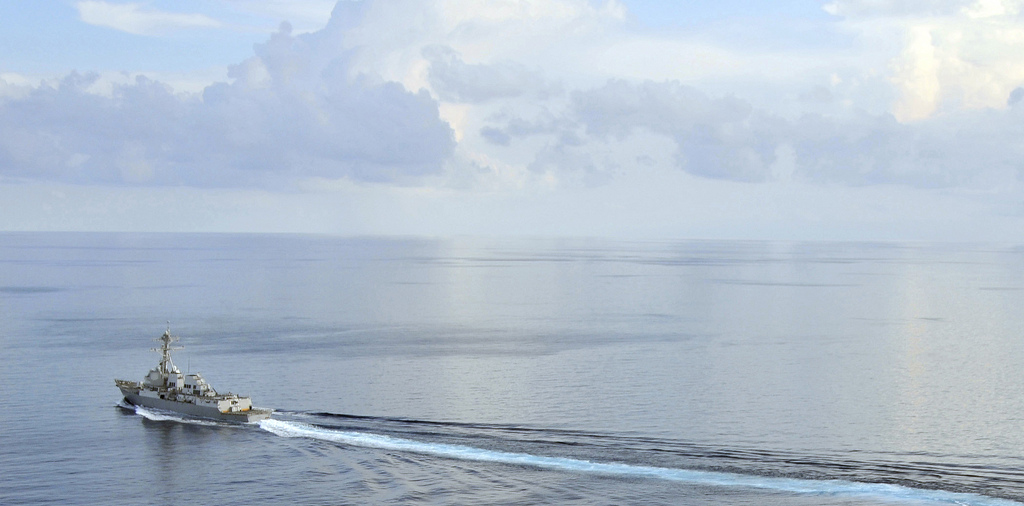
Photo Credit: Adapted from “USS Mustin underway in the Pacific Ocean,” courtesy of flickr user Official U.S. Navy Imagery, and “Exclusive Economic Zone,” used with permission courtesy of Theo Deutinger and TD Architects.



