-
Can “Climate-Smart Agriculture” Help Feed Africa’s Growing Population?
›December 13, 2011 // By Brenda ZuluFood production needs to increase 70 percent by 2050 to meet the demands of a growing world population, said former UN Secretary-General Kofi Annan in a keynote address on “climate-smart agriculture” at a COP-17 event hosted by the World Bank and African Union. Annan, who is now chairman of the Alliance for a Green Revolution in Africa (AGRA), said this was a particular concern in Africa, where four out of five citizens are dependent on agriculture for their livelihoods.
One in seven people in the world do not have enough food to eat, Annan said, and climate change is expected to make this challenge more difficult to overcome. Climate-smart agriculture includes a wide variety of techniques that help increase the resilience of communities and protect them from extreme weather events, such as terracing to prevent soil erosion, improving weather forecasting, managing water runoff, and developing irrigation systems.
“Climate change affects us by undermining our resource base through water and soil degradation,” said Prime Minister of Ethiopia Meles Zenawi at the event. “There is need to protect the resources and to rehabilitate green areas of our land.” He said that since 70 percent of Africans are small-scale farmers and that most of the poor in Africa were farmers, there is no better way to fight poverty on the continent than through agriculture.
South African President Jacob Zuma said at the event that given that the UN projects a population of more than nine billion people in the world by 2050, agriculture should be a priority as it is more vulnerable to climate change than any other sector.
“Climate-smart agriculture includes proven practical techniques such as mulching, intercropping, conservation agriculture, integrated crop management and agro forestry, improved grazing, and innovative better weather management,” he said, all of which have the potential to help increase crop yields.
Mary Robinson, chair of the Global Leaders Council for Reproductive Health, said there could be no smart agriculture without integrating women’s issues, because climate change affects women disproportionately. “Women make the connection between climate-smart agriculture, food security, and gender,” she said.
“Our ability to feed the growing population under climate variability and change will require new expertise and harmonized efforts,” said Robinson.
Annan agreed, saying African women should be fully involved in early action that can support technical assistance, such as screening agriculture plans to ensure they are “climate smart” as well as integrating climate resilience and mitigation into ongoing poverty-reduction programs and testing new approaches.
But according to Brylyne Chitsunge, a farmer from Pretoria speaking on the panel, things will need to change considerably from the status quo. “The small-scale farmer remains very much marginalized in institutions,” she said. “They exist on paper but they really don’t exist.”
Brenda Zulu is a member of Women’s Edition for Population Reference Bureau and a freelance writer based in Zambia. Her reporting from the COP-17 meeting in Durban (see the “From Durban” series on New Security Beat) is part of a joint effort by the Aspen Institute, Population Action International, and the Wilson Center.
Sources: World Bank, World Food Programme.
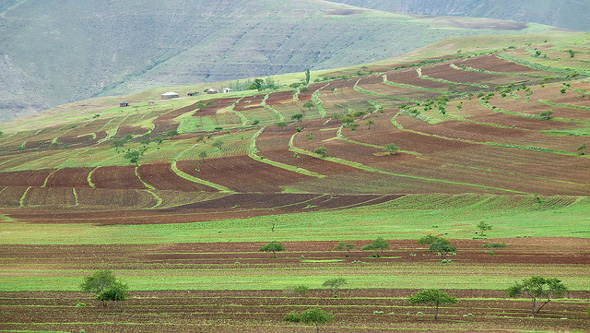
Photo Credit: “Cultivated hillsides,” courtesy of flickr user coda (Damien du Toit). -
Climate Change, Uncertainty, and Conflict in the Niger River Basin
›New research on the Niger River Basin finds that the effects of climate change in the region are pervasive and that “latent conflict” between groups – disagreements and disputes over damage to farmland and restricted access to water, but not physical violence – is common.
“You’ve got vulnerable people, vulnerable households, vulnerable communities living within…fragile systems – governance systems [and] environmental systems,” said Phil Vernon, International Alert’s director of programs for Africa and peacebuilding issues, at “Climate Change, Water, and Conflict in the Niger River Basin,” an event hosted by the Wilson Center on November 17. [Video Below]
Together with his colleagues Lulsegged Abebe and Marisa Goulden of the University of Anglia, Vernon examined how communities in Mali, Nigeria, and Niger have been impacted by climate change, how they have adapted to those impacts, and whether these changes spurred conflict.
Competition Over Dwindling Resources
Climate change destabilizes communities by adding uncertainty and stress, Vernon said, and when a community is already vulnerable, the impacts of those uncertainties and stresses are amplified and the potential for conflict is greater. In every community examined in the study, climate-induced vulnerability led to some kind of conflict. More often than not, however, that conflict took the form of disagreements, or “latent conflict,” rather than violent conflict – a reason for optimism in the face of dire predictions that an era of climate wars is upon us.
Throughout the basin, river flows and rainfall have been decreasing since the 1970s, said Goulden, creating tension between two of the major communities living in the basin – farmers and pastoralists. Pastoralists are forced to travel farther to bring their herds to water, while farmers are expanding their cropland to feed growing populations, reducing the pathways available to herders and their livestock.
Unfortunately, poor policy decisions have made tensions worse in some places. In Lokoja, Nigeria, for example, the government began dredging the Niger River in 2009 to improve commercial shipping. Officials said the dredging would reduce flooding, but in 2010, farmers suffered immensely from floods. The government’s false promises increased the farmers’ vulnerability, said Goulden, because, expecting to be protected from flooding, they were not adequately prepared, making the damage worse.
As a result, farmers are now building homes and developing cropland further away from the river, reducing land available to pastoralists and increasing the potential for conflict between the two communities.
Increased Resilience Is a “No-Brainer”
Climate in the Niger River Basin is marked by a high degree of variability – rainfall, river flows, and temperature already fluctuate a great deal and could become even more variable in the future, said Goulden.
That uncertainty has important implications for how people think about responding to climate change, said Abebe. “Development and adaptation policies must be flexible enough to cope with extreme variability both in the wetter and the dry conditions in the Niger River Basin,” he said.
Boosting resilience will be key to ensuring that vulnerable communities have the flexibility they need to respond to future crises, Vernon said.
“If the interaction of stress and vulnerability is the problem…it’s somewhat of a no-brainer that increased resilience is part of the answer,” said Vernon. And decisions on how to increase resilience “should be made at the lowest appropriate level…from high policy down to household and individual decisions.”
Different People, Different Levels of Resilience
Vernon’s emphasis on making decisions at the “lowest appropriate level” reflects the reality that various communities – and individual community members – experience climate change in different ways. Fostering adaptation strategies that take these variations into consideration will be an essential strategy for avoiding climate-driven conflict in the future.
In Mali, the Niger River flooded downstream of the Selingué Dam in 2001 and 2010, and in each case, researchers found divergent responses to the crises.
In the lead-up to the 2001 flood, dam operators had been intentionally keeping reservoir levels high in anticipation of increased demand for hydroelectric power during an upcoming soccer championship match. When heavy rains hit the area, though, the operators were forced to release huge amounts of water over a short period of time, causing massive flooding downstream.
In the flood’s aftermath, downstream farmers were able to successfully sue the power company for their losses, but downstream pastoralists had no comparable option. The pastoralists were therefore more vulnerable to the flood’s long-term impacts.
Responses differed within communities as well, often breaking down along gender lines. In 2010, when floods hit Mali again, men “were trying to help people move away from the flood water, and then afterward with rebuilding of homes,” said Goulden, “whilst women are concerned with finding shelter, cooking, and caring for the sick, elderly, and children.”
No “Massive Risk of Violence” in the Near Future
Policymakers are left with an urgent crisis – climate change – and a solution that is inherently time-intensive: building resilience in vulnerable communities down to the individual level, said Vernon.
“There is a risk of undermining the elements of resilience which exist already in responding too rapidly and too urgently based on the anxieties we have to the problem of climate change and insecurity,” he cautioned.
Fortunately, although the threat of climate change is urgent, Vernon said that the risk of that threat spilling over into violent conflict is still a long way off. “I think policymakers have got to be thinking about where might this lead,” he said, “but at the moment, in terms of this research, there was no evidence that there’s a massive risk of violence happening any time soon.”
Event Resources
Sources: AlertNet, BBC, International Alert.
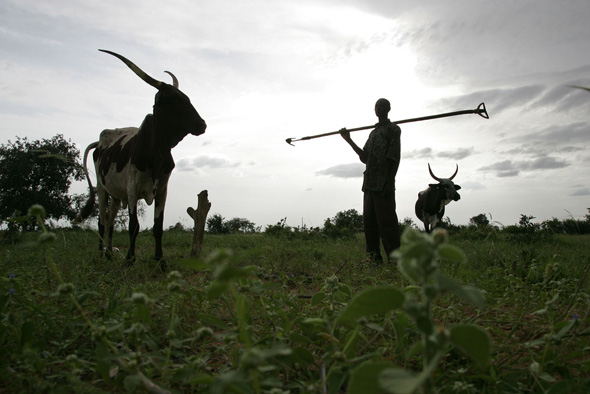
Photo Credit: “Cattle manure millet field in Niger,” courtesy of flickr user ILRI (International Livestock Research Institute). -
Michael Kugelman, Ahmad Rafay Alam, and Gitanjali Bakshi for Foreign Policy
Why South Asia Needs a Kabul Water Treaty
›December 12, 2011 // By Wilson Center StaffPakistan is once again accusing India of water hegemony. This time, however, the accusation refers not to Indian damming of the Western Rivers in the disputed regions of Jammu and Kashmir, but to Indian support for Afghan development projects along the Kabul River. This accusation indulges in conspiratorial thinking, and distracts from a factual understanding of the water issues between the two countries.
-
The Legacy of Little America: Aid and Reconstruction in Afghanistan
›In 2007, the United States built a $305 million diesel power plant in Afghanistan – the world’s most expensive power plant of its kind. Yet the facility is rarely used, because the impoverished country cannot afford to operate it.
This ill-fated power plant does not represent the only time America has lavished tremendous amounts of money on development projects in Afghanistan that have failed to meet objectives. At a December 7 presentation organized by the Wilson Center’s Asia Program and co-sponsored with the Middle East Program and International Security Studies, Rajiv Chandrasekaran discussed Washington’s expensive attempts to modernize southern Afghanistan’s Helmand River Valley from the 1940s to 1970s – and the troubling implications for U.S. development projects in that country today.
From Morrison Knudsen to USAID
According to Chandrasekaran, a Wilson Center Public Policy Scholar and Washington Post journalist, the story begins after World War II, when Afghanistan’s development-minded king, Zahir Shah, vowed to modernize his country. He hired Morrison Knudsen – an American firm that had built the Hoover Dam and the San Francisco Bay Bridge – to construct irrigation canals and a large dam on the Helmand River. Shah’s view was that by making use of the Hindu Kush’s great waters, prosperity would emerge and turn a dry valley into fertile ground.
Unfortunately, problems arose from the start. The region’s soil was not only shallow, but also situated on a thick layer of subsoil that prevented sufficient drainage. When the soil was irrigated, water pooled at the surface and salt accumulated heavily. Yet despite these challenges, King Shah was determined to continue the massive enterprise. And so, increasingly, was the U.S. government – particularly when Washington began to fear that if it did not support this project, the Soviets would.
In 1949, the United States provided the first installment of what would amount to more than $80 million over a 15-year period. With this aid in hand, Morrison Knudsen not only completed the canals and dam but also constructed a new modern community. Americans called the town Lashkar Gah, but Afghans christened it “Little America.” It boasted a movie theater, a co-ed swimming pool, and a tennis court. Children listened to Elvis Presley records, drank lemonade, and learned English at Afghanistan’s only co-ed school.
However, problems continued to proliferate. Afghans in Lashkar Gah – many of whom had been lured away from their ancestral homelands on the promises of better harvests – did not experience greater farm yields. In the 1960s, the Afghans severed their contract with Morrison Knudsen, and began working directly with U.S. government agencies, including the new U.S. Agency for International Development (USAID). The result was some fairly productive farms, but, due in great part to waterlogging and soil salinity, the objective of transforming the region into Afghanistan’s breadbasket was not attained. U.S. funding slowed in the 1970s, and the grand experiment officially ended in 1978, when all Americans pulled out of Lashkar Gah following a coup staged by Afghanistan’s Communist Party.
“We Need To Find a Middle Ground”
What implications does all this have for U.S. reconstruction efforts in Afghanistan today? Chandrasekaran offered several lessons for American policymakers. One is “beware the suit-wearing modern Afghan” who claims to speak for his less-development-inclined countrymen. Another is to be aware that “there is only so much money that the land can absorb.” Finally, it is unrealistic to expect patterns of behavior to change quickly; he noted how Afghans in Lashkar Gah continued to flood their fields even when advised not to do so.
These lessons are not being heeded today, according to Chandrasekaran. He cited a USAID agricultural project, launched in late 2009, that allocated a whopping $300 million to just two provinces annually, with $30 million spent over only a few months. He said that while this effort may have generated some employment, the immense amounts of money at play fueled tensions among Afghans. Furthermore, contended Chandrasekaran, the program “focused too much on instant gratification and not on building an agricultural economy.”
In conclusion, Chandrasekaran insisted that foreign aid is essential in Afghanistan (and at the recently concluded Bonn Conference, Afghan President Hamid Karzai agreed, calling for financial assistance to continue until 2030). He described past aid efforts as either “starving the patient” or “pumping food into him.” We need to find a middle ground, he argued, and said that working on more modest projects with small Afghan nongovernment organizations is one possibility. The problem, he acknowledged, is that Washington is under pressure to spend ample quantities of money, and therefore depends on large implementing partners – no matter the unsatisfactory results.
Michael Kugelman is program associate with the Asia Program at the Wilson Center. -
Youth Need More Information on Climate, Population Links
›December 9, 2011 // By Brenda ZuluYouth need more information about climate change, but also on its links to reproductive health and gender, said Esther Agbarakwe, technical advisor for the Africa Youth Initiative on Climate Change. Speaking at the joint Aspen Institute, Population Action International, and Wilson Center side event, “Healthy Women, Healthy Planet,” at the COP-17 climate conference, Agbarakwe pointed out that “there are critical issues, like demography, the number of young people, and young women in this population, that should be discussed.” But, she said, they would likely not be brought up in any official manner at the conference because of fears about “population control.”
In Nigeria, young people, and particularly young girls, are frequently excluded from formal discussions about climate change and sustainable development. Growing up, Agbarakwe said she was aware of environmental change due to pollution in the Niger Delta, but her parents did not talk to her about reproductive health. In her community, many young girls had unplanned pregnancies and boys dropped out of school. It was only through a child rights activists’ club that she learned about how she could protect herself.
“That is why there is need to have young women in this discussion,” she said.
Giving a Voice to the Most Affected
Wendy Mnyandu, a student from Durban’s Zwelibanzi High School attending the side event, noted in an interview that climate changes have affected mothers more because they are dependent on the forest for energy.
“It is important for villagers to adapt to new technologies [such as] cook stoves, where they can use less fuelwood that will not take away the forest,” she said.
At the Wilson Center earlier this year, Agbarakwe explained how insufficient rain has led to longer trips to collect water, increasing women’s vulnerability. A friend of hers was raped while walking to the next village to fetch water after her own community’s well dried up – an ordeal that was not only emotionally and physically traumatizing, but also isolated her from her community and jeopardized her future plans and dreams.
“It is important for more men to talk about this topic,” said Roger-Mark De Souza, vice president of research at Population Action international, who also spoke at the side event. “I am talking on behalf of my mother, my daughters, my wife, and my granddaughters, for their voices are not often heard. I am a father of two young teenage boys and they know how to talk about this. By talking about it, we can see how family planning is very effective,” he said.
Talking About Population to Climate Experts, and Vice Versa
“Just last week I was in Dakar, Senegal, at the International Conference on Family Planning,” said De Souza. “I was talking to specialists and I was getting them interested in climate change.” Similarly, “more and more we find that climate change activists and specialists are appreciating that climate change is important to women and their wellbeing,” he said.
Population Action International (PAI) has mapped agricultural production, water stress, and increased vulnerability to climate change. “We see that there are 26 global hotspots where these issues are critical. What we have also done is look at these hotspots to determine where there is a very high unmet need for family planning,” said De Souza. PAI is using these maps to show the climate change community that a cost-effective investment in family planning could increase resilience in these areas.
De Souza said that in order to build support for programs that address these issues, it is important to look at national adaptation programs of action and their funding needs. “Funding is critical, and these types of interventions produce results – we need to understand where those missed opportunities are and tell that story to our policymakers and our delegations that are here in Durban and to keep with that message when we go back home,” he said.
Empowering Young African Women
Agbarakwe became interested in these issues after meeting former president of Ireland Mary Robinson, who also spoke at the side event. “I had met a Nigerian young man who challenged me that it was difficult for a woman to realize her career dreams because one day she will have to be married and bear children,” said Agbarakwe:When I saw my passion, I was confused and asked questions of Robinson on what she would do if she found herself at the crossroads like me. She told me as a young woman, I will find myself at a crossroad. That is why I am very determined about this issue, and that is what is needed, because when young women are empowered they actually can make decisions.
Robinson, the chair of the Global Leaders Council for Reproductive Health, said in an interview that she was heartened to see the number of youth at the side event. In Durban, she spoke with a group of young women who were part of Oxfam’s Project Empower:We met young women and several of them had come from the Eastern Cape [of South Africa]. They had come to Durban to look for work. Instead they found themselves in rural poverty. They had dreams of a better life for themselves, but their daily reality they talked to us about was nobody’s dream. They talked to us about negative impacts of their communities – the violence against women that is very prevalent, the unplanned pregnancies, and the reality of women who even have to use their bodies to gain money.
African women are looking for contraceptives, such as the female condom, where they can be in control, said Robinson; there are about 215 million women in the world who do not want to get pregnant but are not using modern contraception. “If we were to solve that problem, women [would not only] be better mothers, but also be better leaders in their communities,” she said.
The good thing was that they were ready to talk about the problems and did not consider themselves to be victims. They were strong women. They had learned to say ‘no’ and to say ‘respect me.’ They talked about going into some of the clinics and facing encounters with the police and that the police did not respect them. ‘We do not accept that anymore. We know now that we are members of the community who wish to be respected,’ they explained.
Brenda Zulu is a member of Women’s Edition for Population Reference Bureau and a freelance writer based in Zambia. Her reporting from the COP-17 meeting in Durban (see the “From Durban” series on New Security Beat) is part of a joint effort by the Aspen Institute, Population Action International, and the Wilson Center.
Sources: Population Action International, World Health Organization.
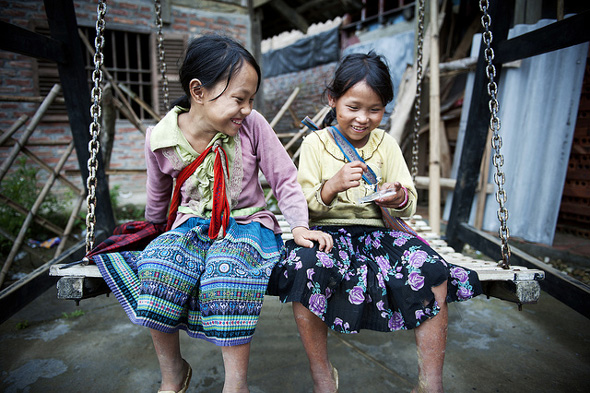
Photo Credit: “Viet Nam and Primary Education,” courtesy of flickr user United Nations Photo; video courtesy of Population Action International. -
Sanitation and Water MDGs in the Middle East and North Africa: Missing the Target?
›Goal 7, Target 10 of the United Nations Millennium Development Goals (MDGs) is to “halve, by 2015, the proportion of people without sustainable access to safe drinking water and basic sanitation.” The Joint Monitoring Programme (JMP), established by the UN to monitor progress towards this goal, has twice concluded (in 2008 and 2010) that the Middle East and North Africa (MENA) are in good shape to meet this target. However, a new article in Development and Change, “The Politics of Assessment: Water and Sanitation MDGs in the Middle East,” by Neda Zawahri, Jeannie Sowers, and Erika Weinthal, argues that the JMP’s “reliance on classifying ‘improved’ and ‘unimproved’ water and sanitation infrastructure, through infrequent household surveys, has produced misleading assessments that fail to capture the extensive water quality and sanitation problems plaguing the MENA.”
The authors compared the findings of the JMP with a variety of data sources – participatory assessments, reports from other UN agencies, donor projects, domestic ministries and agencies, and academic research – and found major contradictions between the progress reported by the JMP and the situation on the ground. In one example, the authors write that “while the JMP considers piped household water as an improvement in water coverage, it fails to differentiate between ‘full’ coverage and ‘partial’ coverage, that is, household water supplies available only a few hours a week.” And the authors point out that according to UN-Habitat, “the availability of piped water does not necessarily translate into safe drinking water, as water may become contaminated before it reaches the tap.”
As a result of the weakness of the indicators used by the JMP, household surveys conducted by the JMP in the MENA region “[do] not adequately capture the quality of drinking water,” the authors write, and efforts to address this inadequacy through more comprehensive testing of municipal water samples were deemed “too complex to be routinely employed through the world” and “prohibitively expensive.”
“International organizations and national leaderships in the MENA lack substantial incentives to adopt more accurate assessments for safe water and sanitation,” Zawahri et al. conclude. The need to generate comparable data across time and space has trumped the importance of “gauging access, quality, and affordability of water and sanitation.” -
Jason Bremner, Behind the Numbers
PHE Champions Bring Their Experiences From the Field to the International Family Planning Conference in Senegal
›December 8, 2011 // By Wilson Center StaffThe original version of this article, by Jason Bremner, appeared on the Population Reference Bureau’s Behind the Numbers blog.
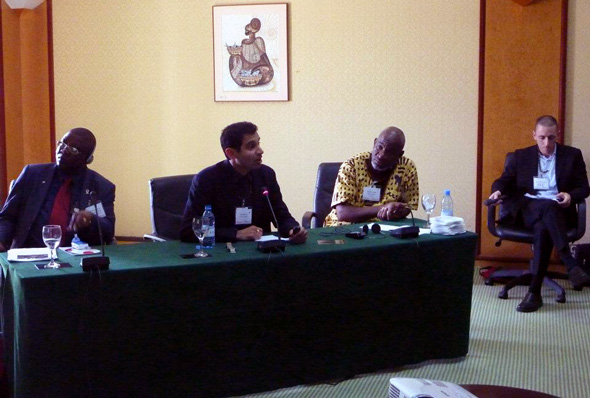
This past week at the 2011 International Conference on Family Planning, four practitioners from the field traveled from remote parts of the Democratic Republic of Congo, Ethiopia, Madagascar, and Tanzania to Dakar, Senegal, to share their successes and challenges in reaching remote communities with an integrated package of health, livelihood, and environment services. Together they made up the panel, “Reaching the Hardly Reached: Delivering Family Planning Through Population, Health, and Environment Integration.”
The panelists came from four environmental organizations whose starting point for working in these remote places was the protection of the biodiversity and natural resources upon which all life depends. Dr. Vik Mohan, physician and medical director for Blue Ventures, talked about how he and his organization transitioned from focusing initially on the conservation of coastal marine reserves and coral reefs to now working to improve health care, including access to family planning.
Blue Ventures, in response to community and women’s needs, opened a family planning clinic, and on the opening day, 20 percent of the women of reproductive age in the community came out to request contraceptives. Today they offer a whole spectrum of short- and long-acting contraceptive methods through partnerships with Marie Stopes International, Population Services International, and various funders. Blue Ventures reported that contraceptive prevalence had risen from 8 percent when they began in 2007 to 35 percent today.
Continue reading on Behind the Numbers.
Photo used with permission courtesy of PRB. Left to right: Didier Mazongo, WWF; Vik Mohan, Blue Ventures; Baraka Kalangahe, Tanzania Coastal Management Partnership; and Jason Bremner, PRB. -
New UNEP Climate Report Says Women Face “Disproportionately High Risks”
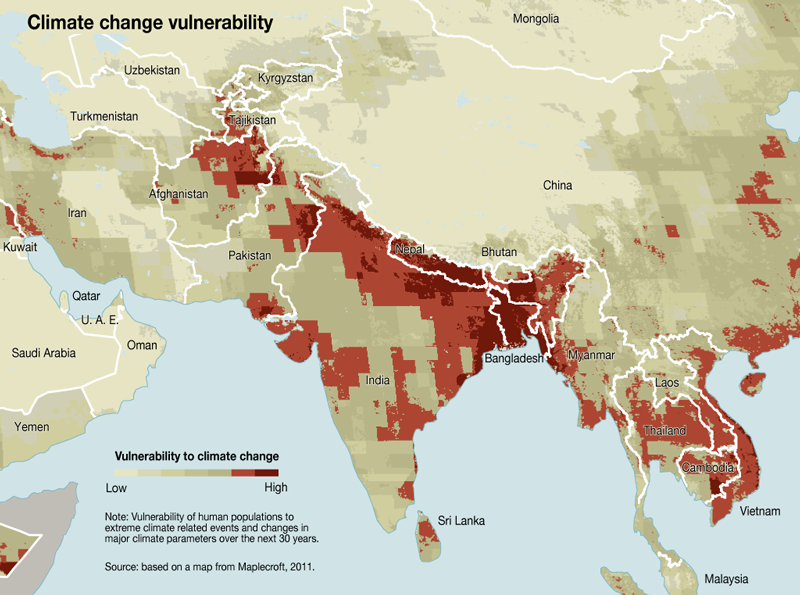
›December 8, 2011 // By Brenda ZuluA new United Nations Environment Programme (UNEP) report, Women at the Frontline of Climate Change: Gender Risks and Hopes, released at COP-17, says that women, particularly those living in mountainous regions in developing countries, “face disproportionately high risks to their livelihoods and health from climate change, as well as associated risks such as human trafficking.”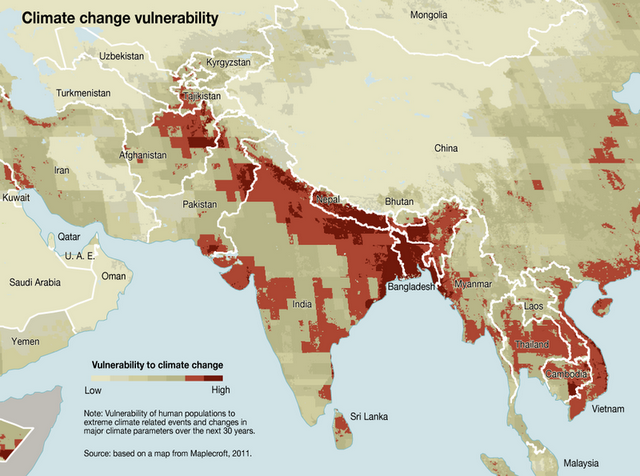
Droughts, floods, and mudslides are affecting a growing number of people worldwide, in part because of climate change, but also because population growth is highest in some of the most vulnerable areas of the world. For example, in the 10 years from 1998-2008, floods affected one billion people in Asia, but only four million people in Europe.
According to UNEP, women often bear the brunt of such disasters: “In parts of Asia and Africa, where the majority of the agricultural workforce are female, the impacts of such disasters have a major impact on women’s income, food security, and health,” as they are responsible for about 65 percent of household food production in Asia and 75 percent in Africa. In addition, they are often more likely than men to lose their lives during natural disasters.
UNEP Executive Director Achim Steiner said in a press release that “women often play a stronger role than men in the management of ecosystem services and food security. Hence, sustainable adaptation must focus on gender and the role of women if it is to become successful.”
“Women’s voices, responsibilities, and knowledge on the environment and the challenges they face will need to be made a central part of governments’ adaptive responses to a rapidly changing climate,” he added.
Investing in low-carbon, resource-efficient green technologies, water harvesting, and alternatives to firewood could strengthen climate change adaptation and improve women’s livelihoods, says UNEP.
“If Insufficient, Family Planning Funds Should Be Scaled Up”
UNEP spokesperson Nick Nuttall said in an interview that there are wide differences between how people consume natural resources, with North Americans and Europeans consuming far more than someone in a developing country. We should move toward more efficient use of natural resources, make the transition to a low-carbon economy, and scale up renewable energies, which can reduce demand for fossil fuels to meet economic growth and population increases, he said.
Asked whether climate change funds should therefore support family planning, Nuttall said the UN supports the right of couples and women to choose the size of their families and that many UN agencies and NGOs provide that support already.
But, he said, “there are funds available for family planning and, if insufficient, they should be scaled up to meet the demands and requests of developing countries. Given that this is an issue far wider than climate change, these existing funding streams should be where the financial support comes, rather than from a climate fund.”
Brenda Zulu is a member of Women’s Edition for Population Reference Bureau and a freelance writer based in Zambia. Her reporting from the COP-17 meeting in Durban (see the “From Durban” series on New Security Beat) is part of a joint effort by the Aspen Institute, Population Action International, and the Wilson Center.
Sources: UNEP.
Image Credit: “Climate change vulnerability,” courtesy of Riccardo Pravettoni, UNEP/GRID-Arendal.
 A Publication of the Stimson Center.