-
The Case for Better Aid to Pakistan: Climate, Health, Demographic Challenges Demand New Approach
›March 2, 2015 // By Kate Diamond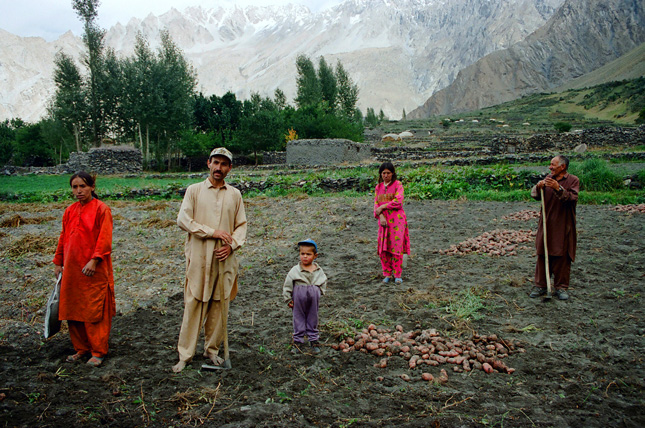
In 2009, the U.S. Congress passed a five-year, $7.5 billion aid package for a country it had all but abandoned just 10 years earlier. Indeed, if one word can summarize the U.S. relationship with Pakistan, “volatile” might be it. Since the September 11 attacks, the U.S. has appropriated nearly $61 billion in aid to Pakistan – more than twice what it received since independence in 1947.
-
In Critical Year for Climate Change, Lack of Urgency is Worrying, Says Nick Mabey
›
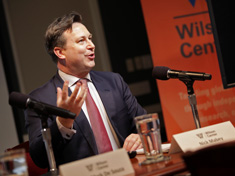
“After Ukraine, ISIS, terrorism…there are a lot of distractions in 2015,” says Nick Mabey, founder and chief executive of the environmental NGO E3G, in this week’s podcast. “Short term issues are important, but they’re not everything.”
-
Simulating Transboundary Water Conflict in South Asia, and the Effect of Drought on Civil Conflict in Africa
› Natural resource management is a trust issue. There’s no better illustration of this than a scenario exercise. A new CNA Corporation report, Bone Dry and Flooding, details a simulation they ran for transboundary water management in the Indian sub-continent. Players of the game – nationals of China, Pakistan, India, and Bangladesh who had all previously worked in politics, policy, or development – were given a hypothetical five-year time span to manage shared water resources. -
As Humanitarian Crises Multiply, Maternal Health and Safety of Women Becoming a Focus
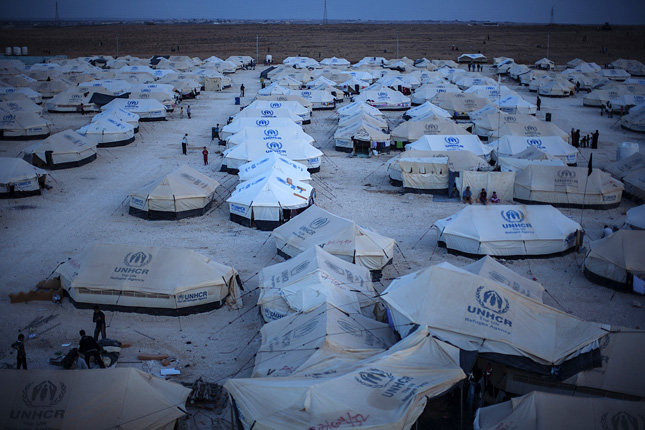
›Accessing maternal health care is already a challenge in many countries, and when conflict erupts or a disaster strikes, it can get even worse, leaving millions of women on their own while at their most vulnerable, said Ugochi Daniels, chief of humanitarian response for the UN Population Fund (UNFPA). Women and girls also become more vulnerable to violence during times of crisis, she said, by virtue of nothing but their gender. [Video Below]
-
In Food Riots, Researchers Find a Divide Between Democracies and Autocracies
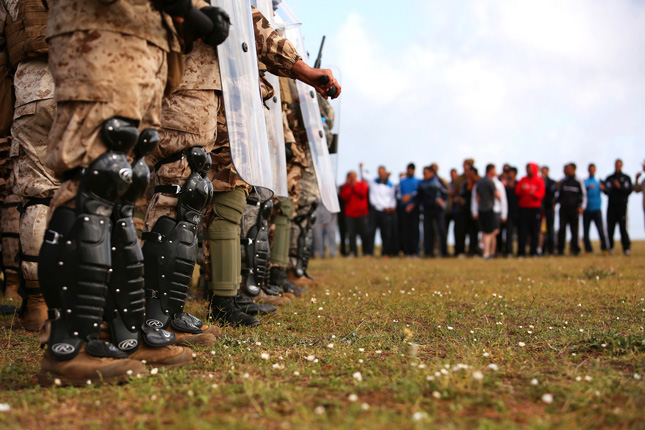
›Though the bull market for metals and energy may be ending, global food prices remain stubbornly high. The inflation-adjusted FAO Food Price Index is down from the near historic heights of 2007-08 and 2011 but still higher than at any point in the previous 30 years, putting a brake on several decades of progress in reducing world hunger.
-
Combination of Climate Change and Youth Puts Some Countries at Risk of Fragility
›Climate change and youthful demographics can combine to create security risks in already fragile contexts, according to a new report commissioned by UNICEF UK and co-authored by the London-based research organizations International Alert and the International Institute for Strategic Studies.
-
Emerging Priorities for Maternal Health in Nigeria: Surveying the Field
›“Nigeria’s population is only two percent of the world population, but we contribute about 10 percent of the maternal mortality,” said Oladosu Ojengbede, professor and director of the University of Ibadan’s Center for Population and Reproductive Health. [Video Below]
-
Reporters Predict Contentious Year Ahead for Environment and Energy
›With the Obama Administration moving forward on emissions reductions, the deadline for drafting the Sustainable Development Agenda, and a highly anticipated global climate summit in Paris, 2015 promises to be a crucial year for climate policy. “In many ways, last year was the year of building momentum, and this is the year of getting the work done,” said Lisa Friedman, deputy editor of ClimateWire, at the Wilson Center on January 5. [Video Below]
 A Publication of the Stimson Center.