• woodrow wilson center
  • ecsp

New Security Beat

Subscribe:
  • rss
  • mail-to
  • Who We Are
  • Topics
    • Population
    • Environment
    • Security
    • Health
    • Development
  • Columns
    • China Environment Forum
    • Choke Point
    • Dot-Mom
    • Friday Podcasts
    • Navigating the Poles
    • Reading Radar
  • Multimedia
    • Water Stories (Podcast Series)
    • Backdraft (Podcast Series)
    • Tracking the Energy Titans (Interactive)
  • Films
    • Water, Conflict, and Peacebuilding (Animated Short)
    • Paving the Way (Ethiopia)
    • Broken Landscape (India)
    • Scaling the Mountain (Nepal)
    • Healthy People, Healthy Environment (Tanzania)
  • Publications
  • Events
  • Contact Us

NewSecurityBeat

The blog of the Wilson Center's Environmental Change and Security Program
  • The U.S. Military, Climate Change, and Maritime Boundaries

    ›
    Reading Radar  //  February 23, 2012  //  By Kate Diamond
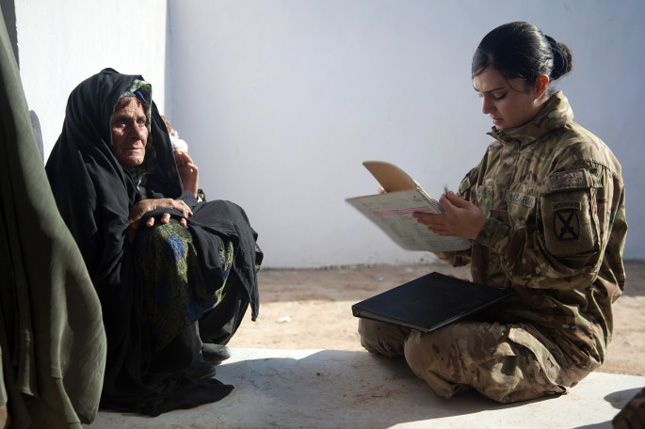
    The Defense Science Board, which advices the U.S. military on scientific and technical matters, writes in a recent task force report that the most immediate and destabilizing effects of climate change will impact U.S. security indirectly, through American reliance on already-vulnerable states that are “vital” sources of fuel and minerals or key partners in combatting terrorism. The report singles out three specific themes as particularly important to responding to near-term climate-driven threats and adapting to climate change’s long-term impacts: providing “better and more credible information [about climate change] to decision makers,” improving water management, and building better local adaptation capacity, particularly in African nations. Ultimately, the report concludes that the most effective, most efficient way the United States can respond to climate change is not militarily but “through anticipatory and preventative actions using primarily indigenous resources.”

    In “Maritime Boundary Disputes in East Asia: Lessons for the Arctic,” published in International Studies Perspectives, James Manicom writes that as climate change makes access and exploration easier, there are lessons to be learned from East Asian states’ handling of maritime disputes for Arctic nations. Manicom finds that simply because a state may be party to the UN Convention on the Law of the Sea (UNCLOS), disputes over boundaries and “over the methods used to settle disputes” persist. Domestic identity politics also can and do affect the extent to which a state attempts to exert influence over disputed areas – a noteworthy conclusion given growing rhetoric in Arctic states over the national importance of disputed territories. Finally, Manicom points out that, while “high expectations of resource wealth” may fuel disputes and “political tension,” those expectations do not inevitably doom competing states to conflict over resources.
    MORE
  • Kaitlin Shilling: Climate Conflict and Export Crops in Sub-Saharan Africa

    ›
    Eye On  //  February 23, 2012  //  By Kate Diamond
    “There’s been a tremendous amount of work done on looking for a climate signal for civil conflict, particularly in sub-Saharan Africa, and a lot of this work draws a very clear and simple path – if it rains more, or if it rains less, there will be more or less conflict,” says Stanford University’s Kaitlin Shilling in this short video interview. Unfortunately, that straightforward research does little in the way of helping policymakers: “the only way to change the agricultural outputs due to climate change is to change climate change, reduce climate change, or stop it,” she says, “and we’re not really good at that part.”

    Shilling moderated a panel at last month’s National Conference on Science, Policy, and the Environment on climate-conflict research. Agricultural export crops – cotton, coffee, cocoa, tea, vanilla – represent one area where policymakers might be able to intervene to prevent climate-driven conflict, says Shilling. Though not as important from a food security perspective, “these crops are really important” for sub-Saharan economies, as well as for “government revenues, which [are] closely related to government capacity.”

    But “the effects of climate change on those crops are less well understood,” Shilling says. How they relate to “government revenues and how those relate to civil conflict is an area that I spend a lot of time doing research on.”

    By “understand[ing] the mechanisms that underlie the potential relationship between climate and conflict, we can start identifying interventions that make sense to reduce the vulnerability of people to conflict and help them to adapt to the coming climate change.”
    MORE
  • Stuck: Rwandan Youth and the Struggle for Adulthood (Book Preview)

    ›
    From the Wilson Center  //  Guest Contributor  //  February 22, 2012  //  By Marc Sommers

    This excerpt is from Marc Sommers’ Stuck: Rwandan Youth and the Struggle for Adulthood, published by the University of Georgia Press. The book was launched at the Wilson Center on February 28 (webcast available here).

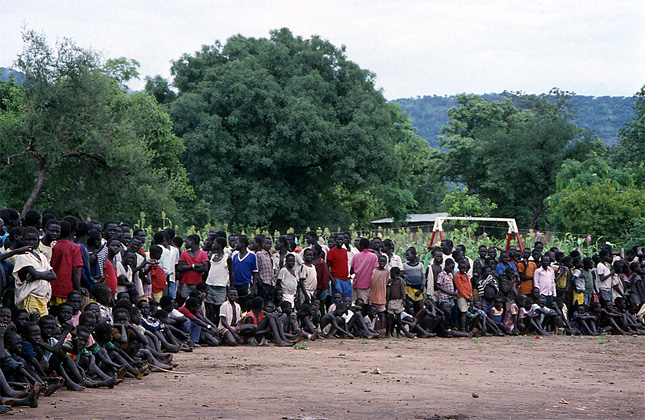
    Several years ago, I wrote that the central irony concerning Africa’s urban youth was that “they are a demographic majority that sees itself as an outcast minority.” Since that time, field research with rural and urban youth in war and postwar contexts within and beyond Africa has led me to revise this assertion. The irony appears to apply to most developing country youth regardless of their location.

    MORE
  • Championing Women’s Rights and Population Issues in Kenya With the ‘Reject’

    ›
    Dot-Mom  //  On the Beat  //  February 21, 2012  //  By Kate Diamond
    “We find that politicians play around with [population] numbers when it comes to the common man and the common woman,” says Jane Godia in this short video interview. Godia writes for Reject, an African Woman and Child Feature Service biweekly news publication that won a Global Media Award from the Population Institute for its issue on family planning and politics in Kenya.

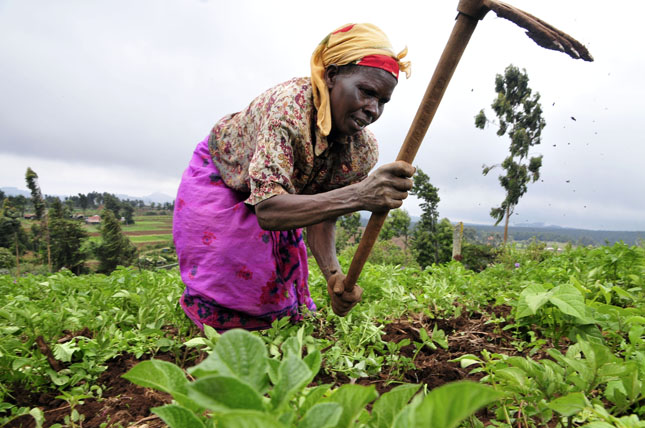
    Godia says that politicians “use these numbers for their gain, they tell women not to use family planning because they want more children so that…they can have more voters, but nobody thinks about if this woman will be able to feed these children, if this family will be able to have their next meal, or even accommodation, or even land to till.”

    The Reject’s name comes from the paper’s early practice of running stories – often about underserved groups, like women, children, and the poor – that had been rejected from mainstream publications. Population and environment issues have been highlighted since the first issue came out in September 2009, when “we were talking about families moving on to Mount Kenya…to look for pasture and water for their animals,” says Godia.

    “When there’s no water and when there’s no food, people migrate,” she says. “And when people are migrating they’re moving with their animals, they’re moving with their families, and they end up going to places” that eventually become overcrowded and resource-stressed, sometimes introducing the same problems that led people to migrate in the first place.
    MORE
  • The Ramsar Convention: A New Window for Environmental Diplomacy?

    ›
    Guest Contributor  //  February 20, 2012  //  By Pamela Griffin
    In seeking ways to connect conservation with peacemaking, the Institute for Environmental Diplomacy and Security (IEDS) has released a study that examines an expanded role for the international wetlands treaty, the Ramsar Convention.

    The Ramsar Convention: A New Window for Environmental Diplomacy? describes the wetlands convention, its place within the international environmental treaty world, and its potential to enhance environmental security during this dynamic time of increasingly insecure water supplies and climate change. With more than 40 years of work, the treaty has been quietly and effectively conserving wetlands and increasing recognition of the need to build international cooperation around them. The treaty has also helped define wetlands within greater biogeographic regions and led to formal identification of transboundary wetlands.

    In the article, we set out to combine information from the convention’s 234 listed wetlands (13 of which have formal transboundary plans) with the Global Peace Index, which ranks countries using 23 indicators, such as number of conflicts, conflict deaths, military expenditures, and relations with neighboring countries. The result is a prioritized list of countries most in need of tools of conflict resolution.

    Working within the framework of the convention builds capacity between high-conflict-risk nations and has potential to develop otherwise-difficult-to-establish trust because the process is transparent and all stakeholder voices are heard. This can be important even when the existing conflict has nothing to do with international wetlands.

    The convention is active in many countries with ongoing conflicts, such as Afghanistan, the Democratic Republic of the Congo, Iran, Iraq, and Sudan, and efforts there may help inform the ongoing debate as to the efficacy of conservation as a tool for peacemaking.

    As environmental conditions continue to evolve rapidly, the need for institutions that can work in the transboundary environment will increase. The established international infrastructure of the convention has the potential to be a greater force in peacemaking. Further research may help focus on the strengths and weaknesses of the current system and reveal ways for more effective peacemaking efforts.

    Suggestions for ways to enhance the convention’s role in environmental diplomacy include working more closely with researchers and practitioners directly involved in the environmental peacemaking field, increased focus on developing capacity for increased flexibility to react to dynamic conditions, and more active promotion of formal transboundary agreements.

    Pamela Griffin is an independent scholar at IEDS where she focuses on the diplomatic potential of transboundary wetlands.
    MORE
  • Taking a Livelihoods Approach to Understanding Environmental Security

    ›
    February 17, 2012  //  By Kate Diamond

    Since the concept of “environmental security” first gained traction in the early 1990s, research on the issue has been overwhelmingly focused on how environmental change impacts state security. That has been to the detriment of policymakers trying to preempt instability and conflict, according to the University of Toronto’s Tom Deligiannis in his article, “The Evolution of Environment-Conflict Research: Toward a Livelihood Framework,” published in February’s Global Environmental Politics.

    MORE
  • ‘Dialogue TV’ With Sharon Burke, Neil Morisetti, and Geoff Dabelko: Climate, Energy, and the Military

    ›
    Eye On  //  February 17, 2012  //  By Stuart Kent

    The video embedded above is only a short synopsis of the full episode. To watch the full Dialogue episode, visit WilsonCenter.org.

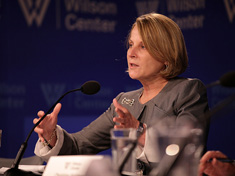
    We are entering “an emerging security environment” where “what constitutes a ‘threat’ and what constitutes a ‘challenge’” requires a broader understanding of security than has often been the norm, according to Sharon Burke, Assistant Secretary of Defense for Operational Energy Plans and Programs. Burke was joined by the UK’s Climate and Energy Security Envoy Rear Admiral Neil Morisetti and ECSP’s Geoff Dabelko on a new installment of Dialogue TV. They debated what climate change and energy security mean for the world’s militaries.

    MORE
  • Assigning Value to Biodiversity, and the 2011 Human Development Report

    ›
    Reading Radar  //  February 15, 2012  //  By Stuart Kent
    New research in the journal BioScience reports the aggregate economic benefits of conserving high priority biodiversity areas outweigh the opportunity costs of alternative land uses by a multiple of three (where priority is assigned according to a global index of the mapped distributions of 4,388 threatened terrestrial species). The authors of “Global Biodiversity Conservation and the Alleviation of Poverty,” led by Will Turner, estimate the value of highly diverse habitats to the global poor in terms of direct benefits and potential external payments for ecosystem services. They find these environmental flows in excess of $1 per person, per day, for 331 million of the world’s poorest individuals and conclude by arguing that, “although trade-offs remain…results show win-win synergies…and suggest biodiversity conservation as a fundamental component of sustainable economic development.” (For further discussion of development around biodiversity hotspots, see Population Action International’s work on population growth.)

    The 2011 UNDP Human Development Report, Sustainability and Equity: A Better Future for All, builds from the understanding that a “failure to reduce…grave environmental risks and deepening social inequalities threatens to slow decades of sustained progress by the world’s poor majority.” A resilient thread in the report highlights the importance of working to ensure women’s equality and reproductive rights for sustainability, claiming that “meeting unmet need for family planning by 2050 would lower the world’s carbon emissions an estimated 17 percent below what they are today.” The report closes with a wide range of policy suggestions that work towards the goal of equating sustainability and equity, including a supportive discussion of a currency transaction tax as a novel and feasible method of providing climate financing.

    These pieces address contradictions between environmentally sustainable behavior and the development imperative. Though both acknowledge that the traditional development model of high intensity economic growth has imperiled the environment upon which the livelihoods of many hundreds of millions depend, they suggest practical ways forward. The Human Development Report in particular adopts some of the strongest language yet, claiming that, “the message is clear: our development model is bumping up against concrete limits.” This honest attempt to work through, rather than around, the tension between development and sustainability is perhaps an indication that we are at last beginning to take seriously the concept of sustainable development.
    MORE
Newer Posts   Older Posts
View full site

Join the Conversation

  • RSS
  • subscribe
  • facebook
  • G+
  • twitter
  • iTunes
  • podomatic
  • youtube
Tweets by NewSecurityBeat

Trending Stories

  • unfccclogo1
  • Pop at COP: Population and Family Planning at the UN Climate Negotiations

Featured Media

Backdraft Podcast

play Backdraft
Podcasts

More »

What You're Saying

  • Volunteers,At,The,Lagos,Food,Bank,Initiative,Outreach,To,Ikotun, Pan-African Response to COVID-19: New Forms of Environmental Peacebuilding Emerge
    Rashida Salifu: Great piece 👍🏾 Africa as a continent has suffered this unfortunate pandemic.But it has also...
  • A desert road near Kuqa An Unholy Trinity: Xinjiang’s Unhealthy Relationship With Coal, Water, and the Quest for Development
    Ismail: It is more historically accurate to refer to Xinjiang as East Turkistan.
  • shutterstock_1779654803 Leverage COVID-19 Data Collection Networks for Environmental Peacebuilding
    Carsten Pran: Thanks for reading! It will be interesting to see how society adapts to droves of new information in...

What We’re Reading

  • Rising rates of food instability in Latin America threaten women and Venezuelan migrants
  • Treetop sensors help Indonesia eavesdrop on forests to cut logging
  • 'Seat at the table': Women's land rights seen as key to climate fight
  • A Surprise in Africa: Air Pollution Falls as Economies Rise
  • Himalayan glacier disaster highlights climate change risks
More »
  • woodrow
  • ecsp
  • RSS Feed
  • YouTube
  • Twitter
  • Facebook
  • Home
  • Who We Are
  • Publications
  • Events
  • Wilson Center
  • Contact Us
  • Print Friendly Page

© Copyright 2007-2021. Environmental Change and Security Program.

Woodrow Wilson International Center for Scholars. All rights reserved.

Developed by Vico Rock Media

Environmental Change and Security Program

Woodrow Wilson International Center for Scholars

Ronald Reagan Building and International Trade Center

  • One Woodrow Wilson Plaza
  • 1300 Pennsylvania Ave., NW
  • Washington, DC 20004-3027

T 202-691-4000