Showing posts from category U.S..
-
Keith Schneider, Circle of Blue
Double Choke Point: Demand for Energy Tests Water Supply and Economic Stability in China and the U.S.
›The original version of this article, by Keith Schneider, appeared on Circle of Blue.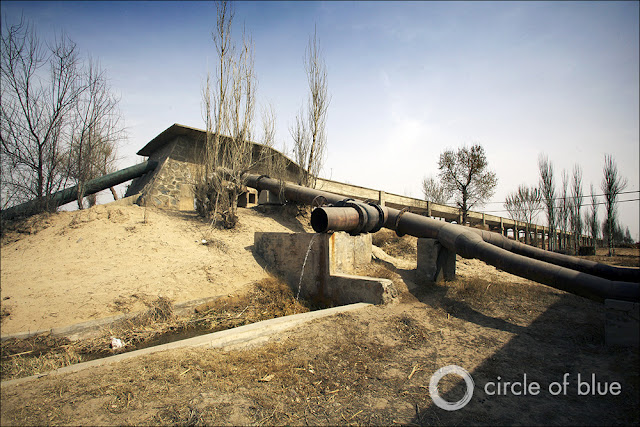
The coal mines of Inner Mongolia, China, and the oil and gas fields of the northern Great Plains in the United States are separated by 11,200 kilometers (7,000 miles) of ocean and 5,600 kilometers (3,500 miles) of land.
But, in form and function, the two fossil fuel development zones – the newest and largest in both nations – are illustrations of the escalating clash between energy demand and freshwater supplies that confront the stability of the world’s two biggest economies. How each nation responds will profoundly influence energy prices, food production, and economic security not only in their domestic markets, but also across the globe.
Both energy zones require enormous quantities of water – to mine, process, and use coal; to drill, fracture, and release oil and natural gas from deep layers of shale. Both zones also occur in some of the driest regions in China and the United States. And both zones reflect national priorities on fossil fuel production that are causing prodigious damage to the environment and putting enormous upward pressure on energy prices and inflation in China and the United States, say economists and scholars.
“To what degree is China taking into account the rising cost of energy as a factor in rising overall prices in their economy?” David Fridley said in an interview with Circle of Blue. Fridley is a staff scientist in the China Energy Group at Lawrence Berkeley National Laboratory in California. “What level of aggregate energy cost increases can China sustain before they tip over?”
“That’s where China’s next decade is heading – accommodating rising energy costs,” he added. “We’re already there in the United States. In 13 months, we’ll be fully in recession in this country; 9 percent of our GDP is energy costs. That’s higher than it’s been. When energy costs reach eight to nine percent of GDP, as they have in 2011, the economy is pushed into recession within a year.”
Continue reading on Circle of Blue.
Photo Credit: Used with permission, courtesy of J. Carl Ganter/Circle of Blue. In Ningxia Province, one of China’s largest coal producers, supplies of water to farmers have been cut 30 percent since 2008. -
Yemen Beyond the Headlines: Governance, State Capacity, and the U.S.
›Part two of the “Yemen Beyond the Headlines: Population, Health, Natural Resources, and Institutions” event, held at the Wilson Center on May 18.
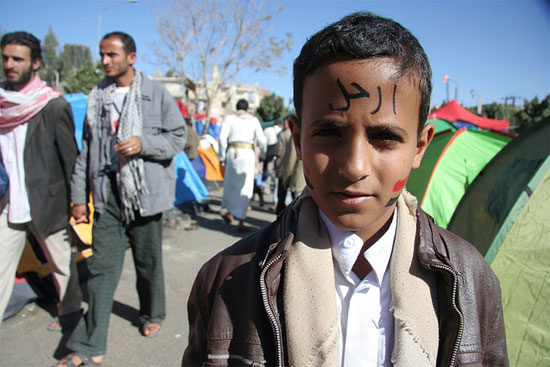
“Moving beyond Ali Abdullah Saleh has proved to be very challenging, not only for the Yemeni people, but for the neighboring countries and for the international community as a whole,” said former U.S. Ambassador to Yemen Edmund Hull, one of a number of speakers on governance and future challenges during the all-day conference, “Yemen Behind the Headlines: Population, Health, Natural Resources, and Institutions,” at the Woodrow Wilson Center. [Video Below]
Don’t Throw Out the Good With the Bad
Yemen’s protest movement is different than those of Egypt or Tunisia because neighboring countries, such as those in the Gulf Cooperation Council, are actively involved. “[They] don’t have the luxury of saying this is a purely Yemeni affair,” said Hull. “They have to identify where their national interests are and then they have to come up with a legitimate and effective way of protecting those interests.” Included in those national interests is dealing with the presence of Al-Qaeda in the Arabian Peninsula.
But, Hull said, “It would be a shame if, as part of this revolution, what was good in Yemen gets tossed out with what was bad.” Among the institutions that should be protected are the Social Fund for Development, a government development initiative designed to reduce poverty , and the Central Security Forces, “still a very necessary institution and one that has to be protected if other challenges in Yemen are to be met,” he said.
“It’s a mistake to over-focus on the end of a regime – yes, it’s important to get a transfer of power, but I would argue [that it is] equally important to institutionalize the forces that have led to this, as a safeguard against the counter revolution and as an impetus to meeting those many, many political challenges that Yemen faces.”
Going forward, Hull said that elections will be key: Yemen had good electoral experiences in 2003 and 2006 but the system has since suffered some “backsliding,” he said. He also emphasized the importance of letting the youth participate, protecting social networking systems and NGOs, instituting legal requirements to promote transparency, and freeing up and protecting the media. “Unless you have a media spotlight, abuses are going to accumulate,” he said.
Not a “Basket-Case”
“Yemen is not a basket case,” said Charles Schmitz, an associate professor at Towson University. “There have been substantial achievements that I think we need to take into account.” Among these achievements, he highlighted Yemen’s growth in life expectancy, literacy rates, and gross domestic product. The country’s population growth rate has also slowed over the past two decades, though its total fertility rate remains one of the highest in the region.
These gains were fuelled by two resource booms, Schmitz explained: mainly, remittances from the construction boom in the 1970s and oil production. However, oil production dropped off dramatically after peaking around 2001, and remittances have not been able to keep up with the growth of the economy.
“Yemen is in a very severe crisis,” Schmitz said. “The oil has stopped… the balance of payments has been going negative for the last couple of years… and the government appears to be dipping into the central bank.” As a result, he said there is a “very real” possibility of the currency – the riyal – collapsing. The currency represents trust in the government, of which there is none right now, he said.
An Opportunity for New Thinking
“The key variable to the future of the Yemeni economy is state capacity, and this is something Yemen has not done well thus far, largely because of the political crisis,” Schmitz said.
“I think we must be attuned to the reality around us,” said Jeremy Sharp, a specialist in Middle Eastern affairs with the Congressional Research Service. “Quite frankly, Yemen needs a lobby in this country. Yes we have a tight budget environment, but it’s also an opportunity for new thinking.”
“The degree and extent of U.S. engagement with Yemen…is based primarily on the perceived terrorist threat there,” said Sharp. “Our policy toward Yemen always seems to be one horrific terrorist attack away from public outcries for deeper U.S. involvement – i.e., military involvement.”
A Cycle of Transitions?
“We may be looking at cycles of transition in Yemen over the coming decades,” said Ginny Hill, an associate fellow with the Middle East and North Africa Programme at Chatham House. “Stable political settlements take time.” The street protestors are not going to get what they want in the short term, “but just two or three of them sitting in government or being involved in the negotiation process… is going to change the dialogue in Yemen,” she said.
The United States has difficult questions to answer, said Sharp: Who will control Yemen’s security forces down the line? How will the next leader deal with the U.S.-Yemen partnership? Will power be fragmented between civilian and military leaders? Will the next leader play the nationalist card and reduce cooperation with the United States to bolster their own public standing?
“In the absence of the degree of engagement that we need, the [U.S. government] aims high rhetorically,” said Sharp. “We speak about these things while pursuing our own national security goals on the ground. Perhaps this path is unsustainable and events will force the U.S. to pay even more attention to Yemen. Or perhaps we will continue to muddle along this path and never quite reach the brink, precipice, or impending crisis that is so routinely predicted in the media.”
See parts one and three of “Yemen Beyond the Headlines: Population, Health, Natural Resources, and Institutions” for more from this Wilson Center event.
Sources: UNICEF, World Bank.
Photo Credit: “Even small children…,” courtesy of flickr user AJTalkEng. -
Watch: Eric Kaufmann on How Demography Is Enhancing Religious Fundamentalism
›May 24, 2011 // By Schuyler Null“There’s a belief, often amongst political scientists and social scientists, that demography is somehow passive and that it doesn’t really matter,” said Eric Kaufmann, author of Shall the Religious Inherit the Earth: Demography and Politics in the 21st Century and professor at Birkbeck College, University of London in this interview with ECSP. “Part of the message of this book is that demography can lead to social and political change.”
“In this case what I’m looking at is the way that demography can change the religious landscape,” Kaufmann said. “It can actually enhance the power of religion, especially religious fundamentalism in societies throughout the world.”
“Purely secular people, who have no religious affiliation, they are leading the move towards very low levels of fertility, even down to the level of one child per woman,” Kaufmann said. On the other hand, fundamentalists are reacting to this trend and deliberately deciding not to make the demographic transition, he said. “In doing so, the gap between secular and religious widens” and is actually more pronounced in places where the two groups collide.
“You can see this in the Muslim world,” said Kaufmann. “If you look at urban areas such as the Nile Delta and Cairo, in those urban cities, women are who are most in favor of Shariah have twice the family size of women who are most opposed to Shariah, whereas in the Egyptian countryside, the difference is much less because they haven’t been exposed to the same modernizing pressures.”
These dynamics affect the Western world as well, especially when you factor in migration, said Kaufmann: “The fact that almost all the world’s population growth is occurring in the developing world, which is largely religious, means that a lot of people are moving from religious parts of the world to secular parts of the world,” he said. “That effects, for example, countries like the United States or in Western Europe, which are receiving immigrants, and it means in the case of Western Europe – which is a very secular environment – that immigrants bring not only ethnic change but on the back of that, religious change; they make their societies more religious.”