-
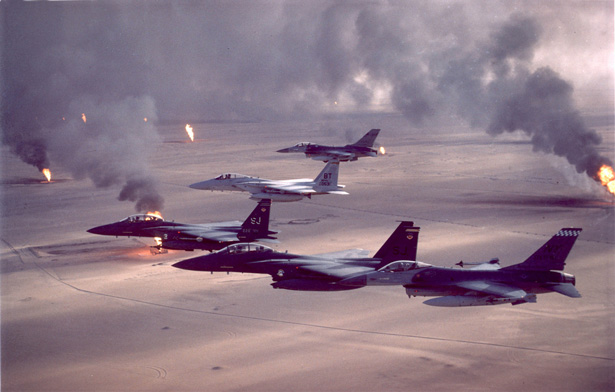
Petro-Aggression: When Oil Causes War
›
One year ago, the United States government froze all property of the Central Bank of Iran and other Iranian financial institutions within the United States. The move was part of a broader effort to compel the Islamic Republic to give up its alleged nuclear weapons program. How is it working out?
-
Bouncing Back: How Do Population Dynamics and Social Cohesion Affect the Resilience of Societies?
›
“The scale and the impact of disasters today can be greater than anything we’ve previously experienced,” said Laurie Mazur at the Wilson Center on March 18. “The proliferation of disasters has gotten a lot of people talking about resilience, about how we can lessen our risk and how we can recover more quickly from disasters of all kinds.” [Video Below]
-
World Water Day Focuses on Cooperation in the Face of Growing Stress
›March 22, 2013 // By Schuyler NullCooperation, not conflict; that’s the theme of this year’s World Water Day. Collaboration over water has been the rule rather than the exception over the past 70 years, UNESCO explained in the launch of their International Year for Water Cooperation initiative earlier this year (which the rest of the UN is thoughtfully supporting).
But the fact that there’s need for such an initiative shows that water conflict and other water issues are not far from the minds of global policymakers. Scarcity, drought, climate change, food security, disease – water impacts people and their governments in so many ways. Here’s a rundown of some of our best related posts.
-
Jason Beaubien, Shots
Power Shift Under Way As Middle Class Expands In Developing World
›March 19, 2013 // By Wilson Center StaffThe original version of this article, by Jason Beaubien, appeared on NPR’s health blog, Shots.
“The meek shall inherit the earth” – that seems to be the latest message from the United Nations Development Program.
-
East Asia’s Many Maritime Disputes and the Imperative of Energy Access
›Friction between Japan and China in the East China Sea has escalated this year to the point where jets on both sides have been scrambled and Chinese military vessels have locked their fire control radar onto their Japanese counterparts multiple times. The source of this tension is the Senkaku (as they are known in Japan) or Diaoyu (if you’re in China) Islands – specifically, who owns them.
-
Urban Health and Demography Trends: More Cities, More Problems?
›Some 52 percent of the world’s population lives in cities, a proportion that will only grow throughout the next few decades. Understanding the health challenges facing urban residents is crucial for those who seek to improve human health, especially since many of these challenges differ from those facing inhabitants of rural areas, where global health resources have traditionally been concentrated. At a private meeting on March 4 at the Wilson Center, experts described how factors ranging from climate change and greenhouse gas emissions to reproductive health and rights impact urban health.
-
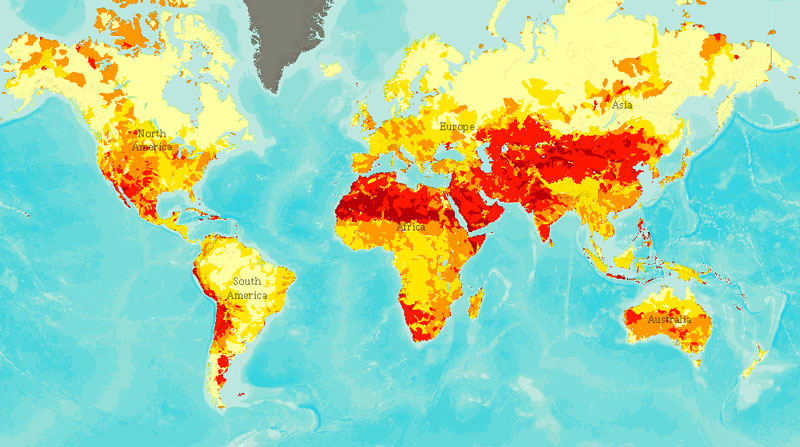
Aqueduct Water Risk Atlas Shows Detailed View of Global Water Vulnerability
›As world population pushes towards nine billion by mid-century and millions are elevated to the global middle class every year, demand for water continues to grow as well. More people need more water for drinking and household use, but also for agriculture, mining, energy, and industry. With water often cited as a limit to growth and potential crisis point, the World Resources Institute has released the Aqueduct Water Risk Atlas, which details various types of water stress around the world in impressively detailed fashion.
-
‘Dialogue’ Interviews Caryle Murphy & John Sullivan: Saudi Arabia’s Demography & 2013’s Big Environment Stories
›Dialogue at the Wilson Center tackled demography and the environment last week, interviewing Pulitzer Prize-winning journalist and former Wilson Center public policy scholar Caryle Murphy about her new book, A Kingdom’s Future: Saudi Arabia Through the Eyes of Its Twentysomethings, followed by John Sullivan, director of the Environment and Health and Safety News Division for Bloomberg BNA, on the most important energy and environmental issues of 2013.
Showing posts from category U.S..