-
Vicky Markham, Impatient Optimists
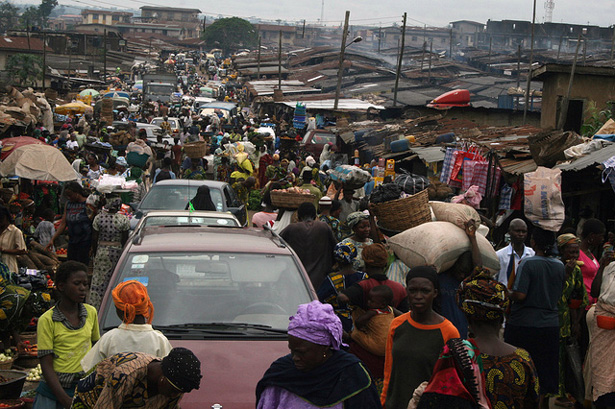
As UN Debates Post-2015 Agenda, Women Deliver Development
›October 23, 2013 // By Wilson Center StaffIt’s not often that we are presented with the perfect opportunity to affect a broad set of development policies as we are currently with the UN’s post-2015 agenda.
-
BALANCED Project Final Survey Results in Tanzania and Philippines
›The BALANCED Project just completed a five year run of supporting population, health, and environment (PHE) projects in South Asia and East Africa, and recent survey results indicate that the project has helped to increase access to family planning and cultivate more environmental awareness in several ecologically vulnerable areas.
 The BALANCED initiative in Tanzania’s Saadani National Park, “the only terrestrial park in the country with a contiguous marine area,” released the results of a 2012 progress survey on its efforts to create community champions for sustainable natural resource management and family planning awareness. Compared to the last survey in 2009, they found increased family planning awareness, higher contraceptive distribution and usage, and improved discussion and acceptance of contraceptive use from male partners. BALANCED-trained community-based distributors provided contraception to “31 percent of all pill users and 21 percent of all condom users.” Survey results also show a greater community awareness of the impact of individual and collective actions on the surrounding biosphere. The report calls for the continued training of community-based distributors and PHE “champions,” along with outreach to the private sector in order to ensure training and distribution can continue without the permanent presence of the BALANCED Project.
 -
Five Years of Population, Health, and Environment Programs: What Works and What’s Next?
›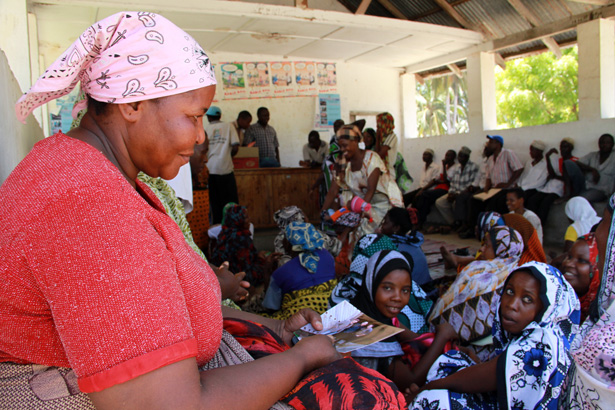
More than 20 percent of the world’s population live in ecological hotspots, places rich in biodiversity but often lacking basic government services. Population, health, and environment – or PHE – programs address compounding stresses in these areas by helping to meet people’s needs for basic health services, including reproductive health care; promoting food security and poverty reduction; and teaching sustainable natural resource management. [Video Below]
-
Prospects for Gender Parity in UN Peacekeeping Forces, Evaluating Girls’ Empowerment Efforts
›The Population Council’s annual report highlights new work from one of the largest organizations doing research on the lives of adolescent girls in the developing world. Of particular note is the Council’s Adolescent Girls Empowerment Program, a four-year study launched in May which will involve 42,000 girls in seven countries – Bangladesh, Burkina Faso, Ethiopia, Guatemala, India, Tanzania, and Zambia. The aim is to evaluate successful strategies for helping girls avoid child marriage, sexually transmitted infections, and unintended pregnancies at a critical juncture in their lives. Council President Peter Donaldson writes that young girls are “one of the potentially most influential figures in the developing world.” A typical 12-year-old girl “in the next few years…will either abandon or continue her schooling, be pushed into marriage and childbearing, or develop a sense of proud ownership of her physical self… As her future is reconfigured, so is ours.”
-
A Season for Motherhood: The Role of Family Planning in Improving Maternal Health
›Ensuring access to family planning is not only a matter of human rights, but can also play a key role in protecting the health of mothers and children. Maternal health experts and program directors met at the Wilson Center on July 31 to discuss the role family planning takes in women’s health in developing countries, what successes family planning programs worldwide have had so far, and what can be done to expand services. Sarah Craven, chief of the UN Population Fund’s Washington office, moderated the event.
-
Why Has the Demographic Transition Stalled in Sub-Saharan Africa?
›August 7, 2013 // By Elizabeth Leahy MadsenIn a recent post on the new United Nations population projections, I discussed the risk in assuming that countries in sub-Saharan Africa will progress through the demographic transition at a pace similar to other regions. Making this assumption is questionable because fertility decline in Africa has generally proceeded more slowly than in other parts of the world, with several cases of “stalls” and even small fertility increases over time.
-
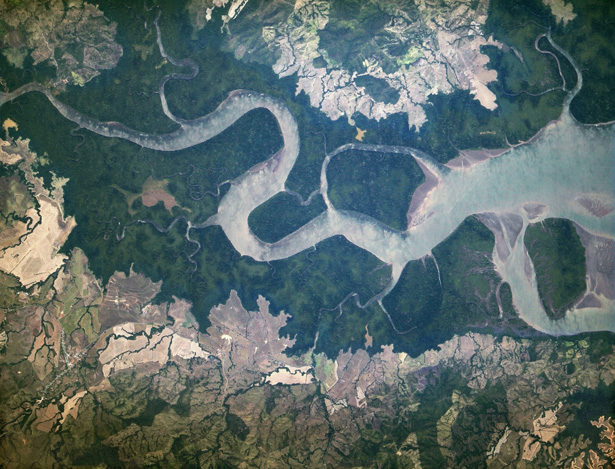
What Does It Take to Cooperate? Transboundary Water Management Around the World
›Water is the foundation of human society and will become even more critical as population growth, development, and climate change put pressure on already-shrinking water resources in the years ahead. But will this scarcity fuel conflict between countries with shared waters, as some have predicted, or will it create more impetus for cooperation?
-
Wilson Center Premieres ‘Healthy People, Healthy Environment’ and ‘Transcending Boundaries’ at Environmental Film Festival
›Environmental security and international development aren’t typical movie-going fare, but at the 2013 DC Environmental Film Festival, ECSP premiered two short documentaries with unique environmental stories: Healthy People, Healthy Environment: Integrated Development in Tanzania shows how improving health services and environmental conservation can empower coastal communities in Africa; and Transcending Boundaries: Perspectives from the Central Albertine Rift Transfrontier Protected Area Network explores the opportunities for “peace parks” along the shared borders of Uganda, Rwanda, and the Democratic Republic of Congo.
Showing posts from category Tanzania.