Showing posts from category Pakistan.
-
Wilson Center Scholar Huma Yusuf on Pakistan’s Population Policy: Will it Work?
›October 8, 2010 // By Wilson Center StaffExcerpt from op-ed by Huma Yusuf in Dawn: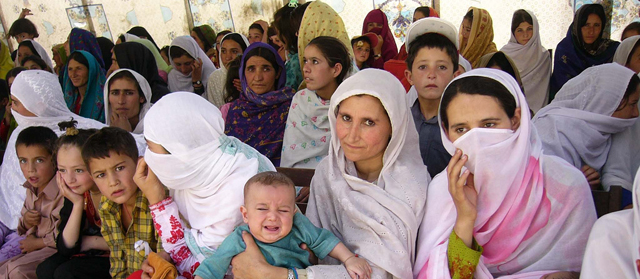
The best news Pakistanis have received in the past week comes in the form of the National Population Policy 2010. The policy recognises that demographics are the key to promoting economic development and security in Pakistan. It also prioritises family planning — particularly in an effort to promote birth spacing — as the best strategy for achieving ambitious population targets (2.1 births per woman in 2025).
In many ways, the story of Pakistan is one of a failure of family planning. Although the Family Planning Association of Pakistan was set up as early as 1952, we have seen a five-fold increase in our population between 1951 and 2009, from 34 million to 171 million.
The urgent need for revamped family planning service delivery cannot be understated. Although 96 per cent of married Pakistani women are aware of at least one modern contraceptive method, only 22 per cent are currently using modern contraceptives, while another eight per cent use less effective traditional methods. One quarter of married women want to wait before having another child, or do not want more children, but are not using contraception. And 24 per cent of married women admit that their last child was mistimed or unwanted.
Many Pakistanis bemoan the prevalence of abortion here (a 2004 Population Council study estimates that there are 890,000 abortions annually), but this too should be understood as a shortcoming of our government’s family planning service delivery. According to the 2006-07 Pakistan Demographic Health Survey, 65 per cent of women who had an abortion were over the age of 30, while 80 per cent had more than three children. In this context, the population policy’s emphasis on family planning is a welcome paradigm shift.
Continue reading on Dawn.
Photo Credit: Adapted from “chitral photos,” courtesy of flickr user groundreporter. -
Pakistan After the Floods: A Continuing Disaster
›September 29, 2010 // By Hannah Marqusee
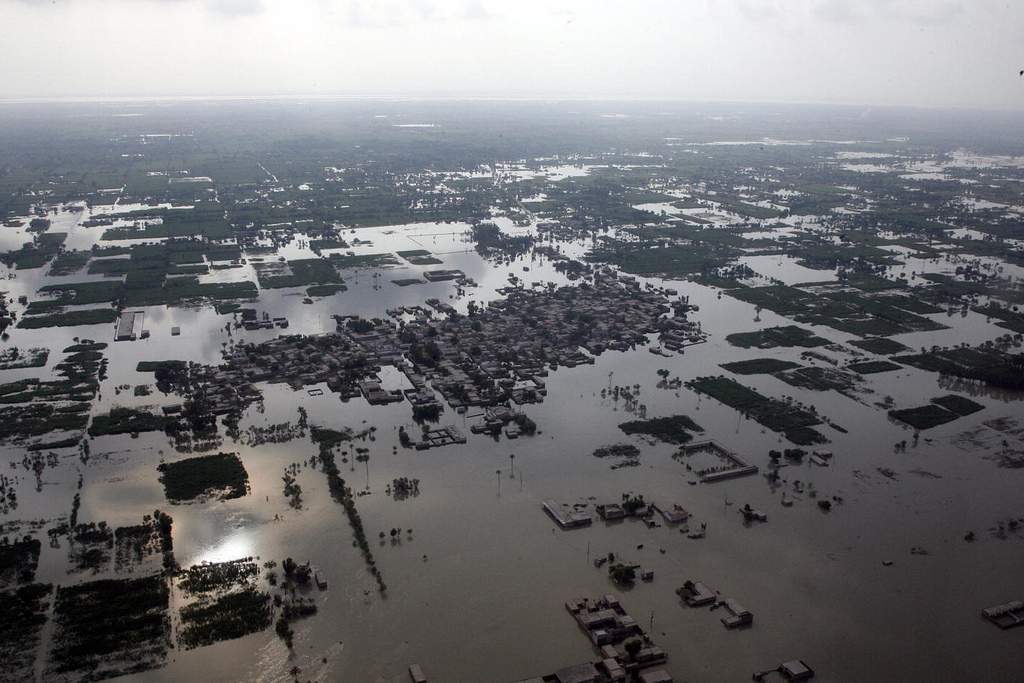
A month after Pakistan’s worst flood in 80 years, millions remain without access to food, clean water, or health care.
-
Derek S. Reveron, The New Atlanticist
When National Security Overlaps With Human Security
›August 24, 2010 // By Wilson Center StaffThe original version of this article appeared on the Atlantic Council’s New Atlanticist blog. By Derek S. Reveron.
For the second time this year, naval forces have been involved in major operations that have little to do with combat at sea. Instead, Sailors and Marines operating from dozens of warships have responded to natural disasters.
Earlier this year in Haiti, traditional warships delivered food, water, and medical supplies. On amphibious ships, the large flight decks designed to move Marines ashore via helicopters proved to be temporary airports for search and rescue teams; medical facilities designed to treat wounded infantry became floating clinics for sick and injured civilians. The use of naval ships as airports, hospitals, or as refugee camps must be temporary, but in a crisis, temporary relief is what is necessary.
Similar uses of militaries are occurring in response to flooding in Pakistan and wildfires in Russia today. NATO is planning and executing responses to alleviate human suffering created by natural disasters, which are certainly non-traditional.
But militaries around the world are being called to serve their people and others in distress. Increasingly, militaries are including humanitarian assistance and disaster relief as a core concept in how they train, equip, and organize. Militaries have reluctantly embraced these new roles because their governments expect them to provide responses to humanitarian crises, support new partners, and reduce underlying conditions that give rise to instability.
At the same time that military aircrews rescue stranded people or military engineers erect temporary housing, critics worry that development is being militarized. But, they miss the larger point that military equipment like helicopters, medical facilities, and logistic hubs are necessary for providing humanitarian assistance during a crisis. Additionally, NGOs increasingly partner with militaries in North America and Europe because militaries have the capacity to reach populations in need where NGOs can deliver their services.
Given the real stress on militaries created by operations in Iraq and Afghanistan, these non-traditional operations are not needed to prove relevance for militaries in a difficult fiscal period. Instead, the inclusion of humanitarian assistance in military doctrine are driven by countries’ national strategies that increasingly link human security and national security. As I wrote in Exporting Security: International Engagement, Security Cooperation, and the Changing Face of the U.S. Military, militaries are being directed to be involved in humanitarian operations.
Far from preparation for major war, humanitarian activities rely on a unique blend of charitable political culture, latent civil-military capacity, and ambitious military officers who see the strategic landscape characterized by challenges to human security, weak states, and transnational actors. Further, changes are informed by international partners that conceive of their militaries as forces for good and not simply combat forces. The United States has been slow to catch up to European governments that see the decline of coercive power and the importance of soft power today.
This change is not only about the state of relations among governments today, but also the priority of human security. Security concerns over the last twenty years have been shifting away from state-focused traditional challenges to human-centered security issues such as disease, poverty, and crime. This is reflected in the diversity of ways by which NATO countries protect their national security. While there are remnants of Cold War conflicts on the Korean Peninsula and in the Persian Gulf region, these are largely the exception. Instead, sub-national and transnational challenges increasingly occupy national security professionals.
Within the United States, the government has embarked on a program to illustrate that its military superpower capabilities can be used for good. The same capability that can accurately drop a bomb on an adversary’s barracks has been used to deliver food aid in the mountains of Afghanistan. The same capability used to disembark Marines from Navy ships to a foreign shore have been used to host NGOs providing fisheries conservation in West Africa. And the same capability to track an enemy’s submarines can detect changes in the migration of fish stocks in response to climate change. To be sure, swords haven’t been beaten into plowshares, but military capabilities once used for confrontation are now used for cooperation.
Derek S. Reveron, an Atlantic Council contributing editor, is a Professor of National Security Affairs and the EMC Informationist Chair at the U.S. Naval War College in Newport, Rhode Island.The views expressedare his own and do not reflect those of the Navy or the U.S. government.
Photo Credit: “100304-F-2616H-060” courtesy of flickr user Kenny Holston 21. -
Historic Floods Plague Pakistan
›August 19, 2010 // By Shawna Cuan“Staggered by the scale of destruction from this summer’s catastrophic floods, Pakistani officials have begun to acknowledge that the country’s security could be gravely affected,” reports the Washington Post. The Pakistani government – already cash-strapped between fighting “the war on terror” and trying to prevent an economic collapse – now faces recovering from the worst flooding in over 80 years.
-
Floods, Fire, Landslides, and Drought: The Guardian’s “Weather Crisis 2010”
›From the Guardian’s DataBlog comes an excellent overview of some of the extreme weather affecting the globe this summer, from the devastating floods in Pakistan which have inflicted “huge losses” to crops and exacerbated an already tenuous security situation, to the wildfires in Russia which have smothered the capital in dangerous smog and crippled domestic wheat supplies.
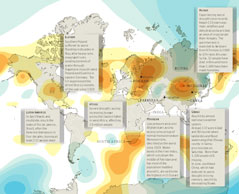
“Global temperatures in the first half of the year were the hottest since records began more than a century ago,” writes author and graphic artist Mark McCormick.
The orange areas of the map represent high pressure systems and the blue, low pressure systems, which as explained by Peter Stott of the Met Office, are important indicators of the rare climatic conditions that caused this summer’s abnormal conditions across Eurasia.
The flooding in Pakistan has garnered the most international attention, having now affected more people than the 2004 tsunami, 2010 Haiti earthquake, and 2005 Kashmir earthquake combined. Other highlighted areas of the map include flooding in Poland and Germany, drought in England, mudslides in Latin and South America, record-breaking drought and hunger in West Africa, and flooding and landslides in China, which recently pushed the world’s largest hydroelectric dam to its limit and have now been blamed for more than 1,000 deaths.
Although it does a good job highlighting the frequency and severity of extreme weather events this summer, it’s important to note that the map only covers events in July and August. That leaves out the “1000-year” floods in Tennessee this May as well as the heavy snowfall seen in the Northeast United States and the winter of “white death” in Mongolia earlier this year, which also severely disrupted local and national infrastructure as well as a great many people’s livelihoods.
Sources: Agence France-Presse, BBC, Guardian, National Oceanic and Atmospheric Administration, New York Times, Telegraph, UN Dispatch.
Image Credit: “Weather Crisis 2010” by Mark McCormick, courtesy of Scribd user smfrogers and The Guardian. -
Flooded With Food Insecurity in Pakistan
›The floods sweeping across Pakistan have caused widespread destruction, ruined livelihoods, displaced millions, and sparked a food crisis. Food prices have skyrocketed across the country as miles of farmland succumb to the deluge, including 1.5 million hectares in Punjab province, Pakistan’s breadbasket and agricultural heartland.
Food insecurity is now rife across the country — yet even before the floods, millions of Pakistanis struggled to access food. Back in 2008, the UN estimated that 77 million Pakistanis were hungry and 45 million malnourished. And while many developing nations have begun to recover from the global food crisis of 2007-08, Pakistan’s food fortunes have remained miserable. Throughout 2010, Pakistan’s two chief food staples, rice and wheat, have cost 30 to 50 percent times more than they did before the global food crisis. Drought, rampant water shortages, and conflict have intensified food insecurity in Pakistan in recent months.
A new edited book volume published by the Wilson Center’s Asia Program, Hunger Pains: Pakistan’s Food Insecurity, examines the country’s food insecurity. The book has already been the subject of a news story and an editorial in the Pakistani newspaper Dawn. The book, edited by Michael Kugelman and Robert M. Hathaway, is based on the 2009 Wilson Center conference of the same name. It assesses food supply challenges, access issues, governance constraints, social and structural dimensions, gender and regional disparities, and international responses.
The book makes a range of recommendations. These include:- Declare hunger a national security issue. Since some of Pakistan’s most food-insecure regions lie in militant hotbeds, hunger should be linked to defense, and food provision projects should be given ample public funding.
- Diversify the crop mix so that Pakistan’s agricultural economy revolves around more than wheat and rice. The country should accord more resources to crops that are less water-intensive and more nutritious.
- Give schools a central focus in food aid and food distribution. Using schools as a venue for food distribution gives parents powerful incentives to send their children to school.
- Tackle the structural dimensions. Strengthening agricultural institutions, improving infrastructure and storage facilities, and injecting capital into a stagnant farming sector are all key to making Pakistan more food-secure. Yet unless Pakistan deals with poverty, landlessness, and entrenched political interests in agriculture, food insecurity will remain.
Michael Kugelman is program associate with the Asia Program at the Woodrow Wilson International Center for Scholars.
Photo Credit: “Chitarl, Pakistan” where floods damaged the way over Lawari pass and killed five in August 2006. Courtesy of flickr user groundreporter -
Reform Aid to Pakistan’s Health Sector, Says Former Wilson Center Scholar
›August 5, 2010 // By Wilson Center StaffExcerpt from op-ed by Samia Altaf and Anjum Altaf in Dawn:
WE must state at the outset that we have been wary of, if not actually opposed to, the prospect of further economic assistance to Pakistan because of the callous misuse and abuse of aid that has marked the past across all elected and non-elected regimes.
We are convinced that such aid, driven by political imperatives and deliberately blind to the well-recognised holes in the system, has been a disservice to the Pakistani people by destroying all incentives for self-reliance, good governance and accountability to either the ultimate donors or recipients.
Even without the holes in the system the kind of aid flows being proposed are likely to prove problematic. Over half a century ago, Jane Jacobs, in a brilliant chapter (Gradual and Cataclysmic Money) in a brilliant book (The Death and Life of Great American Cities), showed convincingly how ‘cataclysmic’ money (money that arrives in huge amounts in short periods of time) is a surefire way of destroying all possibilities of improvement. What is needed, she argued, is ‘gradual’ money in the control of the residents themselves. While Jacobs was writing in the context of aid to impoverished communities within the US, she concluded with a remarkably prescient concern: “I hope we disburse foreign aid abroad more intelligently than we disburse it at home.”
Continue reading on Dawn.
For more on U.S. aid to Pakistan, see New Security Beat‘s coverage of the recent U.S.-Pakistani Strategic Dialogue.
Photo Credit: A U.S. Army Soldier with 32nd Infantry Regiment, 10th Mountain Division, hands out medical supplies to Pakistani refugees outside an International Committee of the Red Crescent aid station in Afghanistan’s Kunar province, October 23, 2009. Courtesy of flickr user isafmedia. -
Wilson Center’s Michael Kugelman Finds the Real Culprit in Pakistan’s Water Shortage
›July 28, 2010 // By Wilson Center StaffExcerpt from Dawn:
ON Jan 15, 2006, the Karachi Port Trust (KPT) inaugurated its new fountain – the Rs320m lighted harbour structure that spews seawater hundreds of feet into the air.
Also on this day – as on most others in Karachi – several million gallons of the city’s water supply were lost to leakage, some hundred million gallons of raw sewage oozed into the sea, and scores of Karachiites failed to secure clean water.
Over the next few years, the fountain jet would produce a powerful and relentless stream of water high above Karachi. Meanwhile, down below, tens of thousands of the city’s masses would die from unsafe water.
After several fountain parts were stolen in 2008, the KPT quickly made the necessary repairs and re-launched what it deems “an extravaganza of light and water”.
In an era of rampant resource shortages, boasting about such extravagance demonstrates questionable judgment. So, too, does the willingness to lavish millions of rupees on a giant water fountain, and then to repair it fast and furiously – while across Karachi and the nation as a whole, drinking water and sanitation projects are heavily underfunded and water infrastructure stagnates in disrepair.
Continue reading on Dawn.
For more on Pakistan’s water crisis, see the Wilson Center report, “Running on Empty.”
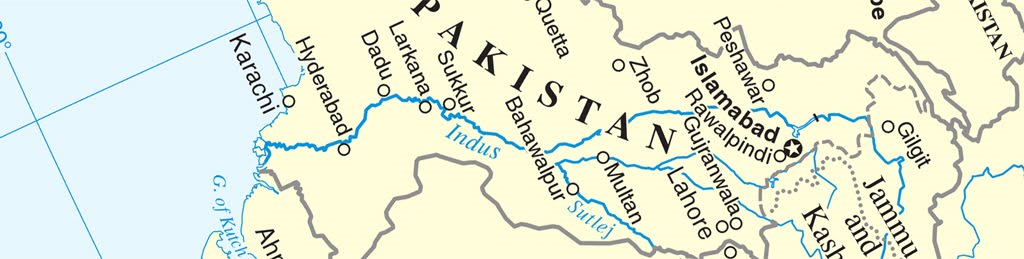
Photo Credit: Adapted from UN map of South Asia, courtesy of Wikimedia Commons.