

Showing posts from category Asia.
-
A Good Woman Is Hard To Find
›August 30, 2007 // By Gib ClarkeThey say that a good man is hard to find. But in some countries, the opposite is true: a good woman is hard to find—because it’s hard to find women at all. According to a recent article by the BBC, the Chinese city of Lianyungang has eight men for every five women. Ninety-nine cities in China have gender ratios as high as 125 (125 men for every 100 women, or a 5:4 ratio).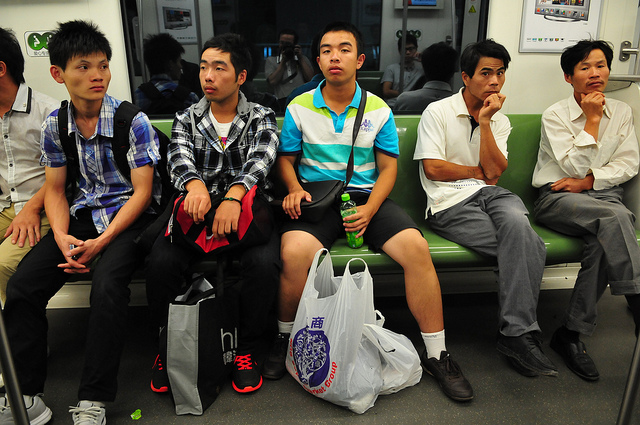
But China is not alone. India has a gender ratio of 113, and the ratio in Asia as a whole is 104.4. In the United States, by contrast, the rate is 97, meaning that there are more women than men.
Gender imbalances are caused by cultural and economic preferences for male children, which contribute to sex-selective abortion and female infanticide. Over 60 million girls are “missing” in Asia as a result of these practices.
Furthermore, some government policies may intensify these gender preferences. China’s one-child policy, for example, may cause concern among parents, particularly in rural areas, that having a female child endangers their family’s future. Government policies intended to combat skewed gender ratios, such as bans on prenatal ultrasounds for the purpose of determining the baby’s sex and bans on sex-selective abortion, have proven ineffective.
Unbalanced gender ratios have consequences that reach beyond just the mothers and children involved. According to Valerie Hudson, high gender ratios leave many men without prospects for marriage, which may mean these men have fewer incentives to contribute peacefully to society. The men with the slimmest prospects for marriage are likely to be unemployed, poor, and uneducated, so they are already at increased risk for violent behavior. Hudson cites statistical evidence showing links between high gender ratios and higher rates of violent crime, drug use, trafficking, and prostitution.
Hudson and co-author Andrea den Boer cover these links in greater detail in their book Bare Branches: The Security Implications of Asia’s Surplus Male Population. In the 11th issue of the Environmental Change and Security Report, Richard Cincotta takes issue with some of the statistical methods that Hudson and den Boer use. He argues that what is important is not nationwide gender ratios, but the number of “marriage-age men” (25-29 years old) and “marriage-age women” (20-24).
While there may be some debate over whether the relationship between gender ratios and violent behavior is a causal one, there is little doubt about what causes the gender imbalances in the first place. An end to preferences for female children will be beneficial not only to girls and women, but to societies as a whole.
Photo Credit: A subway in China, courtesy of flickr user 俊玮 戴. -
Closing the Floodgates: Reducing Disaster Risk in South Asia
›August 16, 2007 // By Karima TawfikFlooding causes massive damage each year in South Asia, but this destruction will not be diminished without more comprehensive disaster preparedness, says a new report by Oxfam International entitled Sink or Swim: Why Disaster Risk Reduction is central to surviving floods in South Asia. The report comes halfway through a monsoon season that has already harmed the livelihoods of 20 million people in Bangladesh, Nepal, and India, crumbling homes and schools, sweeping away crops, and crippling the region’s already-weak infrastructure.
Current flood control efforts are often ineffective and can even exacerbate the problem, says the report. For instance, poorly designed and broken culverts and embankments often flood roads and downstream areas. One embankment in Bihar, India caused a flood-prone area to expand from 2.5 to 6.9 million hectares over the course of fifty years.
In the report, Oxfam recommends that governments implement local emergency plans; avoid building additional dams and embankments; equip communities with preparedness capacities such as early warning systems and first-aid skills; provide community assets such as flood shelters, raised homesteads, and motorized boats; and mainstream disaster preparedness into government policy. Furthermore, the report urges donors to increase funding for disaster risk reduction, which is a strong long-term investment.
Governments and NGOs should also note that lower-income groups and women are more vulnerable to disasters—and tailor their programs accordingly. Poorly built houses are easily destroyed, the landless have reduced access to post-flood aid, and women struggle with malnutrition and disease in displacement camps. Reducing disaster risk—especially for the most vulnerable members of the population—is an important step in raising the standard of living in South Asian countries afflicted by flooding.


