-
Watch: Dan Smith on How International Alert Builds Peace
›April 6, 2011 // By Schuyler NullAddressing violent conflict is complex and difficult, but one universally important aspect of any peacebuilding operation is to understand the unique context of each situation, said Dan Smith, secretary general of International Alert, in this interview with ECSP. International Alert is a London-based NGO that works in 23 countries and territories in West and Central Africa, the Southern Caucasus, Central Asia, Nepal, Sri Lanka, and the Philippines.
The goal of International Alert, said Smith, is to help people “move from situations of danger and vulnerability…towards positions of greater safety.” In addition, the NGO tackles broader international policy questions, he said, such as how to manage and minimize the risks of conflict and hasten recovery from it.
Peacebuilding defies simplification, said Smith, but there are two broad recommendations to keep in mind. First, “going in with a preset form of analysis or of the action you will undertake, or the problems you will look at,” is the most significant mistake international actors can make. “If you’re a hammer, every problem for you is going to be a nail,” he said. “But there are many countries where you need screwdrivers or monkey wrenches… you’ve got to be open-minded about that.”
Second, “realize that the outsider, like us, is not going to make peace or build peace in a country – it’s the people there who are going to do it,” said Smith. The international community’s job is to assist.
“Sometimes it’s as simple as experience from other places,” he said, which can be provided by an NGO and transferred from one context to another. “As long as you don’t shove it down anybody’s throats – it’s always an assisting and a helping role.” -
Tunisia Predicted: Demography and the Probability of Liberal Democracy in the Greater Middle East
›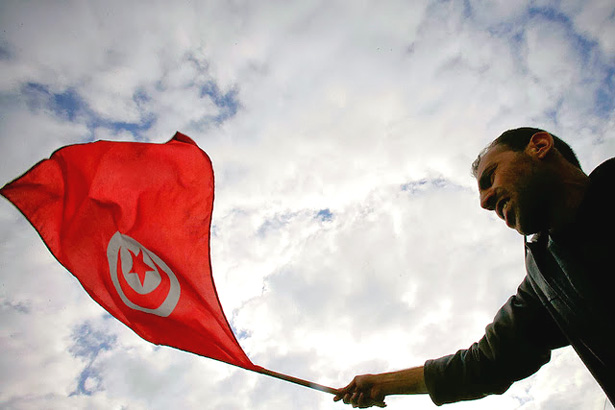
In 2008, demographer Richard Cincotta predicted that between 2010 and 2020 the states along the northern rim of Africa – Morocco, Algeria, Tunisia, Libya, and Egypt – would each reach a demographically measurable point where the presence of at least one liberal democracy (and perhaps two), among the five, would not only be possible, but probable. Recent months have brought possible first steps to validate that prediction. [Video Below]
-
The Impact of Environmental Change and Geography on Conflict
›“Environmental Change, Strategic Foresight, and Impacts on Military Power,” published in Parameters by Chad M. Briggs, the Minerva Chair of Energy and Environmental Security at the Air University, USAF, tackles the changing definition of “environmental security” and how the concept can help planners better prepare for the effects of climate change and an elevated focus on energy security. New potentially destabilizing issues like glacial melt, sea-level rise, and Arctic ice melt are on the horizon, writes Briggs. China and others are already planning for these events, and it’s important that the United States does the same, starting with a greater appreciation for the impact of environmental security on vulnerability and risk. “Due to past practices and bureaucratic stovepipes, implementation is limited more by initiative and imagination than actual resources,” he writes. Clionadh Raleigh of Trinity College Dublin and the International Peace Research Institute finds in “Seeing the Forest for the Trees: Does Physical Geography Affect a State’s Conflict Risk?” that a region’s geography does not have a uniform effect on its likelihood of experiencing conflict. Raleigh’s conclusions, published in International Interactions, run counter to traditional histories which often emphasize the importance of physical geography, specifically with regard to civil war and insurgencies. Focusing on the Great Lakes region of Africa, Raleigh finds that other factors – like how populated an area is and its proximity to valuable natural resources – correlate higher with an area’s propensity for violence than any other factor.
 -
Integrated Approach Helps “Model Farmers” Increase Productivity in Ethiopia
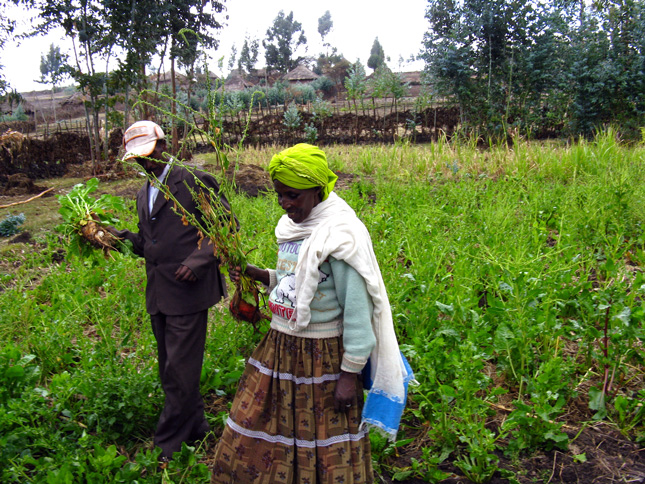
›March 24, 2011 // By Schuyler NullTo reach the village of Grar Gaber from Addis Ababa, you drive up over the Entoto Mountains overlooking the capital then motor down two hours of new Japanese-built highway to the town of Fiche. From there it’s 20 minutes on a broken dirt road across rocky hills. I was joined there by about 20 others from the PHE Ethiopia Consortium’s general assembly (see day one and day two coverage here) and Population Action International, to visit an integrated population, health, and environment (PHE) development program run by LEM Ethiopia.
-
The Youth of North Africa
Surging on a Knife’s Edge
›March 23, 2011 // By Christina DaggettThe Middle East/North Africa region is experiencing a “youth surge,” said Jack Goldstone, director of the George Mason University’s Center for Global Policy, at a recent GMU event. “In the last two decades the number of people in their late teens and twenties has increased… It’s doubled in Egypt; it’s grown by half in Tunisia; and nearly doubled in Libya,” he told Warren Olney on KCRW’s To the Point.Such youth surges are problematic because, Goldstone wrote in ECSP Report 13, “population distortions – in which populations grow too young, or too fast, or too urbanized – make it difficult for prevailing economic and administrative institutions to maintain stable socialization and labor-force absorption.”
In the case of Egypt, the youth surge put enormous pressure on a government system that could no longer guarantee jobs to every college graduate, said Goldstone. When government guarantees dried up, graduates found that their poor-quality degrees were of little use, especially in a system that prioritized connections and bribery. The result was an unemployment rate of 25 percent among Egyptian youth and a mounting sense of frustration with the economic system and the government.
This frustration found a symbol when Mohammed Bouazizi, a 26-year-old Tunisian, set himself – and an entire region – on fire after his third run-in with the police cut off his only source of income. Youth across North Africa and the Middle East, Goldstone said, could identify with Bouazizi’s desperation and frustration after years of dealing with a closed economic system and a corrupt government.
While overall economic growth has been strong in the region – a fact which had misled many observers (including himself, Goldstone admits) into thinking the region was more stable – these economic gains were apparently being captured by the ruling elite to a far greater degree than previously thought, said Goldstone. For example, it is estimated that ousted Egyptian president Hosni Mubarak and his family are worth between $40 and $70 billion.
Meanwhile, a burgeoning surge of young people were struggling to get by. Goldstone pointed to a Gallup poll conducted in 2010 in which only 12 percent of Egyptians and 14 percent of Tunisians would classify themselves as “thriving” – down from 25 and 24 percent, respectively, in 2007 and 2008.
While the Ben Ali and Mubarak regimes have fallen, these revolutions do not ensure the youth in these countries will have a prosperous future. They need not only access to capital, said Goldstone, but also access to information and social networks so that they can identify market opportunities and stay connected.
Immigration to more developed countries could also be an important avenue for economic growth and education. In a Foreign Affairs article, “The New Population Bomb,” Goldstone writes, “Given the dangers of young, underemployed, and unstable populations in developing countries, immigration to developed countries can provide economic opportunities for the ambitious and serve as a safety valve for all.”
The future of Middle Eastern youth, and that of the region at large, depends on the quality of their education and their ability to be productive, said Goldstone. They stand on “a knife edge,” he said, and the transition to democracy will not be smooth or easy.
Image Credit: “Protest Face Paint,” courtesy of flickr user Ahmad Hammoud.
Sources: The Economist, ECSP Report 13, Foreign Affairs, Gallup, International Monetary Fund, KCRW, Voice of America. -
The Continuing Challenges of Integrated Development
›March 20, 2011 // By Schuyler Null“How are we going to feed all these mouths?” asked Bekele Hambissa, director of the Environmental Protection and Development Organization in Addis, on day two of the PHE Ethiopia Consortium general assembly (read about day one here). Environmental resources are directly tied to Ethiopia’s population growth, said Hambissa, during a discussion of balancing efforts to address population growth, environment, and livelihoods. While poverty alleviation is an important goal of population, health, and environment integration (PHE), it must be environmentally sustainable, he said.
-
“Better Bang for the Buck”: Blogging From Ethiopia’s Population, Health, and Environment General Assembly
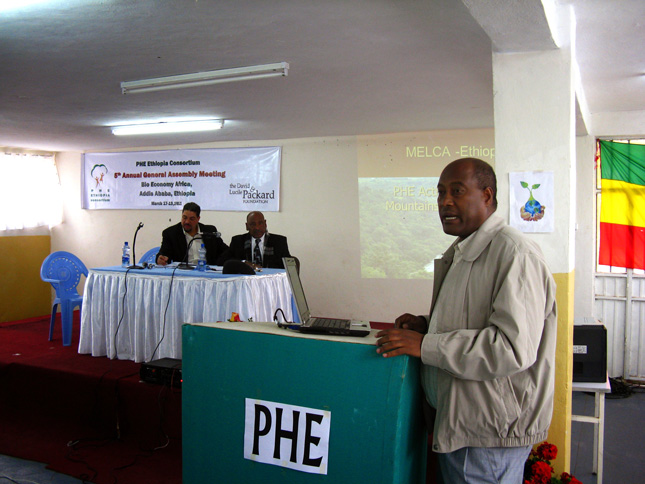
›March 18, 2011 // By Schuyler NullHello from Addis Ababa, where I am blogging from the 5th annual general assembly of the Population, Health, and Environment (PHE) Consortium of Ethiopia (see further coverage here). Along with the Philippines, Ethiopia is the largest PHE programmer in the world, both in terms of number of programs and people affected, and for good reason: The country combines dire need, willing donors, and a great deal of local capacity and will.
-
Rural Poverty: The Bottom One Billion
›March 10, 2011 // By Hannah MarquseeThere are currently 1.4 billion people in the world living in extreme poverty, and 70 percent of them – about one billion people – live in rural areas, according to the Rural Poverty Report 2011, published recently by the International Fund for Agricultural Development (IFAD). The two regions most affected by rural poverty are South Asia, home to half of the world’s rural poor, and sub-Saharan Africa, where, team leader Ted Heinemann points in the accompanying trailer, “the number of rural people living in extreme poverty is actually increasing and the proportion is a very high 62 percent.”
The State of Rural Poverty
While the number of rural poor in the world has actually declined sharply since the late 1980s, the decline is due almost entirely to gains made in East and Southeast Asia, particularly China. Despite these gains, rural poverty remains a stubborn challenge in South Asia, Southeast Asia, and sub-Saharan Africa: three-quarters of the poor in these areas are rural, and “the proportion is barely declining, despite urbanization,” says the report. In the Middle East, North Africa, Latin America, and the Caribbean, the majority of the extremely poor live in urban areas.
The number of undernourished people in the world has also declined slightly from its historic high of 2009, after a doubling of international food prices between 2006 and 2008 left a staggering one billion hungry. (However, food prices recently passed 2008’s historic high point, and some have argued they may have been a factor in the recent uprisings in the Middle East and North Africa.) From a high of one billion, the world’s hungry have since decreased to 925 million, a figure that the UN Food and Agriculture Organization nonetheless calls “unacceptably high.” The current rate of decline is far from meeting the MDG target of halving the number of people who suffer from hunger by 2015, says the IFAD report, and with continuing population growth and resource and energy scarcities, they predict little change in the number of hungry worldwide.
Meeting Rising Demand, Sustainably
“Feeding a global population of just over 9 billion in 2050 will require a 70 percent increase in global food production,” says the report. To do this, the report calls for more sustainable agricultural intensification driven by small-holder farmers. “Small-holder agriculture…can offer rural people a route out of poverty just as they can offer the world a solution to meeting its future food needs,” says IFAD President Kanayo Nwanze, in the trailer.
Increasing global agricultural production must be done “in the context of a weakened natural resource base, energy scarcities, and climate change,” says the report. This will require more efficient use of water, less waste, and a shift towards more resilient crops. It will also require linking scientific knowledge with local farmer knowledge in order to create a sustainable, context-specific approach. The report recommends a sustainable small-holder agriculture system that gives rural people incentives to protect their environment, while helping them adapt to climate change.
Providing Economic Opportunities
Since 80 percent of rural households “farm to some extent,” agricultural intensification will be “a primary engine of rural growth and poverty reduction,” says IFAD, especially in the poorest countries. In a statement to announce the launch of the report, Nwanze said, “rather than romanticizing the concept of lifting poor rural women, men, and children above the poverty line, like a plague that can be eradicated by charity and humanitarian gestures, we are advocating the proactive creation of vibrant rural economies.”
But lifting the one billion rural people out of poverty is not just about stimulating rural farm economies, says the report; it also means creating opportunities in the rural non-farm economy to minimize the risk of economic shocks that drive people into poverty in the first place. While agriculture remains central to rural economies, urbanization, globalization, improved information systems, and growing investments in renewable energy all offer opportunities for growth in rural, non-farm economies. Helping rural people take advantage of these opportunities will require multiple investments, says the report: in education to improve the capabilities of rural youth; in infrastructure and social services to make rural areas better places to live; and in governance mechanisms and collective organizing so that rural people can better represent their own interests.
“Robust action is required now to address the many factors that perpetuate the marginalization of rural economies,” says IFAD. “Above all, this action needs to turn rural areas from backwaters into places where the youth of today will want to live and will be able to fulfill their aspirations.”
Sources: AFP, FAO, IFAD, United Nations, The Washington Post.
Video Credit: “Rural Poverty Report 2011,” courtesy of YouTube user IFADTV.
Showing posts from category Africa.