-
Reporting on Global Health: A Conversation With the International Reporting Project Fellows
›“The story is the story, the information is the information, but you can frame it in very different ways,” said freelance journalist Annie Murphy at a roundtable discussion on the current state of global health reporting. Fresh off their five-week assignments, Murphy and three other fellows from the International Reporting Project (IRP) – Jenny Asarnow, Jill Braden Balderas, and Ann S. Kim – spoke at an event at the Woodrow Wilson Center on April 28 about their experiences researching underreported health issues in Haiti, Botswana, Mozambique, and Uganda. [Video Below]
Taking the Temperature of Global Health Reporting
Global health reporting, like many other forms of journalism, has felt the pinch from the global financial crisis, said Balderas, who edited a recent Kaiser Foundation report on the issue, “Taking the Temperature: The Future of Global Health Journalism.” Other challenges that have led to less global health coverage in mainstream media include an increased focus on “hyper-local” news; “story fatigue” from years of HIV/AIDS coverage; greater focus on epidemics and disasters; and the increasing number of advocacy groups starting their own news services.
Placing global health stories is a big challenge, agreed all four panelists. Who will want to run the story? What form – radio, documentary, print, online – will the story take? According to Murphy, some creative thinking may be needed: “It is global health, but that doesn’t mean we always have to frame it in this box of global health. It will be global health no matter what we do, so I think it’s also important for us to feed it into other events and issues that are important.”
(Re)building Maternal Healthcare in Haiti
With the worst maternal and infant mortality rates in the Western Hemisphere, Haiti needs medical providers of all kinds, said Asarnow, but especially skilled birth attendants. The devastating earthquake in 2010 destroyed Haiti’s only midwifery school, located in Port-au-Prince, killing many students and instructors. The school is still struggling to graduate a class of 15 people, she said.
In the rural town of Hinche, located in Haiti’s Central Plateau region, Asarnow frequently visited a public hospital that provided pregnant women with free obstetric care. Yet, she said, “even with free care, there [were] still a lot of barriers for women coming to the hospital to get care.” For example, the family members of expectant mothers had to provide sheets, clothing, food, and a bucket for personal needs. In addition, some women were too poor to afford transportation to and from the hospital.
Most women in Haiti, though, give birth at home with the help of traditional birth attendants, called matrones, Asarnow said. These matrones, popular in rural areas, are not formally educated in midwifery, but the government, along with non-profits such as Midwives for Haiti, have provided the matrones with training in basic health care and emergency situations.
Simply reporting on childbirth turned out to be a challenge, said Asarnow. “It’s hard to get people interested in something that just happens to most women,” she said; other more unusual health problems, such as infectious diseases, tend to garner more interest.
Finding Health Sovereignty in Mozambique
Health sovereignty, explained Murphy, is “the idea that nations have the right to make decisions about health and about how people are going to be treated” – an issue that is particularly pointed in Mozambique, where 50 percent of the national budget and 70 percent of the annual health budget is tied to international aid.
Mozambique, said Murphy, has only 1,000 doctors to serve a population of 22 million. By contrast, the country has an estimated 50,000 traditional healers. As a result, she said, most Mozambicans use traditional healing for at least part of their regular health care.
While researching traditional healers in the northern province of Tete, Murphy investigated a large Brazilian-owned coal mine that had displaced 5,000 local people when it was built. Mining is a major economic activity in Mozambique, yet mining companies are taxed a mere three percent by the government, said Murphy.
Health reporting doesn’t have to only cover traditional health issues, said Murphy. “The environment, natural resources, and how a country earns its money very much have to do with the health of the people who are living there,” she said. “How can you talk about being sovereign and providing health to your citizens if you don’t have the money to do that?”
Treating the Over-Treatment of Malaria in Uganda
“Malaria is quite over-treated” in Uganda, said Balderas. There’s the “idea that if you have a fever, you have malaria.” Consequently, the rate of misdiagnosis can reach alarming rates in some areas, she said.
Balderas said an estimated 50 percent of Ugandans get free treatment through the public sector. However, only donor-funded facilities are equipped with the rapid diagnosis test (or RDT), which takes only 20 minutes to determine the presence of malaria in a blood sample, she said. If these facilities were more widespread, misdiagnoses rates could easily be lowered.
Other challenges to the accurate diagnosis and treatment of malaria include faulty equipment, shortages of electricity and lab technicians, human error, corruption, bureaucratic entanglements, and presumptive diagnoses. For example, sometimes health workers do not know what is causing a patient’s fever, Balderas said, but they prescribe malaria treatments anyway because “they want to be able to give someone a treatment; they want to feel like they’re helping people.”
“There are certainly a ton of issues that relate to health,” Balderas said, such as poverty and corruption. Everyone she interviewed in Uganda – with the exception of government officials – identified the corruption in the country’s drug sector as a key problem.
Helping “Africa” One Small Story at a Time
Inspired by a World Health Organization study, which found “at least a 60 percent reduction in HIV infection among men who were circumcised,” Kim went to Botswana to investigate infant circumcision, a practice that is gaining popularity but is still alien. “I would meet people in the course of my day and they would ask me what I was doing there and I would talk about circumcision. They’d say, ‘Oh, I really want to get my baby circumcised. How do I do that?’” she reported.
The most powerful moment of her trip, said Kim, came when she was researching cervical cancer – the number one cancer among women in Botswana. As she waited with a woman to receive her lab results, Kim asked her if she was nervous. The woman, who was HIV-positive, said, “Yeah, I’m really worried. To me, it would be worse to get cervical cancer than to have HIV.” Even though Botswana is a middle-income country, said Kim, there are far more resources available to treat HIV than cancer.
Kim said that when presenting her work it was important for her to bring in the human element and not just the statistics: “I hope that, in whatever small way, even these small stories will help get issues in various countries on the map, especially in Africa where we tend to think of it as ‘Africa’ and not so much as different countries with different personalities and different situations.”
Sources: Malaria Journal, UNFPA, World Health Organization.
Image Credit: David Hawxhurst/Woodrow Wilson Center. -
Population Growth and Climate Change Threaten Urban Freshwater Provision
›May 6, 2011 // By Emanuel FeldBy 2050, more than one billion urban dwellers could face perennial freshwater shortages if major improvements are not made to water management practices and infrastructure, according to a recent study published in the journal PNAS, “Urban Growth, Climate change, and Freshwater Availability.” These challenges will arise as hydrologic changes due to climate change compound “an unprecedented wave of urban growth,” with nearly three billion additional urban residents forecast by 2050. “It is a solvable problem,” the study argues, “but one that will take money, time, political will, and effective governance.”
Using demographic data from the Earth Institute at Columbia University, as well as a variety of climate and city-level demographic scenarios, the researchers estimate per-capita water availability for cities in the developing world, where urban growth will be most rapid. They advise, however, that their findings should be taken as conservative estimates, since the study assumes cities can use all nearby water and does not account for key challenges relating to water quality and delivery to urban centers.
In 2000, 150 million people in developing countries lived in urban areas that could not support their own water requirements (i.e. less than 100 liters available per person per day). By 2050, according to the study, urban population growth alone could bring this figure to 993 million and more than three billion could face intermittent shortages at least one month out of the year. When the researchers expanded the area on which cities can draw upon to include a 100 km buffer zone, these values drop to 145 million and 1.3 billion, respectively.
However, once climate and land use change are included in the models, the aggregate number of people facing perennial shortages rises a further 100 million, if only water stores within the urban area are considered, or 22 million, for the 100 km buffer zone model.
Remarkably, these aggregate figures differ very little among the various demographic and climate scenarios. The particularities of the challenge do however vary at the regional level. Perennial water shortage will generally be limited to cities in the Middle East and North Africa. Seasonal water shortages, on the other hand, will be geographically widespread, although rapidly urbanizing India and China will be especially hard hit.
The study acknowledges the temptation to view water shortage “as an engineering challenge.” Still, the lead author, Rob McDonald of The Nature Conservancy, cautions against exclusive reliance on grey infrastructure solutions (e.g. canals and dams) in an article for Nature Conservancy, saying:Some new infrastructure will be needed, of course – that’s the classic way cities have solved water shortages. But especially in parts of the world where there’s lots of cities, just going out farther or digging deeper to get water can’t be the only solution.
Instead, McDonald and co-authors Pamela Green, Deborah Balk, Balazs M. Fekete, Carmen Revenga, Megan Todd, and Mark Montgomery, emphasize the need for cities to encourage more efficient water use by their industrial and residential sectors, as well as the potential to engage the water-intensive agriculture sector in surrounding rural areas.
“Bottom line,” McDonald said in an interview with Robert Lalasz of The Nature Conservancy’s Cool Green Science blog, “don’t think of those high numbers as a forecast of doom. They are a call to action.”
Emanuel Feld is a student at Yale University studying economics and the environment.
Sources: Cool Green Science, PNAS, The Nature Conservancy.
Photo Credit: Adapted from “Chennai prayed too hard…. Part I,” courtesy of flickr user Pandiyan. -
Momentum Magazine
Where Does It Hurt? Climate Vulnerability Index
›The original version of this article appeared in the University of Minnesota’s Momentum Magazine. Text by Mary Hoff, page layout by Todd Reubold.
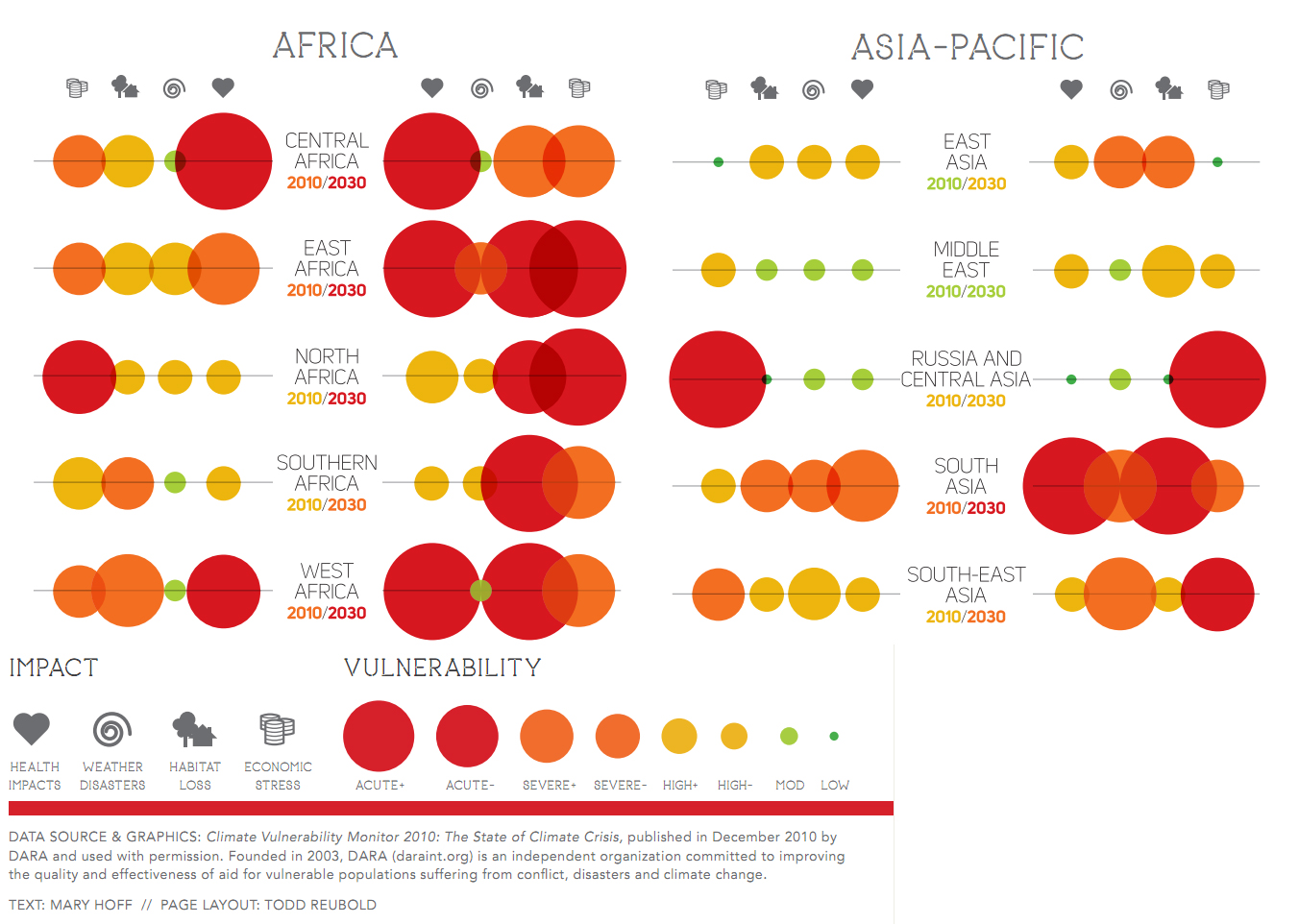
The punch climate change packs varies from one country, region, or continent to another. DARA, a Madrid-based humanitarian advocacy organization, recently partnered with the Climate Vulnerable Forum, comprising countries particularly vulnerable to climate change, to create Climate Vulnerability Monitor 2010, an atlas of vulnerability. This infographic presents a small portion of the picture the Climate Vulnerability Monitor paints.
Vulnerability is grouped into four categories: health impacts, weather disasters, habitat loss and economic stress. Circles on the left side of each set indicate relative magnitude of vulnerability in 2010. Circles on the right indicate the same for 2030.
See the full “Where Does it Hurt?” infographic on the Momentum site or download the Climate Vulnerability report from DARA.
Image Source: Climate Vulnerability Monitor 2010: The State of Climate Crisis, published in December 2010 by DARA (daraint.org). Used with permission. -
David Biello, Momentum Magazine
Coping with Change: Climate Adaptation Today
›May 2, 2011 // By Wilson Center StaffThe original version of this article, by David Biello, appeared in the University of Minnesota’s Momentum Magazine.
The view from space offers a clarity about our changing planet less visible from the ground: spring thaw coming sooner year after year, the iconic snows of Kilimanjaro and glaciers across the globe dwindling – and a great green wall of vegetation spreading across the region just south of Africa’s Sahara Desert.
This arid expanse, known as the Sahel, stretches from the Atlantic Ocean to the Red Sea. It has undergone a remarkable transformation since farmers in nations across the region began to allow trees to grow amidst their crops.
In some places it was by accident, as seeds sprouted from manure spread as fertilizer in Niger. In others it was by design, such as the “green dam” against the desert started in Algeria in 1971. But the result has been the same: improved harvests of millet, sorghum, and other staple crops in a region gripped by perennial drought.
Such “agroforestry” boosts yields by returning vital nutrients to the soil in the form of decaying leaves, shading crops from the harshest sun, and recharging underground water reserves. The trees also provide an additional source of income: wood for fires and construction. And they have another even more important benefit: They may help some of the poorest farmers in the world adapt to climate change – while potentially removing as much as 50 billion metric tons of carbon dioxide from the atmosphere, according to agronomist Dennis Garrity, head of the Nairobi-based World Agroforestry Centre.
“The transformation of agriculture into agroforestry is well underway,” Garrity says. “Agricultural systems incorporating trees increase overall productivity and incomes in the face of more frequent droughts, and agroforestry systems provide much greater carbon offset opportunities than any other climate mitigation practice in agriculture.”
Climate change is already worse than anticipated by the UN Intergovernmental Panel on Climate Change. Extreme precipitation events, such as last spring’s flooding in Nashville, Tenn., or last winter’s drought in China, have become more frequent. Sea ice extents have reached record lows in the Arctic. And 2010 marked the end of the hottest decade in recorded history.
Not only that, but the 0.7-degree-Celsius uptick in global average temperatures we’ve seen so far is only half the warming that can be expected from the concentrations of greenhouse gases already in the atmosphere, according to a 2010 report from the U.S. National Research Council. And as warming continues, according to the NRC report, the world can expect (among other things) a drop in the yield of cereal crops due to higher temperatures, an increase in heavy rainfall, and a rise in ocean levels.
In other words, whatever measures might be adopted to reduce emissions of greenhouse gases, the world will still need to adapt to a changing climate. Indeed, that process has already begun.
Continue reading on the University of Minnesota’s Momentum Magazine site.
Photo Credit: Deep in the Sahel, the dwindling Lake Chad borders Niger, Chad, and Nigeria. Courtesy of flickr user NASA Goddard Photo and Video. -
Watch: Jennifer Dabbs Sciubba on Population and National Security
›April 28, 2011 // By Schuyler Null“Long-term trends really are what shape the environment in the future,” said Jennifer Dabbs Sciubba in this interview with ECSP. “As we’ve seen recently with…revolution in North Africa, it’s the long-term trends that act together for these things to happen – I like to say demography is not usually the spark for a conflict but it’s the fodder.”
Sciubba is the Mellon Environmental Fellow in the Department of International Studies at Rhodes College. In her new book, The Future Faces of War: Population and National Security, she discusses the importance of demographic trends in relation to security and stability, including age structure, migration, youth bulges, population growth, and urbanization.
One of the most important things to emerge from the book, said Sciubba, is that countries that are growing at very high rates that are overwhelming the capacities of the state (like many in sub-Saharan Africa) really will benefit from family planning efforts that target unmet need.
Afghanistan, for example, “has an extremely young age structure,” Sciubba pointed out. “So if you’re trying to move into a post-conflict reconstruction atmosphere…you absolutely have to take into account population and the fact that it will continue to grow.”
“Even if there are major moves now in terms of reducing fertility, they have decades ahead of this challenge of youth entering the job market,” Sciubba said. “Thousands and thousands more jobs will need to be created every year, so if you have a dollar to spend, that’s a really good place to do it.”
For more on Jennifer Dabbs Sciubba and The Future Faces of War, see her book launch at the Wilson Center with Deputy Under Secretary Kathleen Hicks of the Department of Defense (video) and some of her previous posts on The New Security Beat. -
Is Universal Access to Family Planning a Realistic Goal for Sub-Saharan Africa?
›“What do we require to ensure universal access to family planning services that are appropriate, affordable, accessible, and of good quality?” asked Michael Mbizvo, director of the Department of Reproductive Health and Research at the World Health Organization at the Wilson Center last month. [Video Below]
To talk about this difficult question and present research and programmatic evidence for sub-Saharan Africa, Mbizvo was joined by panelists Fred Makumbi, senior lecturer and head of the Department of Epidemiology and Biostatistics at Makerere University, Uganda; Oladosu Ojengbede, director of the Center for Population and Reproductive Health, University of Ibadan, Nigeria; and Frank Taulo, director of the Center for Reproductive Health and senior lecturer of obstetrics and gynecology at the University of Malawi.
Integrating Family Planning and HIV Services
Makumbi shared a number of findings on fertility preferences, behaviors, and contraceptive uptake in the context of HIV infection and care in Uganda. “Integrating family planning services into HIV services could help address the family planning needs of both HIV infected and uninfected,” he said.
According to new research conducted as part of the Rakai Community Cohort Study, despite significant gains in family planning use over time, there is still a high unmet need for contraception, irrespective of HIV status, in the Rakai district of central Uganda, said Makumbi. Male partner’s fertility desires were found to play an important role in pregnancy rates, and compared with previous studies conducted in the Rakai district, researchers saw an increase in pregnancy incidence and prevalence among HIV positive women, especially those on anti-retroviral therapy. HIV care that included voluntary counseling and testing was associated with significant increases in the use of family planning, and in particular, the use of condoms.
To effectively promote universal family planning in sub-Saharan Africa, “there is a need to strengthen family planning services in HIV care programs, with promotion of modern contraceptive methods, and with particular attention to women on anti-retroviral therapy,” said Makumbi. “Strategies to address desire for high fertility need to be developed, especially with regard to male involvement,” he added.
Multi-Pronged Approach to Universal Family Planning
“Family planning success in sub-Saharan Africa is a must for the region’s sustainable development,” said Ojengbede. “Poor commitment to women’s health in sub-Saharan Africa” has not only resulted in high fertility rates and poor maternal health indices but has also negatively impacted economic and human development in the region, said Ojenbede.
To increase access to and use of family planning, Ojengbede stressed the need to generate and sustain government commitment, promote legislation to support women’s autonomy, and implement policies to improve access to quality reproductive health services.
At the community level, Ojengbede said, the public health community must work to integrate family planning services into all reproductive health programs, including prevention of mother to child transmission; accelerate female empowerment programs; actively engage males in family planning access and uptake; and address social and cultural barriers that prevent widespread adoption of family planning.
“Traditional rulers can occupy a critical position to enact positive change in their communities and at the national level,” said Ojengbede. In Nigeria, for example, providing education about the health and economic benefits of family planning has helped traditional leaders embrace family planning and develop their own strategies to promote birth spacing in their communities.
“Universal family planning access must be achieved through a multi-pronged approach that should be colored with socio-cultural sensitivity, solid evidence, and sustainability,” concluded Ojengbede.
Eliminating Unmet Need: “Yes, We Can”
“It is time to prioritize issues that are affecting women and family planning is a very critical area,” said Taulo.
There are still many challenges to overcome before Malawi can achieve universal family planning access, including poverty, misconceptions and myths about family planning, lack of availability of reproductive health supplies, poor infrastructure, shortage of trained professionals, and religious and cultural barriers.
“Commodities are also very much dependent on the donor,” said Taulo, pointing to the challenges of insufficient funding and political will. “Failure to connect family planning to economic development and political stability is one of the main areas that we are struggling with,” he added.
“We have lots of challenges, but also many achievements,” said Taulo. Malawi has made important strides in expanding access to family planning by implementing community-based strategies and youth-friendly programs, developing public-private partnerships, engaging policymakers and traditional leaders, and encouraging media coverage of family planning issues.
“Education is another family planning product,” said Taulo. Moving forward, a “deliberate focus on girl child education” and promotion of women’s welfare can have a major impact on fertility reduction, he said.
“We can eliminate unmet need for family planning in Malawi, if we put our heads together, our thoughts together, and our energy together,” concluded Taulo.
Source: World Health Organization.
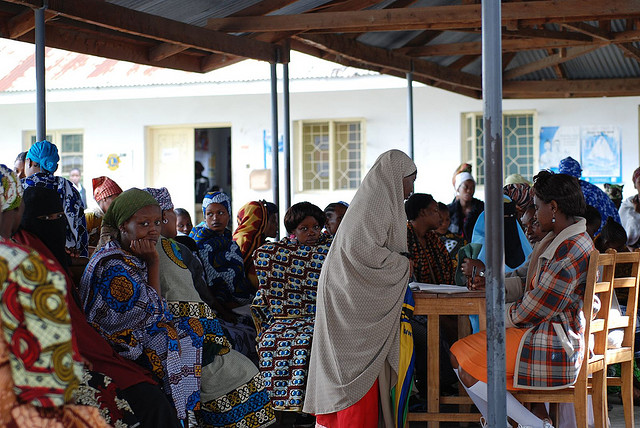
Image Credit: “Women’s Health Clinic” courtesy of flickr user advencap. -
Carl Haub, Behind the Numbers
UN Releases Early Results of Global Population Projections
›April 18, 2011 // By Wilson Center StaffThe original version of this article, by Carl Haub, appeared on the Population Reference Bureau’s Behind the Numbers blog.
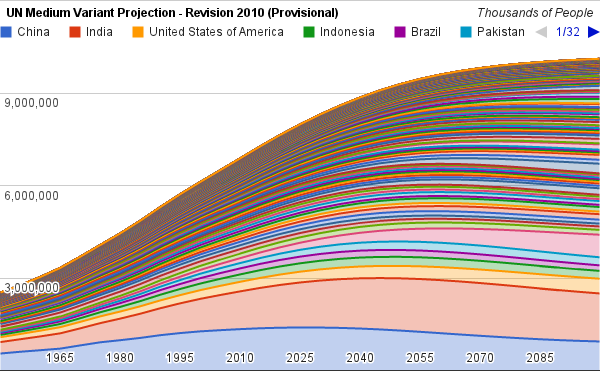
The United Nations Population Division has released preliminary results of its biennial series of population projections for the world’s countries for the 2010 revision. The projections are expected to be finalized later this month.While the global population for 2010 — 6.873 billion — is slightly lower than estimated in the 2008 revision (6.909 billion), the projected population for 2050 is now higher at 9.295 billion compared with the previous 9.150 projected in 2008. That can also be compared to the 2050 population of 9.485 billion on PRB’s 2010 World Population Data Sheet and 9.256 billion in the International Data Base of the U.S. Census Bureau.
The 2010 UN projections differ from the previous series in two significant ways. First, the projection horizon has been extended to 2100, quite far into the future. Second, the UN no longer assumes a uniform “ultimate” level of the total fertility rate (TFR) for all countries, such as the 1.85 level in its medium variant. Instead, multiple possibilities for each country’s TFR are projected with a probabilistic method based on fertility trends for the 1950-2010 period. Then, the median path of those “tracks” serves as the projected TFR for the medium variant series. The high and low variants, however, will be projected as in the past. Those variants have used an “ultimate” TFR of 2.35 and 1.35 for all countries, respectively.
The projected population of sub-Saharan Africa (SSA) in 2050, the world’s region with by far the largest potential for population growth, is now 1.963 billion, up from 1.753 in the 2008 UN projections. But, since the projections now run to 2100, we can now see beyond mid-century. By 2100, the UN projects that SSA would total an eye-popping 3.4 billion, nearly four times its present size and still be growing by 0.7 percent per year, adding 2 million annually at that time!
Continue reading on Behind the Numbers.
Sources: Population Reference Bureau, UN Population Division, U.S. Census Bureau.
Chart Credit: Data from UN Population Division, created by Schuyler Null. See full chart for interactive version (warning: it’s a lot of data – may slow or crash your browser). -
Madagascar, Past and Future: Lessons From Population, Health, and Environment Programs
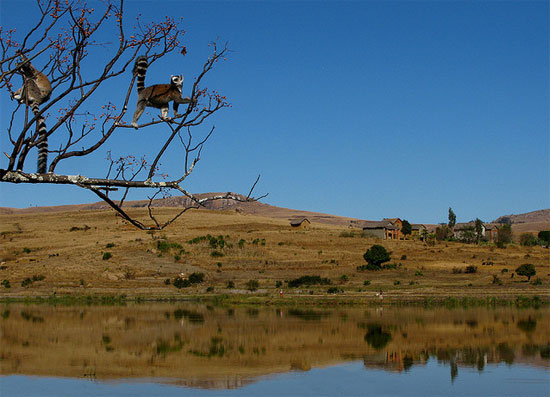
›In Madagascar, “today’s challenges are even greater than those faced 25 years ago,” said Lisa Gaylord, director of program development at the Wildlife Conservation Society. At an event at the Woodrow Wilson Center on March 28, Gaylord and her co-panelists, Matthew Erdman, the program coordinator for the Population-Health-Environment Program at Blue Ventures Conservation, and Kristen Patterson, a senior program officer at The Nature Conservancy, discussed the challenges and outcomes of past and future integrated population, health, and environment (PHE) programs in Madagascar. [Video Below]
Nature, Health, Wealth, and Power
Gaylord, who has worked in Madagascar for nearly 30 years, gave a brief history of USAID’s activities on the unique island, which she called a “mini-continent.” She used the “nature, health, wealth, and power” framework to review the organization’s environment, health, and livelihoods programs in Madagascar and their results. Governance, she said, is the centerpiece of this framework, but this piece “maybe didn’t have an adequate foundation” in Madagascar to see the programs through the political crisis.
Though its programs started at the community level, Gaylord said USAID’s objective was to scale up to larger levels. “You can’t always work on that level and have an impact,” she said, and there was “tremendous hope” in 2002 for such scaling up when Madagascar elected a new president, Marc Ravalomanana.
Unfortunately, changes in funding, a lack of economic infrastructure, and poor governance forced development programs to scale down. After President Ravalomanana was overthrown in a military coup in 2009, the situation got worse – the United States and other donors pulled most funding, and only humanitarian programs were allowed to continue.
“What worries me is that I think we have gone back” to working on a village level, Gaylord said. “We want to go up in scale, and I think that we felt that we could in Madagascar, but that’s where you have the political complexities that didn’t allow us to continue in that direction.”
Going forward, Gaylord said that it is important to maintain a field-level foundation, take the time to build good governance, and maintain a balance in the funding levels so that no one area, such as health, dominates development activities.
Living With the Sea
Based in southwestern Madagascar, the Blue Ventures program began as an ecotourism outfit, said Erdman, but has since grown to incorporate marine conservation, family planning, and alternative livelihoods. One of its major accomplishments was the establishment of the largest locally managed marine protection area in the Indian Ocean, called Velondriake, which in Malagasy means “to live with the sea.” This marine area covers 80 kilometers of coastline, incorporates 25 villages, and includes more than 10,000 people. The marine reserves for fish, turtles, and octopus, as well as a permanent mangrove reserve, protect stocks from overfishing.
One of the biggest challenges facing the region is its rapidly growing population, which threatens the residents’ health and their food security, as well as the natural resources on which they depend. More than half the population is under the age of 15 and the infant and maternal mortality rates are very high, Erdman explained. Blue Ventures, therefore, set up a family planning program called Safidy, which means “choice” in Malagasy.
“If you have good health, and family size is based on quality, families can be smaller and [there will be] less demand for natural resources, leading to a healthier environment,” said Erdman.
The region’s isolation and lack of education and health services are a challenge, said Erdman, but over the past three years, the contraceptive prevalence rate has increased dramatically, as has the number of clinic visits. The program uses a combination of clinics, peer educators, theater presentations, and sporting events, such as soccer tournaments, to spread information about health and family planning.
A Champion Community
“There is a long history of collaborative work in Madagascar,” Patterson said. Focusing on the commune (county) level, she worked in conjunction with USAID, Malagasy NGOs, and government ministries to try to scale up PHE programs in Madagascar’s Fianarantsoa province, which has a target population of 250,000 people.
“We essentially worked at two different levels,” said Patterson. At the regional level, a coordinating body for USAID and local partners called the “Eco-Regional Alliance” met monthly. The “Champion Commune” initiative, which worked at local levels, had three main goals, she explained:
Though working in such remote areas is expensive, and all non-humanitarian U.S. foreign aid has been suspended since the coup, Patterson hopes that development programs will return to Madagascar. Pointing to its vast rural areas, she stressed the importance of integrated efforts: “The very nature of multi-sectoral programs is that they have the highest benefit in the areas that are most remote. These are the areas where people are literally left out in the cold.”- Create a strong overlap with neighboring communes;
- Promote activities that benefited more than one sector (such as reforesting with vitamin-rich papaya trees); and
- Capitalize on the prior experiences of Malagasy NGOs in implementing integrated projects to help build up civil society.
Image credit: “Untitled,” courtesy of flickr user Alex Cameron.
Sources: The New York Times, Velondriake.
Showing posts from category Africa.